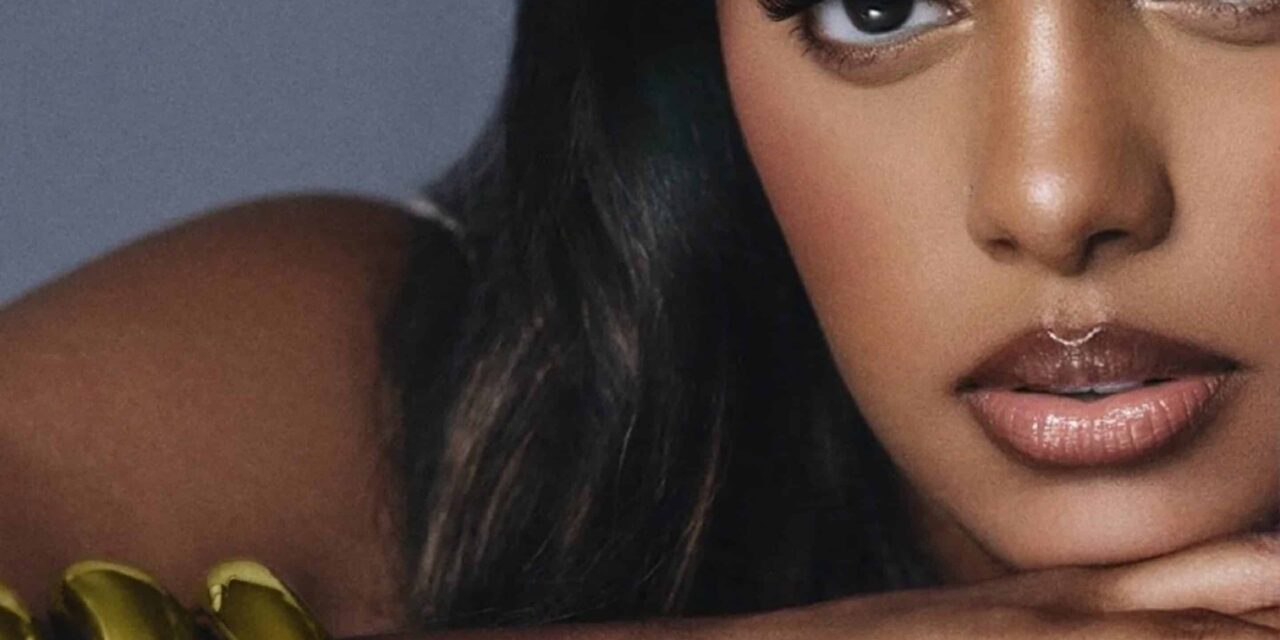
Canadian-born, Ethiopian heritage singer-songwriter and pianist Ruth B. returns with “Storm,” a quietly powerful new single that signals both emotional release and artistic renewal. Arriving alongside a striking official visual that lingers in the stillness after upheaval, “Storm” captures an artist stepping fully into her own — reflective, grounded, and unmistakably self-assured.
Long celebrated for her intimate storytelling and melodic restraint, Ruth B. enters this new chapter shaped by reckoning and rebirth. “Storm” unfolds like weather itself: gentle, patient, and slowly transformative. Produced by six-time GRAMMY winner Cole M.G.N. (Christine and the Queens, Blood Orange, Anderson .Paak), the track pairs tender, expansive sonics with Ruth’s signature piano work, allowing vulnerability and hope to coexist in motion.
The song traces the quiet chaos between heartbreak and healing, moving from whispered confessions to waves of self-realization. It’s a mature evolution of the emotional language that first defined her breakout moments, offering a sense of serenity born not from avoidance, but from lived experience.
Speaking on the track, Ruth shares:
“I started this song as a young adult just trying to make sense of my feelings, and I finished it as a woman who’s lived through them. It’s like a conversation between who I was and who I’ve become.”
That intergenerational dialogue — past self meeting present clarity — is at the heart of “Storm,” giving the song its depth and quiet power.
Since emerging from Edmonton as a teenager, using her piano as a journal and her phone as a stage, Ruth B. has grown far beyond her viral beginnings. With global hits like “Lost Boy,” “Dandelions,” and the Rod Wave-sampled “Mixed Signals,” she has amassed over 8.6 billion streams, multi-Platinum certifications across more than 15 countries, and a devoted monthly audience of over 16 million Spotify listeners. Along the way, she’s earned acclaim from tastemakers including The Guardian, Rolling Stone, CLASH, LADYGUNN, and The Blues Project, as well as co-signs from artists like Drake, Rod Wave, and Blk Odyssey.
Her stripped-back ON THE RADAR performance of “Storm” further reinforces her confidence as both songwriter and performer — warm, textured, and rooted in self-reliance. It’s a reminder that Ruth B.’s strength has always lived in restraint, in letting silence and space speak just as loudly as melody.
With a wave of new releases on the horizon, “Storm” stands as both an emotional reset and a creative marker. Ruth B. isn’t chasing reinvention — she’s refining it. And if this single is any indication, 2026 is shaping up to be a defining year for one of pop’s most quietly resonant voices
“Storm” feels like a conversation between your younger and present self. What changed in you between the moment you started writing it and the moment you finished it?
I started writing this song about 10 years ago when I was still a very new writer. I always say that this song kind of feels like a collaboration with a younger version of myself because I finished it later in life. The thing that changed the most was that some songs need some life lived before you can finish writing them. I don’t think I’m ever the type of person to force a song. When I first started, it was just this cool lyric about a storm… [“can you hear my voice through the storm”] and by the time I’d finished it, there was a real story and a real storm going on, to kind of sing about.
You’ve spoken about “Storm” as both an emotional reset and an artistic awakening. What internal shift or moment of clarity made this new chapter feel possible?
I don’t know if there was really a moment or shift. I think it was just real life and how life can move and take shape. I’d found myself in a position where I actually was feeling unheard with all these things happening around me. The lyric, [“can you hear my voice through the storm”], started to become a reality to me. I think I just knew that it was time to finish the thought and write it.
Your music has always carried a quiet, intimate power. How did working with Cole M.G.N.—a producer known for expansive, textured soundscapes—shape the emotional direction of the track?
I think working with Cole was so amazing because he really quickly understood that I didn’t want to take the new sounds I was thinking of and completely lose the essence of “me” – which is that intimate, kind of vulnerable, stripped back sound that I’ve had for most of my songwriting journey. It was just really cool because I was able to kind of work with someone who does have so much experience, and is so incredibly talented. We were able to meet each other in this new space of just keeping it so simple, but so different from my past music. It was just a match made in heaven in that sense!
You’ve evolved from viral beginnings to becoming a globally recognised songwriter with 8.6B+ streams. How do you stay grounded and connected to the authenticity that defined your earliest songs?
I’ve always loved music, making music, singing and writing from a very young age. I think that continues to grow… but I think the fact that it’s always been there has kind of helped me just stay on course because internally not a lot has changed in that aspect. Maybe the life around me sure, but who I am as a musician and as a person is kind of still pretty much the same.
Growing up in an Ethiopian household in Edmonton, how did your cultural roots shape the way you approach storytelling and emotional vulnerability in your music?
The experience of growing up in an Ethiopian household – I’m a daughter of immigrants, and my parents were really adamant on making sure my brother and I retained our culture, learned about it, and that it was infused in our upbringing. Growing up, I listened to a lot of Ethiopian music. I spoke the language. I still speak it fluently. And I think that’s just a layer of who I am that makes its way into all parts of my life. I always say it’s definitely something I really want to explore even deeper at some point in my life when it comes to the music. I would love to really submerge myself in that and who knows… maybe make an album in Amharic!
“Storm” moves from whisper-like softness to swelling waves of hope. When you think about the arc of the song, what emotion do you hope listeners hold onto the most?
I always say with any song, I want people to feel less alone in their feelings. I think that way in a lot of my music… There are songs that there’s a message where I can say… you know, stand up for yourself or leave a relationship when you don’t think it’s right. I think this one is more of just a moment of honesty. I don’t know that there’s an underlying message – it is right up front. It’s just … hey, I’ve been there too… I’ve been in that relationship where I feel unheard…I’ve been in that relationship where I’m wondering, what’s next? I’m confused; you were my world. Now you’re my… nightmare… I think sometimes it’s as simple as knowing that you’re not alone because when you are going through those things it’s really easy to isolate yourself and feel like no one else has ever been through this.
Your songs have been sampled, referenced, and championed by artists like Rod Wave. How has this cross-genre support influenced your artistic confidence or direction?
Anytime an artist samples my music, I actually think it’s so cool, and especially when it’s a completely different genre than, you know, me. Rod Wave in particular – I love his music, and I think it’s so cool because it kind of exposes my music to people who wouldn’t have listened to me or wouldn’t have found me unless it was through, someone like Rod or whomever it might be. It just makes me happy because I love knowing that my reach is diverse and that my songs can kind of speak to anyone, which is really awesome.
Piano has always been central to your writing—almost like a journal. How did your relationship with the piano evolve over the years, especially through heartbreak, rebirth, and self-realisation?
Ever since I was little, I’ve said that the piano is my perfect dance partner. I really do have such a deep relationship with the piano, and I just, it’s almost personified in my head, where it’s a living being, versus just an instrument. I don’t see how my music or myself as an artist would exist without it. I write all my music to the piano. Even further than that, it’s really where I go when I’m sad, when I’m nervous, I’m anxious, excited, scared, happy. Anyone who knows me well, knows that that’s kind of the place where I just pour my heart into. So it’s such a very deep connection, and I just feel very grateful to have that instrument and have the ability to play it.
You’ve collected multi-Platinum certifications across more than 15 countries and built a cult global following. What part of your journey still feels the most surreal or unexpected?
Growing up in Edmonton, Alberta, really. Just normal upbringing… you kind of, hope for these things in your wildest dreams, but you know, it being a reality seems so far away. So, it’s just the simple things that still shock me. Even if I’m walking through a mall and someone comes up to me and, you know, gets excited, freaks out, it still catches me off guard. But I love that. And I feel so grateful that this is my life. I’m just so excited to continue to write and continue to make music that might have some meaning to someone.
As you step into this luminous new phase, what themes or sounds do you feel drawn to exploring next—either in continuation of “Storm” or in rebellion against it?
I think this upcoming project is just such a rainbow of many things, but it is definitely, without a doubt, my most introspective vulnerable album ever. Because so much life has been lived in these past few years. So many real things have happened and true real experiences. I think a lot of my earlier music was so young and you could definitely hear that in the lyrics but it still feels like real life to me. With the new upcoming music, there are some great things going on and I’m so excited for people to hear it and have people to feel it as well.