Photo credit Jeremey Connors; Artwork credit Ricardo Diseño)
Matt Dorado’s latest immersive production transforms a surreal cocktail party into a living, breathing allegory of fear, desire, and the systems that shape us.
There’s a moment, early in MONSTER PARTY, where the rules quietly dissolve.
You’re handed a drink. Someone whispers something that may or may not be true. A stranger becomes a confidant. A performer looks at you—not past you—and suddenly you’re no longer watching a story unfold.
You’re inside it.
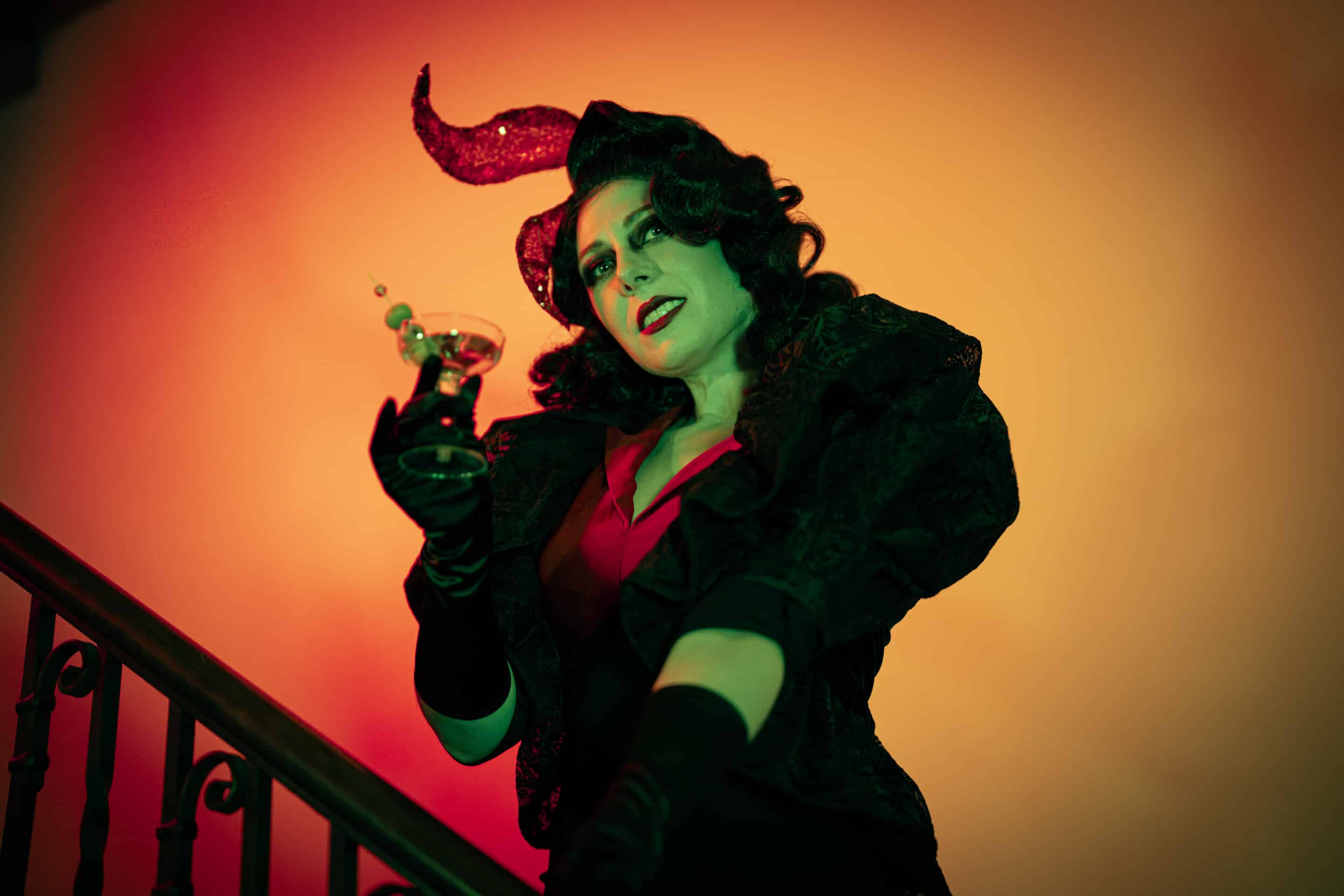
Running April 16–25 at Rita House in Los Angeles, MONSTER PARTY is a surrealist, queer immersive play that places its audience at the center of a supernatural sociopolitical melodrama. Set within the decadent home of a mysterious figure known as The Baroness, the experience unfolds over 2.5 hours of mingling, eavesdropping, participation, and—most importantly—gossip.
But beneath its camp, chaos, and theatrical excess lies something sharper:
A question about what, exactly, turns us into monsters.
TICKETS HERE
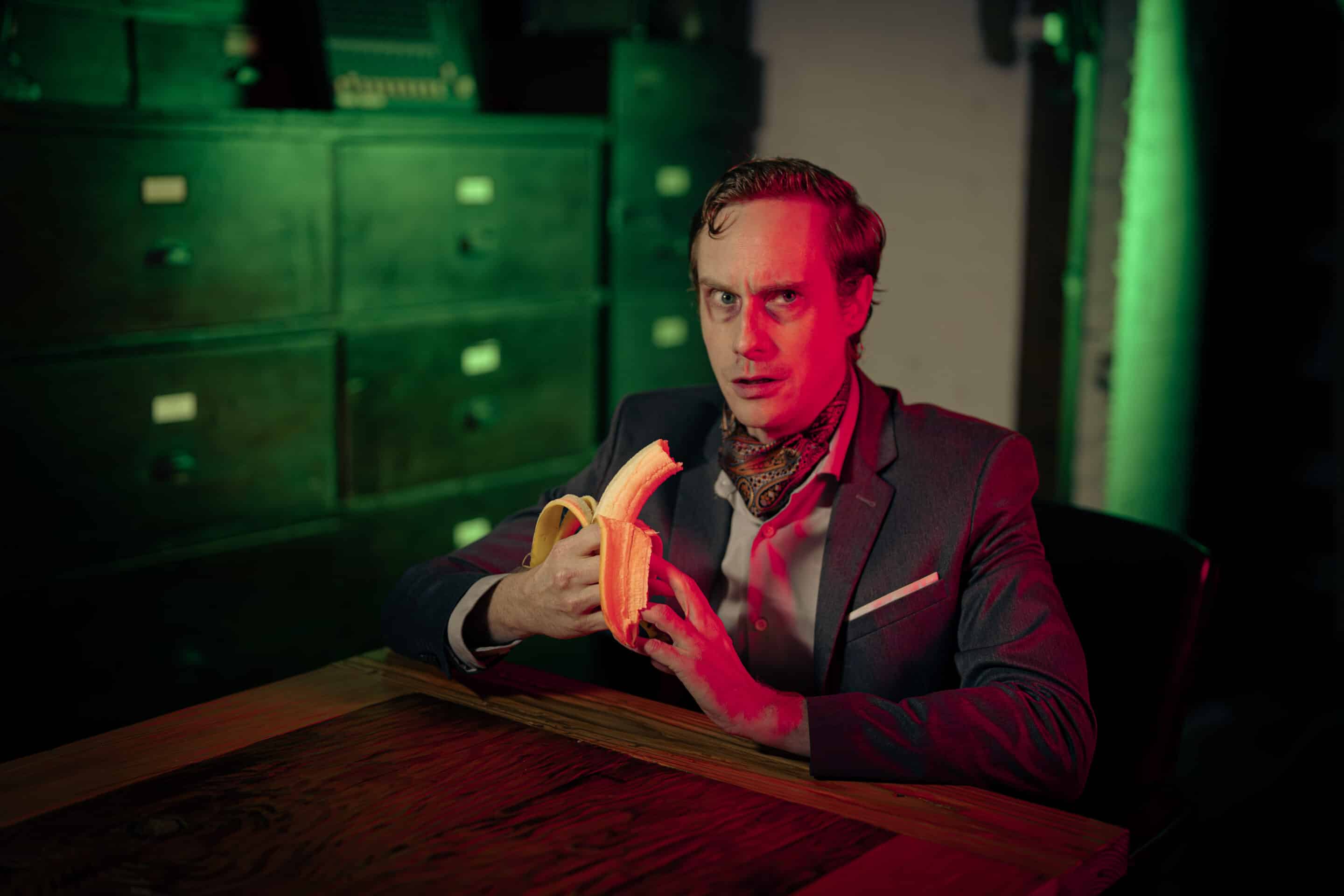
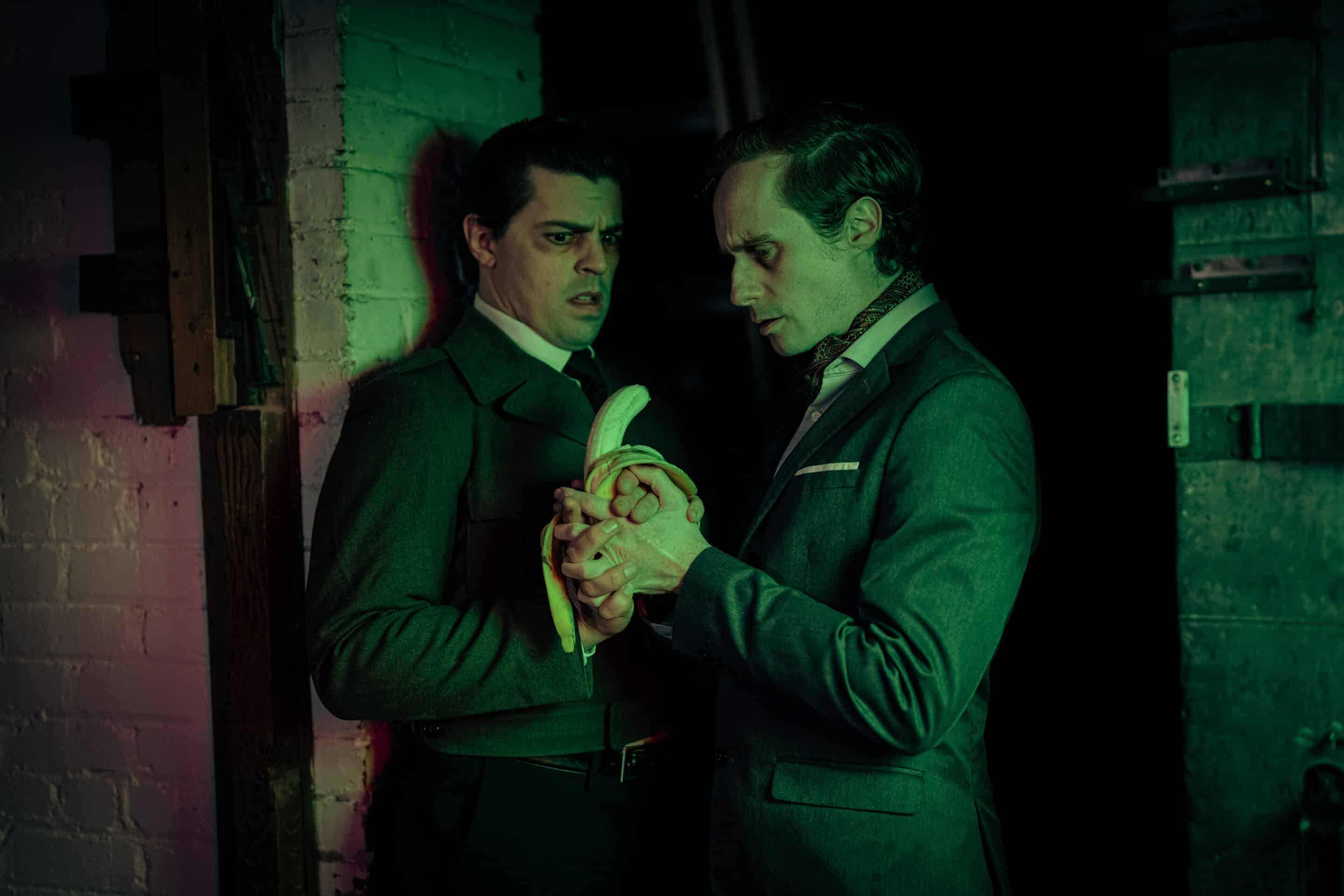
A Party Where Everything Means Something
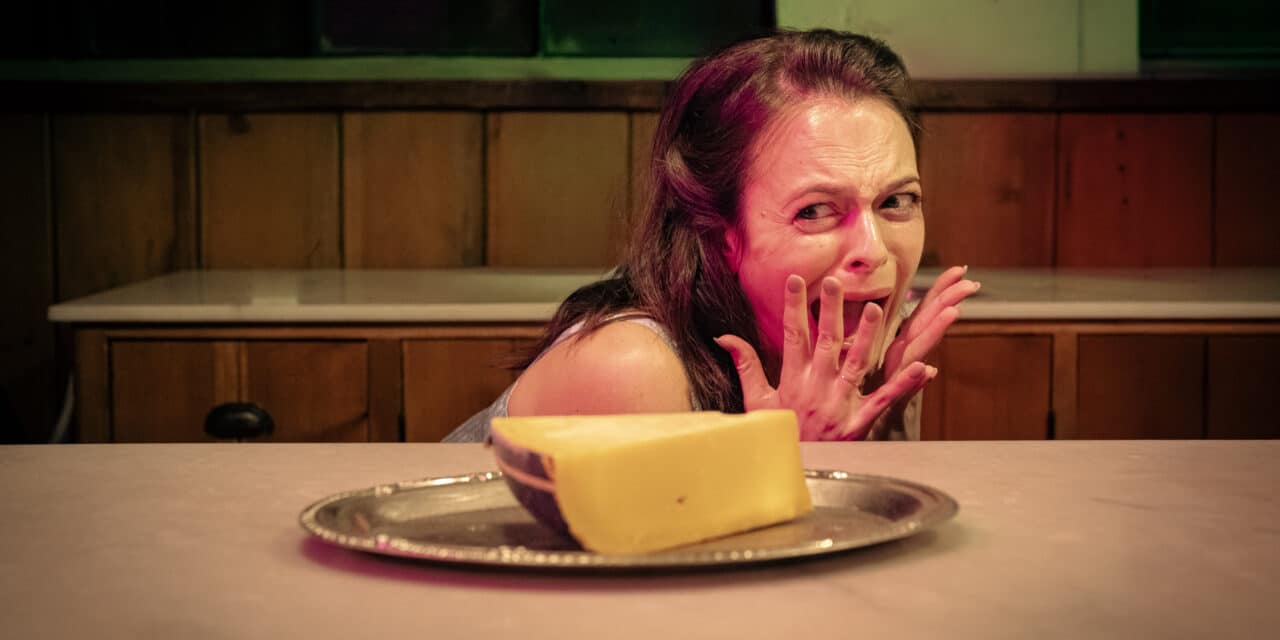
On the surface, MONSTER PARTY is exactly what it promises: a bizarre cocktail gathering filled with eccentric characters, absurdist humor, and moments of theatrical spectacle. Guests are free to explore the space, interact with performers, and piece together a narrative that reveals itself through fragmented conversations and hidden encounters.
But the setting is doing more than just hosting the story—it’s shaping it.
“There’s something about a cocktail party that feels accessible and inviting,” says creator Matt Dorado. “People let their guard down. And that opens them up—not just to the narrative, but to each other.”
That openness becomes a mechanism. Conversations turn into clues. Small talk becomes subtext. And gossip—often dismissed as trivial—emerges as one of the show’s most powerful storytelling tools.
“We’ve all eavesdropped on a juicy conversation at a party,” Dorado says. “Here, you get to do it in a controlled, highly theatrical environment.”
What starts as curiosity quickly becomes participation.
The Politics of Performance
Set against the backdrop of 1950s Washington D.C., MONSTER PARTY draws directly from the historical trauma of the Lavender Scare—a period during McCarthyism when queer government employees were systematically outed and dismissed under the guise of national security.
It’s a heavy foundation. But Dorado doesn’t approach it with restraint.
“The show is very gonzo,” he says. “Balance and subtlety aren’t exactly my style.”
Instead, MONSTER PARTY leans into excess—camp, melodrama, theatrical chaos—while threading in a deeply political narrative about fear, control, and societal paranoia.
And if that sounds like a contradiction, it’s not.
“We’re living in a time where everything is dialed up to an 11,” Dorado explains. “The government feels like a circus. The news is sensationalized. So I think this style of storytelling actually meets the moment.”
The result is a show that entertains and unsettles simultaneously. One that invites laughter, then quietly questions what—and who—that laughter is directed at.
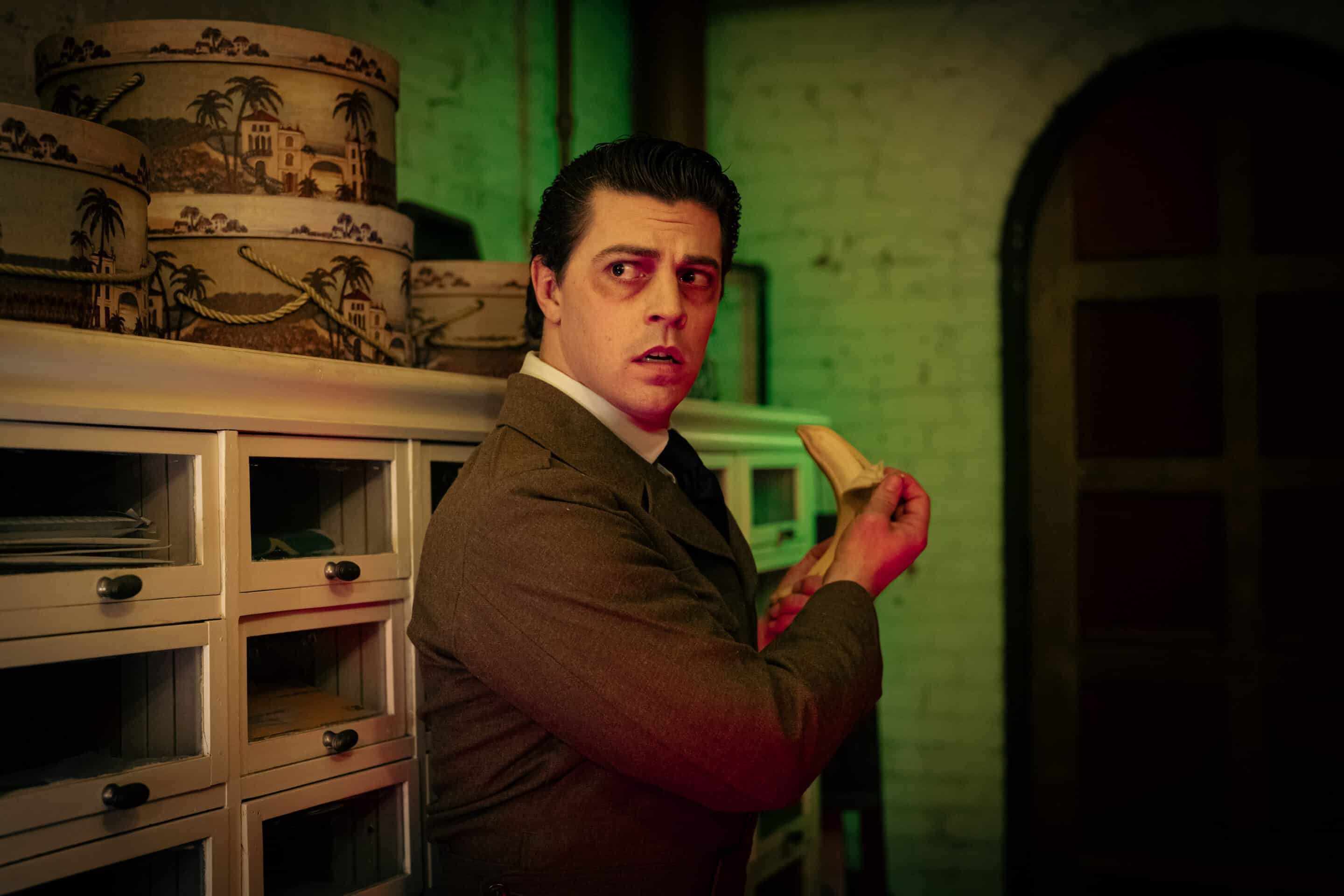
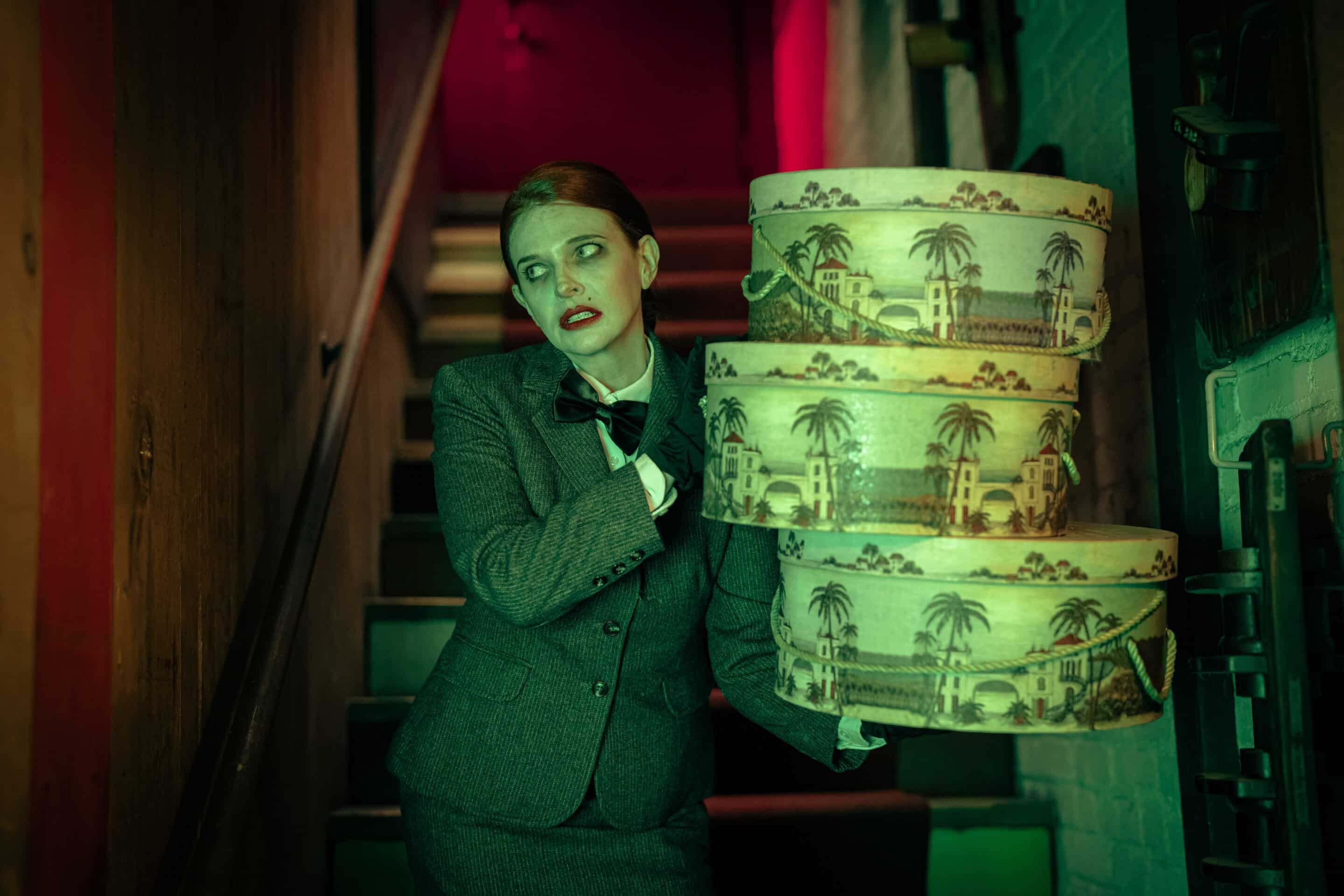
Dissolving the Distance
Unlike traditional theatre, MONSTER PARTY eliminates the boundary between performer and audience entirely.
For Dorado, that shift is central to the magic.
“There’s a different kind of storytelling when you put people inside the world,” he says. “It gives them agency. It makes them part of it.”
That philosophy is rooted in his own upbringing—less inspired by film and more by theme parks and haunted houses, where narrative is something you move through rather than observe.
In MONSTER PARTY, that movement is literal. Guests wander through Rita House—an intricately restored 1929 Spanish Colonial space—encountering scenes as they unfold organically around them.
Some moments are communal. Others are intimate.
“There are points where guests might be pulled aside,” Dorado explains, “and given key pieces of the story. Then it’s up to them to share that information with others.”
In other words: the audience becomes the network through which the narrative spreads.
Through whispers. Through interpretation. Through gossip.
Gossip as a Weapon
At the heart of the show is a deceptively simple idea:
That gossip is not harmless.
“In the context of the Lavender Scare, rumors had real consequences,” Dorado says. “People were outed, fired, and destroyed based on hearsay.”
That historical reality is mirrored in the mechanics of the show. Information—true or false—circulates through the space, shaping perceptions, influencing actions, and ultimately determining outcomes.
“It’s scary how something that starts as trivial chatter can snowball into something much darker,” he notes.
In this way, MONSTER PARTY doesn’t just depict a system—it recreates one.
And places the audience inside it.
The Architecture of Immersion
The choice of venue is far from incidental.
Rita House, with its layered history as a Hollywood prop house, violin factory, and creative hub, becomes an extension of the narrative itself. Its grand interiors—parlors, staircases, libraries—offer space for open interaction, while hidden rooms provide moments of secrecy and tension.
“It feels like a real home,” Dorado says. “That’s important. Guests should feel like they’ve been invited into something.”
But beneath that hospitality lies something darker.
“I love haunted houses,” he adds. “And I wanted to bring some of that energy into this production.”
That duality—warmth and unease, openness and secrecy—mirrors the emotional landscape of the show.
The World of Matt Dorado
For those familiar with Dorado’s previous work, MONSTER PARTY feels like a natural evolution.
From the theatrical nightlife series DRUNKEN DEVIL to the immersive dining experience TO LIVE AND DI(N)E IN L.A., his projects have consistently blurred the lines between performance, environment, and audience participation.
But here, the stakes feel higher.
“This show is very near and dear to my heart,” he says. “And unfortunately, its themes have become more relevant over time.”
That relevance isn’t abstract. It’s immediate.
“If you look around—war, moral panic, division—it’s hard not to see the parallels.”
Which raises a question Dorado doesn’t shy away from:
“What happens if we don’t tell stories like this?”
Who Are the Monsters?
The title MONSTER PARTY suggests something playful, almost celebratory.
But like everything else in the show, it operates on multiple levels.
“The monstrosity is layered,” Dorado says carefully. “Some of it is in the characters. Some of it is in the systems. Some of it is… more meta.”
It’s a deliberate ambiguity.
Because the show isn’t interested in pointing fingers. It’s interested in reflection.
When guests leave the experience, Dorado hopes they carry that reflection with them.
“I want people to think about their actions—or their inaction,” he says. “To question why they made certain choices.”
But not at the expense of enjoyment.
“At the end of the day, it’s still entertainment. I want people to leave smiling, too.”
A New Kind of Nightlife
In a city like Los Angeles—where entertainment is everywhere but connection can feel elusive—immersive theatre offers something different.
“People are looking for experiences that go beyond just going out for drinks,” Dorado says. “They want something shared. Something real.”
For him, immersive theatre isn’t just a genre.
It’s a future.
A space where storytelling, nightlife, and human interaction converge—where audiences aren’t passive consumers, but active participants.
Where the line between fiction and reality blurs just enough to make you question both.
The Invitation
MONSTER PARTY doesn’t ask you to sit quietly and observe.
It asks you to listen.
To speak.
To trust.
To doubt.
To decide what—and who—you believe.
And in doing so, it reveals something uncomfortable:
That the distance between spectator and participant…
isn’t as wide as we think.
Because in the end, the story isn’t just happening around you.
It’s happening through you.