Welcome to the latest episode of our ongoing Speakeasy series in partnership with Verdict Music.
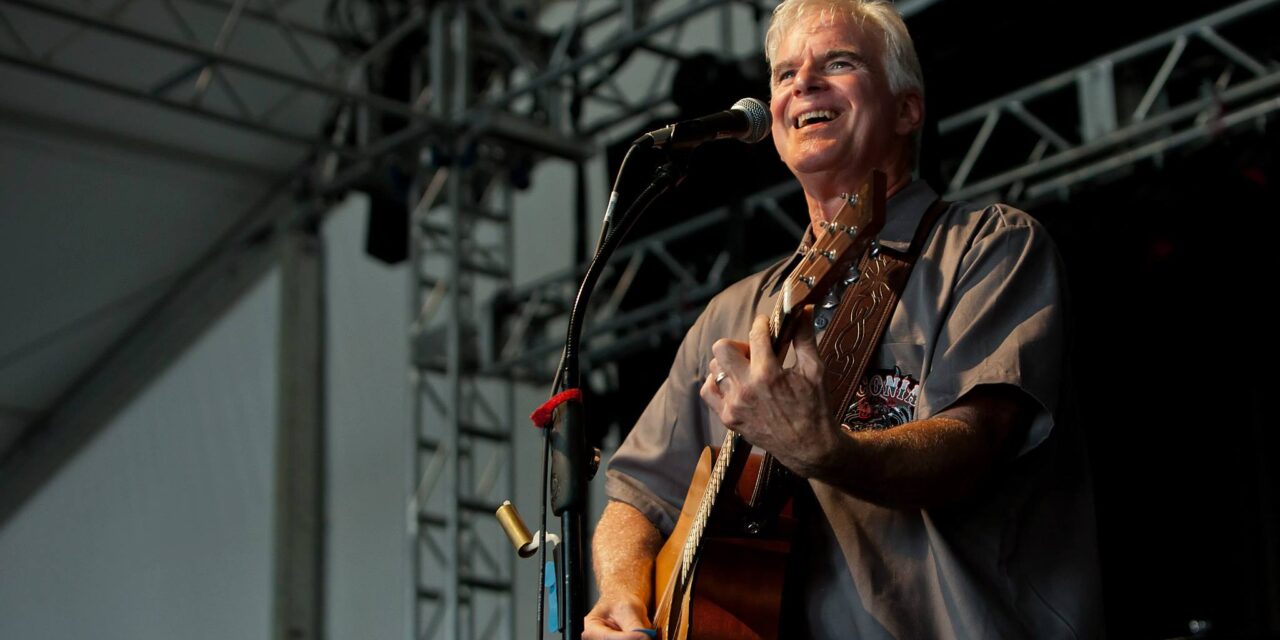
From a log cabin by the lake to decades of touring, bandleading, hosting open mics, and building a career outside the usual music-industry script, Bruce Marshall has learned that longevity has less to do with chasing the spotlight than with staying true to the work.
There is something deeply reassuring about an artist who has figured out how to build a life around music without letting the machinery of the industry define the terms. Talking to Bruce Marshall, that sense comes through immediately. He is speaking from Denmark, Maine, where he lives with his wife Michelle in a log cabin on a lake, surrounded by woods, quiet, and the kind of creative life that many artists claim to want but few actually manage to create.
For Marshall, that life did not happen by accident. It came through decades of playing, adapting, and learning how to approach music from more than one angle. On one side, there is the Bruce Marshall Group, his long-running band project, now more than thirty years deep. On the other, there is the troubadour path: solo performances, acoustic gigs, national opening slots, and years of hosting open mics that connected him directly to the next generation of musicians. Together, those two worlds gave him something rare in this business—sustainability.
That practical wisdom runs through everything he says. Marshall is not cynical about the music industry, but he is realistic about it. He understands that not every artist is built for the fame-chasing model, and he seems genuinely at peace with the fact that his own path has been more regional, more rooted, and perhaps more enduring because of it. Rather than being consumed by the need to “make it” in New York, Los Angeles, or Nashville in the traditional sense, he built something solid: a body of work, a fanbase, a community, and a way of living that still leaves room for joy.
Part of that joy clearly comes from the giving-back side of his career. Marshall has hosted open mics extensively, at one point as many as fifteen a month, and he speaks about that work with the kind of generosity that suggests he learned as much from those rooms as the younger artists did from him. He has seen musicians come through with big dreams, real talent, and all the logistical complications that make a full-time music career impossible for many. What he seems to have offered them was not just encouragement, but perspective: the idea that there are different ways to make a life in music, and that the solo path, in particular, can be liberating.
That realization changed everything for him personally when it first arrived. After years of being strictly a band guy, an agent persuaded him to try a solo acoustic college show. Marshall agreed almost reluctantly. The result was transformative. The show felt natural, easy, and suddenly he understood that he had a second career available to him—one that removed the enormous pressure of always needing a band to keep moving forward. That moment did not replace the Bruce Marshall Group, but it expanded the possibilities of what his life as a musician could be.
It is that same long-view perspective that makes this current chapter feel so meaningful. Marshall is preparing to release a new live album, Live From Cotuit, recorded at the Cotuit Center for the Arts on Cape Cod, a venue that has become especially important in his performing life. For years, fans had asked why there wasn’t a live Bruce Marshall Group record. Now, finally, the answer has arrived. And for Marshall, it feels less like a routine release than a genuine fulfillment of something long overdue.
The album captures not only his band in full flight, but also the larger story around him: a musician shaped by the Beatles, the Allman Brothers, B.B. King, Toy Caldwell, countless gigs, years of songwriting, and a clear-eyed understanding of how to keep the craft alive across decades. It also reflects the way Marshall has always worked best—with authenticity, emotional directness, and a willingness to evolve how he writes and collaborates.
Follow Bruce here:
For Mundane Magazine, Bruce Marshall talks about building a musical life in Maine, learning from open mic communities, the people who changed his path, his relationship with Verdict Music, how his songwriting process has shifted over time, and why this new live record feels like a dream come true.Q&A with Bruce Marshall.
Question: You’re speaking to us from Maine, from what sounds like a pretty ideal creative environment. What’s life like there, and does living in a place like that feed your art?
Answer: We are in Maine, a little town called Denmark, in the Sebago Lake region. We live in a log cabin on a lake. It really is kind of a dream. Maine is one of the most beautiful states, I think.
It absolutely helps the creative process. I feel doubly lucky because my wife is also an artist. She makes guitar-string jewelry and crafts, and sometimes our jobs dovetail really nicely. If I have a ticketed show or something like that, she’ll set up with merch and crafts. So we’re two self-employed artists living in the woods in Maine full-time. Sometimes we just have to pinch ourselves. It’s nice.
Question: You’ve hosted a lot of open mics over the years and worked closely with emerging artists. How has that shaped the way you think about your own path in music?
Answer: You kind of described my approach very well. I never really thought I was somebody who would get a major deal and be completely consumed by the music business. I always imagined myself hooking up with an indie like Verdict—somebody that could focus on what I do.
With the open mics, I enjoyed giving back to the music business. My career really has two sections. I’m a troubadour on one hand—I play tons of solo gigs, I’ve done national opening slots, and I hosted the open mic. That’s kind of my acoustic approach. Then I have the Bruce Marshall Group, my long-term band. We’ve been together over thirty years now and I’ve put out most of my records with them.
The open mic scene taught me a lot too, not just me showing younger artists how to present themselves live. Most of them were not in a position to play music full time because of family, children, logistics. It doesn’t work for everybody. But it was definitely rewarding. I don’t do as many now because I almost got burnt out on it. At one point I had fifteen hostings a month—that’s almost an open mic every other day. That got to be too much.
Question: Was there a specific turning point in your career where you suddenly saw your life in music more clearly?
Answer: Yes. I was always a band guy when I started out. From the mid-70s to the early 80s, I only did band gigs. I loved acoustic music and I was writing and working on my acoustic chops while doing the band thing.
My agent from Live Nation—who retired three months ago—kept bugging me about doing solo gigs. He had a lot of college work and wanted me involved. I kept saying no, no, no. I didn’t think I was a guy who could get up there alone and carry a room.
He finally said, “Bruce, try it once and I’ll never bug you again.”
So I did. I played Bryant College in Rhode Island, and it was a watershed moment for me. First, I couldn’t believe how easy it was. It felt completely natural to get up there for an hour and a half and play acoustic music. Second, I realized at that moment that I didn’t need a band anymore in order to keep going. Not that I wanted to stop doing band work, but it lifted this huge burden off my mind. From that moment on, I knew I had a second career.
That’s something I always told my open mic artists too: develop your voice, see if you can possibly do a solo gig, because solo gigs are often the surest bet in this business.
Question: Who were some of the people, personally or artistically, who really changed your direction or gave you confidence?
Answer: There were the ones I didn’t get to meet, like the Beatles and the Allman Brothers. Those bands opened my eyes to so much. Then B.B. King—I did get to meet him, and I opened for him four times in my career. Once in the 90s, again around 2000, and then later, including a show just a few months before he passed away. Not everyone gets to say that. He was incredibly encouraging every time I worked with him.
And then Toy Caldwell from the Marshall Tucker Band. They were a huge band for me, because I was already an Allman Brothers fan and Marshall Tucker came along with a similar Southern vibe but a very different songwriting voice. Meeting Toy and getting to play with Toy was another huge watershed moment. It gave me a lot of confidence and let me step into a more national-act space for a while, which I hadn’t really done before. I’ve mostly been a regional New England guy.
Question: Tell us about how Verdict entered your world and what that relationship has meant for you.
Answer: It’s been huge for me. I’ve always needed somebody to shop my music, and they do it with gusto. That’s huge.
Funny story—I had actually met Steve Berger thirty years ago and both of us had forgotten it. He was doing some work around Extreme back then. My agent invited me to a barbecue and basketball game at Steve’s house with the band Extreme. So technically that was the first time we met.
“Years later, he asked me for somebody young and promising, somebody he thought was an up-and-comer, and I told him about a young artist, who had come through one of my open mics. It was the first time this artist had ever played in public and we could all tell he was going somewhere. My agent helped get this artist connected to Verdict, and then I got to open at the artist CD release party”.I actually had to blow off another gig to do it, but I had a feeling it was going to be important for me. Steve videotaped me that night, so he had twelve of my best songs live and acoustic on video. Later I asked if he’d be interested in publishing—I didn’t even bring up a record deal because I didn’t want to push it. He said send me more songs and let’s talk.
So it started as a thirteen-song publishing deal, which I was thrilled with. Then I got a four-record download and CD deal with options. It’s been really great because there’s always something interesting on the horizon. Within two years they got two of my songs placed with great artists like Micah Willis and Kenny Neal. I couldn’t have done that on my own. For a songwriter, that’s huge. That’s almost as important as the ultimate gig—getting your songs into the hands of people who will record and release them.
We’re labelmates with Kenny and Micah, and also Ernest Thompson, who is a lyricist. He and I wrote together as well. They have all these things going on that make it exciting and forward-moving. Every year it seems more promising.
Question: When you’re writing, how do you usually begin? Has your process changed over the years?
Answer: It has changed a bit, but originally I pretty much had to have a hook first. The hook would dictate the subject matter, the chorus, the words, the whole thing. Once I figured that out, I was rolling.
Years ago I used to write the words and music almost simultaneously. I’d come up with the hook, work on a chord progression, then stop the music, put the guitar down, and write the words to fit that progression. Once I had the verse progression, the second verse was easy, and hopefully the chorus was already there.
More recently, I’ve shifted a little bit. Part of that came from reading about Springsteen, because I’m a huge fan and I love understanding how he works. He started writing the entire lyric first—first sentence to last—before writing the music, aside from a rough sense of groove or feel.
That was hard for me at first, because it reminded me of people bringing me poems and saying, “Can you put music to this?” and I’d usually say no, because poems don’t always have the right meter for songs.
But I tried that approach, especially when I started working with Ernest Thompson, who isn’t a musician but is a brilliant lyricist. Then with my guitarist Dave Cournoyer we’ve also started doing things differently. Sometimes I’ll sing a melody into my phone without any chords at all, and Dave will build the whole harmonic structure from that. We did that with a song called “Once in a Blue Moon,” and it was a revelation. My melody informed where he went, but I let him run with it. We were both like, wow, let’s do this again.
Question: Were there one or two songs that truly changed your life—either emotionally or artistically?
Answer: Can I pick two? Okay—first, “I’ll Be Back” by the Beatles. That song had everything I absolutely loved, and it’s not even one of their mainstream songs. I come from a musical family, and my parents taught us harmony at a very young age. We couldn’t understand why other kids couldn’t figure out Beatles harmonies—it was just intuitive to us.
Then the complete other side of that would be the Allman Brothers. When I first heard Idlewild South, I was blown out of my seat. I had never heard double melody, harmony lead guitar played against Southern blues with that jazzy edge. And then when Live at the Fillmore East came out, that just completely changed me.
My favorite Allman Brothers song is “In Memory of Elizabeth Reed” by Dickey Betts, which is a nine-minute instrumental and I want it played at my funeral. That song, and that whole record, opened up my guitar playing immensely. Live at the Fillmore East and Fresh Cream were the two watershed records for me as a guitarist.
Question: You mentioned how excited you are about your new live record. What can you tell us about it?
Answer: We always play the Cotuit Center for the Arts every year on Cape Cod. It’s a huge room for us, we always sell it out, and it’s a beautiful theater with amazing sound. So when Verdict said my second album with them should be a live record, I thought, what better place to do it?
We knew we’d have a full crowd. The guys in my band are very technical—one of them used to work for Bose, the bass player is very high-tech—so they brought in a computer-based multitrack system. We set it all up early, ran through the whole thing, and recorded every instrument on its own track.
We didn’t even have a front-of-house sound person. We ran our sound from stage and recorded live from stage. Some people would think that sounds crazy, but with multitrack you can balance everything later in the mix. So you still get the real performance, but everything sounds polished and balanced.
My fans have been bugging me to do a live record for decades. I’m not kidding. They’ve always said, “We love your band live, why don’t you have a live album?” So this is literally a dream come true for me. And honestly, it’s one of the best-sounding records I’ve ever made because we had that kind of control.
We also have Michael Willis on it, which is exciting. He sang “If Dreams Were Money,” which is my song from thirty years ago, and he also contributed his own song “Sunshine,” which came out fantastic. It’s got a Memphis soul feel. For once I got to sing backup, which was really fun for me. Those are a couple of nice teasers on top of the songs people already know.
What makes Bruce Marshall so compelling is not that he represents some romanticized old-school version of the musician’s life. It is that he has actually lived one—honestly, adaptively, and without losing sight of why the songs mattered in the first place. He has moved between bandleader and troubadour, mentor and student, regional lifer and quietly national figure, always finding another way to keep music central without letting it become hollow.
That may be why this live album feels so earned. Live From Cotuit is not just another release in a catalog. It is the fulfillment of something his audience had wanted for years, yes—but also the document of an artist who has had enough time to understand exactly what his music sounds like when it is most fully alive.
In a culture obsessed with scale, speed, and visibility, Bruce Marshall offers another model. One rooted in songs, community, persistence, and the freedom that comes from knowing your own lane well enough to keep expanding it on your own terms.
And maybe that is why the story resonates. Not because it is flashy.
But because it lasts.