The Brazilian artist introduces Azucrim with a surf-rock daydream that explores passion, spirituality, and the beauty of imperfection
Brazilian singer-songwriter, poet, journalist, visual artist, and filmmaker Marina Mole has never approached creativity through a single medium. Her work exists at the intersection of music, literature, philosophy, and visual storytelling, each discipline feeding into the others to create something deeply personal and unmistakably her own.
Now, with the release of “Luneta Azul,” the first single from her forthcoming album Azucrim, Marina opens the door to her most ambitious artistic statement yet: a conceptual record centered around a fictional angel sent to Earth to understand the complexities of human emotion.
Bright, playful, and infused with surf-rock energy, “Luneta Azul” introduces listeners to the colorful universe of Azucrim while revealing an artist fascinated by contradiction—balancing joy and melancholy, fantasy and reality, spirituality and everyday life.
“Launching the album with this song feels like returning to where it all began,” Marina explains. “It was the first song I wrote back in 2022, when I didn’t even know I was making an album.”
At first, however, she didn’t fully understand how important the song would become.
“I realized its significance when I understood that the album was meant to explore emotions,” she says. “This song represents passion, that moment when you feel like anything is possible. It’s about fantasy and dreams of love. Other songs on the album move in the opposite direction, dealing with disillusionment, anger, and resentment.”
That emotional range would eventually become the foundation of Azucrim, a record built around the many contradictions of the human experience.
Interestingly, “Luneta Azul” didn’t always sound as bright as it does today.
“When I first recorded the demo with just voice and guitar, it felt much more melancholic,” Marina recalls. “But when I got together with the band to finish the arrangements, we were listening to a lot of surf and garage rock, especially Los Saicos from Peru. That influence brought a sense of fun to the song that felt right.”
For Marina, that sense of joy is not separate from the deeper ideas explored throughout the album.
“Fun is a philosophical theme for me,” she says. “It has everything to do with how I see life. I love having fun, and at concerts I’ve seen this song bring so much joy into the room. That’s really beautiful.”
While “Luneta Azul” introduces the emotional warmth of the project, Azucrim itself unfolds through a much larger conceptual framework. The title character is a fictional angel whose very existence is rooted in curiosity, rebellion, and spiritual questioning.
“Azucrim comes from the Portuguese verb ‘azucrinar,’ which means something like annoying someone or getting on their nerves,” Marina explains. “I thought Azucrim sounded like the name of an angel, so I created an alter ego around it, similar to how David Bowie created Ziggy Stardust or Aladdin Sane.”
But every rebellious angel needs a reason to challenge authority.
“I needed a reason for this angel to bother God,” she says. “While researching, I discovered Gnosticism, which includes interpretations of God as a distant figure who doesn’t intervene in earthly affairs. I thought that was a pretty good reason to get on His nerves.”
Through Azucrim, Marina explores love, loss, illusion, disappointment, redemption, and spiritual longing. Creating a fictional protagonist allowed her to examine her own emotions from a different perspective.
“I was going through a lot personally at the time,” she admits. “I needed something bigger than myself. Creating this character gave me a sense of purpose and a new perspective from which to look at my feelings. It allowed me to express them in a way that felt larger than my own experience.”
That approach reflects Marina’s multidisciplinary background. Before becoming known as a musician, writing was her first artistic language.
“I was writing poems long before I started writing songs,” she says. “In fact, I learned guitar because I wanted to sing the things I had written.”
Her literary influences flow throughout Azucrim, drawing inspiration from surrealist writers across Brazil, Portugal, and Chile, alongside philosophical thinkers such as Gaston Bachelard.
“When we write, we create images,” she explains. “Those images naturally find their way into my visual work as well.”
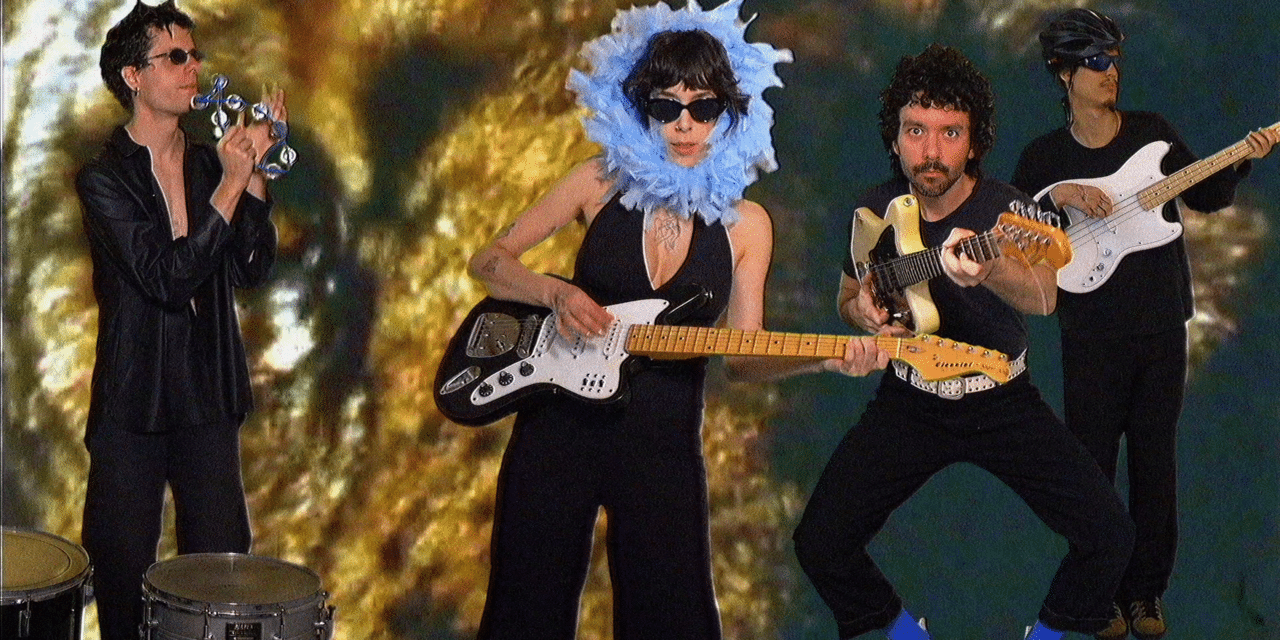
That visual instinct extends to the music video for “Luneta Azul,” which Marina directed, filmed, and edited herself. Inspired by the playful aesthetic of The B-52’s, the video features the musicians who helped bring the album to life: drummer cleozinhu, bassist Lucas Monch, and guitarist Vitor Wutzki.
“I wanted people to experience Azucrim as a complete universe,” she says. “An opportunity to bring together poetry, music, and visuals into one cohesive world.”
The album’s sonic identity is equally intentional. Recorded on reel-to-reel tape alongside her collaborators, Azucrim embraces analog imperfections in an increasingly digital age.
“I don’t connect very much with the digital realm,” Marina admits. “I love the materiality of analog media. I love playing music with other people, recording live, and staying away from the computer for as long as possible.”
More importantly, she values the unpredictability that analog recording introduces.
“I love the things that happen by chance,” she says. “Unexpected moments, imperfections, mistakes—they feel alive.”
That appreciation for vulnerability has remained consistent throughout her artistic journey. Whether recording lo-fi demos on her early releases or constructing a conceptual album like Azucrim, Marina continues to search for authenticity above perfection.
“My vision hasn’t really changed,” she says. “I find beauty in imperfections.”
She points to her earlier work, perdi as track só tem demo, as an example.
“It was very vulnerable because it captured someone learning everything for the first time—playing guitar, singing, recording. With Azucrim I’m more experienced, but I’m still searching for that same vulnerable beauty.”
Much of that growth has been nurtured by São Paulo’s thriving independent arts scene, a community Marina credits with shaping her creative identity.
“São Paulo gave me an extraordinary community,” she says. “Poets, musicians, visual artists, producers. People who, like me, weren’t born there but came to experience this chaotic city.”
For six years, she lived in a shared house filled with musicians on Rua Ibiquara, a place she credits with transforming her understanding of collaboration.
“That’s where I learned to play guitar,” she says. “The people I lived with taught me so much.”
Ultimately, though, Azucrim is less about answers than questions. Through its angel protagonist and emotional journey, the album invites listeners to engage more honestly with their own feelings.
“I just hope it helps people feel,” Marina says. “We spend so much time running away from our emotions because facing them can be difficult.”
If her music can encourage that confrontation—or simply provide a vehicle for emotional release—then she considers the project a success.
“I also hope it encourages people to be playful with life,” she adds. “To step into a character if they want to.”
With “Luneta Azul,” Marina Mole offers the first glimpse into a rich, imaginative world where philosophy dances with surf rock, angels challenge God, and joy becomes a form of spiritual inquiry. It’s a bold introduction to Azucrim, and perhaps a reminder that the most profound truths often arrive disguised as fun.