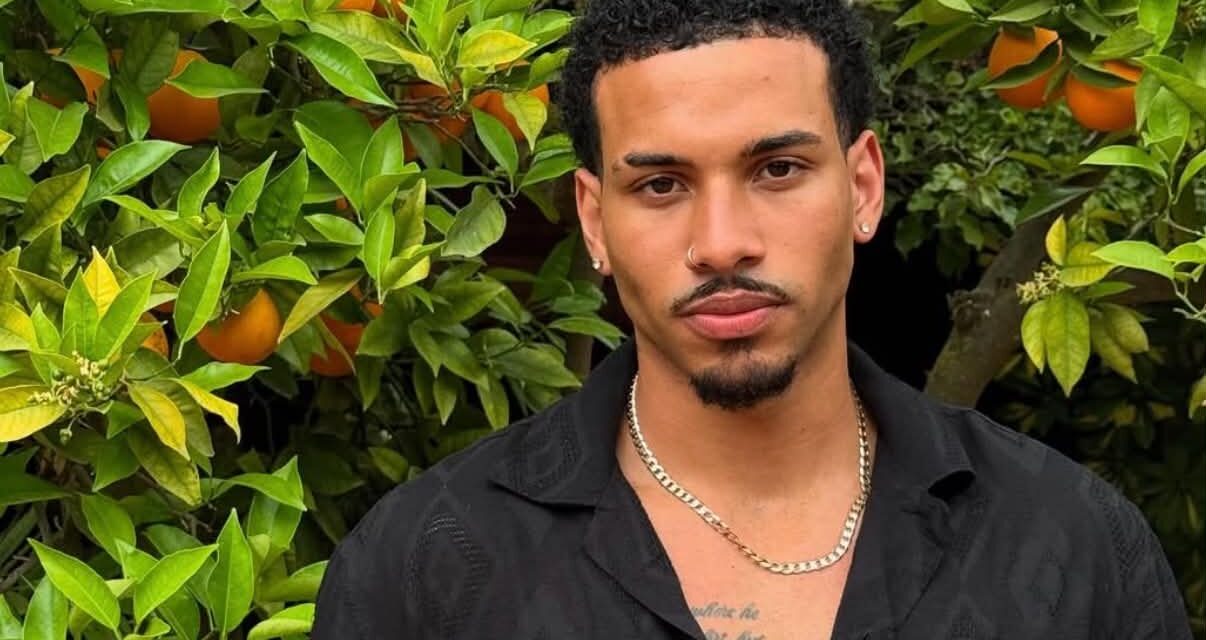
From Too Hot to Handle to music, boxing, business, fatherhood, and a growing global audience, Louis Russell is learning that longevity in modern entertainment means being willing to evolve in public without letting the public decide who you are.
Louis Russell does not seem particularly interested in choosing a lane.
Reality television introduced him to a global audience, but in his mind, that was never supposed to be the destination.
It was the opening.
Audiences first encountered Russell through Netflix’s Too Hot to Handle, where the speed and scale of reality television gave him the kind of visibility that can alter a life almost overnight. Since then, he has appeared across formats including Perfect Match, Battle Camp, Celebs Go Dating and Sidemen Inside, while simultaneously expanding into digital content, entrepreneurship, travel, fitness, lifestyle, music, and, increasingly, boxing.
For someone looking at his career from the outside, those pursuits might appear disconnected.
Russell sees the opposite.
“I see it as one whole thing.”
The through-line is entertainment.
Long before television, he says, that was already the ambition.
“I’ve always wanted to just be an entertainer since I was a kid.”
The medium almost becomes secondary.
A reality show is entertainment.
Music is entertainment.
Boxing can become entertainment.
Building a business around a personality can become entertainment.
Russell’s career reflects an increasingly fluid media environment in which the distinction between television personality, creator, entrepreneur, musician, athlete, and brand is becoming difficult to maintain.
For Russell, that fluidity feels less like a strategy than permission.
The realization came after television invited him back.
“I realized I wanted to be an entertainer more than just someone who does reality shows.”
That was when the possibilities widened.
Music.
Challenge formats.
Boxing.
Business.
Whatever came next.
“I didn’t want to put myself in one box or let people only know me for reality TV.”
Reality Television as a Beginning
Reality television can create the illusion of completion.
A person goes from relative anonymity to millions of viewers almost instantly.
Social numbers rise.
Press arrives.
Opportunities appear.
From the outside, the breakthrough can look like the career itself.
Russell gradually realized that visibility was simply something to use.
“The moment that I realized I could optimize the fact that I’d done TV was the moment that I realized I could really do anything.”
There is a distinctly contemporary logic to that realization.
Television may still create the attention, but attention now travels.
The person audiences watch on Netflix can become the person they follow on Instagram.
Then the creator whose stream they watch.
Then the musician whose song they hear.
Then the entrepreneur whose product they encounter.
The audience moves with the personality rather than remaining loyal to a single medium.
Russell understood that if people were already paying attention, the more important question was what he wanted to do with that attention.
His answer was expansion.
“I wanted to use that as a platform to explore everything else that I was interested in and passionate about.”
The Personality Is the Brand
Russell’s entrepreneurial ambitions have grown alongside that expansion.
His brand, Minacia, takes its name from the Latin-rooted idea of menace, a concept deliberately connected to the personality audiences already associate with him.
That relationship between person and product is important.
Russell does not believe the solution to turning an audience into a business is creating a polished corporate identity separate from himself.
Quite the opposite.
“I’ve built a brand, and I’m continuing to build it through what I’m known for and my personality.”
Authenticity, in his view, is what makes the expansion possible.
There will always be people who dislike what they see.
There will also be people who recognize themselves in it.
“I feel like I want to show the people who I am every step of the way, and if they relate, then they’re going to relate.”
His philosophy toward criticism is similarly uncomplicated.
People will hate.
People will love.
Neither reaction can become the foundation of identity.
“If you’re authentic, the people that hate aren’t going to bother you because they’re not going to like the real you anyway.”
The goal is not universal approval.
It is building an audience whose relationship to him is based on something recognizable as genuine.
Staying Visible Without Standing Still
Visibility, however, is temporary.
Reality television might introduce someone to millions, but remaining culturally relevant requires a different skill set.
Russell has learned that longevity demands a willingness to act before certainty arrives.
“First of all, don’t be scared.”
Be bold.
Put yourself out there.
Accept being judged.
And perhaps most importantly, continue appearing.
“Just make sure you stay relevant and stay out there.”
There is an obvious tension between that philosophy and the popular advice to ignore algorithms, trends, and audience demands entirely.
Russell does not believe in ignoring his audience.
If fans ask him to stream and streaming interests him, he will stream.
If they want music and music is something he genuinely wants to pursue, he will make it.
“You have to listen to your audience while still staying true to yourself.”
That balance is critical.
Following every demand risks turning a person into a product designed by committee.
Ignoring an audience entirely can become its own kind of arrogance.
Russell treats feedback more like information.
The audience can show him where interest exists.
He decides whether that interest overlaps with something he genuinely wants to explore.
“That’s how you keep evolving without losing the people who supported you from the beginning.”
Fame Changes What You Believe About Other People
Experiencing fame has also changed Russell’s relationship with celebrity itself.
Before being inside the machinery, he admits, he was more willing to form an opinion about somebody from what appeared online.
A headline.
A clip.
A controversy.
A comment.
“Before, when I would see something online, that would usually be my first impression of them.”
Being on the other side complicated that certainty.
“Not everything is what you read or what you see about a person.”
It is a lesson that tends to arrive only after seeing your own identity reduced to fragments.
Reality television edits.
Social clips circulate without context.
Audiences construct personalities out of selected moments.
The person receiving the interpretation still has to live with it.
Russell initially struggled with that.
“At first, I used to take offense or feel hurt about what fans would say or what haters would say.”
Over time, the response changed.
The criticism did not disappear.
His relationship to it did.
“It’s made me have thick skin and really push to be better.”
Now, he says, negativity can become fuel.
“I actually motivate myself when I see hate to be better and do better.”
It is not necessarily that every criticism is valid.
Rather, criticism has lost some of its ability to destabilize him.
What initially felt purely negative can now be converted into momentum.
Public Career, Private Life
The more comfortable Russell has become with public attention, the more clearly he has also understood its limits.
That distinction has become particularly important since becoming a father.
“This was a really hard one for me because I’m a really private person, but my career requires me to be public.”
It is perhaps the central contradiction of creator-era celebrity.
The audience often expects access because access is what built the relationship in the first place.
Yet a sustainable public life requires boundaries.
Russell is comfortable absorbing criticism directed at himself.
He becomes more cautious when sharing something might affect someone else.
“When something could affect other people or put them in a bad light, I tend to stay quiet.”
His son represents the clearest boundary.
“I wanted to show him off from the moment he was born.”
But wanting to share something joyful is different from deciding that the public is entitled to it.
“He’s way too young for me to want to put on the internet.”
Fatherhood has consequently sharpened Russell’s understanding that authenticity does not require complete disclosure.
Not every relationship needs explanation.
Not every disagreement needs a statement.
Not every important moment becomes better because strangers can witness it.
“As I’ve gotten older, I’ve realized that not everything needs to be explained to everyone.”
Sometimes privacy itself becomes a form of care.
“Protecting what matters to you is more important than telling the whole story publicly.”

The World Is Bigger Than Your Comment Section
Travel has reinforced a similar lesson.
Russell describes it as one of the experiences that has matured him most, second only to fatherhood.
“It made me realize how big the world is.”
Fame can create a strange distortion of scale.
An intensely negative response online can start to feel universal.
A particular country’s cultural expectations can begin to resemble objective truth.
Then you leave.
“There are places where no one cares who I am, places where people love me, and places where I get more hate than anywhere.”
Geography destabilizes the idea of a single public opinion.
Something rejected in one environment may be celebrated somewhere else.
Russell points toward differences he has noticed between audiences in the UK and parts of South America, Spain, and Portugal, particularly around more dance-oriented, upbeat sounds.
“Where you may be hated, you may be loved somewhere else for the same thing.”
For him, the revelation becomes almost philosophical.
One market cannot determine your worth.
One audience cannot determine your potential.
“If it doesn’t work here, I can go there, and if it doesn’t work there, I can go somewhere else.”
The world is bigger than the room currently judging you.
Finding Out What Else You Can Do
That belief sits underneath Russell’s approach to music and boxing.
Both represent unfamiliar territory.
Both force him to confront perceived limitations.
And both provide a particular thrill:
Discovering the limit may not actually exist.
“When I went into music, I didn’t think I could hit certain notes.”
Then came repeated studio sessions.
“After five sessions in the studio, I’m hitting them and coming up with bars I never thought I could.”
Boxing produced the same experience.
He assumed there were physical limits.
Then he trained.
“I never thought I could punch as fast as I do now, but after five weeks of training, I’m punching faster than the person next to me.”
The point is not that five sessions make someone a master musician or five weeks produce a professional fighter.
The point is psychological.
Russell enjoys encountering a version of himself who can do something the previous version assumed was impossible.
“It excites me knowing I can put my mind to something and execute it.”
That pursuit naturally involves uncertainty.
“The challenge is pushing myself into things where I don’t know what the outcome will be.”
But the uncertainty is increasingly the attraction.
“I want to keep finding out what I’m capable of.”
Growing Up in Front of People
Russell’s audience has not merely watched his career develop.
Many have watched him mature.
The person first introduced through a dating show does not entirely resemble the person navigating relationships, business, fatherhood, and entertainment now.
“I’ve changed a lot.”
Much of that change has affected how he approaches dating and relationships.
His son played a significant role.
So did becoming more aware of what public exposure can do.
“You can keep things private, and you don’t have to make everyone happy.”
That last lesson appears repeatedly throughout Russell’s answers.
Early fame produces enormous pressure to respond.
To clarify.
To please.
To react.
To convince strangers they have understood you correctly.
Maturity has brought a different conclusion.
“You just have to be happy, and the people who are happy for you are the people you want around anyway.”
Public scrutiny, both positive and negative, forced introspection.
“It’s made me understand myself a lot more and realize what actually matters to me.”
Perhaps that is one of the stranger gifts of being perceived at scale.
Millions of people form versions of you.
Eventually you are forced to decide which version belongs to yourself.
From Attention to Legacy
Russell’s ambitions for the future are considerably larger than remaining visible.
Ask what he wants people to remember ten years from now and the word he uses first is entertainer.
An exceptional one.
But his idea of success expands quickly beyond performance.
“I want people to remember me as an exceptional entertainer, someone who provided and built not just a legacy, but an empire that helps other people.”
That includes family.
He wants his mother to experience parts of the world she has never seen.
It includes philanthropy.
“I’ve always wanted to build a charity for homelessness.”
It includes children who may eventually see possibility in the path he built.
“I want to be a role model for kids.”
The ambition becomes circular.
Become better.
Build more.
Use what has been built to create opportunities for somebody else.
“I want to better myself so I can better other people.”
And beneath all of it sits the narrative Russell most wants attached to his name:
Resilience.
“I want to be known for overcoming every obstacle thrown at me and turning it into something positive.”
Not avoiding difficulty.
Transforming it.
“No matter what gets thrown at you, you can build something from it.”
In Conversation With Louis Russell
MUNDANE: Audiences first discovered you through Too Hot to Handle, but you’ve built a career that extends far beyond reality television. Was there a conscious moment when you decided you wanted to redefine what people expected from you?
LOUIS RUSSELL: I would say the moment I realized I could optimize the fact that I’d done TV was the moment I realized I could really do anything.
It was after I got the call to come on again, and I realized I wanted to be an entertainer more than just someone who does reality shows.
That’s when I wanted to start branching into music, different types of shows, challenge shows, going into boxing, and really just optimizing being an entertainer overall.
I realized that I didn’t want to put myself in one box or let people only know me for reality TV.
I wanted to use that as a platform to explore everything else that I was interested in and passionate about.
MUNDANE: You’ve moved between television, entrepreneurship, travel, fitness, lifestyle content, and now music. Do you see these as separate careers or different chapters of the same creative vision?
LOUIS RUSSELL: I see it as one whole thing.
It’s something that I’m enthusiastic and talented in, everything you just mentioned, and I also believe very much in myself.
I’ve always wanted to be an entertainer since I was a kid, and that goes into the music side, the shows, and being an entrepreneur.
For me, they’re not really separate careers.
They’re all different ways for me to express myself, try new things, and continue doing what I’ve always wanted to do.
MUNDANE: Entertainment is changing rapidly, with creators often becoming brands in their own right. How do you balance growing a business while still feeling authentic to the audience that supported you from the beginning?
LOUIS RUSSELL: I think that’s it—the authenticity.
I’ve built a brand, and I’m continuing to build it through what I’m known for and my personality.
The brand is called Minacia, which is known as menace in Latin.
I feel like I want to show people who I am every step of the way, and if they relate, then they’re going to relate.
The best thing you can do is understand that people are going to hate and people are going to love.
If you’re authentic, the people who hate aren’t going to bother you because they’re not going to like the real you anyway.
I want to be authentic and build an audience that really cares and loves me for who I am.
MUNDANE: Reality TV can introduce someone to millions overnight, but sustaining that attention is a completely different challenge. What have been the biggest lessons you’ve learned about longevity in today’s entertainment industry?
LOUIS RUSSELL: First of all, don’t be scared.
You have to be bold, put yourself out there, and be seen.
Don’t worry about people judging you or saying the wrong thing.
Just make sure you stay relevant and stay out there.
People are going to say what they’re going to say, but as long as they see your face, that’s what matters.
If there are trends coming up or your fans tell you what they want, make it a part of your brand.
If they want to see you stream, go stream.
If they want to see you make music and that’s your passion, go make music.
These are all passions of mine, but they’re also things my fans have asked for, and that’s what’s kept me relevant.
You have to listen to your audience while still staying true to yourself.
That’s how you keep evolving without losing the people who supported you from the beginning.
MUNDANE: You’ve appeared across a wide range of shows, from Perfect Match and Battle Camp to Celebs Go Dating and Sidemen Inside. How has each experience changed your perspective on fame, competition, and public perception?
LOUIS RUSSELL: It’s definitely changed my perspective of other people in the space.
Before, when I would see something online, that would usually be my first impression of them, and I would judge them based on that.
But after being in the limelight and experiencing fame, I’ve realized that not everything is what you read or what you see about a person.
Fame is a weird one.
It can make or break you.
At first, I used to take offense or feel hurt about what fans would say or what haters would say, but now it’s given me thick skin and really pushed me to be better.
It actually motivates me when I see hate to be better and do better.
My perspective on fame has changed over the years.
At first, it was negative, and now I’ve turned that negative into a positive.
I don’t look at criticism the same way anymore.
Sometimes the negativity can actually be the thing that pushes you to work harder and prove yourself.
MUNDANE: Social media often rewards carefully curated versions of ourselves. How do you decide which parts of your life to share and which moments are worth keeping private?
LOUIS RUSSELL: This was a really hard one for me because I’m a really private person, but my career requires me to be public.
When something could affect other people or put them in a bad light, I tend to stay quiet.
I don’t mind taking criticism for myself because I know I can handle it, but there are certain things I don’t want to be manipulated or taken out of context.
With my son, who’s way too young for me to want to put on the internet, there are certain things the public just doesn’t need to know.
I wanted to show him off from the moment he was born, but I also want to protect that part of my life.
I think as I’ve gotten older, I’ve realized that not everything needs to be explained to everyone.
Sometimes protecting what matters to you is more important than telling the whole story publicly.
MUNDANE: Travel seems to play a significant role in both your personal life and your content. What have different cultures and experiences around the world taught you about yourself beyond what audiences see online?
LOUIS RUSSELL: Traveling has probably matured and grown me the most after becoming a father because it made me realize how big the world is.
There are places where no one cares who I am, places where people love me, and places where I get more hate than anywhere.
It made me realize that opportunity is endless.
If it doesn’t work here, I can go there, and if it doesn’t work there, I can go somewhere else.
Traveling and experiencing different cultures has really opened my eyes.
In South America, Spain, and somewhat Portugal, they love dancey, upbeat vibes, whereas the UK might frown on that.
It’s a completely different culture.
Where you may be hated, you may be loved somewhere else for the same thing.
It made me realize that I shouldn’t let one place define how I see myself because the world is so much bigger than that.
MUNDANE: More and more entertainers are refusing to stay in a single lane. What excites you most about exploring new creative spaces like music, and what challenges come with constantly evolving?
LOUIS RUSSELL: I think what excites me the most is realizing that the limits I think I have aren’t actually there.
When I went into music, I didn’t think I could hit certain notes, but after five sessions in the studio, I’m hitting them and coming up with bars I never thought I could.
It’s the same with boxing.
I never thought I could punch as fast as I do now, but after five weeks of training, I’m punching faster than the person next to me.
It excites me knowing I can put my mind to something and execute it.
The challenge is pushing myself into things where I don’t know what the outcome will be, but that’s what makes it exciting.
I want to keep finding out what I’m capable of.
MUNDANE: Your audience has grown alongside you over the years. In what ways do you think you’ve changed the most since first stepping into the public eye?
LOUIS RUSSELL: I think I’ve changed a lot.
I’ve definitely matured in my dating and in the way I approach relationships, especially because of my son and being in the public eye.
It made me realize that some things don’t need to be said or brought to light.
You can keep things private, and you don’t have to make everyone happy.
You just have to be happy, and the people who are happy for you are the people you want around anyway.
I’ve learned a lot, matured a lot, and grown a lot from dealing with both the positive and negative sides of being in the public eye.
It’s made me understand myself a lot more and realize what actually matters to me.
MUNDANE: Looking ahead, what legacy do you hope to build? When people think about Louis Russell ten years from now, what do you hope they’ll remember beyond the television appearances and social media numbers?
LOUIS RUSSELL: I want people to remember me as an exceptional entertainer, someone who provided and built not just a legacy, but an empire that helps other people.
I want to know that I did better not just for myself, but for my family and the world.
I’ve always wanted to build a charity for homelessness, see my mom experience parts of the world she’s never seen, and be a role model for kids.
I want to better myself so I can better other people.
Most of all, I want to be known for overcoming every obstacle thrown at me and turning it into something positive.
I want people to see that no matter what gets thrown at you, you can build something from it.
If I’m remembered for even half of that, I’ll die a happy man.
Beyond the Show
There is an old model of celebrity built around scarcity.
The performer appears on screen.
The audience watches.
Then the performer disappears again.
Louis Russell belongs to a completely different entertainment economy.
Television introduces him.
Social media continues the conversation.
Travel changes the audience.
Business translates personality into something tangible.
Music provides another form of expression.
Boxing becomes another test of possibility.
The boundaries between those categories keep dissolving.
That dissolution can look chaotic from the outside.
For Russell, it appears increasingly coherent.
He wants to entertain.
Everything else is a format.
What has changed more significantly is his understanding of what entertainment does and does not require from him.
He has learned that being authentic does not mean publishing every private detail.
That listening to fans does not mean surrendering your identity to them.
That criticism does not need to become self-definition.
That a television edit cannot explain an entire person.
That one country’s reaction is not the world’s reaction.
And that attention is useful only if you turn it into something capable of surviving after the original spotlight moves elsewhere.
Reality television gave Russell an audience.
The larger project now is figuring out what to build with it.
He talks about an empire.
Music.
Business.
Family.
Philanthropy.
Entertainment in its broadest form.
But perhaps the most revealing ambition is simpler.
“I want to keep finding out what I’m capable of.”
It is an unusually useful philosophy for a career built in an era where the platforms, formats, audiences, and definitions of celebrity are constantly changing.
Do not build the identity around one opportunity.
Build the identity around the ability to respond when another arrives.
Russell may have entered public life through reality television.
He seems increasingly determined to make sure nobody can predict exactly where he goes from there.