On “One Life To Give,” the Swedish artist turns lifelong anxiety, creative independence and the terrifying realization that nobody has life figured out into dreamy alternative pop. After six years of releasing music without a team, she’s learned something more useful than certainty: stop waiting for permission and move anyway.
There is a moment in Elise Elvira’s “One Life To Give” when the existential crisis becomes strangely liberating.
Nobody is coming.
No rescuer.
No person carrying the secret instructions for how you’re supposed to live.
No future version of yourself suddenly appearing to explain that everything you’ve been worrying about will eventually make perfect sense.
You’re on your own.
Which sounds terrible.
Until it doesn’t.
“I think I tried to capture the feeling of seeing yourself in the mirror for the first time in a long time,” Elvira tells MUNDANE. “Realising that you’re the one holding yourself back.”
Then comes the important part:
“There’s nothing or no one who’s going to come and save you. Which is both a hard truth, but also a freeing realisation.”
That contradiction sits at the center of “One Life To Give.”
The Swedish artist’s new single initially feels considerably more serene than the psychological territory underneath it. Dreamy synths create space around floating guitars and ticking basslines while Elvira examines the much less dreamy experience of spending too much time trapped inside your own head.
She knows something about that.
“I usually joke that I was born with anxiety,” she says. “But there’s probably some truth to it.”
Apparently, there is photographic evidence.
Look at childhood pictures and the worry is already there.
But “One Life To Give” isn’t really about eliminating that part of herself.
It’s about refusing to let it make every decision.
Congratulations, You Get One
The title contains its own miniature existential crisis.
One Life To Give.
That’s it.
Maybe.
The possibility that this is the only life available could become paralyzing.
Choose correctly.
Love correctly.
Build the right career.
Don’t waste time.
Don’t ruin anything.
Figure yourself out before the clock runs out.
For someone already inclined toward anxiety, “you only live once” can sound less like liberation and more like a threat.
Elvira knows the feeling.
“All of it,” she says when asked how much of the song comes from her experience navigating young adulthood.
She describes mental health struggles as deeply intertwined with contemporary life, and the song becomes partly an attempt to remind herself not to surrender the one life she has to the traps constructed inside her own mind.
“I have to remind myself of that every day.”
Her solution isn’t particularly glamorous.
She has stopped expecting herself to figure everything out.
“I don’t think we’ll ever figure everything out, so I try to just live life as it is and take care of the things that matter.”
Maybe adulthood is less about finding the answer than getting comfortable with the increasingly suspicious possibility that nobody else received one either.
If Nobody Is Coming, Make the Record Yourself
That philosophy extends beyond the lyrics.
Elvira co-produced “One Life To Give,” and production has fundamentally changed her relationship with her own music.
“It changed everything for me.”
Making the initial ideas herself gives Elvira something more valuable than technical control.
It gives her a center.
Before collaborators arrive, before anybody begins offering suggestions, the song already contains something unmistakably intuitive.
Something hers.
“When I make the initial ideas myself, I feel grounded in my sound and in what I want to say.”
That foundation actually makes collaboration easier.
She doesn’t need to enter the room and explain the rules of an Elise Elvira song because, ideally, those rules don’t exist.
“I never want to make the same thing twice.”
Instead, she sets the initial emotional temperature herself.
Then other people can enter.
Production becomes less about controlling every detail and more about establishing enough confidence in the original impulse that collaboration doesn’t erase it.
“I feel like the core was made from my own pure intuition.”
For an artist writing about freeing herself from her own psychological restraints, that creative independence feels particularly appropriate.
Nobody is coming to save the song either.
Good.
She knows how to start it herself.
Before the Instruments, There Was Her Voice
Elvira’s route toward production is even more interesting when placed beside her background.
Before alternative pop came musical theatre.
And opera.
Those early disciplines gave her technique and helped form distinctive elements of her voice, including her vibrato.
But strangely, she says production taught her more about what her voice could actually do.
In the beginning, she wasn’t particularly good at producing.
So she improvised.
“I would just make all the instruments and beats with my voice.”
The limitation became education.
Instead of thinking about singing purely as melody delivered over an arrangement, she began treating the voice as raw sonic material.
Rhythm.
Texture.
Percussion.
Instrumentation.
“It taught me what a powerful instrument it is and how many different ways you can use it.”
It’s another recurring idea in Elvira’s story:
Not knowing how to do something correctly can be incredibly useful.
Try Not to Try So Much
That lesson resurfaced when Elvira became a songwriting coach through Dua Lipa’s Sunny Hill Foundation.
Preparing to teach younger artists forced her to confront a slightly inconvenient realization.
She didn’t have a system.
No elaborate songwriting commandments.
No secret theoretical formula.
“I remember realizing that I have no guidelines or rules when writing music.”
Initially, that made her insecure.
If you’re supposed to teach people how to write songs, shouldn’t you be able to hand them a methodology?
Instead, she gave them something closer to her actual creative philosophy.
Follow the impulse.
Make whatever comes to you.
Don’t become so preoccupied with doing it correctly that you kill the thing you’re trying to make.
“There’s something liberating about being new at something, and the coolest ideas are often lucky mistakes.”
Watching young artists work became inspiring precisely because they hadn’t yet accumulated enough knowledge to police every instinct.
Elvira describes it perfectly:
“They try to not try so much.”
That’s harder than it sounds.
The Tunnel
The visual world surrounding “One Life To Give” transforms the song’s internal struggle into something physical.
Elvira runs through claustrophobic corridors.
Strange figures in animal masks pursue her.
The environment feels feverish and enclosed.
Then the tunnel ends.
Suddenly:
Coastline.
Light.
Space.
The visual shift could easily become a simplistic metaphor for escaping darkness.
Elvira sees something slightly different.
“It represents the moment when you dare to take a step forward even when you have no idea what’s ahead.”
She pauses on what to call that.
“So I guess it represents faith?”
Not certainty.
Faith.
That’s important.
The coastline doesn’t represent finally knowing where you’re going.
It represents moving forward despite not knowing.
“One Life To Give” doesn’t solve anxiety.
It questions anxiety’s authority.
Welcome to the Elise Elvira Cinematic Universe
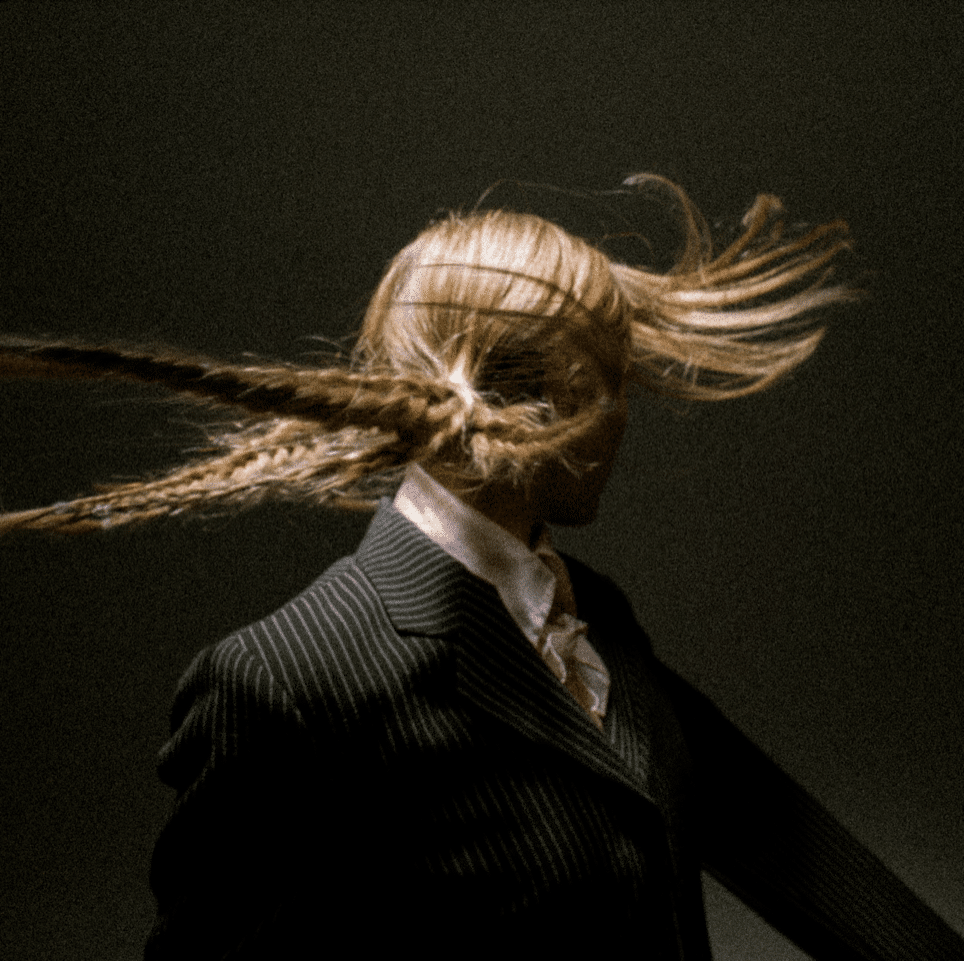
Elvira’s visuals often carry an absurdist, surreal quality that complicates the dreaminess of the music.
But interestingly, she doesn’t necessarily construct those images while songwriting.
The separation is intentional.
She frequently gives collaborators the music without explaining too much.
Then waits.
What did they hear?
What did the song make them see?
“I love that collaboration, and I feel like the end result brings more depth into my world and the music.”
It is a remarkably trusting way of building a visual identity.
Rather than forcing every element of the Elise Elvira universe to originate from Elise Elvira, she allows other imaginations to collide with hers.
The world gets bigger because she doesn’t control every inch of it.
That process mirrors the way she makes music with the small collective surrounding her.
Leave the Ego Outside
Elvira still works with many of the people she met at school.
They’ve grown together.
Watched each other improve.
Watched each other fail.
Watched each other become different artists.
That history creates a particular kind of creative intimacy.
Everyone she works with is also an artist and singer, which means roles don’t need to remain rigid.
Someone isn’t simply the producer.
Another person isn’t exclusively the songwriter.
Ideas can move around.
“We don’t put limiting roles on ourselves.”
There is freedom in working with new people too, and Elvira wants more of that.
But old friends provide something difficult to manufacture professionally.
You can stop performing competence around them.
“Working with close friends allows you not to think too much and to leave the ego out of the room.”
There it is again.
Don’t think too much.
Not because thinking is bad.
Because sometimes thinking becomes the obstacle.
The First Songs Versus the Artist She Is Now
“One Life To Give” belongs to the same evolving chapter that began with “I Need To Sleep” and continued through “I’M DEAD.”
The titles alone suggest someone having an extremely normal time.
But for Elvira, each new single opens another corner of the last few years of her life.
That distinguishes the material from her first project, My Key To Heaven.
Those were essentially the first songs she ever wrote.
She still loves them.
The themes haven’t necessarily disappeared.
But her relationship with craft has changed dramatically.
“I feel way more involved and mature in my craft now.”
That’s an important distinction.
Artistic evolution doesn’t always mean rejecting what you used to care about.
Sometimes you’re asking the same questions with better tools.
Elvira is still sensitive.
Still anxious.
Still interested in the mind.
Still making dreamy music with darkness moving underneath it.
She’s simply more capable of shaping that darkness herself now.
Six Years Is a Long Time to Wait for Permission
From the outside, Elvira’s world is expanding quickly.
She supported Eurovision winner Nemo.
She landed a performance at Way Out West.
Her recent releases have found increasingly substantial audiences.
The team around her has grown.
But her answer about what she wants newly arriving listeners to understand doesn’t focus on any of that.
Instead, she goes backward.
“I released music without a team for six years before finding people who understood what I wanted to do.”
Six years.
That period matters because it dismantles one of the most persistent fantasies surrounding emerging artists: that legitimacy arrives when somebody else notices you.
Manager.
Label.
Agent.
Press.
Industry.
Permission.
Elvira kept going before any of those structures aligned.
And now she’s glad they didn’t arrive sooner.
“I’m so happy it happened that way.”
Why?
Because waiting taught her that the work didn’t require permission to exist.
The people who eventually joined had to understand something she had already been building.
They weren’t there to tell her who Elise Elvira was.
Nobody Is Coming. Start Anyway.
That’s what makes “One Life To Give” feel larger than a song about anxiety.
The same idea appears everywhere.
Nobody is coming to save you.
Nobody is coming to tell you exactly how to write the song.
Nobody is coming to explain the perfect production technique.
Nobody is coming to guarantee that the step beyond the tunnel is safe.
Nobody is coming to hand you a team before you’re allowed to call yourself an artist.
At first, that sounds lonely.
Then you realize what else it means.
You can move.
Elise Elvira spent six years making music before finding the people who understood where she wanted to go.
She learned production partly because she wanted the initial impulse to belong to her.
She teaches young songwriters to trust mistakes.
She works with friends who make it easier to leave ego outside the room.
She makes songs about anxiety without pretending she has defeated it.
And when asked what she wants someone discovering her in 2026 to understand, her answer is almost aggressively welcoming.
“You can do whatever you want.”
Then:
“Everyone is welcome here. If you’re you, you’re cool with me.”
Maybe that’s the destination at the end of the tunnel.
Not a version of yourself who finally has everything figured out.
Just yourself.
Still anxious.
Still uncertain.
Standing on the coastline anyway.
In Conversation With Elise Elvira
MUNDANE: “One Life To Give” feels dreamy on the surface but carries a much heavier emotional undercurrent. What tension were you trying to capture between those two worlds?
ELISE ELVIRA: I think I tried to capture the feeling of seeing yourself in the mirror for the first time in a long time. Realising that you’re the one holding yourself back. There’s nothing or no one who’s going to come and save you. Which is both a hard truth, but also a freeing realisation.
MUNDANE: The song explores ennui, resentment and the feeling of having only one life to figure everything out. How much of it came from your own experience of navigating young adulthood?
ELISE ELVIRA: All of it, I would say. I think it’s impossible not to struggle with your mental health in today’s world.
And I think we all should remind ourselves that this one life might be the only one we get, and that we shouldn’t let ourselves destroy it by giving in to the traps of our own minds. I have to remind myself of that every day.
I don’t think we’ll ever figure everything out, so I try to just live life as it is and take care of the things that matter.
MUNDANE: You co-produced the track yourself. How has becoming more involved in production changed the way you translate emotions into sound?
ELISE ELVIRA: It changed everything for me. When I make the initial ideas myself, I feel grounded in my sound and in what I want to say.
It makes it so much easier for me to invite collaborators into the process when I feel like the core was made from my own pure intuition.
I don’t want to have to explain to anyone at the beginning of the process what an “Elise Elvira” song should sound like, because I never want to make the same thing twice. So having the freedom to set the tone from scratch has made me much more in tune with how I sound and what I want to convey.
MUNDANE: “I Need To Sleep” marked the beginning of this new chapter for you. How does “One Life To Give” push that world further, and where do you feel you’ve evolved since My Key To Heaven?
ELISE ELVIRA: It’s the next step into what I’ve been feeling as a young, sensitive person chasing her dreams. I feel like every new single for this project is going to keep opening up new corners of the last couple of years of my life.
My Key To Heaven was my first ever project, basically the first songs I ever wrote. I still work with the same people, but I feel way more involved and mature in my craft now.
I love that project, though, and I feel like I still write about similar themes, but in a new way.
MUNDANE: The video moves from claustrophobic corridors and masked figures into this stark, open coastline. What does that transition represent to you?
ELISE ELVIRA: It represents the moment when you dare to take a step forward even when you have no idea what’s ahead.
So I guess it represents faith?
MUNDANE: There’s an absurdist, almost cinematic quality to your visual identity. How important are film, surrealism and storytelling outside of music when you’re constructing the Elise Elvira universe?
ELISE ELVIRA: Visuals have always played a big part in me releasing music. It’s not something I have in mind while writing songs, though.
I’ve always had the honour of working with really creative people when it comes to my videos. I usually let them listen to the music without saying too much, just to hear what ideas they get.
I love that collaboration, and I feel like the end result brings more depth into my world and the music.
MUNDANE: Your background spans musical theatre, opera and contemporary pop. What have those very different disciplines taught you about using your voice and building a performance?
ELISE ELVIRA: I think my early days of singing lessons in opera and theatre laid a good foundation when it comes to technique, and also for where my vibrato comes from.
I think production is really what taught me the most about how to use my voice. In the beginning, when I wasn’t very good at the actual production, I would just make all the instruments and beats with my voice.
It taught me what a powerful instrument it is and how many different ways you can use it.
MUNDANE: You’ve also worked as a songwriting coach through Dua Lipa’s Sunny Hill Foundation. Has helping younger artists find their voices changed the way you approach your own songwriting?
ELISE ELVIRA: That was a very cool experience for me. When prepping for it, I remember realizing that I have no guidelines or rules when writing music.
I felt a bit insecure about not having very theoretical tips for them, but I leaned into talking about following their intuition and just creating whatever came to them at that point.
There’s something liberating about being new at something, and the coolest ideas are often lucky mistakes.
It was very inspiring to see them try to not try so much.
MUNDANE: Much of your work is created with a small collective of friends. What does keeping that creative process intimate allow you to do that a larger, more traditional production environment might not?
ELISE ELVIRA: Yes. I love them all so much. We met in school, and we’ve all evolved alongside each other. It’s something special to create art with people who’ve seen you grow and who know you.
Everyone I work with is also an artist and singer, so the collaboration feels so fluid, and we don’t put limiting roles on ourselves.
There’s absolutely something magical about creating things with new people as well, which I want to do too. But working with close friends allows you not to think too much and to leave the ego out of the room.
MUNDANE: Between supporting Nemo, playing Way Out West and releasing more music this year, your world is getting considerably bigger. What do you want people discovering Elise Elvira in 2026 to understand about the artist you’re becoming?
ELISE ELVIRA: I guess I want them to understand that you can do whatever you want.
I released music without a team for six years before finding people who understood what I wanted to do. I’m so happy it happened that way, and I hope my artistry can inspire people to be themselves and not wait for anybody.
Everyone is welcome here.
If you’re you, you’re cool with me.