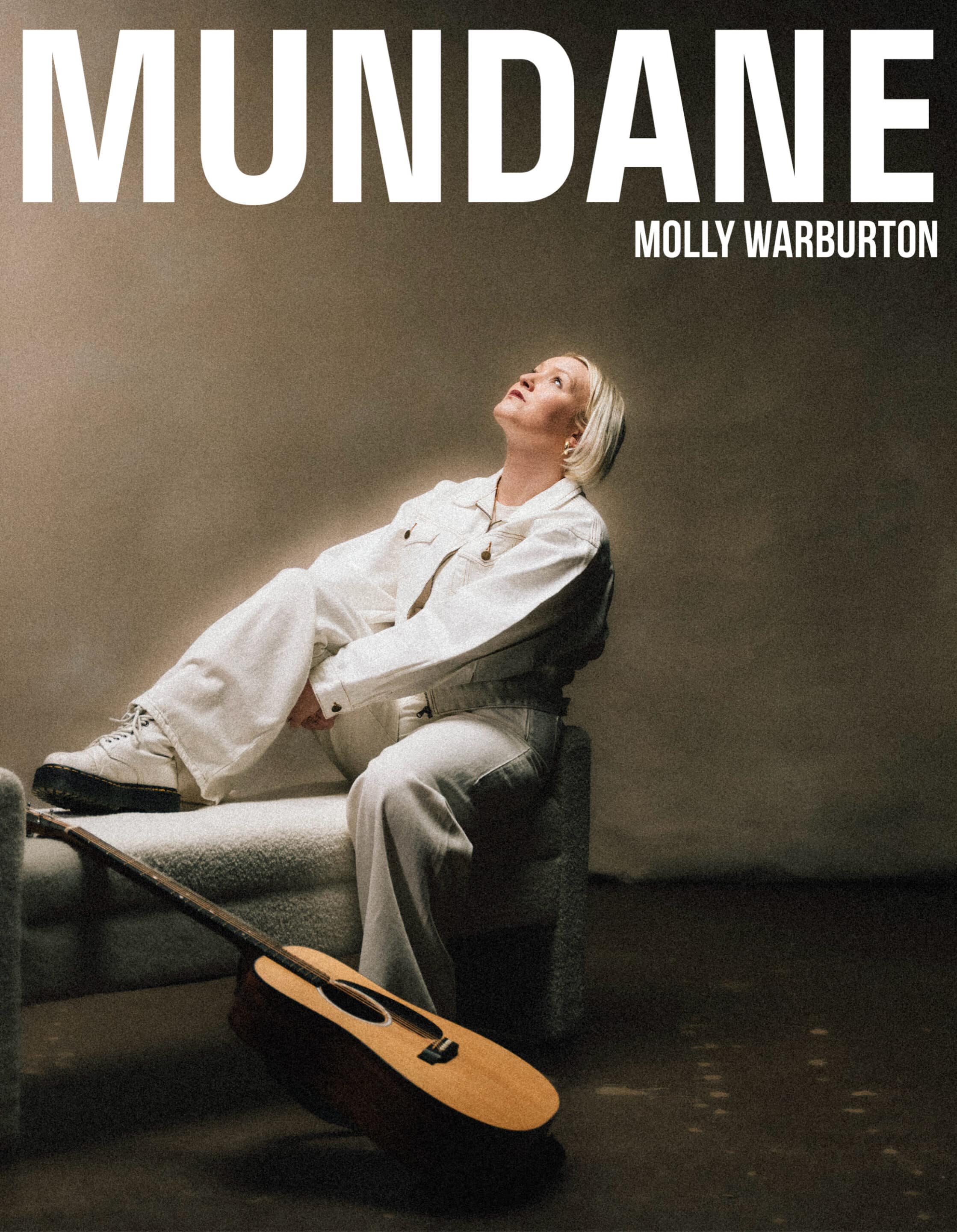
On Eyes Wide Open, the UK alt-pop songwriter stops measuring her life against everybody else’s highlight reel and discovers that success might not arrive as one enormous breakthrough. Sometimes growing up is realizing you’re already living parts of the life you once desperately wanted.
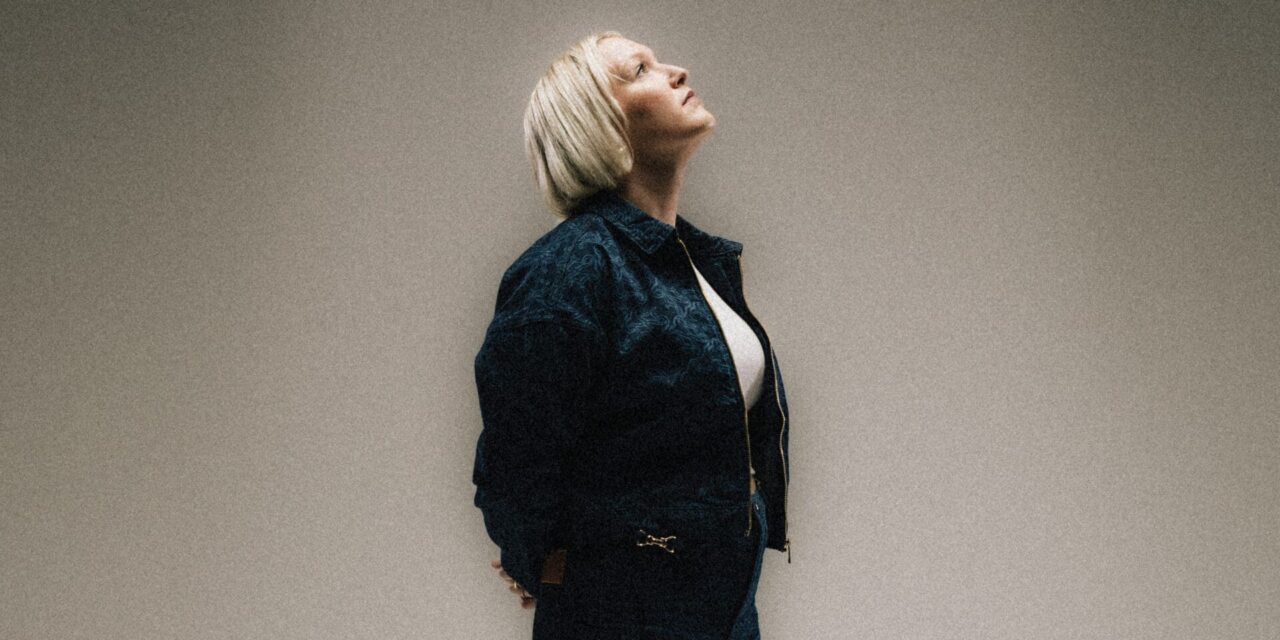
Molly Warburton used to think somebody might eventually tap her on the shoulder.
Congratulations.
You’ve made it.
Presumably there would be some evidence.
The enormous show.
The enormous song.
The enormous announcement.
A moment dividing everything neatly into:
Before.
And:
After.
“I think I imagined there’d be this one massive moment where someone would tap me on the shoulder and go, ‘Congratulations, you’ve made it.’”
Nobody came.
Which turns out to be fine.
Because somewhere between the tiny rooms, support tours, festivals, ridiculous drives, heavy equipment, songs, relationships, disappointments and the endless psychological torture device otherwise known as watching everybody else’s career online, Warburton realized something.
She already has a career.
Not the hypothetical future career.
The one happening now.
“Sometimes you have to remind yourself that you’re already living bits of the life you used to dream about.”
That realization sits at the center of Eyes Wide Open, Warburton’s five-track EP about the slow and occasionally humiliating process of discovering that perhaps everybody else shouldn’t get a vote on whether you’re doing your life correctly.
Unfortunately, Everyone Else Seems to Be Doing Amazing
Comparison has always existed.
Social media simply industrialized it.
Someone has more streams.
Someone gets the festival slot.
Someone announces the tour.
Someone signs something.
Someone releases something.
Someone posts the professionally photographed evidence that their career is going extremely well at precisely the moment you’re eating something depressing in a motorway service station wondering what you’re doing with your life.
“Before you know it, you’re measuring your whole life against everyone else’s highlight reel.”
Warburton knows the cycle.
Especially as a musician.
There wasn’t one cinematic revelation that broke it.
“I don’t think there was one massive lightbulb moment.”
It was age.
Experience.
Exhaustion, perhaps.
Eventually the question changed from:
Am I doing this right?
To:
Am I actually happy?
“I just got to a point where I realised I was spending far too much energy worrying about whether I was doing life ‘right,’ rather than whether I was actually happy.”
That’s Eyes Wide Open.
Ambition Survived
The danger with talking about escaping comparison is that it can very quickly become a sermon about wanting less.
Warburton does not want less.
She would like to make that extremely clear.
“I’m still ambitious and I still care massively about what I do.”
She wants bigger tours.
More festivals.
Albums.
Glastonbury.
She wants to find out how far this can go.
The difference is that those desires no longer have to function as evidence that the present isn’t good enough.
Ambition can point forward without invalidating everything behind you.
That’s harder than it sounds.
Especially in an industry where every achievement seems designed to immediately produce another question.
Great song.
What’s next?
Great show.
What’s next?
Great EP.
What’s next?
Warburton still asks that question.
She’s simply becoming better at occasionally shutting it up.
She Was Hiding Behind Her Own Lyrics
Warburton calls Eyes Wide Open the most “me” music she’s made.
Which raises an obvious question:
Who was making the other stuff?
“Probably myself, to be honest!”
She has always considered herself an honest songwriter.
But honesty has levels.
You can tell the truth while carefully controlling which truth gets access to the microphone.
“Sometimes you write a song and you hide behind a lyric a little bit.”
This time, Warburton wanted less cover.
The resulting songs contain insecurity.
Romantic obsession.
Anger.
Confidence.
Questionable decisions.
All the good stuff.
The musical approach changed too.
Warburton stopped worrying about whether all her instincts could coexist neatly inside one genre description.
She likes enormous guitars.
Big vocals.
Synths.
Pop choruses.
Quiet vulnerability.
So:
“Why can’t all of that exist together?”
Good question.
Apparently an EP Can Write Its Own Plot
There is a remarkably coherent emotional arc across Eyes Wide Open.
It begins with “Am I The One For You?”
Then:
“Better Me.”
“Hopelessly Addicted.”
“Shout Louder.”
And finally:
“Dancing with Devils.”
It sounds suspiciously planned.
It wasn’t.
“I didn’t sit down with a whiteboard going, ‘Right, track one: self-doubt. Track two: personal growth.’”
Warburton laughs at the idea.
The songs were written at different points.
Only when she started assembling them did the narrative reveal itself.
“It basically documented me growing up a bit without me realising I was doing it.”
That makes the progression considerably more convincing.
The EP doesn’t manufacture personal growth retrospectively.
It accidentally recorded it.
Am I Enough? Please Respond at Your Earliest Convenience.
Even the first two titles reveal the shift.
Am I The One For You?
The question is outward.
Tell me.
Do you want me?
Am I enough?
What do you think?
Define me.
Then:
Better Me.
Something begins moving inward.
Someone else can help you recognize parts of yourself.
A relationship can encourage growth.
Another person can see qualities you haven’t learned to recognize yet.
But eventually, Warburton says, the belief has to belong to you.
“Ultimately you’ve got to believe those things yourself.”
The EP gradually stops requesting permission.
“Actually, this is who I am.”
Four words.
Approximately 30 years of work.
Everybody Lied About the Timeline
Warburton also had to abandon another extremely persistent idea.
There is a schedule.
By this age, do this.
By that age, achieve that.
Play this venue.
Reach this milestone.
Become this successful.
Then she reached 30.
“And realise nobody actually knows what they’re doing anyway!”
One of adulthood’s more useful discoveries.
The people who appear to have figured everything out are frequently just better at formatting announcements.
Warburton’s relationship with success changed alongside that realization.
The imaginary finish line became less compelling.
Success became more ordinary.
Making music for a living.
Playing shows.
Traveling.
Meeting people because of songs.
Watching something written privately become meaningful to a stranger.
Those things are less dramatic than being tapped on the shoulder by the Success Committee.
They’re also real.
Love Doesn’t Require a Performance Review Either
The same shift applies to relationships.
Warburton has learned that love shouldn’t feel like a continuous audition.
“You shouldn’t constantly have to prove that you’re worth loving or worth having around.”
That’s another form of external validation.
Do enough.
Be enough.
Perform correctly.
Maybe they’ll keep you.
Warburton’s new metric is considerably simpler.
“The right people make you feel more like yourself, not less.”
That line could almost summarize the entire EP.
The right relationship.
The right career.
The right creative environment.
The right life.
Maybe they all have something in common.
You become more recognizable to yourself inside them.
Not less.
Molly Warburton Has Started Saying No
Warburton describes herself as naturally easy-going.
She doesn’t enjoy unnecessary confrontation.
Historically, that sometimes meant silence was easier.
Don’t upset anyone.
Don’t make the situation difficult.
Don’t object.
She’s getting worse at that.
Or better, depending on whom you ask.
“Everything!” she says when asked what she’s become more willing to speak up about.
“Probably to everyone’s annoyance.”
Now, when something doesn’t sit right:
“Actually, no, I’m not happy with that.”
This has entered her creative life too.
She trusts her instincts more.
If something doesn’t feel right for Molly Warburton the artist, Molly Warburton the person is increasingly willing to say so.
That attitude powers “Shout Louder.”
Being underestimated.
Talked down to.
Encouraged to make yourself smaller.
Eventually:
“Absolutely not.”
The Volume Was Always There
It makes sense that Warburton’s newfound assertiveness would emerge through big music.
Her influences include KT Tunstall, Fleetwood Mac and Florence + The Machine—artists whose work demonstrates that personal writing doesn’t have to remain sonically small.
Warburton wants intimacy and enormity simultaneously.
“I want people to listen on their headphones and feel like I’m talking directly to them, but then come to a gig and have those same songs absolutely go off.”
That’s the ideal transformation.
Private thought.
Public release.
The lyric begins inside one person.
Eventually an entire room screams it back.
“There’s nothing better than hearing a room sing something you’ve written back at you.”
For Warburton:
“It’s mad!!”
Two exclamation points necessary.
Onstage, She Stops Overthinking
There is also an interesting reversal between Warburton the songwriter and Warburton the performer.
“I think I’m probably the most confident version of myself when I’m onstage.”
The stage might seem like the place where self-consciousness should become unbearable.
People are literally looking at you.
Instead, Warburton experiences freedom.
“All the overthinking disappears and I’m just completely in it.”
Years of gigging have made that version of herself part of the songwriting process.
She now knows what a song might become in a room.
Where it can expand.
What an audience might shout.
Where intimacy can suddenly become communal.
The stage isn’t simply where the song goes after it’s finished.
It increasingly influences what the song wants to become.
Please Stop Dancing With the Devil
Then there’s “Dancing with Devils.”
Warburton likes the metaphor because it doesn’t pretend humans immediately stop doing something simply because they’ve identified it as terrible.
Sometimes you see the red flag.
Recognize the red flag.
Analyze the red flag.
Perhaps discuss the red flag extensively with your friends.
Then:
“Yeah, go on then.”
This is known technically as being a person.
“We’re all guilty of it!”
The song isn’t necessarily about eradicating every dark or messy impulse.
Warburton is more interested in recognition.
Why do I keep choosing this?
Why does this person feel familiar?
Why do I return to this situation?
Why do I know exactly how this ends and keep beginning it anyway?
“Once you can actually see the pattern, you’ve got a much better chance of changing it.”
Eyes open.
Again.
The Breakthrough Was the Career
Warburton has been building her audience through years of performing.
She’s played tiny rooms.
Larger venues.
Festivals.
Support tours.
Driven unreasonable distances.
Carried unreasonable quantities of equipment.
And, like most artists doing that work, occasionally wondered when the cinematic portion of the career was scheduled to begin.
“Come on, when’s the massive breakthrough happening then?”
But the gradual build changed her.
“I’m actually really grateful I’ve had to build it gradually.”
Because now she doesn’t want a moment.
“I want an actual career.”
That’s a crucial distinction.
A moment can happen to you.
A career is something you learn how to sustain.
The endless gigs weren’t what happened before the story.
They were the story.
One Million Streams Is Still Not an Answer
Warburton has accumulated more than a million streams, earned editorial playlist support, received radio backing and played festivals including Kendal Calling, The Great Escape and Highest Point.
Those are achievements.
They’re also incapable of permanently answering the question:
Am I successful yet?
No number can.
Because the number moves.
A million becomes two.
The room gets bigger.
Then you want the next room.
The festival moves higher up the list.
The goalpost is extremely portable.
That’s why Eyes Wide Open is ultimately less interested in achievement than perspective.
Warburton hasn’t stopped wanting things.
She’s stopped asking future achievements to retroactively validate her present.
The Person Who Started These Songs Couldn’t See It Yet
At the end of the EP’s emotional journey, Warburton can identify the thing she understands now that she didn’t when these songs began.
“I don’t need everyone’s approval.”
Simple.
Almost irritatingly simple.
Also:
“It’s probably taken me about 30 years to work that one out!”
She knows her people better now.
Her relationships.
What she wants from music.
What kind of artist she wants to become.
And perhaps most importantly, she’s getting better at remaining inside whatever is actually happening.
Not immediately converting every experience into preparation for the next one.
“I’m much better at enjoying what’s actually happening instead of constantly thinking, ‘Okay, but what’s next?’”
The ambition remains.
The future remains.
The uncertainty definitely remains.
She isn’t presenting Eyes Wide Open as enlightenment.
“I definitely don’t have life figured out.”
Nobody does.
That’s not the point.
Eyes Wide Open
Maybe clarity isn’t knowing exactly where you’re going.
Maybe it’s finally recognizing whose opinion you’ve been using as the map.
The industry.
Other artists.
Partners.
Streaming numbers.
Festival posters.
Timelines.
People online.
Everyone else’s highlight reel.
For years, Warburton looked outward for answers.
The EP literally begins there:
Am I The One For You?
Tell me who I am.
Tell me if I’m enough.
Tell me whether I’m succeeding.
Tell me if I’m doing this correctly.
Five songs later, the answer isn’t some grand declaration of absolute confidence.
It’s smaller.
More believable.
More useful.
She trusts herself more.
She speaks up.
She recognizes destructive patterns.
She understands success as something that can be happening before you’ve declared yourself successful.
She knows the right people should make her feel more like herself.
She knows that a gradual career is still a career.
And she knows that living exclusively for the next milestone is a remarkably effective way to miss the life you’re currently building.
Eyes Wide Open isn’t Molly Warburton announcing that she finally has all the answers.
It’s Molly Warburton realizing she was asking too many people the question.
“I’ve stopped looking at myself through everybody else’s eyes.”
For the first time, she’s looking through her own.
In Conversation With Molly Warburton
Eyes Wide Open traces a journey from looking for validation in other people to finding confidence within yourself. Was there a particular moment when you realised you had been seeing yourself through other people’s eyes rather than your own?
I don’t think there was one massive lightbulb moment. It was more getting a bit older and thinking, why do I actually care so much what everyone thinks? Especially in music, you’re constantly comparing yourself. Someone’s got more streams, someone’s playing a bigger festival, someone’s just announced something amazing and before you know it, you’re measuring your whole life against everyone else’s highlight reel.
I think I just got to a point where I realised I was spending far too much energy worrying about whether I was doing life “right”, rather than whether I was actually happy. That’s really where Eyes Wide Open comes from. I’m still ambitious and I still care massively about what I do, but I’m much better at trusting my own gut now.
You’ve described this as the most honest and most “you” music you’ve written. What were you previously protecting, filtering, or perhaps not yet ready to understand about yourself?
Probably myself, to be honest! I’ve always been an honest songwriter, but I think there were still bits of me I was scared to properly show. Sometimes you write a song and you hide behind a lyric a little bit. With these songs I didn’t really want to do that anymore.
There’s insecurity, falling completely head over heels, anger, confidence, making bad decisions, all the good stuff! Musically I stopped thinking so much about what box I was supposed to fit into. I love massive guitars, big vocals, synths, proper pop choruses, quieter vulnerable moments, so why can’t all of that exist together? I think that’s why this EP feels the most like me. I wasn’t trying to make myself easier to define.
Did you deliberately construct the emotional progression of the EP?
Not at all, which I actually love. I didn’t sit down with a whiteboard going, “Right, track one: self-doubt. Track two: personal growth.” That would be very unlike me!
The songs were written at different points, and then when we started putting the EP together I suddenly realised they were telling this story. You go from “Am I The One For You?”, which is literally questioning myself and asking somebody else for an answer, through “Better Me” and “Hopelessly Addicted,” then you get to “Shout Louder” where there’s this real change in attitude, and finally “Dancing with Devils.” It basically documented me growing up a bit without me realising I was doing it.
What beliefs about love, success or yourself have you had to unlearn?
That there’s a timeline for everything. I definitely used to think, “By this age I should have done this, I should be playing here, I should have achieved that…” And then you get to 30 and realise nobody actually knows what they’re doing anyway!
I’ve also completely changed how I look at success. When I was younger, I think I imagined there’d be this one massive moment where someone would tap me on the shoulder and go, “Congratulations, you’ve made it.” Obviously, that’s not really how it works.
Now success is getting to make music for a living, playing shows, travelling around, meeting people through music and having people genuinely connect with songs I’ve written.
And with relationships, I’ve learnt that you shouldn’t constantly have to prove that you’re worth loving or worth having around. The right people make you feel more like yourself, not less.
Does the shift between “Am I The One For You?” and “Better Me” capture the transformation at the heart of the EP?
Yeah, completely, even just those two titles say quite a lot. “Am I The One For You?” is basically going, “Do you want me? Am I enough? Tell me what you think of me.” Then “Better Me” starts bringing it back to yourself.
Someone can absolutely bring out the best in you and help you see things in yourself that maybe you couldn’t see before, but ultimately you’ve got to believe those things yourself. I think the EP gradually stops asking everyone else for permission and starts going, “Actually, this is who I am.”
What have you become more willing to speak up about as you’ve grown into this version of yourself?
Everything! Probably to everyone’s annoyance.
I’m naturally quite easy-going and I hate unnecessary confrontation, so I’ve definitely been guilty of keeping quiet because it’s easier or because I don’t want to upset anyone. I’m much better now at going, “Actually, no, I’m not happy with that.”
That’s happened creatively as well. I trust myself so much more now. If something doesn’t feel right for me as an artist, I’m much more comfortable saying it. That’s a massive part of “Shout Louder.” It’s that feeling of being talked down to, underestimated or made to feel like you should make yourself smaller. Eventually you’re just like… absolutely not.
Is “Dancing with Devils” about walking away from destructive patterns, or accepting the darker parts of ourselves?
A bit of both.
I love the idea of “dancing” with your devils because sometimes you know something is a terrible idea and you’re still like… yeah, go on then. We’re all guilty of it! You can see every red flag going and somehow convince yourself it’s fine.
And I think there’s something really human about that. The song isn’t necessarily saying you have to completely get rid of the darker, messier sides of yourself. It’s more about recognising them and understanding why you’re drawn back to certain people, situations or habits. Because once you can actually see the pattern, you’ve got a much better chance of changing it.
How much does the person you become onstage influence the person writing the songs?
I think I’m probably the most confident version of myself when I’m onstage. There’s something about playing live where all the overthinking disappears and I’m just completely in it and because I’ve gigged so much, I definitely think about that when I’m writing now.
KT Tunstall has always been a huge inspiration for me, and I love artists like Fleetwood Mac and Florence + The Machine because they can write something really personal and vulnerable, but then you hear it live and it becomes enormous.
That’s what I want from my music. I want people to listen on their headphones and feel like I’m talking directly to them, but then come to a gig and have those same songs absolutely go off. There’s nothing better than hearing a room sing something you’ve written back at you. It’s mad!!
Has building your career gradually changed your definition of success?
Massively.
I’ve been doing this a long time and I’ve definitely had moments where I’ve thought, “Come on, when’s the massive breakthrough happening then?” But I’m actually really grateful I’ve had to build it gradually.
I’ve played tiny rooms, bigger venues, support tours, festivals, I’ve driven ridiculous distances, carried far too much gear around and probably played to every size crowd imaginable, and all of that has made me realise I don’t just want one big moment. I want an actual career.
Obviously I’ve still got massive goals. I want bigger tours, more festivals, Glastonbury, albums, I want to see how far I can take it. Success now is also being able to say that music is my life and my job. That’s something younger me desperately wanted, and sometimes you have to remind yourself that you’re already living bits of the life you used to dream about.
What can you see now that the person who began writing these songs couldn’t see yet?
That I don’t need everyone’s approval. Which sounds really simple, but it’s probably taken me about 30 years to work that one out!
I know myself much better now. I know who my people are, what relationships matter to me, what I want from music and what kind of artist I want to become. I’m also much better at enjoying what’s actually happening instead of constantly thinking, “Okay, but what’s next?”
I still have loads I want to achieve and I definitely don’t have life figured out—I don’t think anyone does—but I think that’s the whole point of Eyes Wide Open. It’s not me saying, “I’ve cracked it, here’s the answer.” It’s more like I’ve stopped looking at myself through everybody else’s eyes. I’m finally looking through my own.