There is a particular kind of loneliness that comes with constantly looking toward the horizon.
Not necessarily because you’re alone, but because you’re so captivated by what lies ahead that you sometimes forget to appreciate what’s standing right beside you.
The next destination.
The next opportunity.
The next achievement.
The next version of yourself.
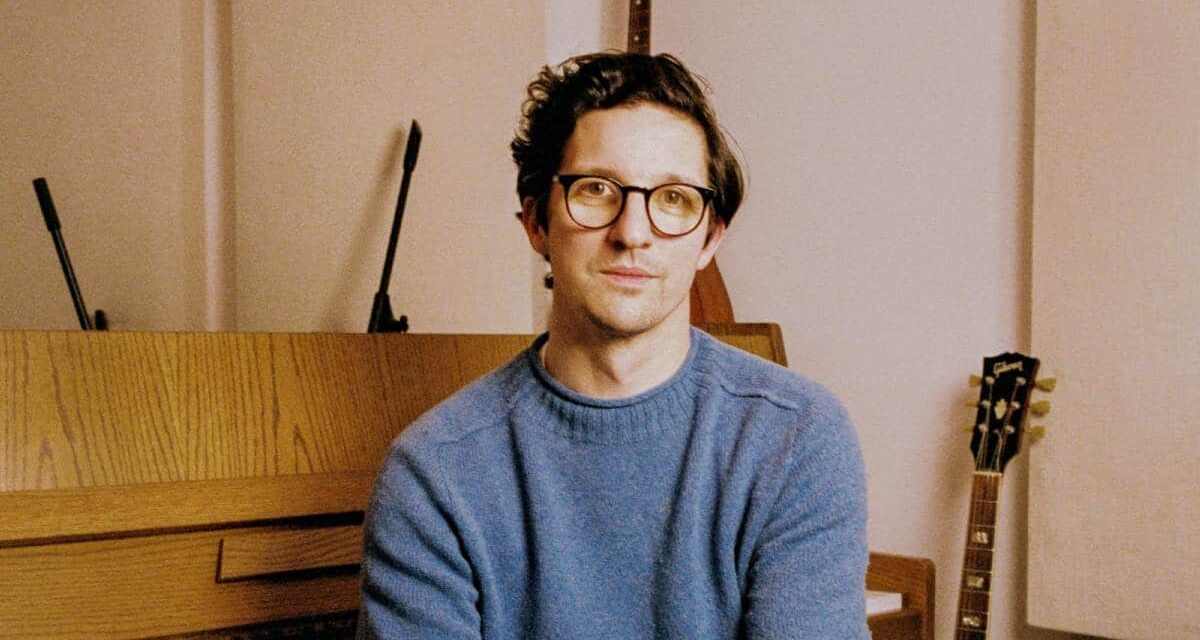
For years, British singer-songwriter Dan Croll lived somewhere between those possibilities, building a career that took him from Stoke-on-Trent to Liverpool, across international stages, and eventually to Los Angeles.
Along the way, he accumulated the kind of accomplishments that most emerging musicians would consider extraordinary: more than 100 million streams, major touring opportunities, prominent commercial syncs, and recognition from some of Britain’s most influential music publications and radio stations.
His breakthrough track “From Nowhere” became part of Apple’s global iPhone 6 campaign. His music found its way into projects associated with FIFA, Grand Theft Auto, Burberry, and Paul Smith. He toured alongside artists including Imagine Dragons, Bastille, Bombay Bicycle Club, HAIM, London Grammar, and CHVRCHES.
By conventional industry standards, Dan Croll had already won.
But somewhere between the accomplishments, the disappointments, and the constant uncertainty of making a living through music, his understanding of success began to change.
And perhaps nowhere did that transformation become clearer than during his final month living in Los Angeles.
With his departure approaching, Croll borrowed a friend’s car and set off across California and the American West, determined to visit the places he had spent years imagining.
The Pacific Coast Highway.
Yosemite.
The Grand Canyon.
The towering redwoods.
For someone who grew up in Stoke-on-Trent, the experience was extraordinary.
But as his time in America came to an end, he realized something unexpected.
The places he had spent so much time dreaming about weren’t necessarily what he would miss most.
The people were.
That realization became “Most of All,” a deeply affecting single from his forthcoming album Winning Streak, arriving October 9.
And in many ways, it also became the emotional key to understanding the entire record.
The Things We Travel For Aren’t Always the Things We Remember
Travel has an almost irresistible relationship with romanticism.
We imagine that certain places will change us.
That standing beneath a mountain, driving along a coastline, or arriving in a city we’ve dreamed about will somehow reveal something essential about who we are.
Sometimes those experiences do change us.
But the meaning we attach to them often becomes clearer only after we’ve left.
For Croll, the American landscape carried a particular fascination.
“I still think back to those moments, as a lad from Stoke-on-Trent, suddenly being amongst the redwoods, inside the Grand Canyon, sailing the California coastline, it was immense.”
Even the ordinary geography of Los Angeles felt remarkable.
The mountains on the horizon.
The vastness of the landscape.
The sensation of living somewhere that once existed only in his imagination.
“My gaze was always in the distance.”
It’s a revealing description.
Because while Croll was looking outward, something equally significant was developing much closer to home.
Friendships.
Community.
The relationships that transformed an unfamiliar city into somewhere he belonged.
“I don’t think it was until I was approaching the end of my time in LA, pacing up and down my flat, that I realised right under my nose was the most special thing: my friends.”
That realization became the emotional foundation of “Most of All.”
The song begins with images of travel and discovery but gradually reveals that the landscapes are secondary to the people who gave those experiences meaning.
“I’d miss you most of all” becomes its central truth.
It’s a sentiment that could easily become overly sentimental.
But Croll approaches it with the precision of a songwriter who understands that emotional impact often comes from recognizing something ordinary that we’ve spent years overlooking.
Leaving Los Angeles Wasn’t a Defeat. It Was Proof He Had Taken a Chance.
For someone who describes himself as naturally cautious, moving to Los Angeles represented an unusually significant gamble.
Croll doesn’t consider himself a particularly impulsive person.
He prefers logic.
Planning.
A degree of certainty.
But his decision to relocate to California challenged those instincts.
“That sudden move to LA caught even myself off guard.”
The experience forced him to build a life without the familiar structures that had previously supported him.
He arrived without an established community.
Without guaranteed professional opportunities.
Without knowing exactly what the move would become.
And over time, he created something meaningful.
Friendships.
Collaborations.
New creative possibilities.
A deeper connection to the music that had inspired him in the first place.
“When I look back now on my time in America, there is just an immense sense of pride.”
That word—pride—appears repeatedly when Croll discusses his recent work.
But it’s rarely connected to external recognition.
Instead, it describes the satisfaction of doing something difficult.
Of working through uncertainty.
Of discovering that he was capable of more than he had previously believed.
“From not knowing anybody to building a community and deep friendships. From not having any work to discovering new avenues and opportunities.”
For Croll, returning to Britain doesn’t diminish the significance of his American chapter.
It gives him an opportunity to understand what that chapter actually meant.
And perhaps most importantly, it has helped him reconsider his relationship with his own music.
The Imposter Syndrome of Someone Who Never Planned to Become a Musician
It’s easy to assume that professional success eventually produces a stable sense of artistic legitimacy.
A certain number of streams.
A major tour.
An acclaimed album.
A prestigious award.
Surely, at some point, the evidence becomes overwhelming enough to silence the feeling that you don’t belong.
But creative identity rarely develops that neatly.
Croll admits that despite his accomplishments, he has spent much of his career wrestling with uncertainty.
“There’s been a general sense of imposter syndrome with myself and my music.”
Part of that insecurity comes from the unusual way his career began.
Music wasn’t originally a carefully constructed professional ambition.
His decision to study it at university was relatively spontaneous.
And only a few years later, he found himself experiencing commercial success.
“Music was never the career plan; it was frantic and last-minute deciding to study it at university, and three years later, upon leaving, I found success.”
That rapid transition left him feeling as though he was constantly catching up with a career that had developed before he fully understood it.
“I’ve been on the back foot and never truly certain since.”
His years in Los Angeles helped change that relationship.
Living closer to the musical traditions and artists who had inspired him gave him a stronger sense of connection to his own work.
The city offered experiences worth writing about.
Collaborations that challenged him.
And an audience with whom he felt particularly connected.
The move didn’t necessarily eliminate insecurity.
But it gave him something that industry achievements alone hadn’t provided.
A greater sense of ownership over his creative life.
“Most of All” and the Beauty of an Emotional Crescendo
Croll’s songwriting has long been defined by attention to detail.
But “Most of All” takes that precision into particularly ambitious territory.
The song begins with classical guitar and voice.
The arrangement is intimate.
Almost conversational.
As the narrative develops, the production gradually expands, introducing plucked bass, cascading piano, vibraphone, drums, and layered strings.
By the end, the instrumentation has grown into something considerably more orchestral.
The progression mirrors the emotional revelation at the heart of the lyrics.
A personal reflection gradually becomes something expansive.
For Croll, the inspiration came from an artist whose relationship with storytelling and orchestration remains unmistakable.
Frank Sinatra.
“I love how his songs are so centred around people and places.”
What fascinates Croll about Sinatra isn’t simply the vocal delivery.
It’s the way the arrangements create emotional scale.
The instruments don’t merely accompany the story.
They help tell it.
“I find them so visual, and I think a big part of that is the beauty and elegance of the instrumentation and production around them.”
With “Most of All,” Croll wanted to capture a similar sense of emotional progression.
“The vast majority of his songs build towards this emotional eruption at the end, and that’s what I wanted for ‘Most of All’.”
The arrangement becomes a way of translating realization into sound.
As the significance of friendship becomes clearer, the music grows richer.
The strings expand.
The piano and vibraphone intertwine.
And the song reaches its emotional peak not through dramatic lyrical revelation alone, but through the accumulation of musical detail.
It’s an approach that treats production as an extension of storytelling.
And in Croll’s hands, that relationship feels particularly deliberate.
How One Violin Became an Orchestra
One of the most striking details about “Most of All” is how Croll created its orchestral scale.
Rather than recording a full string ensemble, he built the arrangement by repeatedly layering a single violin performance.
It’s a technique born partly from limited resources.
But the result became central to the track’s character.
The layered strings create warmth and breadth without completely losing the intimacy of the original recording.
And for Croll, the process offered another kind of satisfaction.
Not simply because the arrangement worked.
But because he had managed to achieve something ambitious within the limitations available to him.
“There’s something about working with limitations and somewhat against the odds that gives me such a proud feeling once I come out the other end having conquered what I set out to do.”
It’s an interesting perspective in an industry where production value is often associated with increasingly elaborate resources.
Bigger studios.
Larger teams.
More equipment.
More expensive arrangements.
Croll’s experience suggests that limitations can sometimes produce a different kind of creative clarity.
When resources are restricted, every decision becomes more consequential.
Every instrument needs a purpose.
Every layer must justify its presence.
And the satisfaction of creating something expansive from something modest becomes part of the emotional relationship with the work.
“I want it to feel as good as I did once we’d finished it.”
That statement captures something important about Croll’s current approach to music.
The process matters.
Not simply the result.
Learning to Do Less Before Learning to Do More
The creative discipline behind Winning Streak didn’t emerge overnight.
Croll traces an important shift in his approach to recording back to his third album, Grand Plan.
For that project, he restricted himself to a four-track tape player.
The limitation forced him to abandon some of the elaborate production possibilities that had previously been available.
Instead, he had to concentrate on the fundamental elements of each song.
The melody.
The structure.
The performance.
The emotional core.
It became an exercise in restraint.
And that experience shaped the philosophy behind Winning Streak.
But this time, Croll wasn’t interested in simply repeating the restrictions.
He wanted to build on what they had taught him.
“I allowed myself the layers, but each one had to serve a purpose.”
That principle extended beyond individual tracks.
He wanted the entire album to feel coherent.
As though the songs belonged to the same physical and emotional environment.
“I wanted it to feel like it was recorded in a day, with the setup left there to be used as and when.”
There’s an intimacy in that idea.
A record that feels lived in.
A collection of songs that seem to share the same room.
Not because they sound identical, but because they emerge from a consistent creative world.
And for the first time, Croll took responsibility for producing and engineering the entire album himself.
The process required new technical knowledge.
Online tutorials.
Manuals.
Trial and error.
What might have seemed like a limitation became another opportunity for growth.
And the resulting record carries the marks of that care.
What America Taught Him About Collaboration
Before moving to Los Angeles, Croll describes his creative process as relatively solitary.
He associates some of that tendency with his own personality.
And some with a broader British cultural attitude toward artistic independence.
A certain stubbornness.
A desire to protect the creative process.
The romantic image of the artist struggling alone until something meaningful emerges.
“There’s that slight stubbornness to do it yourself, feeling the need to be the tortured artist battling with ourselves to the death for a body of work.”
In America, he encountered a different attitude.
One that felt more outward-looking.
More collaborative.
More willing to invite other people into the creative process.
He found that openness transformative.
“I think it did me a world of good to indulge in that outwardness.”
The experience changed how he thinks about songwriting.
Rather than treating collaboration as a potential threat to artistic identity, he began recognizing how shared experiences could enrich the work.
“I feel my best songs have now come from those shared experiences.”
It’s a lesson he hopes to carry back to Britain.
And there’s an interesting tension between that realization and the fact that Winning Streak is his first entirely self-produced and self-engineered album.
But the two ideas aren’t necessarily contradictory.
Creative independence doesn’t have to mean emotional isolation.
You can retain control over how a record is made while allowing the experiences and perspectives of other people to shape what the record becomes.
For Croll, that balance seems increasingly important.
The Problem With Romanticizing the Past
“Most of All” is a song built around memory.
But memory is complicated.
It rarely preserves experiences exactly as they happened.
Instead, it edits.
Selects.
Softens.
Intensifies.
And occasionally transforms ordinary moments into something almost mythological.
For artists, nostalgia can be a particularly powerful creative resource.
It offers images.
Emotions.
Stories.
A sense of distance that makes experiences easier to examine.
But it can also become a trap.
When asked how he avoids romanticizing the past so completely that the present disappears, Croll doesn’t attempt to offer an elegant solution.
“Honestly, I still haven’t figured that out.”
He admits that nostalgia has become a recurring difficulty.
“My fault, and it has been for a long time, is that I constantly romanticise the past and spend next to no time in the present.”
It’s a remarkably candid admission.
Particularly from an artist whose recent music is so deeply concerned with the significance of memory.
The same instinct that allows Croll to write movingly about places and relationships can also make it difficult to appreciate the life unfolding around him.
And perhaps that’s part of what gives Winning Streak its emotional tension.
The album isn’t simply celebrating what came before.
It’s also examining the difficulty of learning how to live after it.
How to appreciate a meaningful chapter without becoming permanently attached to it.
How to acknowledge loss without allowing it to define everything that follows.
And how to recognize that the present will eventually become another past worth remembering.
A Winning Streak That Doesn’t Require Winning
The title Winning Streak initially suggests momentum.
Success.
A sequence of achievements.
The feeling that everything is finally going according to plan.
But Croll’s understanding of the phrase is considerably more complicated.
Over the course of his career, he has experienced major professional accomplishments.
And he is genuinely grateful for them.
But those achievements have existed alongside repeated setbacks.
Disappointments.
Uncertainty.
The constant need to adapt to an industry that rarely offers stability.
“I’ve had a brilliant career. I’ve experienced more than the vast majority of musicians get to experience, and I’m incredibly grateful for it all.”
Yet he also describes a career marked by the need to recover from one challenge after another.
“Since the very beginning, it’s been blow after blow, and life has become about dealing with them, getting back up and just carrying on.”
That experience has fundamentally changed what winning means to him.
It’s no longer necessarily about reaching the next milestone.
Or recreating the commercial success of an earlier release.
Or maintaining a particular level of visibility.
Sometimes winning simply means continuing.
“Winning is now just continuing forward.”
But Croll adds another important distinction.
It’s also about accepting that the direction of that progress might change.
An artist’s career evolves.
Audiences shift.
Styles develop.
Commercial fortunes rise and fall.
And the life that once seemed desirable might no longer be the life that feels meaningful.
“Not only that, but being OK with the new ‘forward’.”
That willingness to redefine progress is perhaps the most significant idea behind the album.
Because resilience isn’t simply the ability to keep pursuing the same goal indefinitely.
Sometimes it’s the ability to recognize when the goal itself needs to change.
The Quiet Victory of Holding Your Own Record
After more than 100 million streams and years of international touring, Croll has developed a surprisingly simple understanding of what feels meaningful.
Releasing music.
Actually finishing something.
Allowing it to exist outside his own creative process.
And, ideally, being able to hold it in his hands.
“Just getting a song out there is the most meaningful thing I can do right now.”
It’s a perspective that feels almost countercultural in an industry obsessed with quantifiable success.
Streaming numbers.
Playlist placements.
Social engagement.
Ticket sales.
Algorithmic visibility.
Those measurements can be useful.
But they don’t necessarily capture the emotional experience of creating something.
For Croll, the physical object offers a different kind of satisfaction.
“Getting to hold a vinyl of your work? Now that’s a good feeling.”
The ritual matters.
Placing the record on a turntable.
Listening to the music in sequence.
Taking time to experience something that required months, or perhaps years, of creative work.
It’s a moment that doesn’t depend on anybody else’s approval.
And unlike the fluctuations of commercial success, the existence of the record itself is permanent.
“Success comes and goes, but that special moment of your music being out in the world is forever, and it’s priceless.”
Perhaps that’s the clearest expression of his new philosophy.
Success is temporary.
But making something meaningful remains meaningful even after the attention moves elsewhere.
Letting Go of the Artist He Thought He Had to Be
As Croll prepares to release Winning Streak, he finds himself reconsidering some of the habits that have shaped his creative life.
Stubbornness.
Perfectionism.
The tendency to impose expectations on experiences that can’t always be controlled.
These qualities have undoubtedly contributed to his meticulous approach to songwriting.
But they’ve also created pressure.
And after years of navigating an unpredictable industry, he’s becoming increasingly interested in what might happen if he loosened his grip.
“I’m ready to leave behind stubbornness, instead being open to everything and everyone.”
That openness extends to the imperfections that inevitably emerge during the creative process.
Rather than treating every flaw as something that must be eliminated, Croll wants to become more comfortable recognizing the beauty that can exist within it.
“I’m ready to leave behind perfectionism and the inherent stress that comes with that, instead just being content with how things are and finding the beauty in the flaws and faults.”
It’s a particularly meaningful shift for an artist known for detailed arrangements and carefully constructed songs.
Because perfectionism can create extraordinary work.
But it can also make the experience of creating that work unnecessarily painful.
And perhaps most importantly, Croll wants to release himself from the burden of expectations.
The belief that a record must achieve a certain outcome.
That a career must follow a predictable trajectory.
That success must look the same at every stage of life.
“This is an industry where it’s really tough to hold expectations; in my experience, that can make you sick and disappointed.”
His alternative is deceptively simple.
To keep making music.
To remain open to what happens next.
And to treat positive developments as welcome surprises rather than obligations.
The People Who Remain
There’s something quietly profound about the fact that an album called Winning Streak contains a song about realizing that the most meaningful part of a journey wasn’t the journey itself.
It was the people.
After years of chasing opportunities, exploring unfamiliar places, and building a career defined by movement, Dan Croll is beginning to understand that some of life’s most important achievements are difficult to measure.
A friendship that survives distance.
A creative collaboration that changes your perspective.
A decision to take a risk.
A song that finally feels complete.
The ability to look back on a difficult chapter with pride rather than regret.
And the freedom to keep moving forward without needing to know exactly what success will look like.
Croll’s time in Los Angeles gave him extraordinary experiences.
But perhaps its greatest gift was a different understanding of what makes those experiences valuable.
Not the landscapes alone.
Not the professional accomplishments.
Not even the music in isolation.
But the relationships, memories, and shared experiences that gave everything else meaning.
And if Winning Streak represents a new chapter in his career, it’s one defined less by the ambition to achieve more than by the desire to appreciate what already exists.
He still wants to make music.
Still wants to experiment.
Still wants to connect with audiences.
But the urgency has changed.
The need to prove something has begun giving way to the desire to create something.
And maybe that’s what winning eventually becomes.
Not the moment when everything finally goes according to plan.
But the moment when you realize that your life can be meaningful even when it doesn’t.
In Conversation With Dan Croll
Winning Streak is shaped by transition, leaving Los Angeles, returning to the UK, and reassessing what success actually means. Did moving home change your perspective on the life you had built abroad, or on the person you had become while living there?
When I look back now on my time in America, there is just an immense sense of pride. I believe myself to have always been a very ‘safe’ person. I don’t take many gambles; I like to go about things logically. However, that sudden move to LA caught even myself off guard, and how I went from that first day in LA to my final one is something I just feel so proud of. From not knowing anybody to building a community and deep friendships. From not having any work to discovering new avenues and opportunities.
Maybe most of all is the connection to my own music. I hate to use this term, but I do think there’s been a general sense of imposter syndrome with myself and my music. Music was never the career plan; it was frantic and last-minute deciding to study it at university, and three years later, upon leaving, I found success. I’ve been on the back foot and never truly certain since.
That time in LA brought me closer to all of my biggest inspirations, the reasons I love music. It gave me stories and life experience to write about, and brought me closer to an audience that I felt most connected to. All of this, it’s just a really proud feeling I have for it all, and for myself for taking that jump into the unknown.
“Most of All” begins as a song about movement and travel, but ultimately lands on the people who matter more than the places. Was that realization something you understood while you were on those road trips, or only once you had enough distance from them?
I always knew those people were special, right from the very beginning. However, I was definitely blinded (in a good way) by the places around me. I still think back to those moments, as a lad from Stoke-on-Trent, suddenly being amongst the redwoods, inside the Grand Canyon, sailing the California coastline, it was immense. Even just the day-to-day of LA, always having the mountains on the horizon, my gaze was always in the distance. I don’t think it was until I was approaching the end of my time in LA, pacing up and down my flat, that I realised right under my nose was the most special thing: my friends.
The arrangement mirrors the emotional arc of the song, starting with just guitar and voice before expanding into something orchestral. Do you usually think about production as a form of storytelling in the same way you think about lyrics?
Not usually. Most of the time it happens very naturally and without much thought, but for “Most of All” it was absolutely a forethought and a big part of the storytelling arc. The biggest reference and inspiration for this track especially was Frank Sinatra. I love how his songs are so centred around people and places. I find them so visual, and I think a big part of that is the beauty and elegance of the instrumentation and production around them.
The vast majority of his songs build towards this emotional eruption at the end, and that’s what I wanted for “Most of All”. I really wanted that realisation of friendship and love to shine through at the end, with the richness of the strings and the beauty of the vibraphone and piano intertwined.
You built the string arrangement by repeatedly layering a single violin performance rather than using a full ensemble. Did working within that limitation end up giving the track an intimacy you might have lost with more resources?
Yes, definitely an intimacy, but again, going back to that word of pride, there’s something about working with limitations and somewhat against the odds that gives me such a proud feeling once I come out the other end having conquered what I set out to do. And not only that, but being incredibly happy with the end product and sound. I think that determination and pride show through in what you’re listening to. I want it to feel as good as I did once we’d finished it.
There’s a quietness to the idea of a “winning streak” here, it seems less about obvious triumph and more about resilience, perspective, and continuing forward. Has your definition of success changed significantly over the course of your career?
Without a doubt. I’ve had a brilliant career. I’ve experienced more than the vast majority of musicians get to experience, and I’m incredibly grateful for it all. However, since the very beginning, it’s been blow after blow, and life has become about dealing with them, getting back up and just carrying on.
Like you say, winning is now just continuing forward. Not only that, but being OK with the new ‘forward’. An artist’s career changes so much as they get older. Styles change, audiences change, there are peaks, there are dips. It’s a whole rollercoaster. I’m just trying to ride it and keep my eyes forward. It doesn’t matter where I go or where I end up; as long as I’m making music, I’m happy. If people want to hear it, or like it, that’s a bonus.
You’ve spent years being recognized for meticulous songwriting, but this record seems especially interested in stripping away outside influence and getting closer to what actually matters to you. Was there anything you consciously had to unlearn while making it?
I think my great ‘unlearning’ came from my third album, Grand Plan, where I restricted myself to a four-track tape player to record and write on, forcing myself not to add all the bells and whistles and just concentrate on the core elements and the song itself.
For this new album, it was about building on that. I allowed myself the layers, but each one had to serve a purpose. Each one had to play not just a part on a single track, but on the record as a whole. I wanted it to feel like it was recorded in a day, with the setup left there to be used as and when.
I also think, because this was the first time I produced and engineered everything by myself, that ‘limitation’ factored back into it. In fact, it was less unlearning and more learning, having to watch online tutorials and read manuals. I think that care and dedication shows through in the instruments that were used.
Los Angeles and the UK offer very different creative rhythms and environments. What did California give you as a songwriter that you’re carrying home with you, and what are you excited to rediscover about making music back in Britain?
California, and my time in America as a whole, gave me collaboration. Before that big move, my career was pretty solitary. I think part of it is British culture, but also part of it is me, where we’re quite protective over our craft. There’s that slight stubbornness to do it yourself, feeling the need to be the tortured artist battling with ourselves to the death for a body of work.
The Americans, on the other hand, I found the complete opposite, incredibly outward in both their personalities (probably too much sometimes) and professional lives. I think it did me a world of good to indulge in that outwardness, and I feel my best songs have now come from those shared experiences. So that’s something I’d like to bring back home.
“Most of All” is deeply sentimental without becoming overly nostalgic. How do you write about memory and longing without romanticizing the past so much that the present disappears?
Honestly, I still haven’t figured that out. My fault, and it has been for a long time, is that I constantly romanticise the past and spend next to no time in the present. It can be a real problem, and one I’m still battling with.
Your career has included huge syncs, major tours, and more than 100 million streams, yet this album seems fascinated by smaller, quieter victories. What feels meaningful to you now that perhaps wouldn’t have registered as success ten years ago?
Just getting a song out there is the most meaningful thing I can do right now. So much has happened over my now 145 years in the music industry, and I’ve been blinded by so much, that I suppose I never realised how brilliant it is to just get music out there, even more so if it’s a physical product.
Getting to hold a vinyl of your work? Now that’s a good feeling. Putting it on the record player and taking the time to listen to what you’ve put so much hard work into? Nothing is more meaningful than that. Success comes and goes, but that special moment of your music being out in the world is forever, and it’s priceless.
If Winning Streak is ultimately a record about learning what is worth holding onto, what did making it teach you that you’re finally ready to leave behind?
I’m ready to leave behind stubbornness, instead being open to everything and everyone. I’m ready to leave behind perfectionism and the inherent stress that comes with that, instead just being content with how things are and finding the beauty in the flaws and faults.
And I guess, finally, to leave behind expectations. This is an industry where it’s really tough to hold expectations; in my experience, that can make you sick and disappointed. I’m ready to just be happy with how things are, and if anything positive happens or comes into my life, it’s just an unexpected bonus.
Dan Croll’s new album, Winning Streak, is scheduled for release on October 9, 2026. “Most of All” is available now.