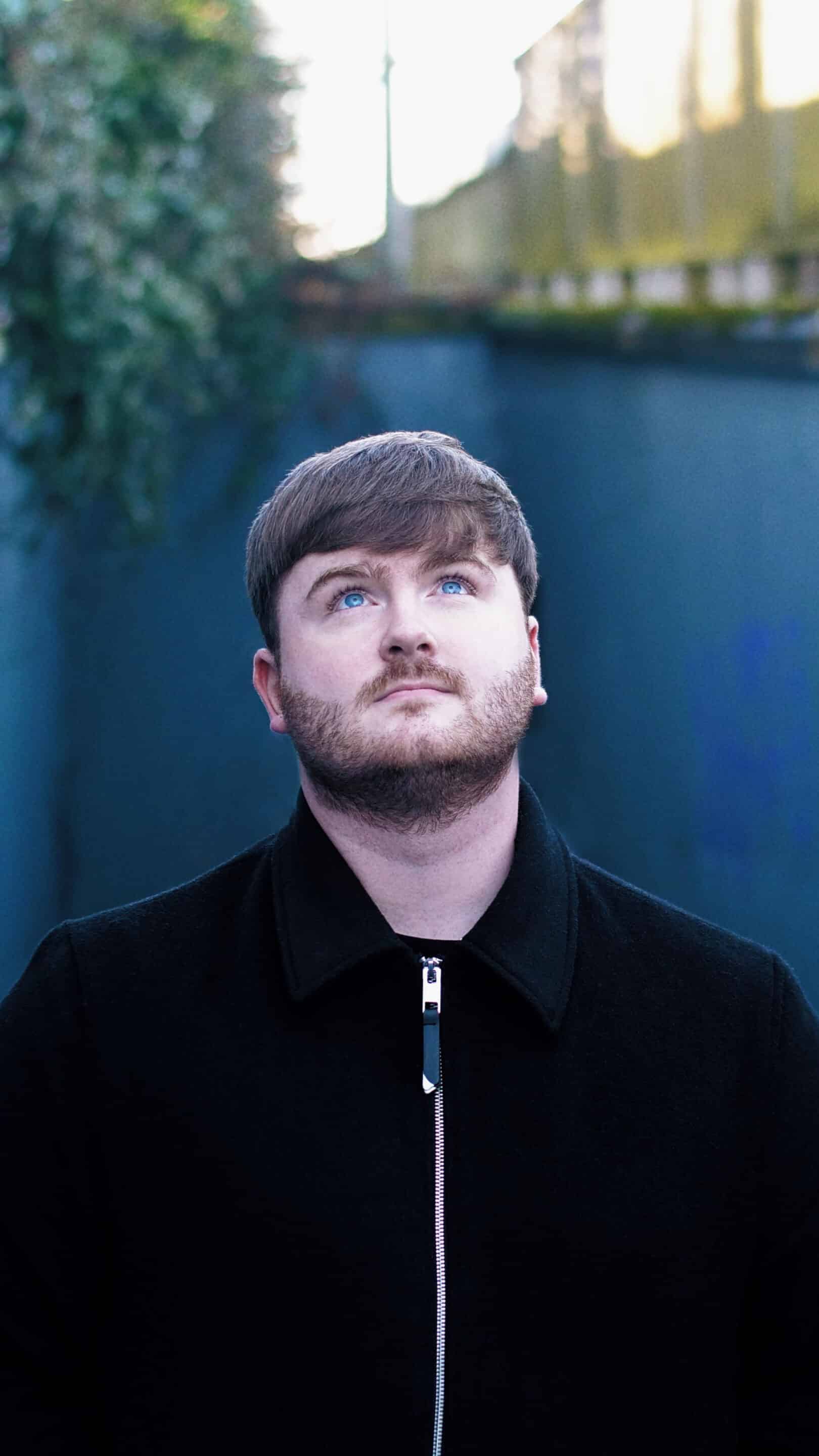
With his new single “Katie,” the Donegal-born, Belfast-based singer-songwriter explores friendship, self-discovery, and the uncertainty of finding your place in the world. After years of performing other people’s music, Laughlin is learning to embrace the vulnerability of telling his own stories.
There’s something strangely universal about not knowing where you’re going.
We’re encouraged to make plans, pursue ambitions, and build lives that follow some recognizable trajectory. Yet some of the most defining moments happen when those plans stop making sense, when the future feels uncertain, and when we begin questioning the choices that brought us here.
For Irish singer-songwriter Kevin Laughlin, those feelings became the foundation of “Katie,” his new single released September 18, 2026.
Written about a close friend struggling to find direction in her life, the song captures the uncertainty of growing up, making decisions, and learning to accept that not everything needs to be figured out immediately.
But what began as an attempt to understand somebody else’s experience eventually revealed something more personal.
“I wasn’t long after a pretty rough time myself when I wrote the song for my friend so I probably, subconsciously, was writing it a small bit for myself too.”
It’s a revealing admission from an artist only beginning to establish himself as an original songwriter.
Following his debut single in March 2026, produced by Irish singer-songwriter Ryan Sheridan, Laughlin has spent the year building momentum through live performances, including an Irish tour supporting Gearoid McCarthy and shows alongside Hermitage Green and Chris Boldt.
Yet beyond the growing list of performances, his most important development has been learning how to transform personal experiences into music.
Finding Yourself Through Somebody Else’s Story
One of the most interesting aspects of “Katie” is its perspective.
Rather than writing directly about his own struggles, Laughlin began by observing somebody else’s.
That emotional distance allowed him to explore uncertainty without becoming entirely consumed by his personal circumstances.
“I suppose you zoom out from yourself and look at the wider picture more when you’re not writing about what’s happening in your own life.”
It’s a philosophy that connects naturally to the storytelling traditions that have shaped his musical identity.
Growing up listening to Christy Moore, Paul Brady, and Luke Kelly, Laughlin developed an appreciation for songs that preserve ordinary experiences and transform them into something meaningful.
But his years performing contemporary pop music also shaped his melodic instincts.
“I have played so much pop music over the years in different settings that it probably is what most naturally comes out when I pick up a guitar to write or during production in a studio.”
The result is a sound that exists somewhere between traditional folk storytelling and contemporary pop accessibility.
His songs typically begin with an acoustic guitar, allowing the narrative to take shape before the production introduces additional textures.
“In their rawest form the songs are all folk ballads that become something different during the recording process.”
That balance allows Laughlin to preserve the intimacy of his influences while developing a musical identity of his own.
From Performing Other People’s Songs to Sharing His Own
Before releasing original music, Laughlin spent years performing in bars, at weddings, and across different live settings throughout Ireland.
Those experiences taught him how to entertain an audience.
But introducing his own songs required a different kind of confidence.
“The biggest adjustment has been talking in between songs and giving them their backstory.”
When performing familiar material, the audience already understands the music. They know the melodies, recognize the lyrics, and bring their own memories to the performance.
Original songs arrive without that familiarity.
And for an emerging artist, explaining the experiences behind them can become essential to creating a connection.
Laughlin has been learning that lesson while supporting more established performers.
Watching Gearoid McCarthy, he’s been particularly struck by the ability to move an audience from high energy to complete silence.
“He also has the ability to calm the crowd right back down and perform a song like ‘My Old Man’ and have the theatre totally silent hanging off every word.”
Hermitage Green, meanwhile, impressed him with their vocal harmonies, something he hopes to incorporate more prominently into his own full-band performances.
These experiences are helping him understand that great live performance isn’t simply about musical ability.
It’s about knowing how to make people listen.
Learning to Be Vulnerable Without Demanding Perfection
Writing personal songs can be uncomfortable, particularly when you come from a small community where everybody seems to know everybody else.
Laughlin admits that becoming comfortable with that vulnerability has been one of the most significant adjustments of his emerging songwriting career.
He’s learning to worry less about how his music might be perceived and to accept the embarrassment that sometimes comes with sharing personal experiences publicly.
He’s also trying to resist the pressure to make every lyric extraordinary.
One piece of advice from John Mayer has stayed with him:
“Not every line has to flick you in the forehead.”
It’s a reminder that songwriting doesn’t require constant revelation.
Some lyrics establish context. Others carry the narrative forward. And sometimes the simplest observations communicate the most.
Laughlin’s approach is also shaped by the environments surrounding him.
Belfast provides inspiration through everyday encounters, overheard conversations, and unexpected fragments of language.
Donegal offers something different: the Atlantic coastline, familiar landscapes, and a community filled with natural storytellers.
“Looking out your front window at the Atlantic Ocean is quite a sight.”
But perhaps more importantly, Laughlin recognizes that some experiences require time before they can become songs.
“I have found that I am most ready to write about things that happened to me a few years ago.”
That distance allows him to understand experiences more fully before attempting to translate them into music.
The Beginning of Something Bigger
For Laughlin, 2026 has been a year of important firsts.
His debut release, growing catalogue of original material, and increasingly prominent live performances have introduced him to new audiences while helping him develop confidence as a songwriter.
But he’s careful not to present himself as somebody who has already figured everything out.
“I’m so early on in my songwriting career that I’m not sure that my perspective has changed a whole lot just yet.”
Instead, he’s focused on learning, performing, and continuing to write.
And perhaps that’s what makes “Katie” such an appropriate release at this stage of his career.
It’s a song about not knowing exactly where life is taking you, written by an artist who is still discovering where his own creative journey might lead.
Rather than pretending to have the answers, Laughlin is becoming increasingly comfortable asking the questions.
And sometimes, that willingness to embrace uncertainty is where the most meaningful stories begin.
In Conversation With Kevin Laughlin
“Katie” reflects on the uncertainty of figuring out where life is taking you. When you were writing this, did you find that the process helped clarify your own direction, or did it just highlight the questions you still have?
Looking back on it now, it probably did. I wasn’t long after a pretty rough time myself when I wrote the song for my friend so I probably, subconsciously, was writing it a small bit for myself too.
You mention that the song was written about a close friend. How does shifting the perspective to someone else’s experience help you tap into more universal themes of questioning choices and paths?
I suppose you zoom out from yourself and look at the wider picture more when you’re not writing about what’s happening in your own life. You’re thinking more about how certain situations make other people feel rather than focusing solely on your own emotions about what has happened to you.
Blending folk storytelling with pop accessibility seems to be a core part of your sound. How do you balance the intimacy of a personal narrative with the broader, melodic requirements of a contemporary pop song?
When it comes to the blend of folk and pop within my own songwriting, I think it happens quite naturally and almost by accident at times. I have played so much pop music over the years in different settings that it probably is what most naturally comes out when I pick up a guitar to write or during production in a studio. My ear is more tuned into how pop music sounds from playing it. The storytelling aspect comes from the artists I listen to when I’m not working. I grew up with the likes of Christy Moore, Paul Brady, Luke Kelly. All fantastic storytellers. The balance comes from the fact that I write with an acoustic guitar, so in their rawest form the songs are all folk ballads that become something different during the recording process.
You spent years honing your craft as a live performer before stepping into the spotlight as an original artist. What was the biggest adjustment you had to make when moving from interpreting other music to sharing your own stories?
I feel that the biggest adjustment has been talking in between songs and giving them their backstory. When you’re playing in a bar on St. Patrick’s Day or with a band at someone’s wedding, people just want to dance and there isn’t a huge need to speak unless you’re getting people to sing along. When it’s a song I’ve written, more than likely a large portion of the audience won’t have heard of me before, let alone an unreleased song! So in that instance it’s really important to give a bit of backstory to the music I’m playing in the hope that some people may relate to it. That was probably the biggest adjustment.
You’ve built a strong foundation supporting artists like Gearoid McCarthy and Hermitage Green. How has observing those artists in a live setting influenced the way you approach your own sets and audience engagement?
Both bring an electric energy to the stage. To quote my grandfather, Gearoid is like the Duracell Bunny. He is so engaging to watch perform on stage. But he also has the ability to calm the crowd right back down and perform a song like “My Old Man” and have the theatre totally silent hanging off every word. Hermitage Green have the most amazing live harmonies. This was something I really took away from watching them perform and want to implement into my own live performances where I have my full band.
With “Katie” following your debut single from earlier this year, how do you feel your songwriting perspective has evolved over these past few months of being active as a solo artist?
I’m so early on in my songwriting career that I’m not sure that my perspective has changed a whole lot just yet. I suppose maybe I get less bogged down in worrying about how things may sound and I’m becoming more comfortable with the small bit of embarrassment that comes with writing personal songs when you’re from quite a small area where everyone knows each other.
Your influences include Paul Brady, James Taylor and John Mayer—all masters of storytelling. What is one specific thing you’ve learned from that lineage that you always try to keep at the center of your own songwriting?
One thing I heard John Mayer say in an interview was “Not every line has to flick you in the forehead”. I try to keep that to the forefront of my mind when writing lyrics. Every lyric you write can’t be the best and you shouldn’t worry if you haven’t written Slow Dancing in a Burning Room yet.
You’ve been based in Belfast, with roots in Donegal. How does the environment of these places—their landscapes, their stories, and their music communities—find its way into the songs you’re writing now?
Small things like walking around the city and seeing something on a sign or hearing someone say something interesting when they pass you on the street can spark an idea for a lyric. That’s something I wouldn’t have had before moving to a city. The landscape of Donegal is always inspiring. Looking out your front window at the Atlantic Ocean is quite a sight. Also the people back home in Donegal are so interesting, there are so many fantastic storytellers locally that would be a songwriters goldmine!
As you continue to build your catalogue through 2026, how do you decide which experiences or moments in your life are ready to be turned into a song?
I have found that I am most ready to write about things that happened to me a few years ago. I have a few songs about parts of my life that I had to process a bit more before I put them into songs. Over the next while there are definitely a few life experiences that warrant a song or two!
After a year of breakout performances and releases, what is the ‘next world’ you’re looking to enter as an artist once “Katie” is out in the world?
I suppose I just want to keep trying to break into the singer-songwriter world and continue building on what has been a really exciting year for me. I have had the most amazing year in 2026 and learned so much from the musicians and people I’ve met along the way. I’m hoping to get one more gig and maybe another single released before the year is out so stay tuned to my socials for that!
“Katie” by Kevin Laughlin is available now.
Upcoming shows: November 6 — Gleneagle, Killarney; November 7 — TF Royal Theatre, Castlebar. Both supporting Gearoid McCarthy.