If you are a frequent visitor to art galleries like myself, you are most likely familiar with the peculiar experience of going to a museum in July or August. The institutional giants—prioritized by tourists and proudly filled with stolen objects—aside, most smaller galleries refrain from hosting interesting shows over summer, for reasons very similar to those behind the lack of movie premieres during that period (if we, again, rule out the giants). Summer is a dead season, time for rest and relaxation, when most people yearn to escape the cities, with their overheated streets and walls, not rush into them to see what’s new in the art world. So, all the art events that do happen over summer take on the role of an amuse-bouche: a little space-filler, something interesting enough to flatter the effort of the few summer-in-the-city survivors, determined to maintain some level of cultural activity, but also low-effort enough not to induce guilt or FOMO in all the beach-goers. And, as an added bonus, let the people in the business become said beach-goers as well, before the big opening frenzy begins in September.
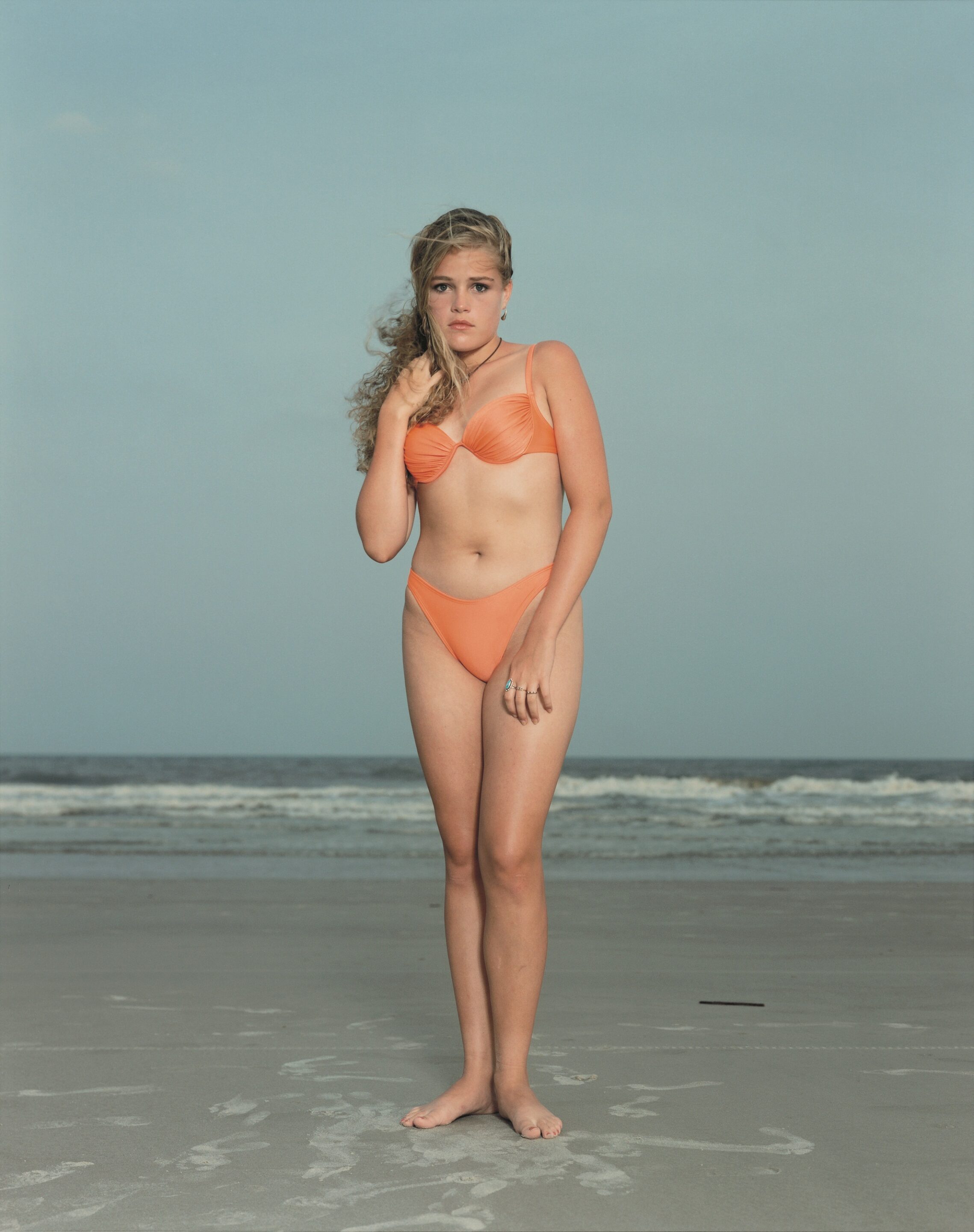
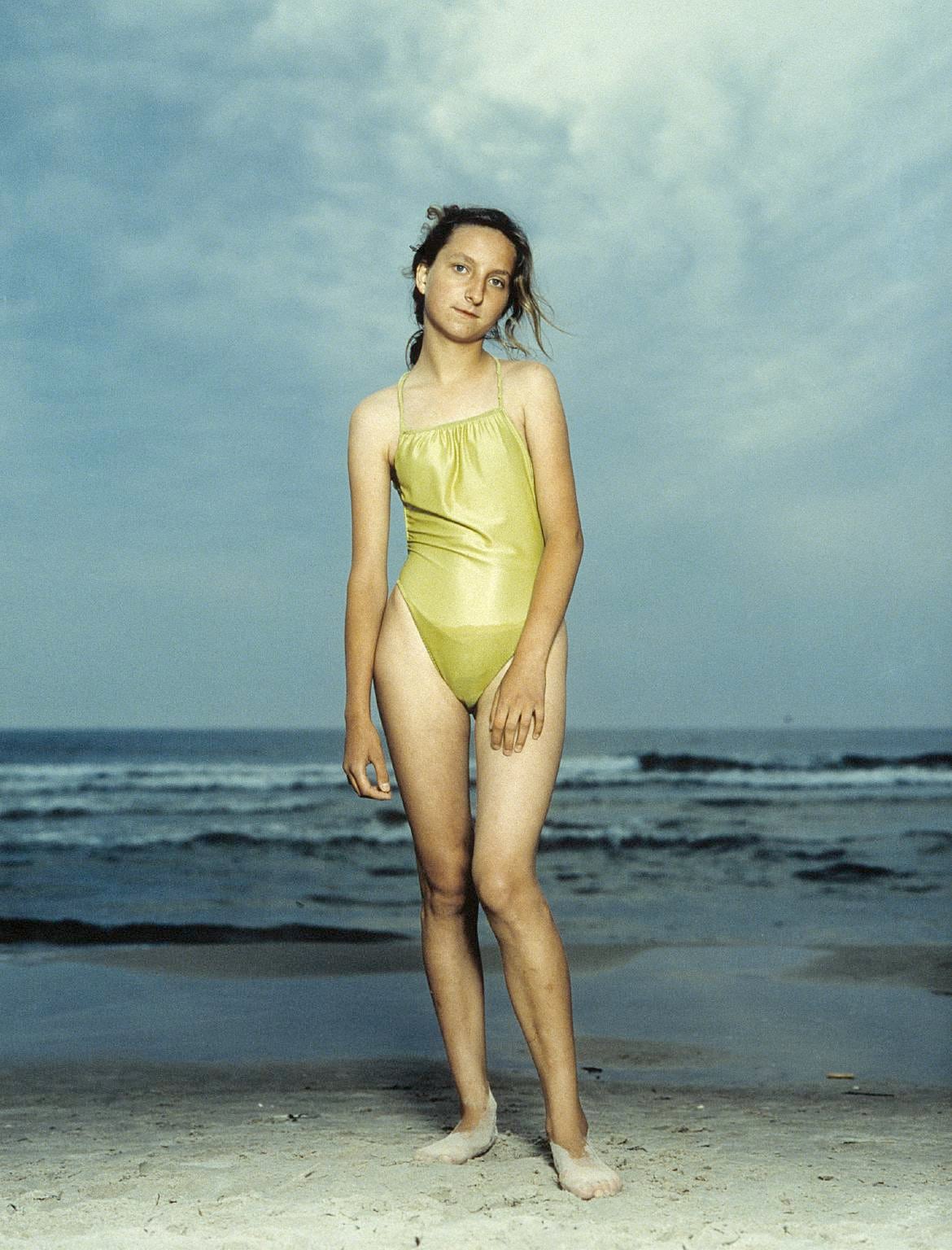
Ironically enough, it was one of those amuse-bouche exhibits, Photography from A to Z at the Parisian MEP, that led me to the wonderful discovery of the Dutch photographer Rineke Dijkstra. The idea behind the show was to organize pictures into concepts, each beginning with—you guessed it—a different letter of the alphabet. The letter A got ‘adolescence’ and that is where I was confronted with Dijkstra’s Beach Portraits, probably her most famous project. The title is in fact quite self-explanatory: the series consists of photos of teenagers posing in their swimwear against the background of the sea, looking into the camera in absolute stillness. There was something immediately striking about those pictures: the persistent consistency of visual language, the rigidness of structure, the beach setting acting almost as an indoor studio, they all draw the viewer’s attention to what’s really at stake: the portrayed teenagers. The stiffness of their bodies, the discomfort in their gaze, the pure beauty of human emotion pouring out of every one of them. You look at those pictures and instantly you understand what those young people are going through. You sympathize with them deeply because everything about them speaks to something you experienced yourself. The first thing I thought when seeing the Beach Portraits was: ‘This is the best visualization of what it feels like to be a teenager I have ever seen.’ Indeed, being a teenager is a feeling, a feeling so strong that I remember it vividly to this day. A feeling that is complex and confusing, unfamiliar and overwhelming, uncomfortable but also exciting. It all makes it very difficult to describe yet impossible to forget.
As a photographer, Dijkstra is generally interested in transitional states: she believes they bring out the most authenticity in her subjects, since the vulnerability they entail reduces the risk of conscious, manufactured body language. Beach Portraits is just one example among many of her dedication to that pursuit. In New Mothers, she captures the equally complex cocktail of emotions related to childbirth and early motherhood. In The Buzz Club, Liverpool, UK / Mystery World, Zaandam, NL, she studies individuals as they dance and gradually sink into the music, allowing themselves to let go. Finally, in her ongoing creative relationship with a boy named Olivier, she witnesses his journey from being accepted into the French Foreign Legion to becoming a mature, trained soldier.
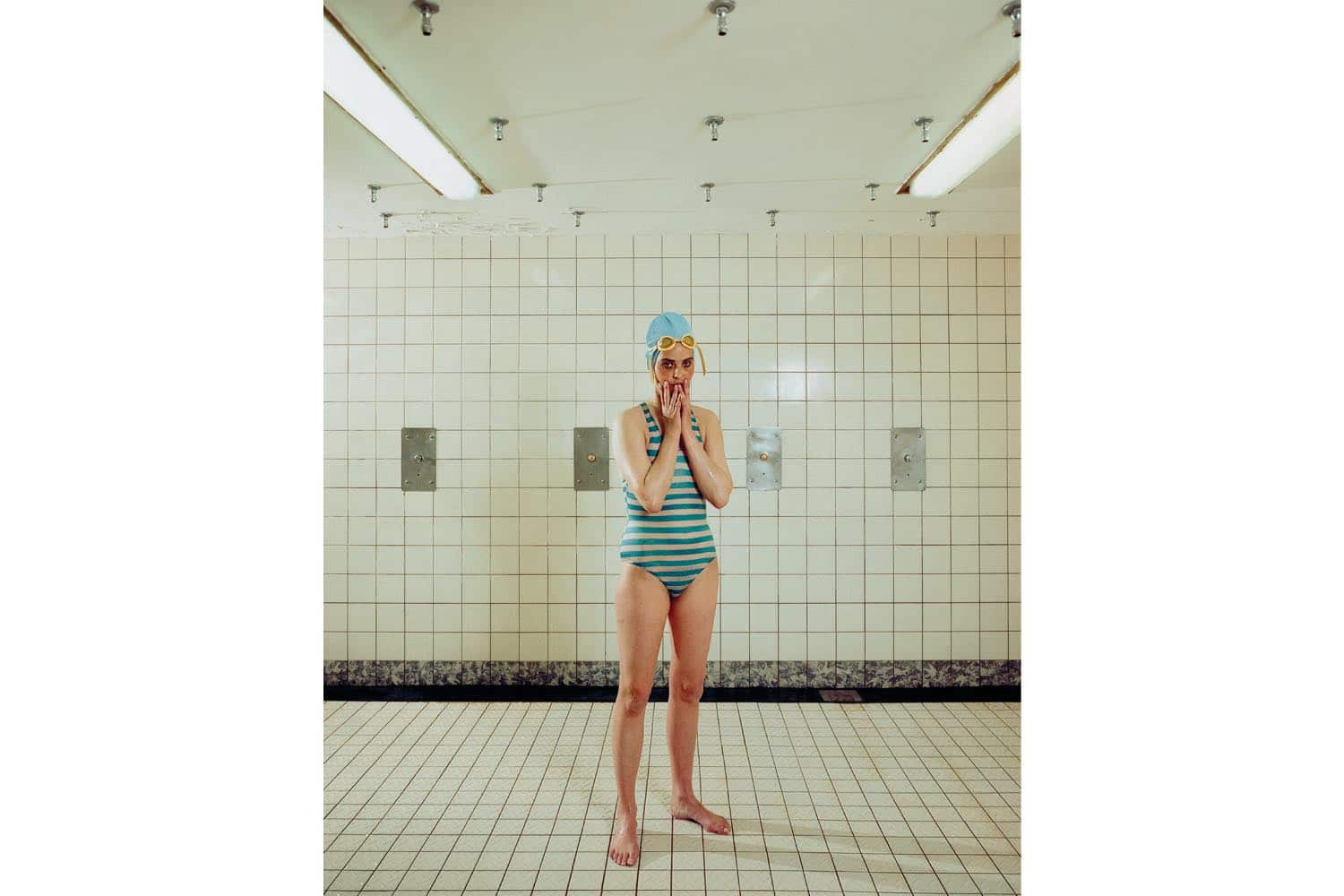
The inherent vulnerability of a transitional state is nourished by an underlying sense of a lack of control caused by change. Entering the army, becoming a mother, and going through puberty are all experiences that leave us suddenly inhabiting a world in which we are perceived differently and no longer understand what is expected of us, realizing that the rules of our reality have changed overnight and we have to learn how to live our lives all over again. And as exciting as it is to start a new adventure, there’s no denying that it also feels immensely scary. Overall, not an easy challenge to undertake, let alone reflect so flawlessly in a singular picture. So my question is: How does she do it? How does an artist approach an awkward 13-year-old and somehow access their deeper, clumsily concealed vulnerability so that it resurfaces instantly?
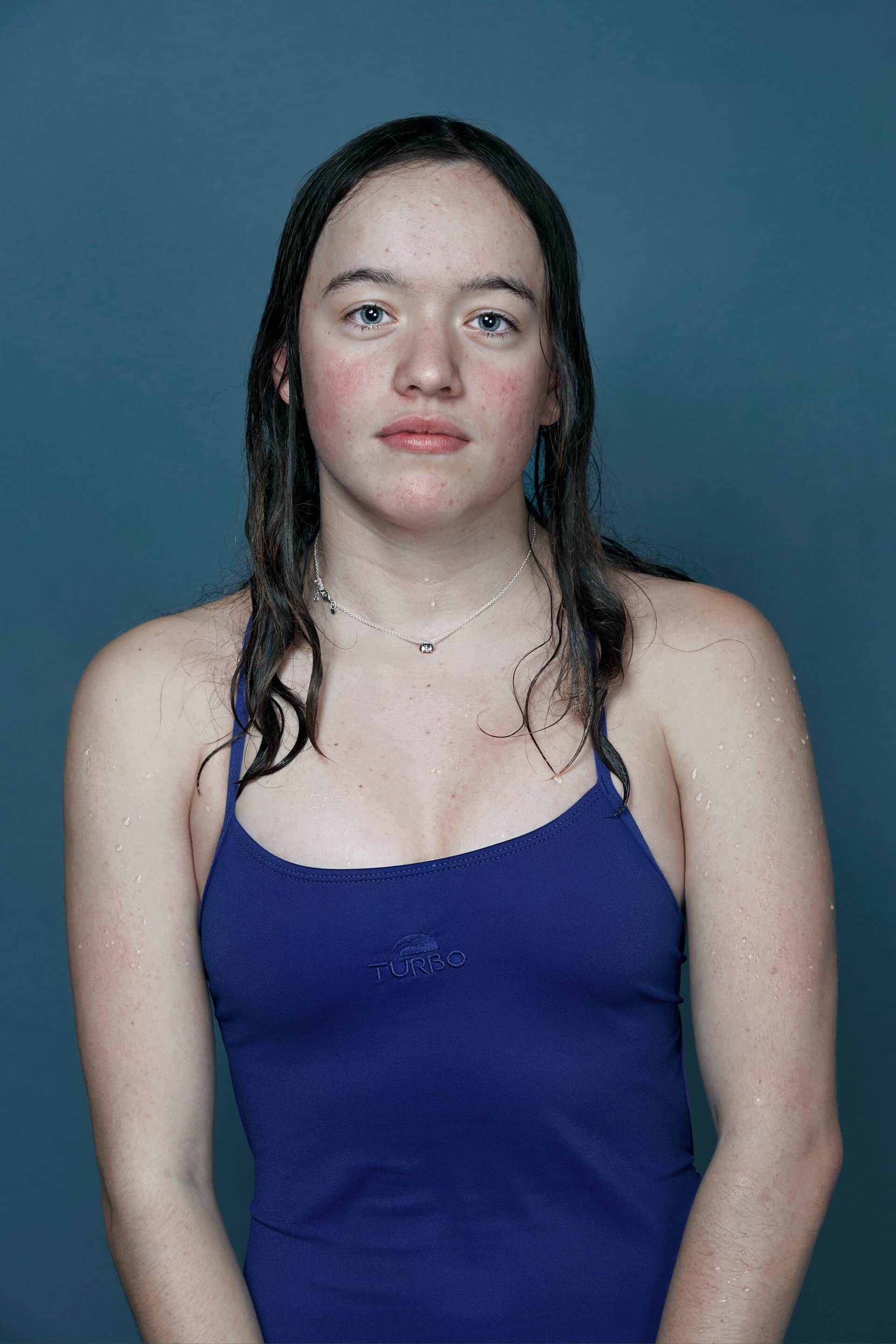
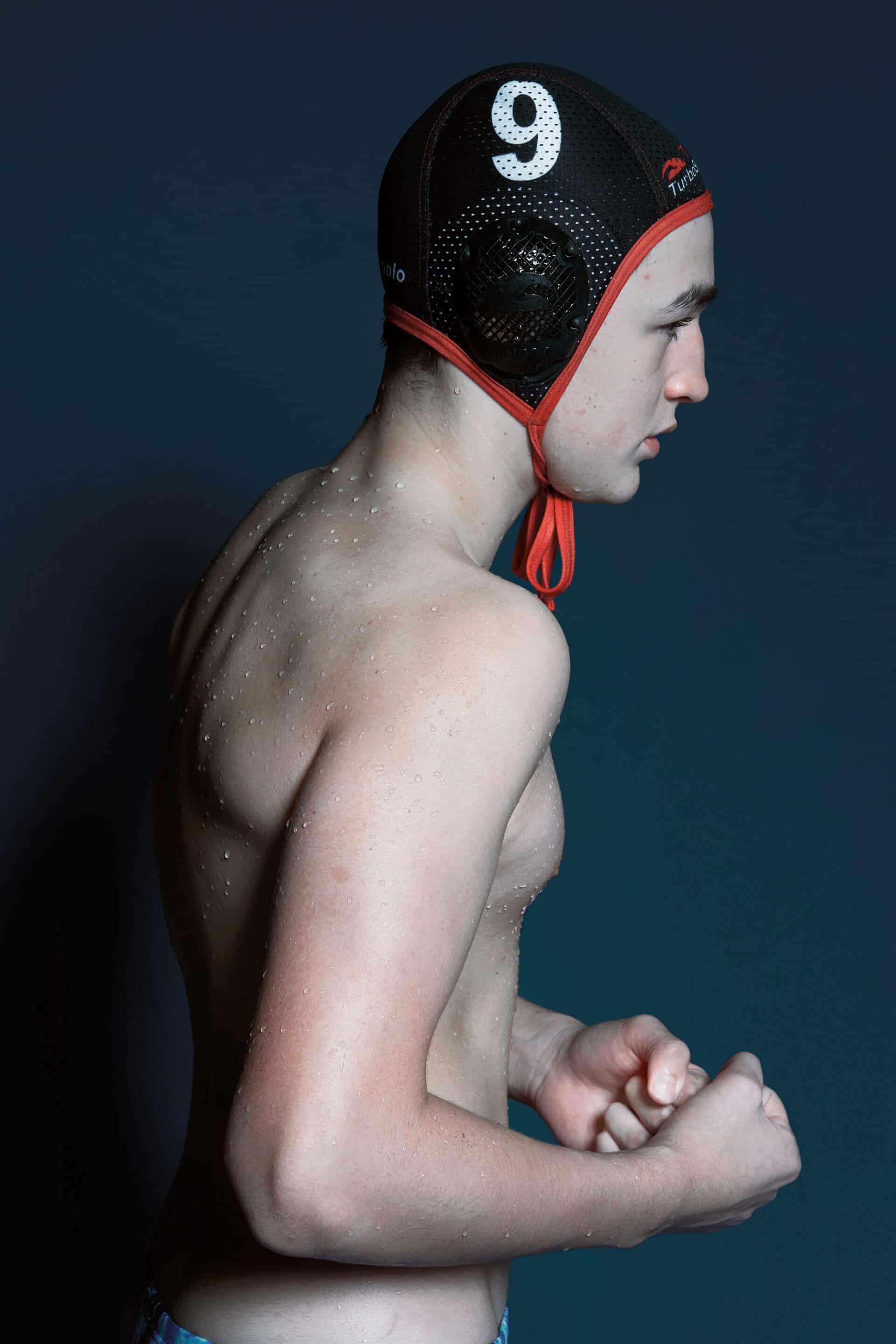
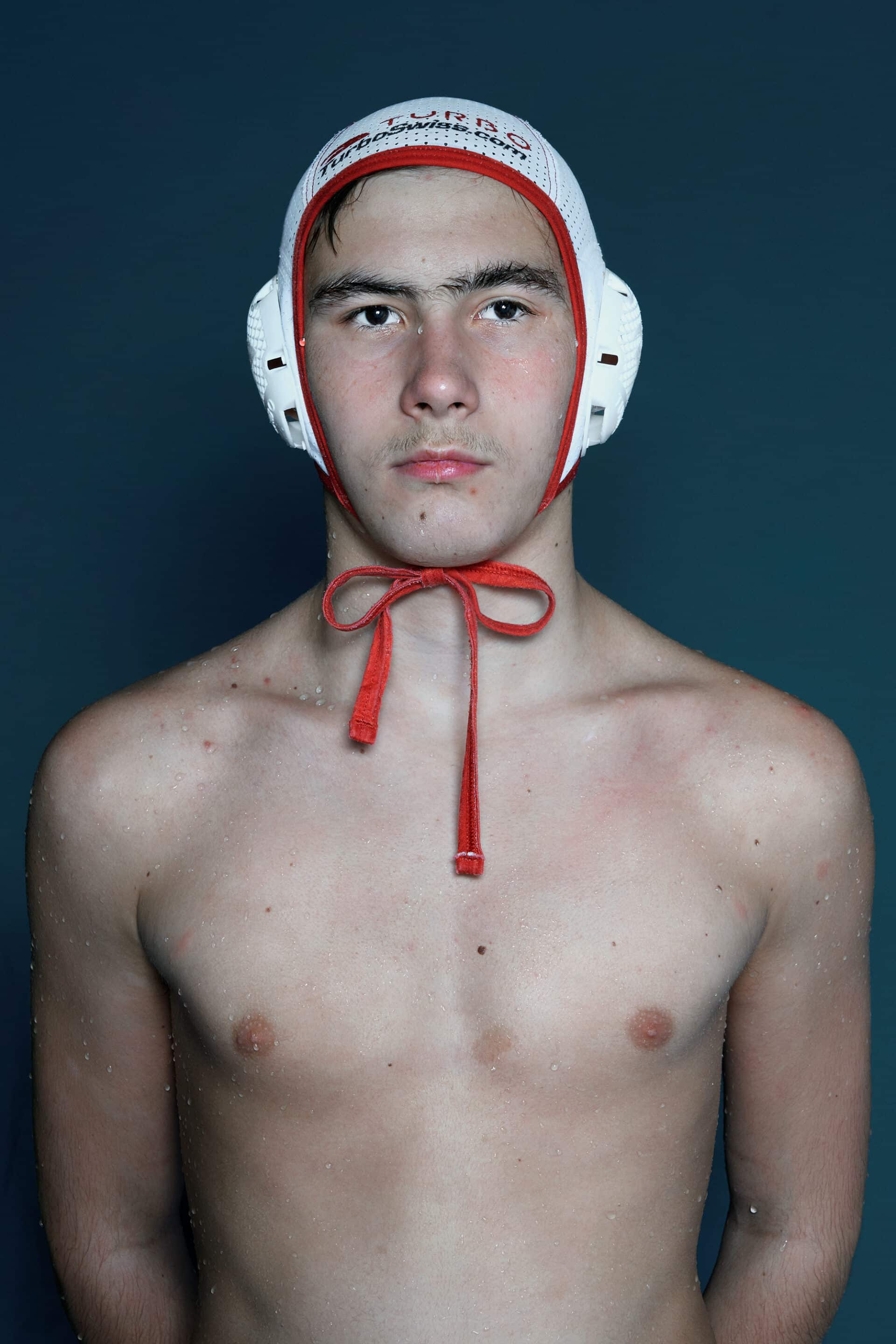
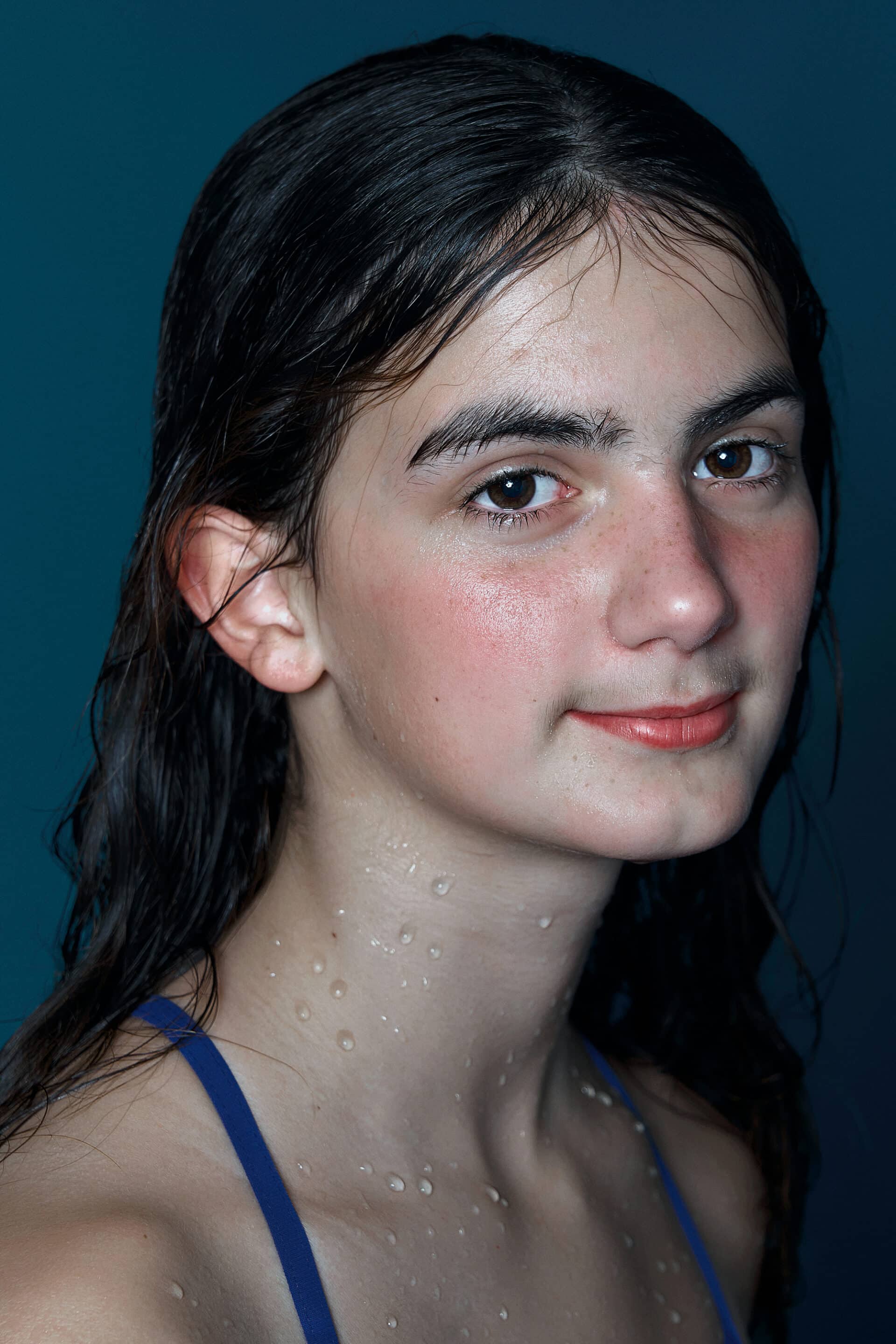
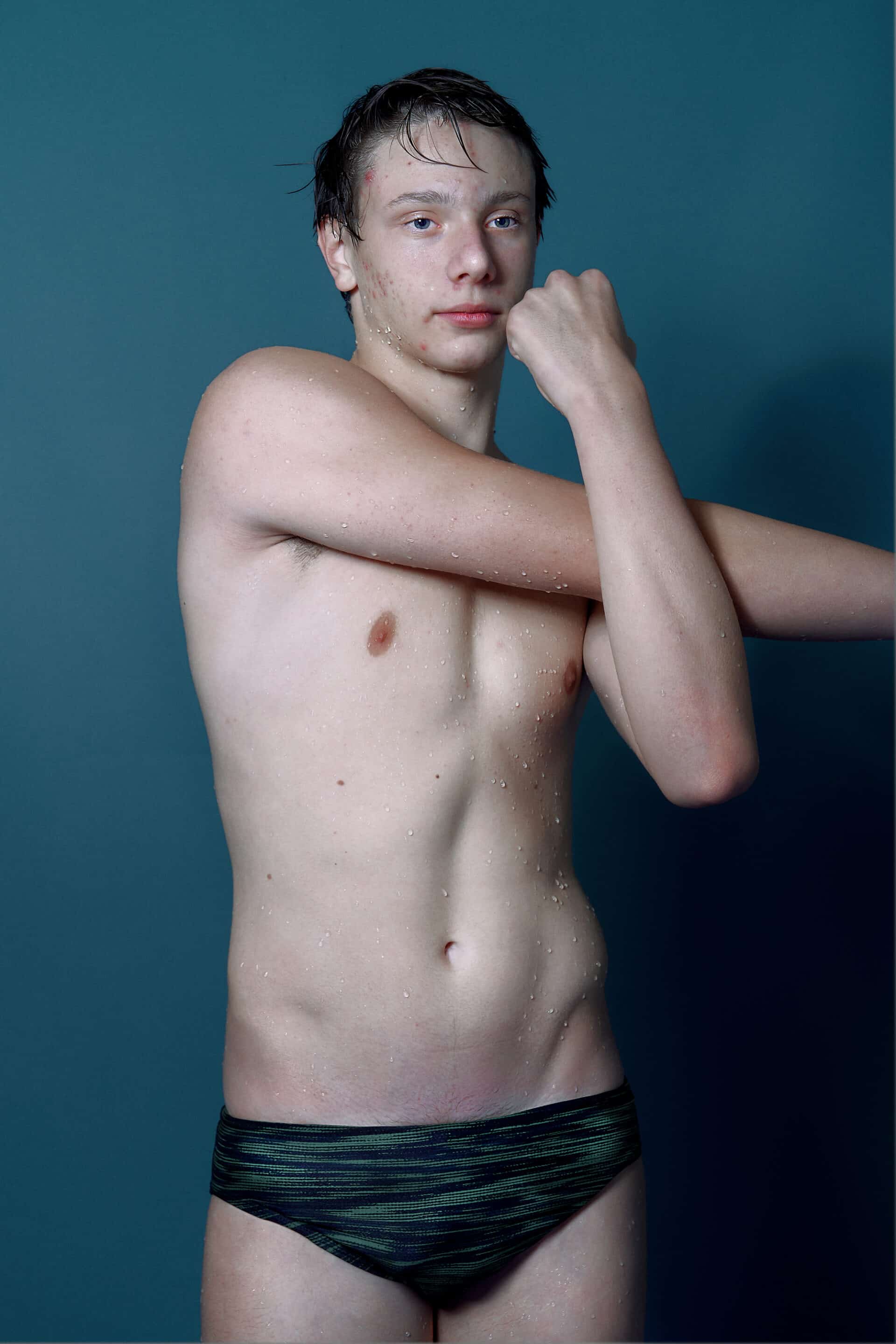
Determined to find out, I talked to Gaia Pierobon, an Italian photographer who—as our conversation helped her realize—‘never actually works with adults’. I met Gaia last year during Offprint Paris, an annual book fair featuring independent publishers, artists and creatives. It was there that I bought her photobook, Loser (2024), that centers around a group of teenage Swiss water polo players she photographed during training, straight after coming out of the water. That warm August afternoon, when I encountered the work of Rineke Dijkstra for the first time, Gaia’s book immediately appeared in my mind. It was impossible not to be taken aback by the numerous parallels between the two projects. First, the subject matter: both depicted individuals no older than 18. Second, the form: both consisted of focused portraits against a toned, solid background, aimed at centralizing the tension in the faces and bodies of the portrayed. Lastly, and perhaps most importantly, the sense of familiar discomfort recognizable in the subjects’ postures and expressions, so integral, as we’ve already established, to being an adolescent.
As it turns out, the comparison wasn’t just a fruit of my art-sympathizer enthusiasm, manifesting in naive obstination to look for intertextual dialogue everywhere. I was correct in identifying this reference, consciously toyed with by Gaia. ‘Rineke Dijkstra is a huge inspiration for me. I did a workshop with her once when I was a student at ECAL (École cantonale d’art de Lausanne, an art school in Switzerland), where she explained various elements of her practice. For instance, there is this very famous self-portrait after swimming which she took after reaching a state of extreme exhaustion: she didn’t have the strength to pose, so her body behaved in a very natural way. That’s actually what inspired the Beach Portraits series. So I was also thinking a lot about how all the muscular tension we accumulate in our bodies is sort of released when we get out of the water. I think that’s what gave me the idea of portraying water polo players.’
Like Dijkstra, Gaia is also naturally drawn to human vulnerability in a transitional state, as exemplified by the fact that most of her projects center around teenagers. But she doesn’t rely on her teacher’s techniques, however successful they have proven to be, to access the physical authenticity of her subjects at all costs. She builds on the awkwardness of teenage bodily experience to analyze the identity formation process it accompanies:
‘I want to observe a contrast of identity formation in those raw moments, that I am not able to explore so much with adults. I don’t find so much contrast in the way their bodies perform and in the way they perceive themselves. Teenagers are expected to behave physically in a certain way but at the same time they have this rawness to them because that behavior is not formed yet. And that is reflected in the way they interact with their body. It always goes back to this physical experience of feeling the need to feed the standards of society, but being very vulnerable and continually learning to behave, to be accepted and to be loved.’
Instead of seeking the most natural postures, Gaia embraces the stiffness of her subjects, seeing them as a very telling element of the experience of adolescence. Your physique is changing and your hormones are acting out, which in itself is challenging enough, as you have to find a way to feel comfortable and safe in a body you no longer recognize. But those are merely a framework for a whole set of societal consequences that puberty entails: the ideas of femininity and masculinity, the recognition of being perceived, the new expectations in terms of interactions, relationships, self-presentation. It’s a lot. The pressure is so overwhelming that it’s no wonder many of us rebel and dye our hair purple. And when you add practicing a sport to the equation, it becomes even worse. Training imposes a regular interaction with your body, making it impossible not to be aware of the changes it’s undergoing, not to mention the standards you are expected to fit into from now on:
‘I chose to focus on the sports context because, having grown up in a very disciplined environment of ballet dancing, I remember how uncomfortable it felt to realize that, in the space of just one summer, my body had changed so drastically: it was so much heavier and the fat wasn’t distributed the way it used to. It affected my sense of balance—I wasn’t able to do a pirouette anymore, for example—and forced me to relearn how to move. Also, since ballet is a very feminine-coded sport, I noticed how it shaped my understanding of standards of femininity and grace. So I guess for this project, I wanted to explore the extreme opposite, a male-dominated environment.
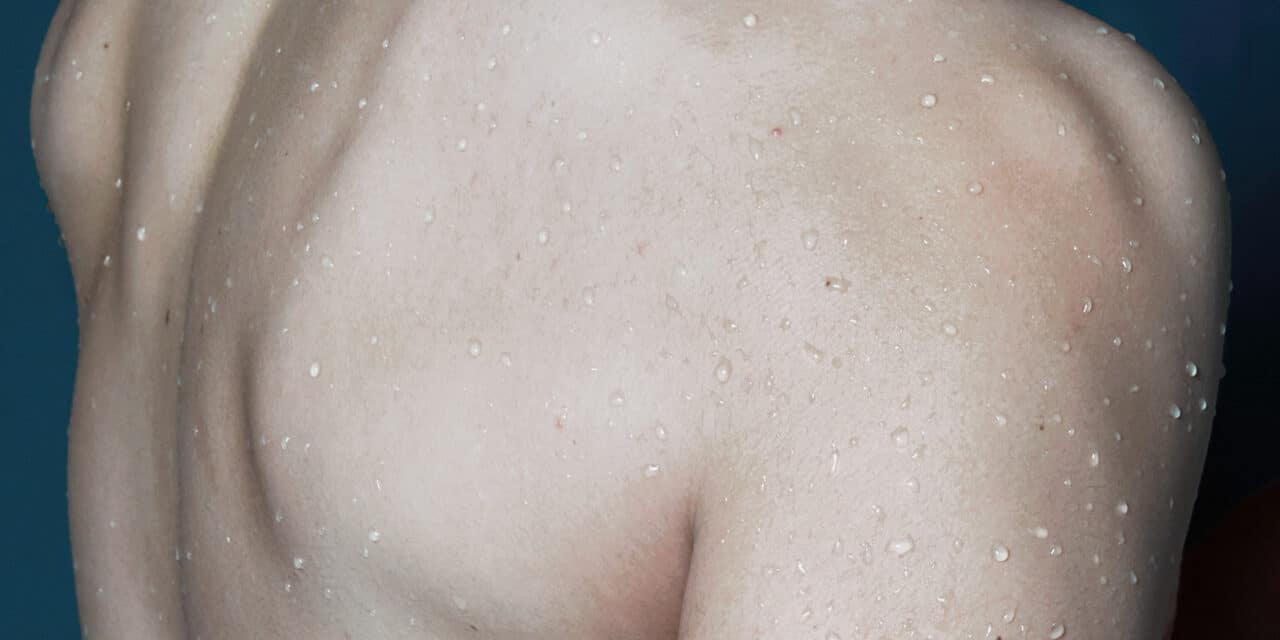
Most of the subjects in Loser are indeed boys. Fresh out of the pool, they pose against a solid blue background, sometimes standing straight and looking into the camera, sometimes positioning their bodies in more coded, manufactured ways. The photos are interspersed with quotes taken directly from the set: Gaia’s instructions given to the models or things she overheard them say to each other.
‘To shoot these pictures, I went to maybe three or four training sessions, always in the evening, and stayed there from the beginning until the very end, which was, I think, around 6 p.m. to 10 p.m. So I spent quite a bit of time with those teenagers and I noticed a very particular dynamic, especially with the older ones, the 16 to 18 year-olds. They would be very verbal with one another, and they would make fun of each other a lot. The studio was right next to the pool, so they could see each other posing and they were screaming a lot of negative things at one another. They were speaking French, and I guess they thought I couldn’t understand them, so they were also making flirty, jokey comments about me. So I decided to include both their conversations with myself and the conversations between them, because I thought it was very revealing of how teenage boys perceive themselves: they think that saying something
JULIA MICHALCZYK
derogatory about their friends would make them appear different—stronger or more masculine. And you can really see that in the book in a very raw and direct way.’
In that sense, the title adds an interesting interpretative layer to her project. Alongside discomfort regarding their own bodies and the pressure imposed by society, there is a third element of any teenage experience, equally bittersweet in nature: other teenagers. Struggling to understand the norms, teenagers project their ideas of expected behaviors on one another, constantly feeding into each other’s insecurities. Trapped in an echo chamber of peer comparison, nobody ever feels like they’re good enough. Everybody feels like a loser.
‘For the title, I was playing with the meaning of the word. On one hand, it refers to me asking the teenagers to loosen up, to release the tension and pose more loosely in front of the camera. But on the other hand, it also has a lot to do with this teenage fear of being labeled as losers if we show our vulnerability. I could really see those boys trying to appear strong and secure while simultaneously remaining stiff and uncomfortable, precisely because of this fear.’
The discomfort and awkwardness of the subjects are very evident in Loser. They surface so strongly that you feel almost inappropriate for looking at the pictures, afraid to add to the difficulty of the experience, which, when you consider it as a whole, seems almost impossible to bear. But then, as much as you’re uneasy, you’re also captivated. You’re not able to look away, because, just as with Beach Portraits, the innocence of adolescence, clear as day despite the entangled web of frictions and insecurities, reads as pure nostalgia. It brings you right back into your own past, your own discomfort and awkwardness, your own confusion paired with excitement for what awaits. And it makes you realize one thing: it really was almost impossible to bear, and yet somehow, you managed. We all manage. We grow up, we become adults, we emerge on the other side. There is a lot of beauty and courage in the very fact of being human. We forget about it almost too easily. For my part, I am grateful to these artists who take pictures of awkward teenagers and make me remember again.
CREDITS:
Rineke Dijkstra
1
Rineke Dijkstra, Self-portrait, Marnixbad, Amsterdam, the Netherlands, June 19, 1991. © Rineke Dijkstra
2
Rineke Dijkstra, Hilton Head Island, S.C., USA, June 24, 1992. © Rineke Dijkstra
3
Rineke Dijkstra, Kolobrzeg, Poland, July 26, 1992. © Rineke Dijkstra
Gaia Pierobon
ALL :
From the series Looser, 2024. © Gaia Pierobon.