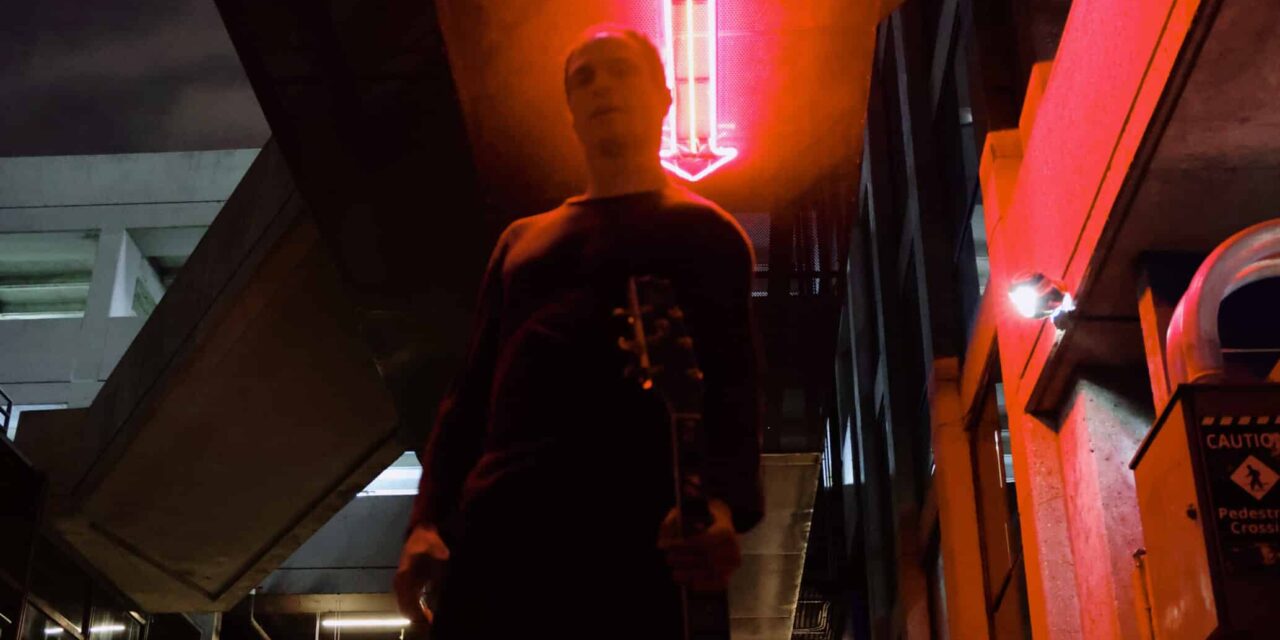
Some artists move to Nashville chasing the stage. Others move there chasing the rooms you never see: living rooms, back rooms, borrowed studios, bare wooden floors—places where the real currency is trust, time, and the simple act of musicians playing for themselves.
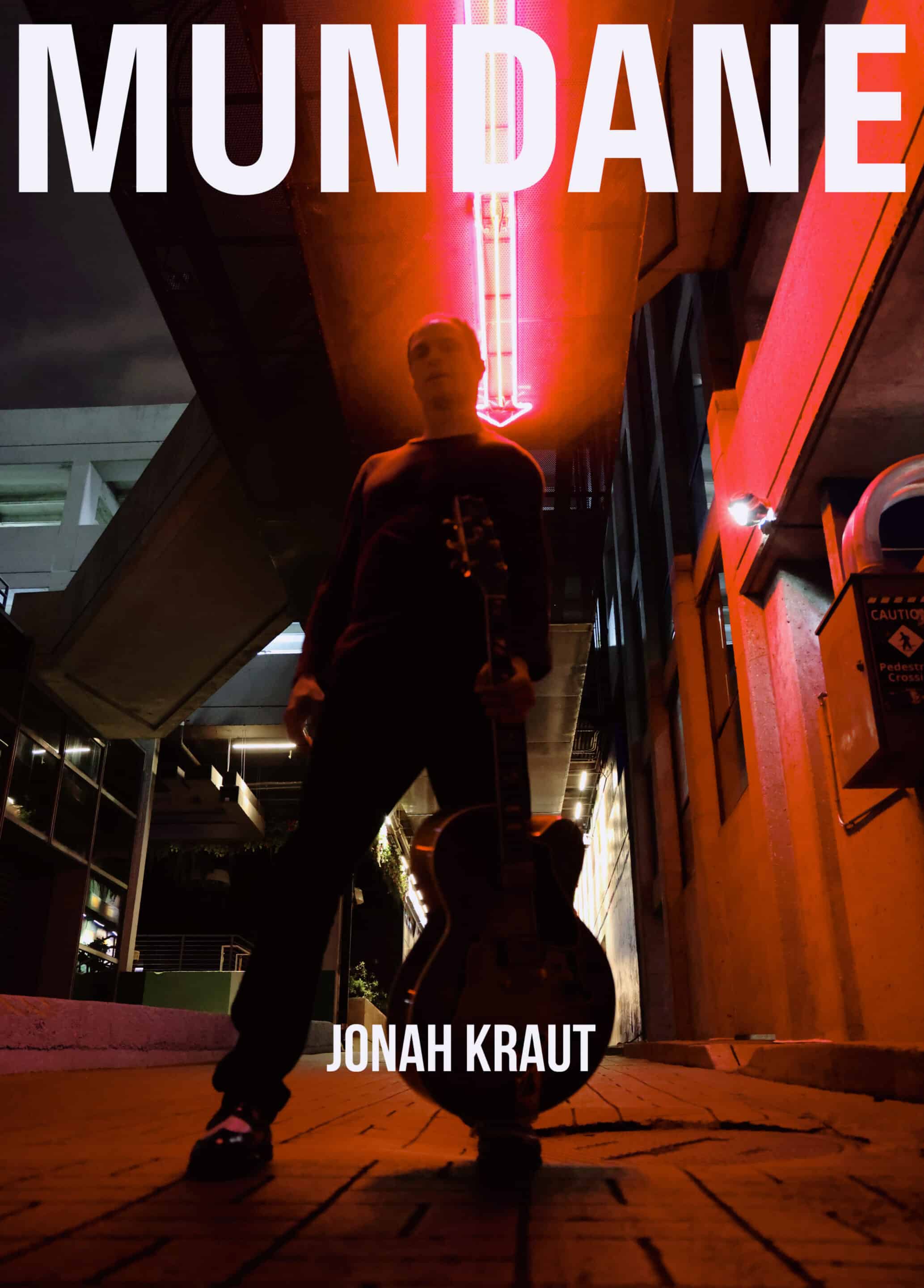
In this conversation, Jonah Kraut (a Nashville-based multi-instrumentalist, songwriter, and studio-minded storyteller) reflects on arriving in the city after graduating from New England Conservatory, learning to loosen a fixed identity as “just a guitarist,” and building a creative life rooted in process over noise. We talk about the behind-the-scenes Nashville that most people miss, recording in a naturally great-sounding room discovered through his day job as a piano tuner, and why he’s skeptical of cold, frictionless art—whether it comes from algorithms or the industry’s demand for clean, repeatable branding.
What emerges is a portrait of an artist who believes the reward is the work itself—and that sometimes the best thing that can happen after you finish something is… nothing.
Q: It’s great to meet you. Tell us your story. What brought you to Nashville?
Jonah Kraut: Nashville was not on my target growing up—certainly not on my radar in school—until I graduated from New England Conservatory in Boston and had to pivot. I tried giving it a go in Boston, which is hard for young people, and then I started deciding where to go next.
I had actually ruled out Chicago, even though I grew up near the suburbs of Chicago. So in some ways it was a process of elimination. But Nashville had a reputation as a music industry hub, and I had visited a friend at Vanderbilt, so I could feel the vibe. This was a little bit before it became a major destination city—although I think I was on the front end of that.
It’s a city that’s more open than it projects. Once you’re here, you see how open it is. And that was ultimately what appealed to me most.
Q: What made you realize Nashville was the right fit for you creatively?
Jonah Kraut: I don’t know if I ever questioned moving here. When you get a little taste of what’s out there, you see variety—especially meeting older musicians, people who feel like they’ve stepped out of the history books, except they’re right in front of you, in three dimensions. You’re suddenly part of the same ecosystem.
I got little confirmations as I stayed. One of the first big experiences: I used to hang out at Cowboy Jack Clement’s house. He was a producer, songwriter, musician—he had worked in Memphis with Jerry Lee Lewis. A friend of mine would go over there, so I started going too.
At the time there had been a renovation and there was nothing in the rooms—bare walls, wooden floors. I show up one day and someone is sitting in the window, and it’s Bobby Bare. Then Emmylou Harris shows up. I’m in the other room listening to Bobby Bare and Emmylou play with Cowboy. I think Sean Camp was there, David Ferguson was there.
I don’t remember everything they played, but I remember “Four Strong Winds.” I was literally a fly on the wall. The sound of the rooms still reverberates in my memory.
That was a peak musical moment—not because it was a show, but because it was just people playing for themselves. A lot of Nashville isn’t onstage. It’s behind the scenes: people getting together in houses and playing. If you’re willing to hang and maneuver your way into that world, you’re bound to see something. Those are the things that kept me around.
Q: There’s a myth of Nashville as industry-first. But you’re describing something almost utopian.
Jonah Kraut: Musicians want to play. Most of them do. They have careers and egos, sure, but they also want to play. And music is so many different things to different people. For musicians, it’s often healing.
When people acknowledge each other in a room and find common ground, it’s one of the few instances where you can recreate a little utopia—just for a moment.
Q: How did your identity as an artist take shape in Nashville? Was it difficult to find?
Jonah Kraut: Slowly. People develop slowly.
I studied jazz guitar, and for some reason when I moved here I had it in my head that I would be “a guitarist.” That’s how I’d present myself—not as a writer, not even as a cellist. I grew up playing cello.
But I got here and quickly realized: being “a guitarist” doesn’t make you stand out. So I had to advertise myself as more versatile. I was a cellist, I was recording demos out of my apartment, and I had this experience writing with a band in Boston (The Patrons), and I brought that creative life with me too.
Over time I had to pick and choose. And honestly, I had to level everything off: stop thinking of myself as “great at one thing” and allow myself to be “okay at many things,” and be okay with that. Then over time you can focus—be a little bit of this for a while, and a little bit of that for a while.
Q: You’ve talked about releasing work and then feeling like nothing happens. How did you learn to live with that?
Jonah Kraut: I did three records for myself over ten years ago—getting back into the studio, writing songs. I had enough to say and I had some money I could spend, so I put projects together. And then I didn’t do anything for a while.
That space is important because it forces you to focus on what you want to do next.
I used to tell myself: if you write a good song and record it well, it’ll get out there. Yes and no. You have to keep it out there. You have to keep tapping the balloon up. That takes energy, and you have to have a band, you have to play shows. I never really had “my band.” I’d hire people for shows, but I never felt like: this is the band.
Sometimes it felt like failing on some level, even if I was proud of the work.
And I’ll say something that might help other artists: the best thing to happen after you finish something is nothing. Nothing happens. You just sit with it. It’s aggravating—because there’s an emotional build-up and then release.
My mom is a painter. She has a show, builds everything up, and then afterwards there’s this emotional drop. Musicians have that too.
But the benefit is: you grow. When you pick up the pencil again, you’ve gained more than it seems. The more you can get away from your ego, the more you can assess what you want to bring out next.
It’s always about the next one.
Q: So how do you see yourself now, creatively?
Jonah Kraut: More crystallized.
Two years ago I did a project where I invited the same people I worked with over ten years ago, partly because the space was available—Cowboy Jack’s studio. That was where I recorded my first record. After Cowboy passed away, the studio stayed operable.
It was coming up on the ten-year anniversary of that first record, and I thought: I can do the same thing again. This time I expanded the band—three players instead of two. And I wrote the songs in an order that felt like an album from the beginning, almost like a novelist writing a novel. We recorded a little out of order, but the intention was clear.
Coming out of that, I felt like I understood the equation: the people you involve, the songs, how you present them, the arrangements. The input affects the output. That became very clear to me.
Now the reward is the thing itself.
Q: Let’s talk about your EP Watching the Flowers Grow. How did that project come together?
Jonah Kraut: That EP came from writing songs with a friend of mine, Phil Dubnik—he’s a sound engineer. He challenged me to write. We did a few together.
I wasn’t satisfied with the demo performances—not because the songs were wrong, but because I could hear where they could go.
The real impetus was a room. I tune pianos—that’s my gig—and I have a client I’ve tuned for years. He has a piano in this big room with high ceilings—big enough to be a small studio—and every time I was in there I thought: this is a great sounding room.
So I had the setting, and I started synthesizing everything I’d learned. I had “Watching the Flowers Grow,” I had another song, so I wrote two more. I brought in three musicians and pre-planned the sound in my head. The more pieces I put together beforehand, the more it enhanced the record.
It’s a live sound—open, because of the room. And it limits you in a good way: you can’t mix it into something it isn’t. I didn’t have rigid expectations. A lot of this is: I wonder what would happen if I did this? And then you get this wonderful surprise in real time.
It was exhausting—but extremely rewarding.
Q: You mentioned trusting collaborators—like bringing in someone to do a video. Why is that trust important to you?
Jonah Kraut: When you trust other people and you don’t hold too tightly to what you want to say, you make room for something better. There’s something about knowing your intention—and then stepping back and asking, What do you think?
That’s when the work becomes bigger than your own head.
Q: We’re in a moment where technology is accelerating fast. How do you feel about AI in music?
Jonah Kraut: A friend of mine—Austin Long—loves using AI to get his ideas out. He’s very talented. And listening to his work, it’s just another tool. Things are moving rapidly.
But what I’ve never heard in AI—and honestly what I often don’t hear in a lot of non-AI music either—is the human element. We’ve been moving toward machine-driven music for a long time—synthesizers, drum machines, timekeepers instead of drummers. That creates a feeling, and to me it can feel cold.
It’s not that machines can’t be soulful—there are examples where they are. But over time, I think things have become less human. We value humanity less, and that’s bigger than music.
Part of what I want to do is redirect away from anything cold. I used to do solo projects where I layered myself, and it was fun. But no matter how good I could make it sound, nothing compared to playing with another person in the same room.
From that point on, I never had interest in doing anything other than being myself with other people.
Q: Your background is deeply musical—classical, jazz, guitar, cello. Where did it all begin?
Jonah Kraut: I started cello lessons in kindergarten. I remember a presentation at school, running home excited, wanting to do it. My sisters played instruments. My dad played guitar and piano. My parents signed me up.
I think I initially wanted violin and they said, “Let’s do cello,” and it worked out because in chamber music you can play really good literature while playing parts that let you learn. I was playing with musicians better than me from a very young age, which made me progress quickly.
I went through a brief period of hating practicing, and then I learned how to practice on my own.
By adolescence, my friends were into guitar and told me: if you can play cello, you can play guitar. Improvising and learning by ear is so natural on guitar—so it became this augmentation of who I was musically.
I started listening to jazz because my first guitar teacher, Tommy Zender, threw a lot at me, and jazz stuck. Around my second year of high school, I was listening constantly and started thinking about music school.
Along the way I experimented with bass too—because cello gives you a foundation, and jazz on bass is its own world. Over time you can see how my interests proliferated.
Now that classical background is a treasure. It’s a huge well to draw from. Even now I’m exploring early music on vinyl—there’s always more.
When I went to music school, I was naive—I thought: if I’m good enough, good things will happen. Nobody knows. But for me, school was wonderful. My teachers and classmates still inform me.
Q: What’s next for you right now?
Jonah Kraut: The immediate thing is a song called “Lucy Gray.” I started writing again with a friend from Boston, Matt Borushko. We started The Patrons together. He stayed on an English professor track, but he’s always kept making music too.
He sent me songs, we started trading, and “Lucy Gray” was based on the Wordsworth poems—there are multiple “Lucy” poems, which I didn’t know about. That opened a whole world for me: literature influencing music.
Months after we worked on demos, I kept thinking about that song. Then Tiny Desk submissions opened up, and it felt like a perfect way to present it. A videography opportunity popped up at the same time—this convergence of things—and we made it happen. Matt also wrote about it and posted an interview-style piece on his Substack, so the song exists in this multidimensional way now.
That’s inspiring because it suggests a larger realm: building projects where literature and music interlock. We’ve talked about doing an EP based around the Lucy poems, but it could extend anywhere—romantic era, ancient Japan, anything. It’s about the boundaries you choose.
Beyond that, I want to keep writing with people in Nashville—different voices, different genres. I have big ideas too: multimedia, the relationship between theater and music.
My ideas don’t fit neatly into the commercial landscape where you lock into a team and repeat the same machine everywhere. My ideas are more like one-offs. But that’s what I’m here to figure out: how to build a life where those ideas can exist.
Closing Note
If this conversation has a thesis, it’s this: in a world speeding toward frictionless content, Jonah Kraut is chasing something slower and more difficult—music made by people, in rooms, with all the unrepeatable human residue left intact.
If you want, paste Jonah’s preferred bio line + links, and I’ll tighten the intro, add pull quotes, and format it exactly to your standard MundaneMag template (including a “For fans of…” tag and a release info box).