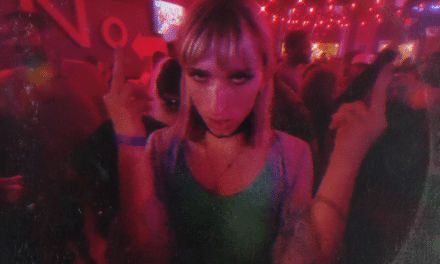
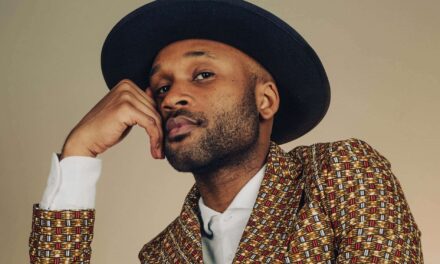
On I Thought The Altitude Would Make It Worth The View, the Perth four-piece turn ambition, uncertainty, early adulthood, and the exhilaration of playing together into their most expansive record yet.
There is an appealing lie hidden inside ambition.
Get higher.
Go farther.
Make the room bigger.
Reach the next city, the next crowd, the next record, the next version of yourself.
Eventually, surely, everything will make sense.
Perth indie-rock band DICE have spent the last few years living inside that ascent.
What began as a local project has steadily expanded into something much larger: sold-out shows across multiple continents, years of heavy rotation on Australian radio, increasingly ambitious records, and a growing audience waiting on the other side of the world.
Their new album, I Thought The Altitude Would Make It Worth The View, arrives from somewhere inside that climb.
The title almost functions as its own confession.
You reach the altitude.
The perspective changes.
But perspective has weight.
“We wanted to make an album that doesn’t offer easy answers, but instead finds beauty in the climb, even when the view isn’t what you expected,” the band explains.
That contradiction runs through the record.
The songs are euphoric without being uncomplicated.
Optimistic without pretending everything is fine.
Built for open windows and loud rooms while quietly asking the kinds of questions that tend to arrive when the room finally goes silent.
For DICE, growth does not mean escaping uncertainty.
It means learning how to keep moving through it.
When Euphoria Carries a Heavy Heart
One of the most interesting things about I Thought The Altitude Would Make It Worth The View is how frequently its sound and subject pull in different directions.
The record feels expansive.
Bright.
Physical.
At times almost weightless.
But underneath that momentum are songs about collapse, longing, addiction, uncertainty, ambition, and the instability of becoming an adult.
“The journey of the album isn’t all positive even though the overall sound is quite euphoric,” the band explains.
That emotional tension never needed to be artificially reconciled.
“The overall theme of self-reflection has various emotions and themes attached.”
Perhaps that is precisely why the album feels coherent.
Self-reflection rarely produces one emotion.
Look closely at yourself long enough and you can find pride next to embarrassment.
Excitement next to fear.
Gratitude beside exhaustion.
Hope beside grief.
DICE allow those contradictions to coexist without forcing the listener toward a neat conclusion.
Even the placement of “Stars,” which they describe as arguably the saddest song on the album, becomes part of that architecture.
“Sometimes it’s nice to have a heavy-hearted song amongst the rock.”
The album understands that release sometimes requires interruption.
A Windows-Down Record About Looking Inward
DICE describe the record as something like a windows-down anthem for radical self-reflection.
At first, those ideas might seem incompatible.
Self-reflection is usually imagined as private.
Quiet.
Still.
DICE make it loud.
For the band, reflection is less about retreating from life than paying attention while moving through it.
“We’re all young men growing up in this crazy world,” they explain. “We’re just trying to navigate what’s right and wrong.”
The songs document that process almost like diary entries.
“We’re constantly self-reflecting and these songs are just real stories in our lives.”
That framing matters because it prevents the album from pretending to contain wisdom the band has not yet earned.
These are not songs written from the top of the mountain.
They are written during the ascent.
The uncertainty is part of the point.
Finding the DICE Sound by Risking It
Sonically, the album represents a clear expansion.
DICE moved away from some of the grit associated with their earlier material and pushed toward something lighter, more euphoric, more polished, and occasionally more pop-oriented.
A major part of that evolution came through working with producer Joe Chiccarelli, whose career has included records with artists such as The Strokes and The White Stripes, alongside additional production from Jay Watson of POND and Tame Impala.
Working at East West Studios in Hollywood also changed the band’s approach.
“With this new album we used a different process when writing and recording the songs.”
They discovered something especially important about vocalist Ben Hodge in the process.
“We leaned more into a poppy side of DICE when we found Ben’s voice to work really well with pop-style songs.”
That realization could have pushed the band toward imitation.
Instead, Chiccarelli helped them preserve the character of DICE while opening the architecture around it.
“Joe helped us keep what was our ‘DICE sound’ while allowing us to experiment with new visions and ideas.”
That balance is often harder than dramatic reinvention.
The challenge is not becoming somebody else.
It is changing enough that your existing identity becomes more visible.
“He has an ability to execute ideas and adapt them to work with the rest of the song.”
Watson, meanwhile, helped refine the atmospheric side of the record, particularly its keyboard and pad textures.
“He worked closely with Ben and Joe to fine-tune keys parts to help elevate the songs.”
That word—elevate—feels fitting for an album obsessed with altitude.
The New Altitude Was a Process, Not a Moment
There was no single instant when DICE suddenly heard the record and knew they had arrived somewhere new.
Instead, the evolution accumulated.
“The whole recording process made these songs what they are today.”
Live tracking.
A major studio.
Professional production.
New instrumentation.
Greater freedom.
Each decision created the conditions for the next.
“With songs like ‘Cooler’ and ‘Footprints’ we were so impressed by how they turned out with a new approach instrumentally.”
The “new altitude,” then, was not a destination.
It was a method.
The band stopped asking how they were supposed to sound and started discovering what happened when they gave themselves permission to expand.
Four People in a Room
Some of the album’s most revealing moments came through subtraction.
On “Echo” and “Daydream,” DICE deliberately stripped away much of the additional production and focused on the energy of the band playing together.
Rather than making the process more intimidating, the limitations made it easier.
“It was definitely more liberating.”
There is a reason live tracking can feel so different from building a song piece by piece.
Musicians stop responding primarily to a click track or a pre-existing arrangement.
They respond to one another.
Lenny describes locking more deeply into Regan’s bass when the band played together.
“I personally felt I could lock into Regan’s bass part more than if I was recording to a backing track.”
That responsiveness leaves fingerprints on a recording.
Tiny shifts in rhythm.
Moments of anticipation.
The sensation that one musician is pushing while another is holding back.
“This new approach captured how much we felt for these songs as we played them.”
For a band whose live energy has become such an important part of its identity, preserving that interaction inside the studio feels especially significant.
Production Can Expand a Song. Chemistry Makes It Alive.
That distinction sits at the center of DICE’s evolution.
The band clearly enjoys bigger production.
Synthesizers.
Pads.
Layering.
Pop structures.
Studio experimentation.
But the new record suggests they are equally interested in identifying what cannot be manufactured afterward.
Chemistry.
The sound of musicians listening to each other.
The slight danger of playing something in real time.
That is where I Thought The Altitude Would Make It Worth The View becomes more than a production upgrade.
It explores two seemingly opposite instincts at once.
How large can we make this?
And:
How little do we actually need?
Some songs answer with enormous choruses.
Others answer with four people in a room.
“Call Me For A Good Time” After Midnight
Then there is “Call Me For A Good Time.”
The song occupies an entirely different corner of the album.
Moody.
Late-night.
Seductive.
Restless.
The kind of track that belongs somewhere between an afterparty and a bad decision.
Its origins were surprisingly simple.
“It all started with a vocal melody that Ben sent in with an upbeat, syncopated synth part.”
Then somebody suggested moving the instrumentation toward an MJ-inspired disco energy.
From there, the band worked collectively.
“The whole band just jammed it in a room until the verses and pre-chorus felt right instrumentally.”
Only afterward did they return to Ben’s vocal, reshaping it around the arrangement.
The track was later developed further with Chiccarelli in Los Angeles, while Watson helped refine the keyboard textures.
What emerges is a song about the moment when attraction stops feeling casual.
Desire becomes repetition.
Repetition becomes dependency.
The party continues, but something underneath it has become less playful.
That tension makes the track especially effective.
Like much of the album, it hides uncertainty inside something designed to move.
The Value of Not Knowing
DICE repeatedly return to the excitement of the unknown.
That sounds romantic until you remember that uncertainty is also exhausting.
A young band can spend years asking questions with no stable answers.
Will this career last?
Will people show up?
Will a song connect?
Will the next record work?
Can everyone continue doing this financially?
Can the thing that once felt like escape survive becoming a job?
The band does not attempt to answer those questions on the album.
Instead, they seem to be learning how to tolerate them.
That may be what liberation looks like here.
Not total freedom from anxiety.
Freedom from believing anxiety means you are on the wrong path.
Perth at the Edge of Everything
Part of DICE’s identity also comes from where they began.
Perth exists at a considerable geographic distance from many of Australia’s major cultural centers.
For a developing band, that isolation can create obvious challenges.
But isolation also creates ecosystems.
“Perth is always home for us and the music scene back home is so supportive and tight knit.”
Because breaking beyond Western Australia can be difficult, bands develop alongside one another.
“The scene just thrived solo.”
That phrase captures something important about isolated music communities.
When access to the larger industry is limited, scenes often become intensely local.
Bands attend one another’s shows.
Audiences overlap.
Friends become collaborators.
Competition loses some of its usefulness.
“Whenever we go see our mates play there’s always familiar faces, everyone just gets around each other.”
That communal foundation sits underneath DICE’s increasingly international career.
The bigger the stages become, the more important “home” can become as an emotional reference point.
The Industry Never Stops Moving
DICE have already experienced the instability that comes with momentum.
Touring.
Travel.
Release cycles.
Expectations.
New markets.
Larger audiences.
The next milestone always waiting.
When asked whether the meaning of the album’s metaphorical climb has changed now that the record exists, their answer is telling.
“It honestly hasn’t changed.”
The lesson is not that they finally arrived.
It is that arrival may not exist.
“It’s just important to take it day by day and enjoy the process because this music industry is so volatile and overwhelming.”
For musicians, ambition creates a peculiar psychological problem.
Every achievement can immediately transform into context for the next goal.
Sold out one room?
Book the larger room.
Reached one country?
Reach another.
Finished the album?
Start thinking about the next one.
Momentum can erase itself if you never stop long enough to recognize what is happening.
“As a musician you need to take it in with gratitude.”
Then comes the sentence that might summarize the entire record:
“The climb will never stop but the view is beautiful from where we are at the moment.”
Maybe the Altitude Was Never Supposed to Solve Anything
That realization transforms the album title.
At first, I Thought The Altitude Would Make It Worth The View sounds disappointed.
I climbed.
I expected something.
The reward was more complicated than promised.
But by the end of the record, the title begins feeling less cynical.
Maybe the mistake was expecting the view to justify the climb.
Maybe climbing is not a transaction.
Ambition cannot guarantee peace.
Success cannot automatically produce certainty.
Perspective may reveal beauty and difficulty simultaneously.
The higher you go, the more you see.
That includes everything you hoped for.
It also includes everything you previously could not see.
We Live for That Shit
If there is one place where DICE abandon reflection almost completely, it is the stage.
“We live for that shit!!!”
The punctuation feels necessary.
For all the complicated questions surrounding artistic careers, their relationship with live performance appears remarkably uncomplicated.
“Playing live to an excitable crowd is why we do it.”
The band spent the previous year taking their music to audiences around the world, and the experience seems to have reinforced their understanding of performance as something reciprocal.
DICE bring energy.
The audience sends it back.
Then everybody goes slightly further.
“The energy created on and off stage that’s reciprocated when playing music is the wildest thing.”
That feedback loop matters even more when entering unfamiliar cities.
The band is preparing for an extensive North American run, including stops in Washington, New York, Boston, Philadelphia, Chicago, Denver, Seattle, San Francisco, Los Angeles, San Diego, and beyond.
Their biggest anticipation is wonderfully straightforward.
“The new faces singing along to the new songs is always the coolest thing to us.”
A song begins privately.
Someone writes it in Perth.
It gets recorded thousands of miles away.
Then eventually somebody in another country knows every word.
For DICE, that remains surreal.
“We love travelling and being able to feel that rush of adrenaline jumping on that stage in front of a new city each night.”
North America, as they put it:
“Here we come!”

In Conversation With DICE
MUNDANE: I Thought The Altitude Would Make It Worth The View feels like a significant evolution from your earlier work. How did working with Joe Chiccarelli and Jay Watson influence the way you approached the sound of this record?
DICE: With this new album we used a different process when writing and recording the songs. Working with Joe on the songs at East West Studios was an incredible experience.
We leaned more into a poppy side of DICE when we found Ben’s voice to work really well with pop-style songs. We also just generally felt free to experiment with our sound without any pressures.
Joe helped us keep what was our “DICE sound” while allowing us to experiment with new visions and ideas. He has an ability to execute ideas and adapt them to work with the rest of the song.
Jay helped us with finding keys and pad sounds that worked well with the tracks, and he worked closely with Ben and Joe to fine-tune keys parts to help elevate the songs.
MUNDANE: You mentioned that these tracks live somewhere between hope, collapse, and the excitement of the unknown. Was it difficult to translate those conflicting emotions into a cohesive album sound?
DICE: The range of emotions wasn’t conflicting with the overall sound of the album.
The journey of the album isn’t all positive even though the overall sound is quite euphoric. The overall theme of self-reflection has various emotions and themes attached.
“Stars” is arguably the saddest song on the album and that sits nicely on side B as a breath of fresh air. Sometimes it’s nice to have a heavy-hearted song amongst the rock.
MUNDANE: The album has been described as a “windows down anthem” for radical self-reflection. What does self-reflection look like for the band when you aren’t in the studio?
DICE: Self-reflection is such an important part of growing and learning as a young individual.
As we are all young men growing up in this crazy world, we’re just trying to navigate what’s right and wrong.
We’re constantly self-reflecting and these songs are just real stories in our lives, like diary entries for ourselves.
MUNDANE: You’ve moved toward a more expansive, euphoric sound on this LP. Was there a specific moment or song where you realized you had finally reached that “new altitude” you were chasing?
DICE: There was never a specific moment that we felt that way, but the whole recording process made these songs what they are today.
The feeling of live tracking in East West and professionally producing these songs created the opportunity for that next-level sound.
With songs like “Cooler” and “Footprints,” we were so impressed by how they turned out with a new approach instrumentally.
MUNDANE: “Echo” and “Daydream” were stripped back to capture the raw energy of four people in a room. Did you find it more challenging to record without the usual production layers, or did it feel more liberating?
DICE: It was definitely more liberating.
There’s something about the energy captured when live tracking together as a band. It was awesome.
We had so much fun actually playing the songs live together and I personally felt I—Lenny—could lock into Regan’s bass part more than if I was recording to a backing track.
This new approach captured how much we felt for these songs as we played them.
MUNDANE: “Call Me For A Good Time” captures that specific moment where desire borders on addiction. What was the creative process like for building such a moody, late-night atmospheric track?
DICE: It all started with a vocal melody that Ben sent in with an upbeat, syncopated synth part.
Someone came up with an idea to make the instrumentation a bit more MJ to capture that disco nighttime energy, then the whole band just jammed it in a room until the verses and pre-chorus felt right instrumentally.
Then we brought it back to Ben and tweaked the vocals to fit back in.
This was all before it got workshopped in LA with Joe, then it all came together with the help of Jay on keys.
MUNDANE: You’ve spent the last year touring the world and playing to sold-out crowds. How has the energy of those global audiences shaped the way you think about your live performances for this upcoming North American tour?
DICE: We live for that shit!!!
Playing live to an excitable crowd is why we do it. We always want to bring the energy and play to as many new people as possible.
Being able to travel to the other side of the world and play music is a dream.
MUNDANE: Perth has such a unique scene. How do you think growing up and developing as a band there influenced your relationship with the indie-rock sound you’re known for today?
DICE: Perth is always home for us and the music scene back home is so supportive and tight knit.
Because it’s so isolated from the rest of Australia, it’s hard for bands to break outside the WA border, so the scene just thrived solo.
Whenever we go see our mates play there are always familiar faces. Everyone just gets around each other.
MUNDANE: You say the album is about “chasing something bigger than yourself” and realizing that perspective has its own weight. Now that the record is out, how has your perspective on that “climb” changed?
DICE: It honestly hasn’t changed.
It’s just important to take it day by day and enjoy the process because this music industry is so volatile and overwhelming. As a musician, you need to take it in with gratitude.
The climb will never stop, but the view is beautiful from where we are at the moment.
MUNDANE: As you head into this massive North American run, what are you most excited to see or feel when you step out onto the stage each night?
DICE: The new faces singing along to the new songs is always the coolest thing to us.
The energy created on and off stage that’s reciprocated when playing music is the wildest thing.
We love travelling and being able to feel that rush of adrenaline jumping on that stage in front of a new city each night.
North America, here we come!
The View From Here
There is a temptation in music journalism to organize a band’s career as a series of arrivals.
The first album.
The breakthrough.
The international tour.
The acclaimed producer.
The bigger room.
The definitive record.
But DICE’s new album suggests another way to understand progress.
Maybe there is no definitive altitude.
Every summit simply reveals another climb.
That could be depressing.
DICE make it sound exhilarating.
They are still young enough to be surprised that somebody across the world knows the words.
Experienced enough to understand that momentum cannot be trusted.
Ambitious enough to keep moving.
Self-aware enough to occasionally look around.
That balance may be the real evolution happening on I Thought The Altitude Would Make It Worth The View.
Not simply bigger production.
Not simply poppier melodies.
Not the move from Perth rooms to international stages.
Perspective.
The realization that success can be beautiful without solving you.
That sadness can live comfortably inside euphoric music.
That four people playing together can sometimes communicate more than another layer of production.
That the industry can be volatile and the experience can still deserve gratitude.
And that a climb does not need to end before you are allowed to appreciate the view.
DICE may have thought altitude would make everything worth it.
What they found instead is more interesting:
The altitude was never the reward.
Being present long enough to notice where they already are might be.
CATCH DICE ON TOUR
Wed 10/14/26 Washington, D.C. – Union Stage
Thu 10/15/26 New York, NY – Bowery Ballroom
Fri 10/16/26 Boston, MA – Sonia Live
Sat 10/17/26 Fairfield, CT – StageOne
Sun 10/18/26 Philadelphia, PA – Johnny Brenda’s
Wed 10/21/26 Columbus, OH – Rumba Café
Thu 10/22/26 Chicago, IL – Schubas Tavern
Fri 10/23/26 Madison, WI – High Noon Saloon
Sat 10/24/26 Minneapolis, MN – 7th St Entry
Tue 10/27/26 Denver, CO – Globe Hall
Fri 10/30/26 Portland, OR – Show Bar
Sun 11/1/26 Seattle, WA – Barboza
Tue 11/3/26 Sacramento, CA – The Starlet Room @ Harlows
Wed 11/4/26 San Francisco, CA – Cafe du Nord
Thu 11/5/26 Los Angeles, CA – Venice West
Fri 11/6/26 San Diego, CA – Casbah
Sat 11/7/26 Phoenix, AZ – Last Exit Live