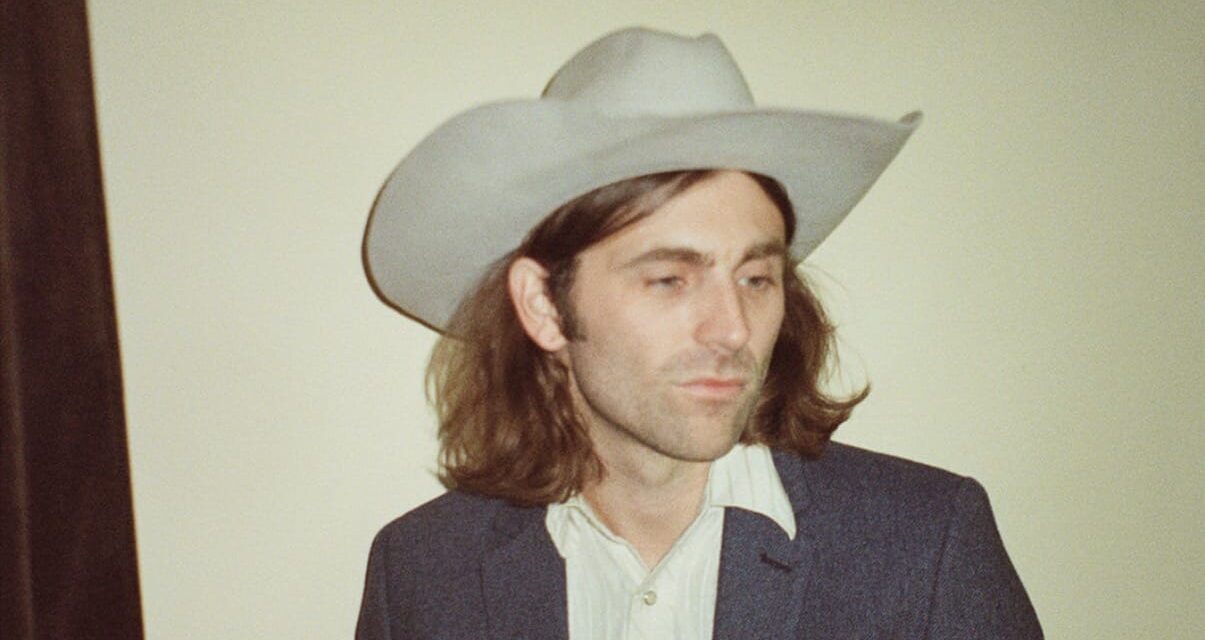
The Boise-based folk and western songwriter opens the door to Prison Of Tears with a song that feels like both midnight confession and emotional survival.
There are songs that describe heartbreak, and then there are songs that sound like they were written from inside the exact hour it happened. Freeman DeJongh’s new single “Can I Live Here Tomorrow” belongs to the second category. It does not circle pain from a safe distance. It sits inside it—softly, honestly, and with just enough hope to keep the whole thing breathing.
Released March 6 ahead of his forthcoming album Prison Of Tears, the track arrives as a vulnerable plea wrapped in twang, atmosphere, and the kind of emotional directness that can only come from someone writing because they have to. For DeJongh, this is not simply another single. It is a confession, an apology, and a way of enduring feelings too large to carry in ordinary conversation.
That immediacy is part of what makes the song so affecting. It began, like many of his songs do, late at night—born from sadness, remorse, and the aftermath of having hurt someone he deeply loved. From there, it became something larger through an almost instantaneous creative exchange with longtime collaborator Treyson Krasowski, who responded within half an hour with piano, expanded melodies, and new lyrical ideas. The result is intimate not just because of what it says, but because of how it came into being: two people awake in the same emotional hour, building a song before daylight could flatten it.
Musically, “Can I Live Here Tomorrow” feels characteristic of what makes DeJongh’s work distinct. He draws from folk, western, country, jazz, and something more dreamlike—an eerie spaciousness shaped by pedal steel, acoustic textures, and subtle atmosphere. But none of that ever feels decorative. The sonic world exists in service of feeling. Warmth and distance sit side by side because the emotions themselves do.
That quality seems deeply connected to DeJongh’s listening life. He speaks of formative nights spent in his grandmother’s basement, listening with his father to Van Morrison, Curtis Mayfield, Don Henley, Traffic, Jimi Hendrix, and The Allman Brothers—not as passive background music, but as something to sink into fully. That early education in feeling sound, rather than just consuming it, runs through his own work. His songs don’t just tell stories. They hold emotional space.
For Mundane Magazine, Freeman DeJongh reflects on writing from remorse, the meaning behind the song’s title, collaborating in the middle of the night, the emotional legacy of Astral Weeks, and why Prison Of Tears may be the most honest work he has ever made.
Question: “Can I Live Here Tomorrow” feels like a midnight confession whispered before the world wakes up. What emotional state were you in when this song first arrived, and what did it allow you to say that ordinary conversation couldn’t?
Answer: This song was written late at night as many of my songs are. What state was I in? Hmm, I was sad, remorseful, introspective—I’d recently hurt someone I really loved. This is a love song, an apology—a song begging someone to hear me say, “I am sorry.” Songs allow you to build a world around a feeling, a larger expression—they allow you to say something in a much more elaborate and expressive way.
Question: There’s something deeply human in the title itself—it carries uncertainty, tenderness, and almost a quiet plea for belonging. What does “Can I Live Here Tomorrow” mean to you beyond the literal words?
Answer: It means—“Will you let me exist in your heart tomorrow? Can you hear me saying I’m sorry?” You know—“I’ve got so many things to say to you.” It begs for another chance.
Question: The song seems to sit at the intersection of love found, love lost, and the question of how we affect the people around us. When you were writing it, were you searching for answers, or simply trying to survive the questions?
Answer: I was trying to survive the feelings. I was trying to recycle something painful that I created into something beautiful I could also create.
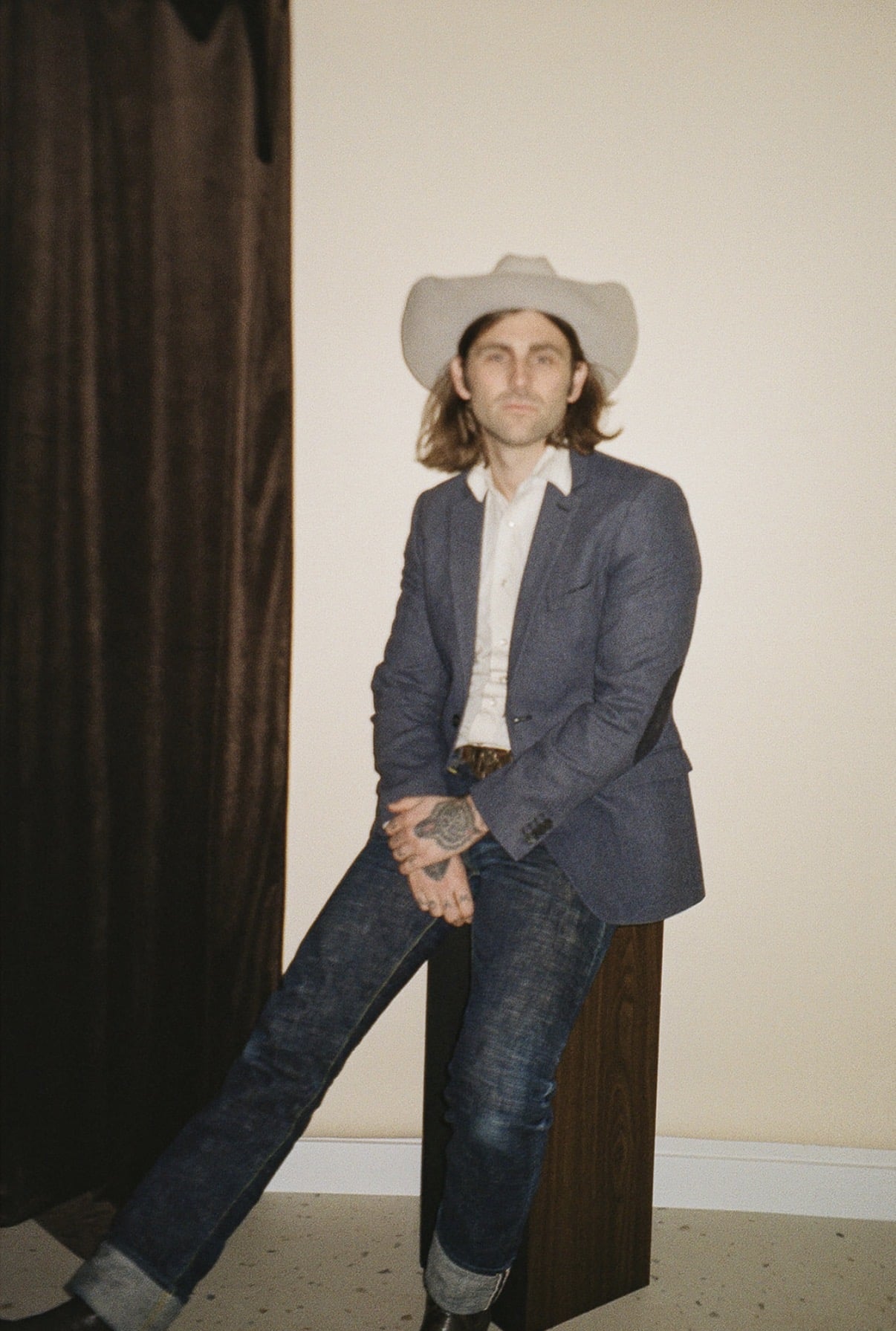
Question: Knowing the song began as a late-night voice memo and was answered so quickly by Treyson Krasowski adds another layer of intimacy to it. What did that near-instant creative exchange unlock in the song that might not have happened in daylight?
Answer: Trey and I make a lot of music together, we think the same about music, people, life. We share many similar experiences and have the same values. He is always one of the first people I share ideas with because neither of us will judge an idea, we’ll just go, okay—there is something here—how do we help it grow? When you connect with someone in the same time and place you can start to make assumptions that maybe this moment was meant to be. God, the universe, cosmic connection. I don’t think about it that hard. I like making music with my friends and I’m lucky my friends live on the same wavelength that I do.
Question: Your music often feels rooted in place—not just geographically, but spiritually. How much do the mountains of Idaho and the natural quiet around you shape the emotional architecture of your songs?
Answer: That’s interesting. I’ve made lots of landscape music but Idaho has nothing to do with this song. This song is from my heart, it could happen anywhere and my goal in expressing what I expressed in this song was to connect with the larger heart of the universe.
Question: There’s a beautiful tension in your sound: pedal steel, old-time acoustics, synth atmospheres, and a kind of ghostly spaciousness all coexisting. How do you know when a song needs warmth, when it needs distance, and when it needs both at once?
Answer: I have no idea what a song needs until I start playing it—they aren’t my ideas, I just listen and play what the song tells me to play. Usually it’s pretty obvious what it is asking for. These instruments are my tools and part of my style and aesthetic and they are the instruments through which I feel most comfortable letting music flow through me. I do like eerie sounds, space, I know desolation—this is how I feel so I guess those are the sounds that find me.
Question: You’ve described music as something that helps make life’s heaviest moments bearable. Was “Can I Live Here Tomorrow” written from inside that heaviness, or from the hope of finding your way out of it?
Answer: Both. It was very much written inside of it and is also my tried, tested and true way to bear it. I’m not sure that I’ve found my way out, does anyone?
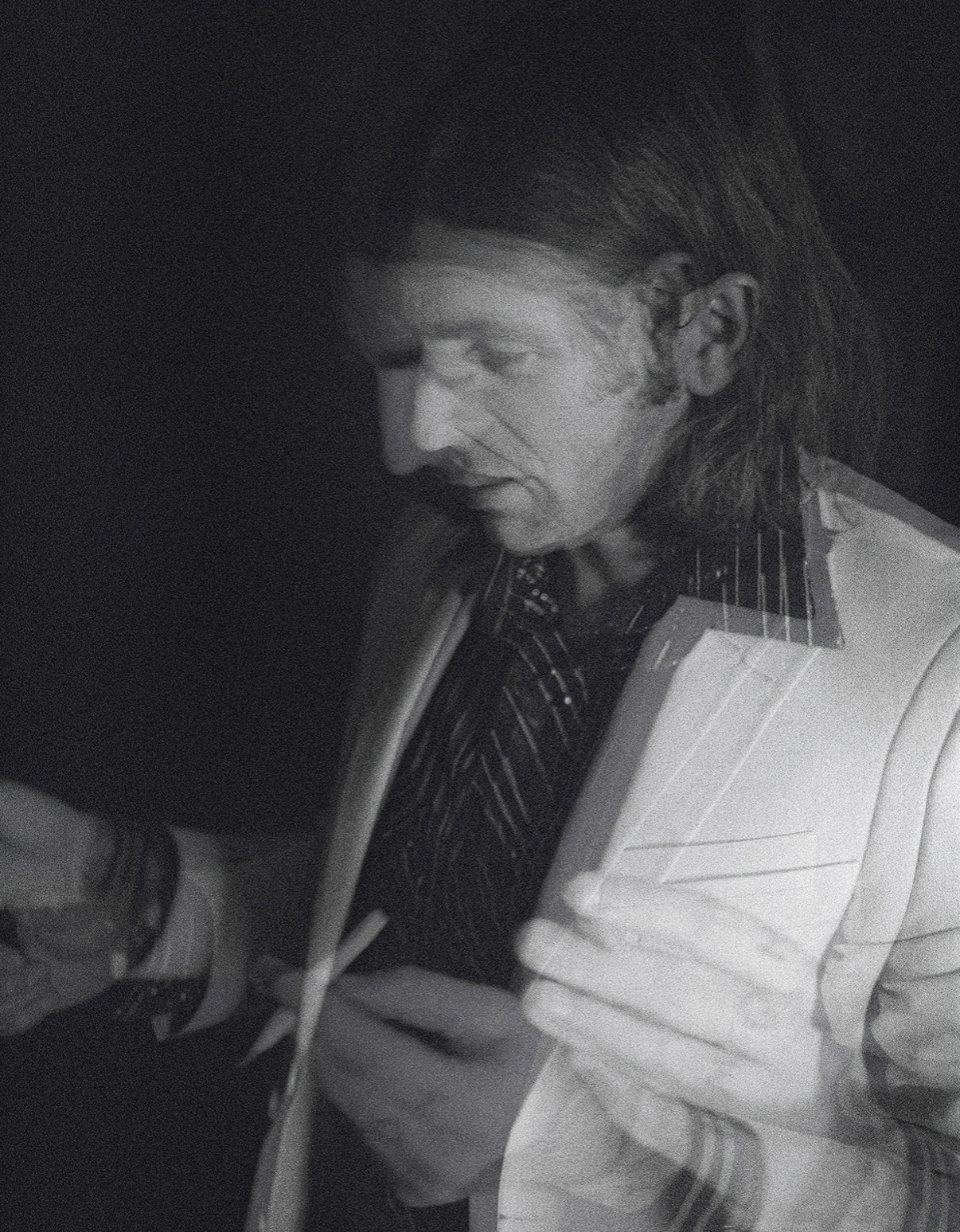
Question: The reference to listening to Astral Weeks in your grandmother’s basement feels incredibly formative—almost like an origin point. What did those early listening experiences teach you about the kind of emotional world you wanted your own music to hold?
Answer: I know how to feel music. A lot of people are losing that, they see music with their eyes on TikTok or social media or whatever. If you can’t feel anything, what the fuck are you doing? My Dad taught me how to listen to music, how to sit there with your feelings and just sink into it. Those nights, we’d sit there for hours, he’d burn cigarettes and we’d be on the corduroy couch, we’d listen to Van Morrison, Curtis Mayfield, Don Henley etcetera. That was in my Grandma Wanda’s basement out in the corn country, near Red Oak, Iowa—one of my favorite places on Earth.
The first time I smoked weed was with my Dad on that couch and we listened to “Dear Mr. Fantasy” by Traffic and then Electric Ladyland by Jimi and then Live at the Fillmore by the Allman Brothers. I remember “Dear Mr. Fantasy,” that arpeggiated guitar coming in slow, then Steve Winwood’s voice. I remember listening to that over and over just mesmerized. I still have that exact record. It’s super special to me.
What did it teach me? Maybe not to be afraid to feel. How to tap in. How to not hide from sadness. Also, that’s all I knew—that’s literally what we did every night. That was all my Dad, Jim DeJongh. Every song I write has him in it, every single one, and he’s usually the first person to hear a new song. He’s always bought me guitars. When we hang out, we still just listen to music and smoke. He texts me songs I’ve never heard almost every day.
Question: Your songs seem to roam freely between folk, jazz, country, western, and something more dreamlike or spectral. Do you see genre as a language for expression, or more as something to move through and leave behind?
Answer: I don’t think about genre at all. I like it all. I just make what I feel or what I’m interested in. I spend most of my time studying music, learning, going through books, usually it’ll show up in a song. I think that’s how it goes for a lot of folks.
Question: If “Can I Live Here Tomorrow” is a centerpiece of Prison Of Tears, what does it reveal about the emotional landscape of the album as a whole—and where does this song sit within your larger journey as a songwriter?
Answer: It sort of lays the foundation of the sentiment of the album as a whole—it is the first song on the album. Prison Of Tears is an album about crying my eyes out. It’s an album about saying I’m really fucking sorry. It is 10 songs and they’re all love songs. I wrote them all for her.
I’m not the kind of songwriter who sits down and tries to write clever songs or whatever. It’s a necessary thing for me to stay alive—sometimes it’s the only thing I feel that I can do right. I’ve been writing songs since I was like 10 years old, so these are just another mile marker on my journey—but these songs are the most honest songs I’ve ever written. I said everything I had to say in them. I didn’t write anything on paper, I just sang what came to me. I wanted to be purely expressive. I wanted it to come from the heart. I wanted her to know I really meant it. That’s really it. I wanted to make something beautiful for someone I truly love and leave it to hope that she’ll hear my sincerity in it.
What makes Freeman DeJongh’s work resonate is not simply that it is emotional. It is that the emotion never feels dressed up for effect. “Can I Live Here Tomorrow” is deeply vulnerable, but not in a curated way. It feels like the result of someone trying to survive his own feelings long enough to turn them into something another person might be able to receive.
That quality seems likely to define Prison Of Tears as a whole. If this song is the foundation, the album promises not an abstract meditation on heartbreak, but a direct passage through it—ten love songs, ten apologies, ten attempts to say what ordinary speech cannot hold.
And maybe that is what DeJongh understands so clearly: some songs are not written to explain pain. They are written to remain alive inside it, and maybe, if they are honest enough, to let someone else hear the sincerity buried underneath the wreckage.