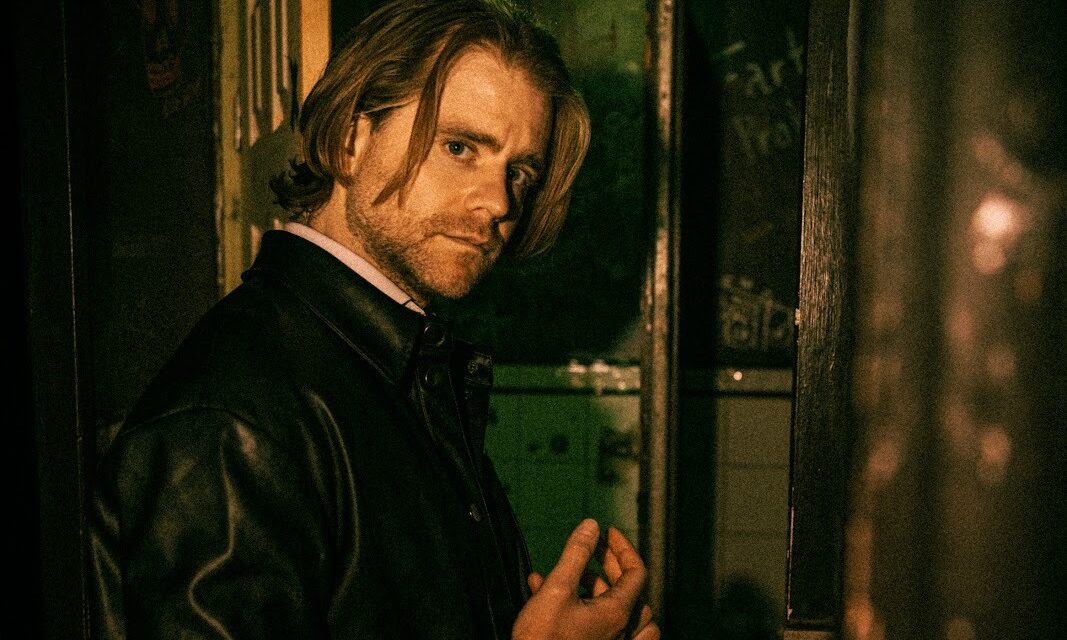
From Los Angeles dive bars to Camden’s late-night stages, Kyle T. Hurley is building a transatlantic sound rooted in memory and instinct.
American-born singer-songwriter Kyle T Hurley has quietly been crafting something deeper than a standard release cycle. Now based in London and working closely with Spiritual Records, Hurley is preparing to unveil his upcoming album KTH 3:16, introduced by the new single “Ode to the Irish John”.
The track isn’t just another entry in his catalog—it’s a meditation on memory, influence, and the figures who shape us. Inspired by The Giver, the song explores the idea of a “memory keeper”—someone who carries emotional weight and passes it on, intentionally or not.
That concept sits at the heart of Hurley’s current era. His music—somewhere between country, blues, rock, and a subtle 90s-grunge edge—feels less like genre fusion and more like lived experience filtering through sound. It’s instinctive, shaped by what he listens to, where he lives, and the environments he moves through.
From early days in the Los Angeles club scene to recording in historic studios like Abbey Road, Hurley has built a career that bridges tradition and experimentation. But it’s London—specifically Camden’s ever-evolving creative ecosystem—that’s become the catalyst for this next chapter.
Working with producer Jack Trouble and a tight-knit creative circle at Spiritual’s Camden venue, Hurley has found a space where risk is encouraged and originality is expected. Add in the visual direction of Tony Kaye—known for his striking, emotionally intense work—and this era begins to feel fully realized, both sonically and visually.
For Mundane Magazine, Hurley reflects on the emotional core of “Ode to the Irish John,” the influence of living between cultures, and why authenticity remains the hardest—and most important—thing to achieve as an artist.
Q&A with Kyle T Hurley
Question: Your music blends country, blues, rock, and even a hint of 90s grunge energy. When you’re writing, do you consciously navigate those traditions, or do they simply emerge as instinct?
Answer: A lot of what I write comes from what I’m listening to at the time. That usually hits all those categories—rock, blues, country, definitely a lot of 90s influence. It’s all just what I’ve naturally gravitated toward my whole life.
Question: “Ode to the Irish John” references The Giver, a story about memory and its burden. What drew you to that concept?
Answer: I first read it as a kid and it always stuck with me. Watching the film later brought it all back and made me revisit it as an adult—it resonated even more. The idea of “the giver,” that mentor figure who leaves a lasting impact, is something I think everyone encounters at some point.
Question: You’re an American artist building this chapter in London. How has that shift shaped your storytelling?
Answer: It’s given me a deeper appreciation for roots-based writing and honesty. The UK is very connected to traditional songwriting, but also very open to new ideas. That balance really influences how I approach music now.
Question: Camden Town has always been a cultural crossroads. What does that environment give you creatively?
Answer: Camden is a hotbed for original music. People are receptive to new sounds, so it makes taking creative risks easier. It’s one of the best places to sharpen your ideas.
Question: Your songs often reflect the nightlife of Europe and the wandering life of a musician. Do those moments feel more like inspiration or survival?
Answer: Inspiration. The best performances I’ve seen aren’t in big stadiums—they’re in quiet rooms late at night when an artist taps into something real. That’s where the magic is.
Question: Working with Spiritual Records and producer Jack Trouble—what did that collaboration unlock?
Answer: It opened up ideas I wouldn’t have explored on my own. Finding your sound is exhausting, and having someone push you into new territory makes a huge difference.
Question: The artwork for this era is shaped by Tony Kaye. How did that collaboration influence the visual identity?
Answer: It defined it. I gave him full freedom. When you work with someone like that, you trust them. You don’t put a saddle on a mustang.
Question: You’ve recorded in iconic studios like Abbey Road. Does that legacy affect your creative mindset?
Answer: Honestly, not really. Those places can feel sterile. The magic comes from people and energy, not the name of the studio. That can happen anywhere—even in a living room.
Question: How do you honor tradition without being trapped by it?
Answer: By being true to myself. You can’t escape your influences, so you work with them instead of against them. Finding your own sound is the hardest part.
Question: With KTH 3:16 on the horizon, what does this album reveal about where you are in life?
Answer: It’s about making people think—about memory, movement, belonging. For me, it’s understanding that you shouldn’t chase the past, but you can’t escape it either.
There’s something quietly compelling about the way Kyle T Hurley approaches music. No forced reinvention, no over-explained identity—just a continuous process of absorbing, reflecting, and creating.
With “Ode to the Irish John” setting the tone, KTH 3:16 feels less like a statement and more like an open question—one rooted in memory, shaped by movement, and carried forward by instinct.