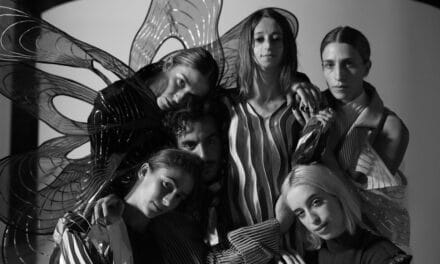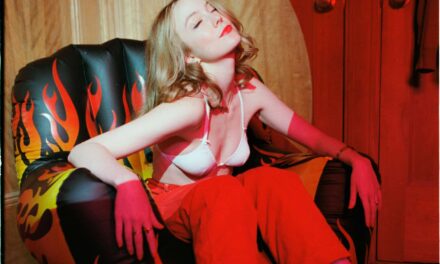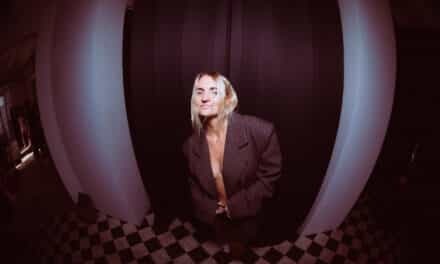
With two tracks, two characters, and no easy moral center, the Italian artist transforms her latest EP into a living emotional experiment about power, withdrawal, identity, and choice.
For OBA, pop is not supposed to sit politely in the background. It is supposed to pass through the body, create friction, leave a mark.
That philosophy sits at the center of What’s Your Move?, the new EP from the Italian singer-songwriter and visual artist, released March 6. More than a conventional two-track release, the project unfolds like a psychological scenario: two songs, two opposing forces, and one open question left hanging over the listener.
Not what do you think?
Not which song do you prefer?
But: what’s your move?
It is a challenge as much as a title.
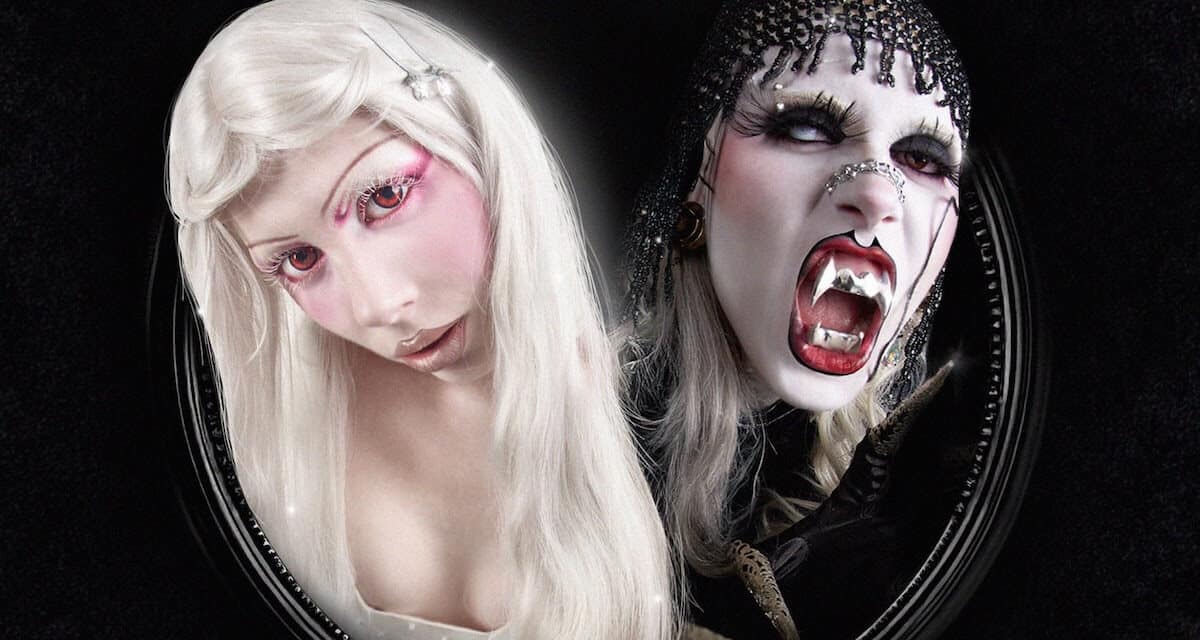
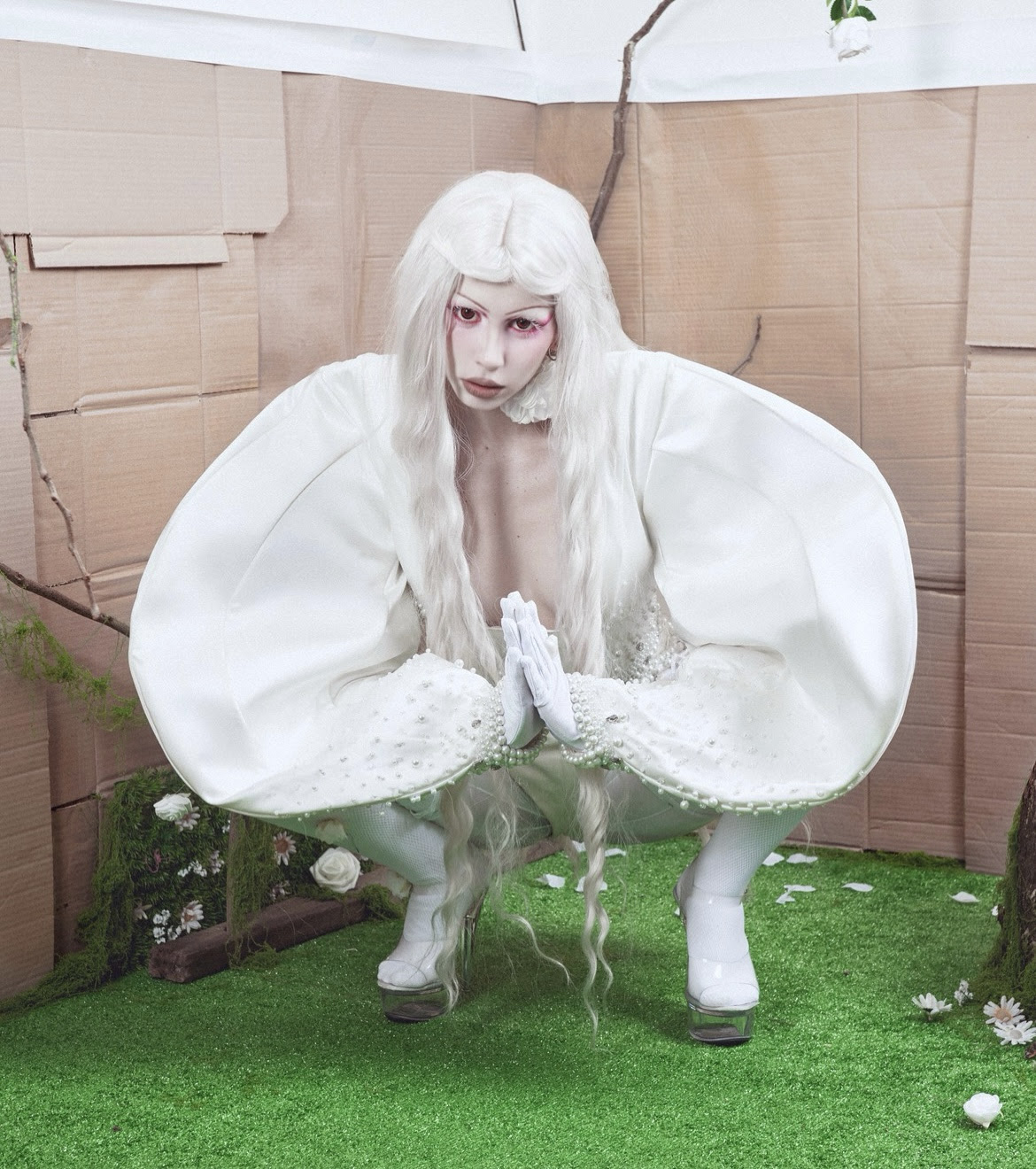
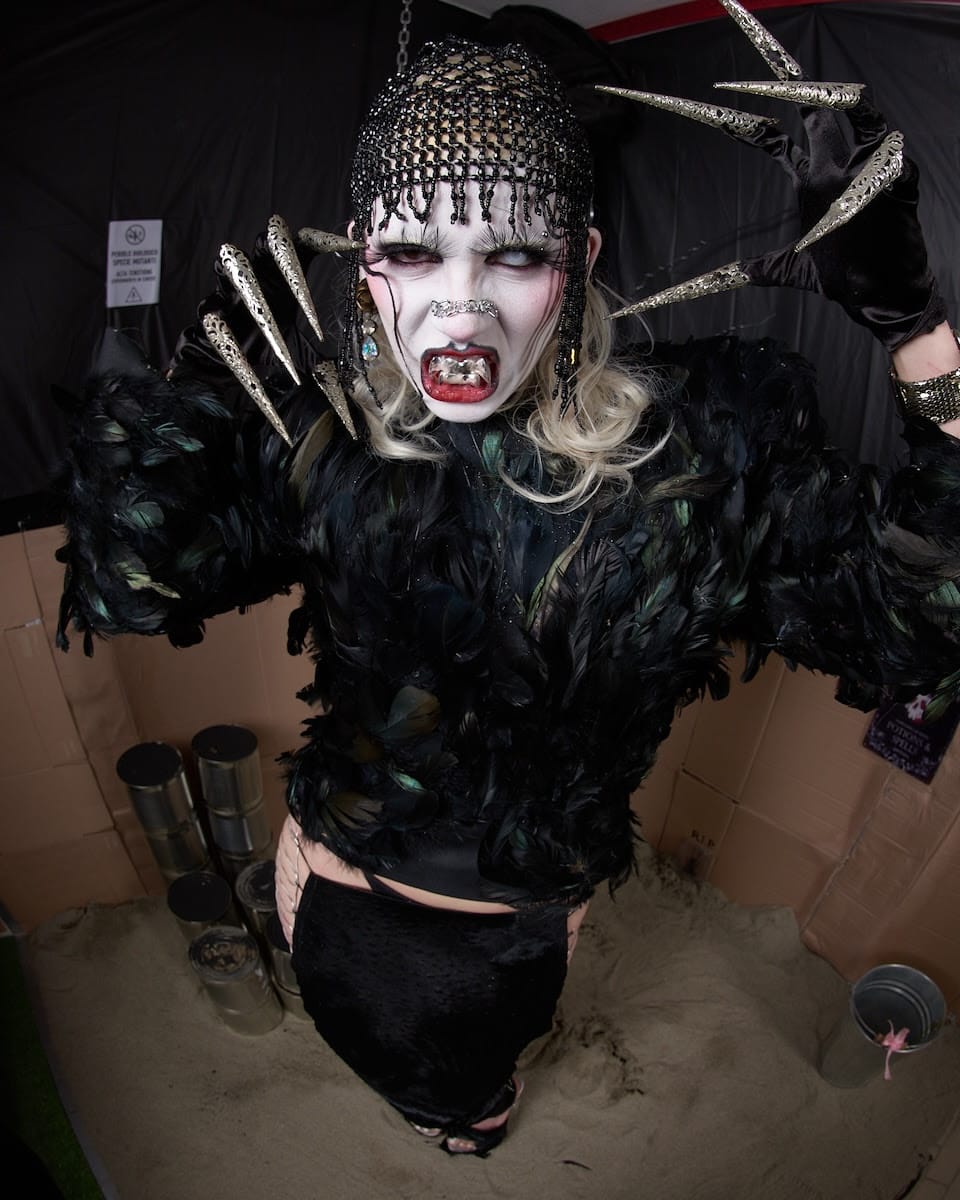
Built around the two tracks “White Fly” and “Mantis,” the EP stages a confrontation between emotional strategies pushed to their extremes. One withdraws, slows down, disappears from the swarm in order to survive. The other watches, seduces, manipulates, and strikes. Vulnerability versus control. Retreat versus domination. Silence versus consumption.
And OBA does not keep those energies abstract. As she has done throughout her work, she physically embodies both figures, turning the songs into something beyond audio: a multisensory, performative world where gesture, costume, space, and presence are all part of the same language.
That approach makes perfect sense within her larger artistic universe. Born in Brianza in 2001, Giulia Alborghetti, known as OBA, has built a project that moves across music, visual art, performance, set design, and handmade production. Her work blends pop, R&B, alternative, and experimental influences, but just as importantly it refuses to remain only sonic. Each release becomes an ecosystem. A place. A symbolic terrain to step into.
With What’s Your Move?, that terrain is especially charged.
“Mantis,” the EP’s focus track, occupies the darker pole of the project. It explores emotional manipulation, magnetic toxicity, and the unsettling pull of people who gain power by destabilizing others. Sonically, it lives in an electronic alternative-pop space: tense, aggressive, lucid. It does not ask for redemption. It stares directly into the dynamics of emotional predation and lets the danger stay visible.
“White Fly,” by contrast, takes the opposite route. It is the song of someone submerged in conflict, overstimulation, and noise, who chooses not to fight on those terms. Instead, they step away. Not as surrender, but as a form of preservation. It is a quieter move, often misunderstood, but one that protects integrity and keeps a light alive. Musically, it leans into pop tension, R&B sensitivity, and wider melodic openings—creating a striking contrast with “Mantis.”
Together, the two tracks feel less like opposites than reflections. Different responses to the same emotional pressure.
For OBA, that duality is essential. These are not just two fictional roles. They are archetypes, yes—but also energies that exist inside everyone. And that is what gives the project its psychological charge: the listener is not allowed to remain neutral for long.
That tension extended beyond the music with an immersive live event at La Redazione di Scomodo in Milan on March 7, where the EP became a real environment. Not simply a concert, but an interactive space where the audience physically entered the habitat of White Fly and Mantis, exposed themselves to the project’s symbolic world, and were asked to choose a side.
White or black.
Fly or mantis.
For Mundane Magazine, OBA reflects on how two songs became an emotional experiment, why performing characters through the body changes their meaning, what fascinates her about manipulative personalities, and why her answer to “What’s your move?” right now is simple: roll the dice.
Question: What’s Your Move? frames the EP more like an emotional experiment than a traditional release. When did you realize this project needed to function more like a psychological scenario than just a collection of songs?
Answer: At first it was not meant to be an experiment. They were simply two songs. Then I realized they were starting to speak to each other. They had opposite energies, and by chance even the titles were two insects. That was the moment I understood I had to follow what the songs were asking from me and let them interact. So I decided to build a habitat where they could coexist. White Fly and Mantis become a mirror, one that takes away your ability to stay neutral. Sooner or later you have to understand which one you are choosing to be in order to survive. That’s where the question comes from: What’s your move?
Question: The two tracks, “White Fly” and “Mantis,” represent opposite emotional strategies: withdrawal versus domination. Do you see them as two sides of the same person or as completely different archetypes?
Answer: They are both. They are very clear archetypes, but they are also two energies that exist inside every one of us. You can choose to live more like White Fly, staying solid and stepping away from dynamics when they become rotten. Or you can live more in the energy of Mantis—magnetic, sexy, but also manipulative, obsessed with control, and full of emotional tension. They are two very different ways of being in the world, but in the end we all carry both.
Question: In this project you physically embody both characters. What happens to your understanding of them when you perform them through your body instead of just writing them?
Answer: When I write them, they remain ideas. When I perform them and pass them through my body, they become much clearer even to me. The way I move changes, the gaze changes, the way I occupy space changes, and I really understand what kind of energy I’m embodying. White Fly and Mantis have completely different presences, and performing them helps me distinguish the two instincts more clearly, channeling them as different energies and not just as characters. That way I can communicate shades of these personalities that words alone could never fully tell.
Question: “Mantis” explores manipulation, attraction, and emotional power dynamics. What fascinates you about the psychology of people who control others through charisma and emotional tension?
Answer: What fascinates me is the fact that, even after years of therapy and searching for my inner light, I still remain one of the favorite victims of Mantises. I have tried everything, even salt in the corners of the house and every kind of ritual, but nothing works. I always fall into their sexy traps. I have to acknowledge the talent.
Question: On the opposite end, “White Fly” chooses disappearance over confrontation. Do you see walking away from chaos as weakness, or as one of the most radical forms of strength?
Answer: White Fly does not run away. It steps away as a form of position-taking. In certain games, stepping away is the most radical act you can make. We live in a society that constantly pushes us to be louder than everyone else. White Fly does not avoid confrontation, it avoids dirty confrontation and chooses to remain solid. That is its move.
Question: You have said that pop should “pass through the body” and create friction. How does that physical sensation show up when someone encounters your music or performances for the first time?
Answer: My project is born from friction and from emotional and visual impact. It is an exchange with the audience—it does not exist without the people who enter into it. Everything revolves around choice and taking a very human position. My motto is: “Do you throw the dice or just watch them?” That’s why I also create themed events beyond concerts, where people can truly enter the project and experience it as something immersive. There they can move through the imagery and live all its elements firsthand. It is not something that only exists behind a screen. Live, it becomes far more powerful and physical.
Question: Your work merges music, visual art, costume, performance, and installation. At what point did you understand that writing songs alone was not enough to fully communicate the world you wanted to build?
Answer: Music is the core, and it can exist on its own. But sacrificing everything else would mean sacrificing a part of my natural creative process. When I create music, images, materials, ideas for space, and ideas for how something should take form all come to me together. The project is born that way already, in 360 degrees. That’s why I express myself through different mediums.
Question: The immersive event at La Redazione di Scomodo in Milan turned the EP into a real environment where the audience had to choose between White Fly and Mantis. What did you hope people would discover about themselves by being forced to take a side?
Answer: It was very interesting to see how willing people were to defend the side they had chosen in themselves. Some chose very instinctively, others maybe because they were drawn to the aesthetics of White Fly or Mantis. But then you also have to take on the other side of that character, the counterpart. And it becomes even more interesting when you have to explain that choice. During the evening, some people from the audience were even interviewed specifically about this.
Question: Many of your projects touch on identity, emotional vulnerability, and LGBTQIA+ expression. How do you balance creating something deeply personal while still leaving room for collective interpretation?
Answer: I always start from something very personal. The balance lies in not wanting to control too much how it will be interpreted. I bring my experience, and then I leave space for people. Everyone finds their own point of entry, and at that moment my story also becomes theirs.
Question: At the center of the EP there is a question instead of a statement: “What’s your move?” When you ask yourself that question today—artistically and personally—what answer do you arrive at?
Answer: When I ask myself that question today, the answer is to throw the dice. To keep building this game, to play it by my own rules, and sometimes to sabotage the rules I find already written. To choose movement regardless of everything.
What makes OBA’s work compelling is not just that it is conceptually ambitious, though it is. It is that the concept never feels detached from the body. Everything comes back to embodiment, sensation, presence, and the emotional consequences of choice. In her hands, pop becomes less a genre than a testing ground—one where identity is unstable, aesthetics are strategic, and the audience is never merely observing.
That is the real force of What’s Your Move? It does not present emotional dynamics from a safe distance. It stages them. It asks you where you stand. It asks what kind of energy you turn into when pressure rises. Do you disappear to preserve yourself? Do you control before you can be controlled? Do you watch, or do you act?
OBA does not offer a moral answer. She offers a game, a mirror, and a risk.
And maybe that is what makes the EP linger. Not because it tells you who to be, but because it quietly removes the option of pretending you have not already chosen.