Featuring The Last Poets’ Abiodun Oyewole and Baba Don Babatunde, Bryan Lurie’s SYNACURE turns poetry, house music and social consciousness into a question about community, identity and what music can still accomplish when people come together.
“Who are we now?”
In the hands of SYNACURE, the question isn’t rhetorical. It is personal, political and spiritual at once. It asks us to examine the communities we claim as our own—and whether those communities are capable of expanding their definition of who belongs.
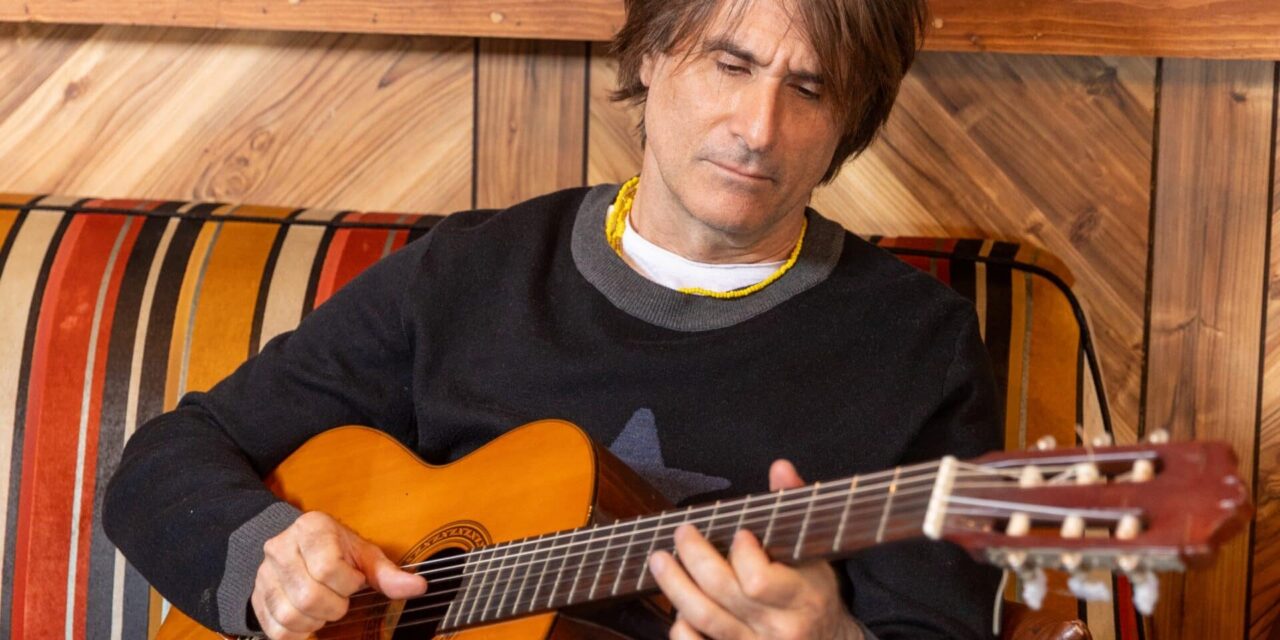
For Bryan Lurie, the New York musician and producer behind SYNACURE, the question began with someone else’s words.
Years ago, Lurie engineered Omi Tutu, a record by Abiodun Oyewole and Baba Don Babatunde of The Last Poets. Among its pieces was Oyewole’s poem “We’re Not Well Here.” It stayed with him.
“Sometime after that, I was listening to the album, and that poem struck me,” Lurie remembers. “It jumped out to me as a piece that had multiple meanings and spoke to all of us in this moment.”
Eventually, he began hearing something new inside it.
“I felt certain elements of the poem could be emphasized, and could get people moving and thinking at the same time.”
The result is “Who Are We Now?,” SYNACURE’s sophomore single, released via Lurie’s independent ZIQ STREET RECORDS. Featuring Oyewole and Baba Don, the track transforms the source material into soulful house music without stripping away its urgency. Political division, spirituality, identity and collective responsibility coexist with a groove designed for movement.
That combination is central to SYNACURE. For Lurie, thinking and dancing have never needed to be opposing activities.
The truth according to you
Socially conscious music can easily become prescriptive, particularly during periods of extreme political polarization. But Lurie is less interested in instructing listeners than in creating conditions for reflection.
“I think if you tell the truth, people can relate to what you’re saying,” he says. “You might disagree about certain things, but we all respect and want other people to tell us the truth as they see it.”
That philosophy makes Oyewole a particularly natural collaborator.
A founding member of The Last Poets, Oyewole brings a voice to “Who Are We Now?” that Lurie describes as both authoritative and deeply human.
“Abiodun has a SOUND,” he says. “His speaking voice is warm but also Shakespearean. It commands respect without asking for it. And yet it’s also intimate.”
For Lurie, that distinction matters. Oyewole isn’t simply delivering information.
“It’s not a newscaster’s voice, just reading the news—it’s the news and a reaction to the news at the same time.”
Baba Don Babatunde provides another essential element: rhythm. Having played percussion on the original recording, he returns on conga for SYNACURE’s reinterpretation.
“He has such a wide-ranging knowledge of percussion and rhythm that it gives a feeling of effortless groove to just about anything he plays on,” Lurie says. “His presence always feels like it was meant to be.”
Refusing the genre box
That meeting of spoken word, percussion and house reflects SYNACURE’s larger musical philosophy.
Lurie describes himself through multiplicity rather than genre. African and Latin traditions, funk, disco, hip-hop, house and organic instrumentation all exist within SYNACURE because they existed within his musical education first.
“These days you’re expected to fall into some specific niche or genre,” he says. “But if you grew up listening to all kinds of music, which I did, then that is your foundation.”
Trying to eliminate those contradictions for the sake of marketability, he argues, produces precisely the opposite of individuality.
“It’s the forcing yourself into a particular genre that makes you unremarkable. You are what you are made up of, which is many things.”
It’s an idea that extends beyond SYNACURE into the philosophy behind ZIQ STREET RECORDS. Inspired by a globally minded approach to music, Lurie created the independent label around eclecticism, collaboration and a resistance to easy categorization.
Rather than asking artists to become more legible to an industry built around niches, he wants the label to give them greater permission to remain complicated.
“I’m ultimately hopeful that we can join up with artists from around the world who refuse to be put into boxes of ‘this is what you do’ or ‘this is what your music is called,’ but who rather speak from their heart using all the influences that they as individuals experienced to make the art that they make.”
The objective, he says, is empowerment—and reaching “audiences who need originality, freedom and truth and individuality.”
From “I” to “we”
SYNACURE’s first single, “I Luv NYC,” might initially seem like a very different proposition. A kinetic, trance-inflected celebration of New York, it looks inward toward Lurie’s own city while “Who Are We Now?” confronts something much broader.
To Lurie, however, both songs revolve around the same tension between individual and collective identity.
“‘Who Are We Now?’ encourages introspection, but also encourages the recognition that you, the individual, are also a member of a group,” he explains.
The crucial next step is questioning whether that group actually embodies the values it claims.
“I think the song asks the individual to question their own group—whatever group they see themselves as part of—and ask whether that group is really living up to its own standards.”
“I Luv NYC,” meanwhile, is his own declaration of belonging.
“That’s MY group,” Lurie says. “There are a lot of problems, but I’m proud of us.”
For an artist whose philosophy rests on the belief that people who listen and dance together might also learn to live together, the dancefloor consequently becomes something more complicated than escapism.
But Lurie resists romanticizing it too neatly.
“Yes and no,” he says when asked whether dance music can function as healing or resistance. “Joy and fun are absolutely necessary, and like all necessities—political!”
For him, the distinction between music as pleasure and music as social force may itself be artificial.
“There’s no such thing as something that really moves you but is not on some level ‘healing’ or ‘political.’ Music—real music—and MAKING music—is sacred.”
Below, SYNACURE speaks with MUNDANE about The Last Poets, rejecting genre, New York identity, the politics of joy and why our definition of “we” might be one of the most important things we can reconsider.
MUNDANE: “Who Are We Now?” asks a question that feels deeply personal while also addressing the state of the world. Was there a specific moment that inspired you to write this song, or had this question been building inside you for years?
SYNACURE: The song is based on a poem called “We’re Not Well Here” by Abiodun Oyewole of the Last Poets, that he recorded with Baba Don Babatunde for a record called Omi Tutu. They did this record, which I engineered in my studio, years ago. Sometime after that, I was listening to the album, and that poem struck me—it jumped out to me as a piece that had multiple meanings and spoke to all of us in this moment. It was a moment of recognition. I felt certain elements of the poem could be emphasized, and could get people moving and thinking at the same time.
MUNDANE: The track explores political division, spirituality and our shared humanity without feeling preachy. How do you approach writing socially conscious music that invites conversation rather than tells people what to think?
SYNACURE: I think if you tell the truth, people can relate to what you’re saying. You might disagree about certain things, but we all respect and want other people to tell us the truth as they see it.
MUNDANE: Collaborating with Abiodun Oyewole and Baba Don Babatunde of The Last Poets connects your music to one of the most influential voices in spoken word and activism. What did their presence bring to the song that couldn’t have existed otherwise?
SYNACURE: Abiodun has a SOUND. His speaking voice is warm but also Shakespearean. It commands respect without asking for it. And yet it’s also intimate. It’s not a newscaster’s voice, just reading the news—it’s the news and a reaction to the news at the same time.
Baba Don played all the percussion on the original track and is playing conga on this reworking of the piece. He has such a wide-ranging knowledge of percussion and rhythm that it gives a feeling of effortless groove to just about anything he plays on. His presence always feels like it was meant to be.
MUNDANE: Your work consistently blends house music with African, Latin, funk, disco, hip-hop and organic instrumentation. How do you maintain a cohesive artistic identity while drawing from such a wide range of musical traditions?
SYNACURE: These days you’re expected to fall into some specific niche or genre. But if you grew up listening to all kinds of music, which I did, then that is your foundation. Which then becomes your legacy, if you stay true to it. It’s the forcing yourself into a particular genre that makes you unremarkable. You are what you are made up of, which is many things.
MUNDANE: You describe SYNACURE as music that “builds communities.” In an era where algorithms often divide listeners into niches, can music still create genuine collective experiences?
SYNACURE: Music is probably the best and most effective way people can create community. The niches and genres are mostly nonsense and are used to separate people, so they can be more easily reduced to stereotypes and then marketed to.
MUNDANE: Your debut single, “I Luv NYC,” celebrated the city’s diversity and cultural heartbeat, while “Who Are We Now?” feels much more introspective and globally focused. How do these two songs speak to each other?
SYNACURE: I think “Who Are We Now?” encourages introspection, but also encourages the recognition that you, the individual, are also a member of a group. And I think the song asks the individual to question their own group—whatever group they see themselves as part of—and ask whether that group is really living up to its own standards.
“I Luv NYC” is me saying, “I’m a proud New Yorker!” That’s MY group, and I think at their best New Yorkers are indeed living up to our own standards. There are a lot of problems, but I’m proud of us.
MUNDANE: Launching your own label, ZIQ STREET, gives you complete creative freedom. Beyond releasing your own music, what kind of artists and community are you hoping to cultivate through the label?
SYNACURE: I’m ultimately hopeful that we can join up with artists from around the world who refuse to be put into boxes of “this is what you do” or “this is what your music is called,” but who rather speak from their heart using all the influences that they as individuals experienced to make the art that they make.
Basically, I’m hoping we can empower artists. And with them, reach the audiences who need originality, freedom and truth and individuality.
MUNDANE: Dance music has always carried a political undercurrent—from disco to house to club culture. Do you see the dancefloor as more than entertainment, perhaps even as a space for healing or resistance?
SYNACURE: Yes and no. Joy and fun are absolutely necessary, and like all necessities—political! There’s no such thing as something that really moves you but is not on some level “healing” or “political.” Music—real music—and MAKING music—is sacred.
MUNDANE: The idea that “people who listen together and dance together can live, learn and love together” is central to your philosophy. Has there been a particular performance or moment that convinced you this belief was true?
SYNACURE: The whole decade of the ’60s and early ’70s spoke to people coming together over music. It wasn’t some bizarre coincidence that Bob Dylan, Nina Simone, the Beatles, Sly and the Family Stone, etc., and the peace movements, civil rights movements, women’s movement and the environmental movements all happened simultaneously.
MUNDANE: “Who Are We Now?” ultimately asks listeners to reflect on themselves as much as society. If someone walks away from the song asking one new question about their place in the world, what do you hope that question is?
SYNACURE: Ask yourself what you can do to make your particular group embrace a bigger “we” than it’s been embracing up to now.
That final idea may be the clearest expression of what SYNACURE is attempting—not only with “Who Are We Now?” but with the larger ecosystem surrounding the project.
For Lurie, community isn’t synonymous with sameness. In fact, the entire SYNACURE and ZIQ STREET philosophy appears built around the opposite proposition: that a meaningful collective becomes stronger when it makes room for more influences, more identities, more traditions and more ways of creating.
He points to the 1960s and early ’70s as evidence of music’s capacity to accompany profound cultural change, citing artists such as Bob Dylan, Nina Simone, the Beatles and Sly and the Family Stone alongside the civil rights, peace, women’s and environmental movements of the period.
Whether music can exercise that kind of collective power in an algorithmically fragmented culture is one of the questions sitting underneath “Who Are We Now?”
SYNACURE’s answer is to keep trying.
Dance together. Listen together. Question the groups we belong to. Refuse the boxes designed to make us easier to categorize.
And perhaps most importantly, ask whether the “we” we have inherited is big enough—or whether it is time to make it bigger.