There is something wonderfully contradictory about dance music.
It can be loud enough to drown out the world while simultaneously forcing us to confront something deeply personal. It can make us feel invincible while bringing us unexpectedly close to tears. And sometimes, beneath the synthesizers, distorted vocals, and relentless rhythms, it can communicate something that words alone never could.
For Taylor Felt, that contradiction has become the foundation of an artistic identity that exists somewhere between emotional introspection, futuristic pop experimentation, and unapologetic self-expression.
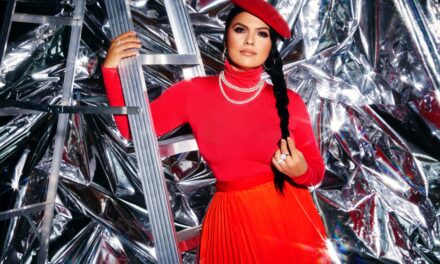
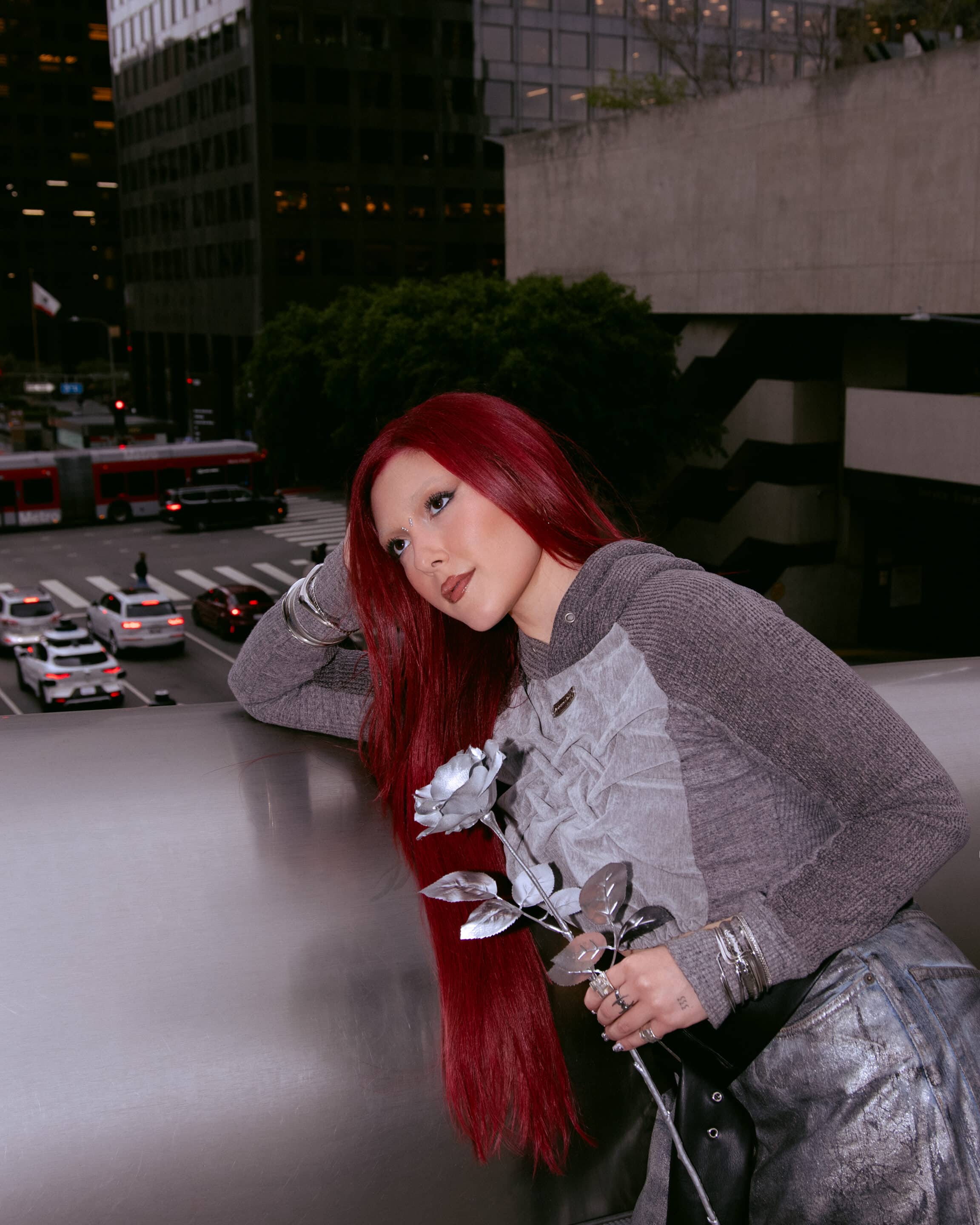
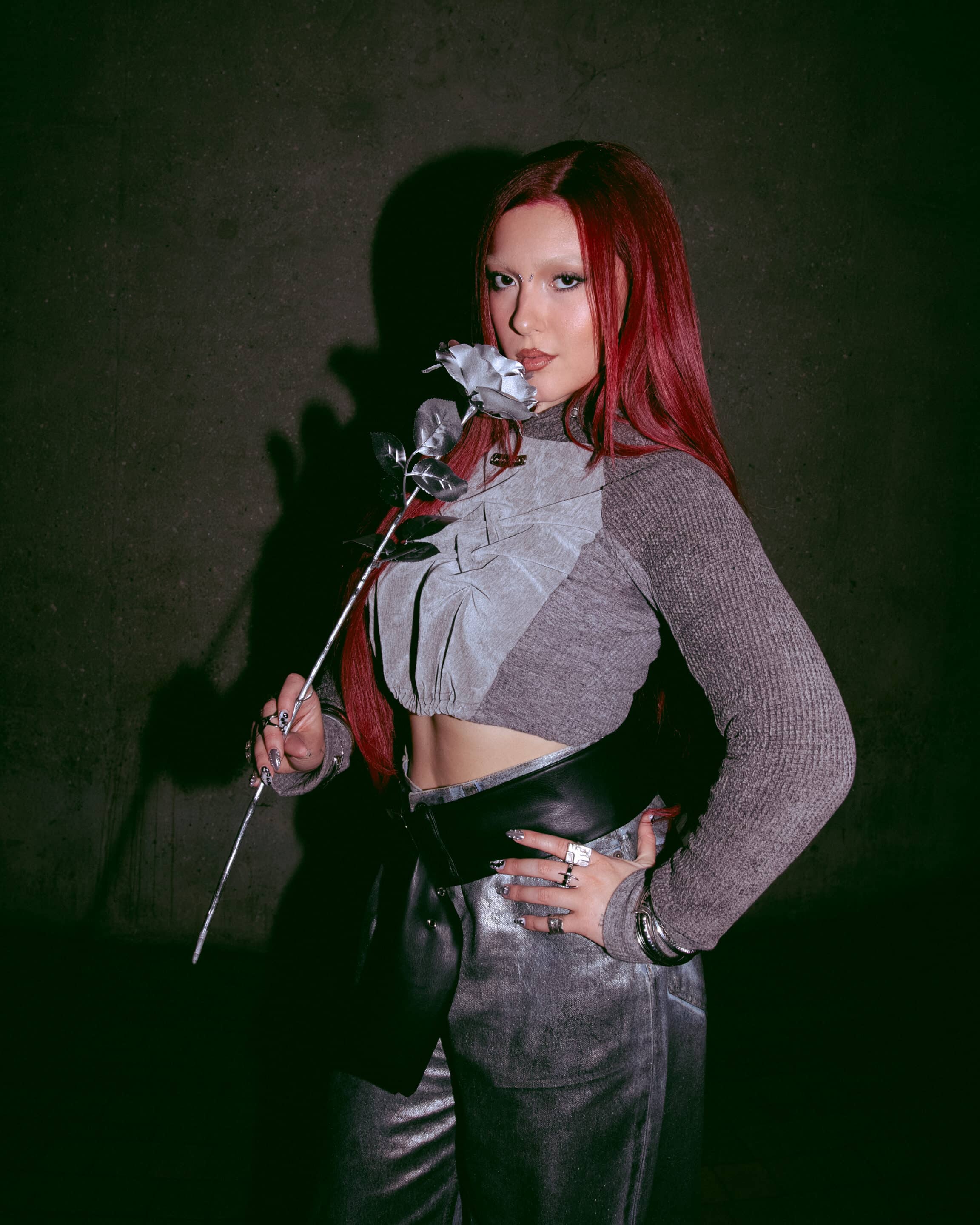
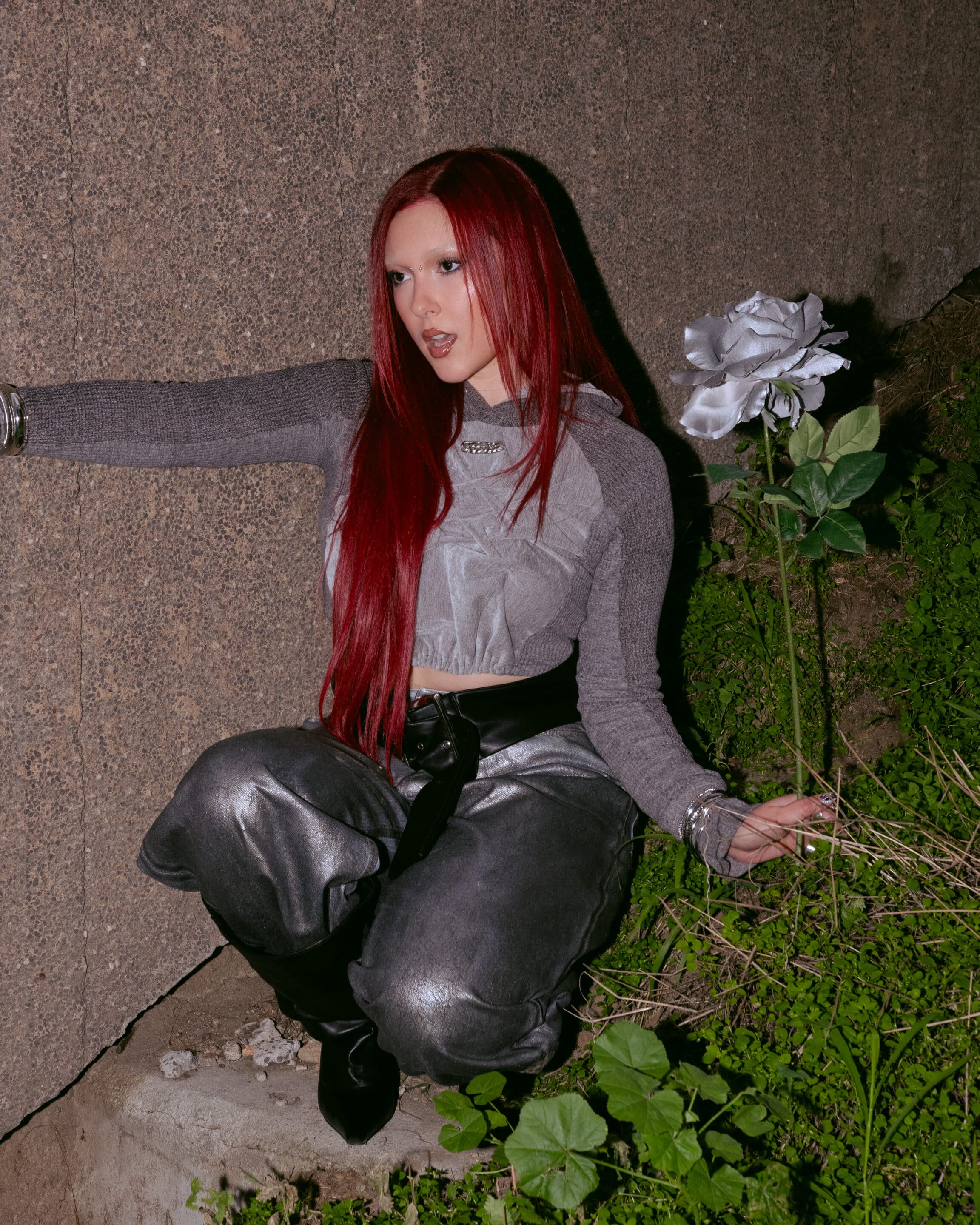
Her world is one of chrome flowers, industrial textures, vibrant colors, and electronic sounds that seem to belong equally to the past and the future.
But beneath its meticulously constructed visual identity lies a surprisingly intimate philosophy.
What if healing isn’t always about sitting with your sadness?
What if, sometimes, the most meaningful thing you can do is get up, move your body, and remember who you are?
That’s the emotional territory Felt explores through Electra Bloom, a project that represents a significant evolution from her previous EP, Dead Flowers.
Where the earlier record dealt with heartbreak and healing, Electra Bloom is about what happens afterward: the moment when self-acceptance begins to replace emotional survival.
“I really wanted the energy to be more about love and like inner growth and like inner acceptance,” she tells MUNDANE.
And rather than expressing that transformation through quiet contemplation, Felt has chosen something considerably more physical.
“I think the best way to heal is to like dance and move and like move it out of your body.”
It’s a philosophy that feels particularly relevant in a musical landscape where emotional vulnerability and escapism are too often treated as opposites.
For Felt, they are inseparable.
From Dead Flowers to Chrome Botanicals
Before writing a single song for Electra Bloom, Taylor Felt already knew what the project would be called.
The title existed on a whiteboard, waiting for the music to catch up with the world she had imagined.
She knew she wanted to maintain a connection to Dead Flowers, but she was no longer interested in telling the same emotional story.
If the previous project represented something dying, the next would represent its transformation.
“I wanted to continue that continuity with dead flowers as being the first EP. I wanted to do something about blooming and blossoming.”
She experimented with titles such as Eternal Bloom and Electric Bloom before arriving at Electra Bloom, a name that captured the tension between organic growth and technological futurism.
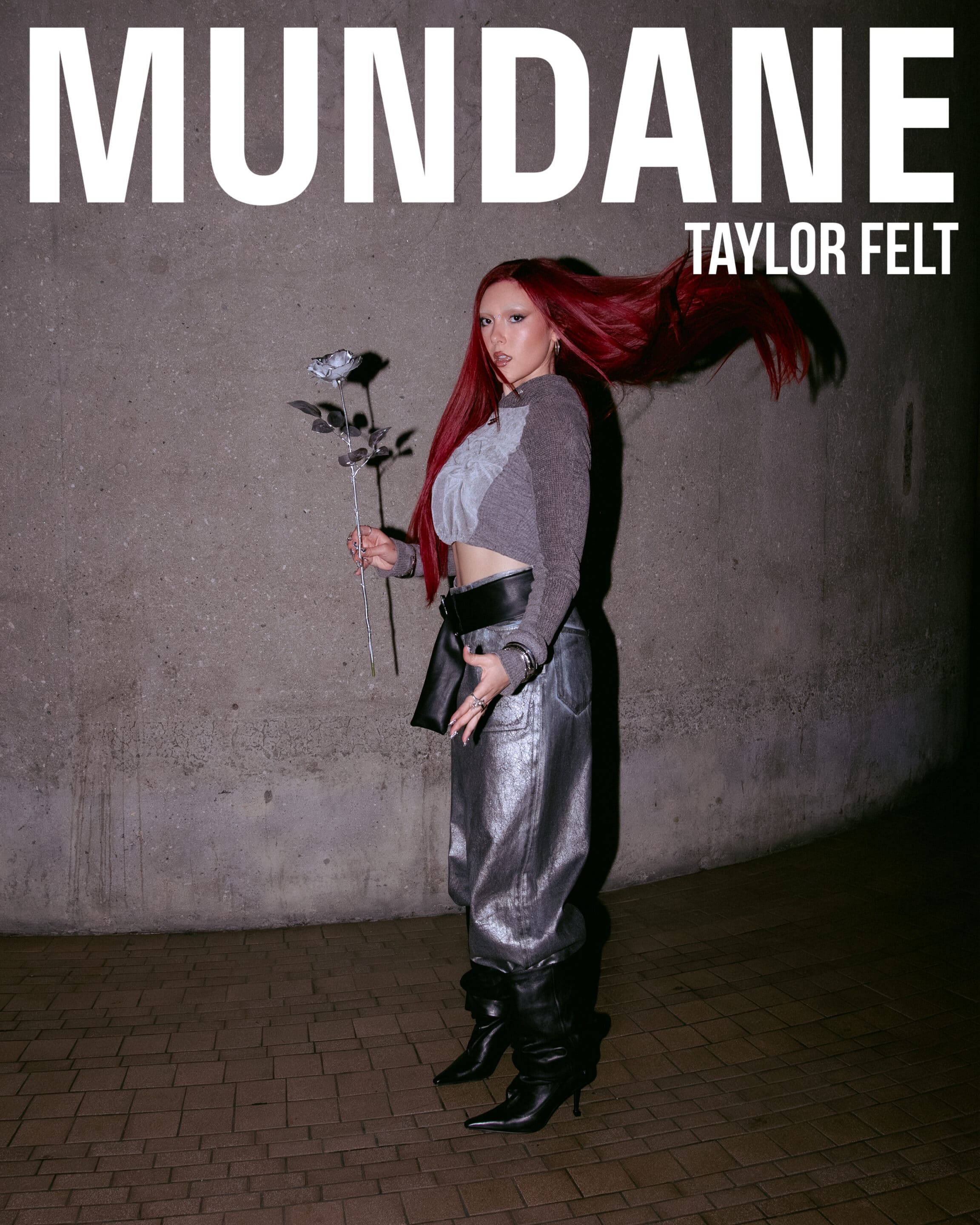
The concept eventually evolved into an aesthetic she describes as “chrome botanical.”
It’s an intriguing collision of opposites.
On one side are flowers, grass, sunlight, and the natural world.
On the other are concrete, chrome, brutalist architecture, and the synthetic textures of electronic music.
Felt associates those contrasting environments with the two cities that have become essential to her creative identity.
Los Angeles represents sunlight, space, and the opportunity to process inspiration.
New York represents industrial intensity, fashion, unpredictability, and a kind of unapologetic individuality.
Together, they form the visual and emotional architecture of Electra Bloom.
But the chrome flowers also carry a more personal meaning.
“I’ve poured so much love into myself. I have now planted the seed, I’ve blossomed and then I’ve cased it in chrome because nobody’s going to kill my flowers anymore.”
It’s an unexpectedly powerful image.
The flower remains delicate, but it is no longer defenseless.
Its beauty hasn’t disappeared. It has simply developed a new form of protection.
For Felt, this is what growth looks like after heartbreak: not becoming emotionally unavailable, but learning how to preserve the parts of yourself that once felt vulnerable to destruction.
New York’s Chaos, Los Angeles’ Calm
Although Felt lives in Los Angeles, she grew up in Connecticut, and her relationship with the East Coast remains central to her creative process.
During our conversation, she describes New York Fashion Week as one of the most significant environmental inspirations behind Electra Bloom.
The runway presentations, the music, the fashion, and the sheer intensity of the city left a lasting impression.
“Everyone just is so like authentic in New York. I feel like they embrace their authenticity.”
For Felt, the city’s fashion culture represents a willingness to experiment without constantly seeking approval.
That freedom translates directly into her music.
The industrial, glitch-heavy textures of Electra Bloom are not simply production choices intended to sound futuristic.
They are sonic interpretations of an environment.
“You could feel the concrete jungle in the kind of like industrial glitchy energy of the music,” she explains, emphasizing that the connection was intentional.
But New York isn’t necessarily where she needs to be to create.
In fact, she describes a process in which she absorbs the city’s energy before returning to Los Angeles to transform it into something new.
“I go to New York and I like sponge it all up and then I come to LA and it feels really calm. So then it allows me to like kind of absorb, alchemize it and then create it.”
It’s a revealing description of the relationship between experience and artistic production.
Inspiration doesn’t always arrive in the studio.
Sometimes it comes from walking through a city, watching a runway show, noticing an unusual outfit, or hearing a sound that would otherwise disappear into the background.
Felt is constantly collecting those fragments.
She records melodies into her phone, captures interesting noises, and photographs visual references that might eventually become part of a song’s identity.
Some of the music on Electra Bloom was even written in her childhood bedroom in Connecticut.
The location matters less than her willingness to remain receptive.
For Felt, songwriting isn’t a process that begins and ends with a melody.
It’s the construction of an entire world.
“I like to place myself into like my own little movie when I write a song. Like what does it look like? What would the music video look like? What would the person listening to the music, where would they be when they listen to it?”
It’s a cinematic approach to music that treats sound, fashion, visual storytelling, and emotional atmosphere as interconnected forms of expression.
Why Dance Music Deserves to Be Taken Seriously
One of the most fascinating parts of our conversation concerns a persistent misconception about electronic music.
Because dance music is so closely associated with clubs, nightlife, and collective pleasure, its emotional complexity can sometimes be overlooked.
The assumption is that music designed to make people move must somehow be less introspective than music built around acoustic instruments or traditional singer-songwriter arrangements.
Felt strongly disagrees.
“I think dance music sometimes gets a rap that it’s like surface level or like not full of depth.”
With Electra Bloom, she wanted to challenge that perception without sacrificing the genre’s physical immediacy.
Her goal was to make music that felt euphoric and emotionally meaningful at the same time.
That meant paying attention not only to the lyrics, but also to the emotional implications of the production itself.
The choice of a synthesizer, the placement of a vocal effect, or the texture of a particular sound could communicate as much as a written verse.
“Even storytelling with the melodies and and the instruments and the the sound selection. It was super intentional.”
Her influences reflect that philosophy.
She cites Lady Gaga as an inspiration for her fearless artistic vision and ability to create an entire universe around her music.
FKA twigs represents a similarly uncompromising relationship between sound, performance, and identity.
But one of Felt’s most formative experiences came from discovering Imogen Heap at a young age.
Hearing “Hide and Seek” and encountering its unusual vocal production fundamentally altered her understanding of what a human voice could become.
The song was strange, almost unsettling, but that unfamiliarity made it irresistible.
She remembers being fascinated by the possibilities of the vocoder and the idea that a voice could function as an instrument rather than simply carry lyrics.
She also points to producer Clams Casino, whose atmospheric electronic productions create an almost weightless emotional experience.
For Felt, the appeal lies in music that can feel synthetic and deeply human simultaneously.
“There’s some dance songs that like kind of make me want to cry in the club.”
It’s a sentiment that captures the emotional ambition of Electra Bloom.
The music doesn’t need to choose between euphoria and vulnerability.
It can contain both.
Bringing the Past and Future Into the Same Room
Another important influence on Electra Bloom is the dance-pop music Felt loved growing up.
She describes revisiting the sounds that excited her before she began thinking of music as a career.
The early 2010s, in particular, offered a distinctive combination of maximalist production, infectious melodies, and unabashed optimism.
Felt is drawn to the era’s crunchy synthesizers, choppy rhythms, and glitch-heavy textures.
“There was so much joy in the music,” she recalls.
Rather than simply recreating that sound, however, she wanted to combine it with the more experimental possibilities of contemporary electronic music.
Hyperpop, futuristic vocal processing, and unconventional production techniques became part of the same creative vocabulary.
The result is a project that treats nostalgia as something to transform rather than preserve.
It’s not about returning to the past.
It’s about recovering the emotional freedom that certain sounds once represented and allowing that freedom to evolve.
This is also where Felt’s fascination with fashion becomes particularly relevant.
Much like a designer combining archival references with contemporary materials, she approaches music as a conversation between different eras.
The familiar and the unfamiliar are not competing forces.
They give each other meaning.
Escapism as a Way of Finding Yourself
When I ask Felt about the role of escapism in her music, her answer takes the conversation in an unexpected direction.
For many people, escapism means temporarily forgetting who they are.
For Felt, it’s almost the opposite.
“I think the escapism is escaping into like your highest self.”
It’s a distinction that reveals a great deal about her artistic philosophy.
She isn’t necessarily interested in transporting listeners away from their identities.
She wants to create a space where they can reconnect with the most confident, liberated, and fearless versions of themselves.
And that process begins with her own relationship to the music.
Felt admits that she makes songs partly to empower herself.
When she’s having a difficult day, listening to her own work can remind her of the person she wants to become.
The artists she admires, particularly Rihanna and Lady Gaga, offer a similar sense of fearlessness.
She wants her listeners to experience that energy without becoming overly preoccupied with the person behind the song.
“When I want someone to listen to my music, I don’t want them to think about me at all. And I want them to think about themselves.”
There’s something refreshing about that ambition.
In an era when musicians are increasingly expected to turn their personal identities into endlessly accessible narratives, Felt is interested in creating an experience that ultimately belongs to the listener.
The artist provides the world.
The audience decides what to do inside it.
The Freedom of Being the Black Sheep
Felt’s attraction to unconventional expression isn’t limited to her music.
Growing up in a small Connecticut town, she often felt disconnected from the traditional expectations surrounding her.
The paths available to her seemed relatively predictable: athletics, conventional professions, college, and a stable career.
But she never imagined herself following that trajectory.
“I love just being untraditional in every sense.”
She describes knowing from a young age that music would be central to her life and that she eventually needed to move to a major creative city.
Her rebelliousness wasn’t something she developed as a marketing strategy.
It was already part of her personality.
And over time, music helped her become more comfortable with that difference.
She describes songwriting as a form of therapy, one that forces her to confront emotions and aspects of herself she might otherwise avoid.
“Through making music, it helped me find out so much about myself. It allowed me to like see my shadows and give it a hug.”
That relationship between self-discovery and creative expression has become essential to her work.
She no longer views the unconventional parts of her personality as qualities that need to be corrected.
Instead, they are part of what makes her artistic world distinctive.
The result is a creative identity that feels rebellious without being purely confrontational.
Felt isn’t necessarily interested in rejecting tradition for the sake of rejection.
She’s interested in preserving the freedom to make decisions that feel authentic, even when those decisions don’t align with other people’s expectations.
What Happens When You Give Your Music Away?
Perhaps the most revealing example of Felt’s creative confidence comes through Electra, the remix companion to Electra Bloom.
Remixing an existing song presents a peculiar artistic challenge.
The original work already has an identity, an emotional history, and a particular relationship to its creator.
Allowing someone else to reinterpret it means surrendering some control over how that work is understood.
For an artist as invested in world-building as Felt, that could easily become uncomfortable.
Instead, she embraced it.
She wanted Electra to explore a more explicitly club-oriented version of the original project, but she deliberately avoided micromanaging the process.
Her friend and collaborator Alexi, with whom she created the song “Waves,” helped organize the remix project and connect the music with DJs and producers.
Felt gave the remixers almost complete creative freedom.
“I didn’t want them to have any references. I didn’t give them anything. I said, ‘Just do you.'”
She also avoided letting the participating artists hear one another’s work.
The objective wasn’t to force every remix into a predetermined aesthetic.
It was to discover what each producer heard in the songs independently.
The results surprised her.
Different artists transformed the arrangements, experimented with her vocals, and even altered melodic choices.
Rather than feeling protective of the original versions, Felt found herself hearing new possibilities in music she thought she already understood.
“Sometimes when you see something so close and then you like step away, you’re like whoa. I like didn’t even see it from that perspective.”
She describes receiving the remixes almost like receiving gifts.
Each interpretation revealed another emotional or sonic dimension of the original composition.
And somehow, despite the lack of strict creative direction, the finished project felt cohesive.
It’s an interesting paradox.
Felt had spent so much time carefully constructing the world of Electra Bloom.
But the remix project became meaningful precisely because she allowed other people to enter that world and change it.
Perhaps artistic identity isn’t always strengthened through control.
Sometimes it becomes more interesting when you’re willing to let someone else see what you’ve created differently.
The Song Beneath the Synthesizers
Toward the end of our conversation, Felt makes an observation that feels particularly important given the complexity of her production.
For all her fascination with electronic experimentation, futuristic textures, and vocal processing, she believes the foundation of a great song is remarkably simple.
“My biggest like test for a good song is if you could strip it down to like a piano or a guitar and it still sounds good.”
It’s a striking statement from an artist whose musical identity is so closely associated with maximalist electronic production.
But it also explains why her work is so concerned with emotional substance.
Many of the songs began with nothing more than a piano or guitar before evolving into their final electronic arrangements.
The production may create the world, but the songwriting has to survive without it.
That belief connects Felt to a much broader tradition of popular music.
Technology can transform the way a song is experienced, but it doesn’t necessarily replace the emotional logic that makes the song meaningful.
For Felt, the two belong together.
A compelling melody and a carefully chosen synthesizer are not opposing artistic priorities.
They are different ways of communicating the same feeling.
In Conversation With Taylor Felt
The following conversation has been edited for clarity and length.
MUNDANE: You’re originally from Connecticut and now based in Los Angeles, but New York seems to have played a significant role in shaping this project. Do you feel that LA is more of a creative home for you, or do different cities bring out different parts of your artistic identity?
Taylor Felt: I love being bicoastal. I love coming home and visiting my family and going to New York. New York was actually one of the biggest environmental inspirations for this project.
I went to New York Fashion Week about a year ago in the winter, and just seeing the runway, the music, the energy, and the creativity was so inspiring. Everyone is so authentic in New York. I feel like people really embrace their authenticity there.
The fashion really shines in New York, and that was such an inspiration for the music. You can feel the concrete jungle in the industrial, glitchy energy of the music, and that was intentional.
I go to New York and soak it all up, and then I come back to LA, where it feels really calm. That allows me to absorb everything, alchemize it, and create. New York can be really chaotic, and I love that, but having the balance of both is really sweet.
MUNDANE: When you’re creating music, do you find yourself most inspired in the studio, or does the creative process begin while you’re traveling, experiencing fashion, and absorbing different environments?
Taylor Felt: I’ve written certain songs on the EP in my childhood bedroom in Connecticut. It really depends on how I’m feeling and when inspiration comes to me.
I’m always trying to open myself up to whatever I should make next. Sometimes something just pops into my head, and I have to act on it wherever I am.
If I’m walking down the street and hear a melody, I’ll pull out my voice memos and record it. If I hear a bird making an interesting sound, I’ll record that too.
Fashion inspires me as well. If I see a mannequin wearing an incredible outfit, I’ll take a photo because that might be what I imagine a song looking like.
I like to place myself inside my own little movie when I write. What does the song look like? What would the music video look like? Where would someone be when they’re listening to it?
A lot of the songs have really strong visuals connected to the writing process. It’s about creating an entire world that people can dive into.
MUNDANE: What is the world you’re inviting listeners into with Electra Bloom, and how does it connect to the emotional journey of your previous project, Dead Flowers?
Taylor Felt: I’ve only been writing this project for about a year and a half, so it still feels really fresh to me.
I wanted the energy to be more about love, inner growth, and inner acceptance. My last project, Dead Flowers, was more about heartbreak and healing.
Now I feel like the best way to heal is to dance and move. You can move those emotions out of your body. It’s therapeutic to allow yourself to move freely without overthinking or worrying about looking cringey. It’s about being in your body instead of outside of it.
I actually had the title Electra Bloom before I wrote any of the songs. It was on my whiteboard.
I wanted to continue the flower imagery from Dead Flowers, but this time I wanted it to be about blooming and blossoming.
I played around with names like Eternal Bloom and Electric Bloom, and eventually I put them together.
There’s a duality in the name. The bloom represents the organic elements of life: the green, the grass, the sunshine. That’s very LA to me.
Then there’s the Electra side, which is more concrete, brutalist, and chrome.
I started calling the aesthetic “chrome botanical.”
I’ve poured so much love into myself. I’ve planted the seed, I’ve blossomed, and now I’ve encased it in chrome because nobody is going to kill my flowers anymore.
Those flowers aren’t dying. I’m locked in.
MUNDANE: Dance music is sometimes misunderstood as something purely physical or superficial, but your work feels deeply connected to storytelling. How important was it for you to preserve that emotional depth while creating something designed to make people dance?
Taylor Felt: I think dance music sometimes gets a reputation for being surface-level or not having much depth.
I really wanted to make sure I was still being introspective and writing meaningful songs.
There’s storytelling in the lyrics, but there’s also storytelling in the melodies, the instruments, and the sound selection.
Everything was intentional.
I listened to a lot of music I grew up loving. I wanted to remember what I was naturally drawn to before I even thought about music as a career.
A lot of that was 2010s dance-pop. There was so much joy in that music.
It had these crunchy, choppy, glitchy synthesizers that made me feel so alive.
I wanted to bring some of that into my music while adding futuristic hyperpop elements.
It’s about bringing the past and future together.
MUNDANE: Which artists helped shape that relationship between electronic experimentation, emotional storytelling, and visual identity?
Taylor Felt: Lady Gaga was a huge inspiration. She’s such a visionary, and her authenticity always shines through.
I also love FKA twigs. Her talent is insane.
Imogen Heap was a really big inspiration for me, especially the way she uses her voice as an instrument.
I remember seeing the music video for “Hide and Seek” when I was really young. It blew my mind. It actually creeped me out a little, but that’s why I was so intrigued.
I had never heard anything like it. I remember thinking, “I need to use a vocoder.”
That really changed the way I thought about music.
I also love Clams Casino. His production is so glitchy but also euphoric.
His music gives me this floating feeling. It’s electronic, but there’s something really organic and emotional about it.
Sometimes electronic music makes you want to cry. I love that feeling of hearing a dance song that makes you want to cry in the club.
MUNDANE: Electronic music can offer a powerful form of escapism. What does escapism mean to you, and what do you hope people experience when they enter the world of your music?
Taylor Felt: I think escapism is about escaping into your highest self.
That’s what I want to make music for.
When I make music, I make it for myself first. It’s a release. Sometimes I make it to hype myself up when I’m having a bad day.
I’ll listen to my own music and remind myself who I am.
Sometimes we forget who we are, why we’re here, and what our purpose is.
When I listen to artists like Rihanna or Lady Gaga, they feel so fearless in who they are.
I want to make music that gives people that same feeling. Take the risk. Go for it. Be loud and proud.
When I listen to my own music, I feel that energy, and I hope it translates.
At the end of the day, I don’t want people listening to my music and thinking about me.
I want them to think about themselves.
I want them to connect with their highest selves and become the best versions of themselves.
That’s the whole point.
MUNDANE: There’s something rebellious about your music and visual identity. How much of that rebellion is part of your everyday personality, and how has it shaped your relationship with creativity?
Taylor Felt: I think it’s a huge reflection of my actual life.
I love being untraditional in every sense. Traditional things sometimes give me the ick.
If someone tells me to do something, part of me immediately wants to do the opposite.
I also love going out and having fun, but there’s a balance. I can be a hermit for a while, and then I can be really social and outside experiencing everything.
Growing up in a small town in Connecticut, I often felt like the black sheep.
Not many people were interested in music. It was more about having a traditional lifestyle, being an athlete, becoming a doctor or lawyer, and doing something stable.
I knew from a young age that college wasn’t for me. I knew I needed to be in LA or New York, and I knew I was going to make music.
Music has always been woven into my identity.
What’s beautiful is that through making music, I’m also discovering myself.
Making music is like a therapy session. Sometimes those sessions are hard because you have to confront things you don’t want to talk about.
But music has helped me discover so much about myself.
It’s allowed me to see my shadows and give them a hug.
I’ve learned to embrace all the different parts of myself, including the rebellious parts, without feeling guilty or ashamed.
I want to take risks and have fun. Maybe that’s the Aries in me.
Sometimes you just have to jump off the cliff and hope the parachute opens.
MUNDANE: With Electra, you’re allowing other producers to reinterpret songs that are already deeply personal to you. How did you approach the remix project, and what was it like hearing your music transformed through someone else’s perspective?
Taylor Felt: I actually wanted to be really hands-off with the remix project.
We had the idea of making an Electra version that would dive even deeper into the club and electronic worlds.
But I didn’t want to micromanage it. Sometimes you can get in the way of the flow of music.
My friend and collaborator Alexi helped with the project. We created “Waves” together, which is the bonus track and focus track of Electra, and he also remixed the song.
He’s really connected to the dance world, so I told him to pick the DJs and producers he thought would work best with each track.
I trusted him.
I didn’t want to give the remixers references. I just told everyone, “Do you.”
I didn’t let them hear the other remixes either. I wanted everyone to approach the songs independently.
Somehow, everything came together in a really cohesive way without us trying to force that cohesion.
Every week I’d get a new remix, and I’d be so surprised.
It made me see the songs in completely different ways.
Sometimes you’re so close to something that you can’t see it from another perspective.
Hearing these DJs take something so close to my heart and reflect it back to me through different production was incredible.
They experimented with my vocals and even changed some melodic choices.
It felt like receiving a gift.
The whole experience made me fall in love with the songs even more.
MUNDANE: As you look beyond Electra Bloom and Electra, what do you imagine the next chapter of your life and music will look like?
Taylor Felt: I think the next chapter is definitely a full-length debut album.
I feel ready to start that, and I’ve already been creating and tapping into the energy of what it could become.
I’m also hoping to release another song before the end of the year, which I’m really excited about.
Creatively, I’m looking forward to spending the winter hibernating and diving deeper into what the album feels like and looks like.
I’m excited to see how it reveals itself to me.
MUNDANE: One final thought: with all the futuristic production and electronic experimentation in your music, what do you think ultimately makes a song great?
Taylor Felt: My biggest test for a good song is whether you can strip it down to just a piano or guitar and it still sounds good.
That’s when you know you have a song.
A lot of these songs actually started with just piano or guitar, and then we built the production around them.
The production can be elaborate, but the song has to work with the bare bones.
That’s what’s important to me.
What’s Next: A World Still Blooming
Although Electra Bloom represents an important creative chapter, Felt is already looking toward the next one.
During our conversation, she reveals that she’s beginning to explore the possibility of her debut full-length album.
She’s excited by the prospect of spending the winter developing its sound, visual identity, and emotional direction.
But she isn’t interested in forcing the process.
Instead, she wants to remain receptive to whatever the next creative phase reveals.
“I’m just excited to see how it will be revealed to me.”
It’s a fitting approach for someone whose music often begins with unexpected inspiration: a sound heard on the street, a visual detail at a fashion show, or a melody that arrives without warning.
And perhaps that’s the most interesting thing about Taylor Felt’s artistic evolution.
Her music is becoming more deliberate without becoming less spontaneous.
Her visual identity is becoming more defined without losing its capacity for transformation.
And her understanding of herself is becoming more confident without requiring her to stop exploring.
The flowers that once represented heartbreak have bloomed.
The chrome that surrounds them isn’t necessarily a barrier to the world, but a reminder of the strength she has developed.
And the dance floor is no longer simply somewhere to forget what happened.
It’s somewhere to discover what comes next.
Because sometimes healing doesn’t look like moving on quietly. Sometimes it looks like turning the volume up, surrendering to the music, and realizing that the person you’ve been trying to become was waiting for you to start dancing all along.