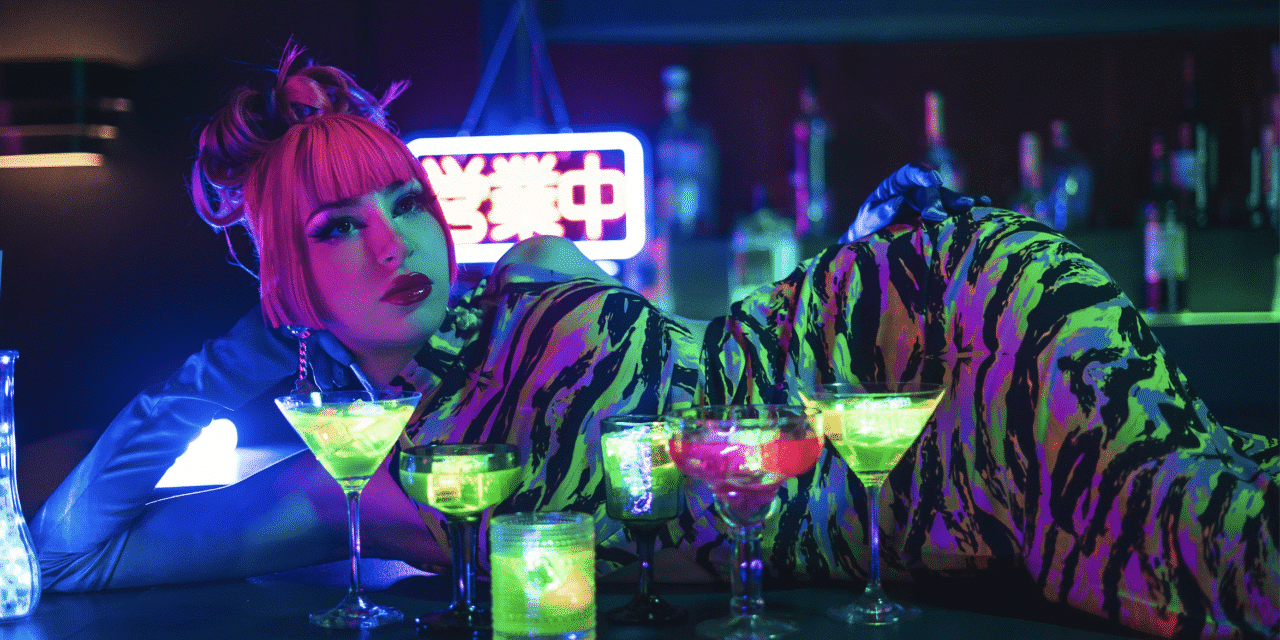
Los Angeles–based Solene, already dubbed the Mother of Cyber Jazz by fans, is forging her own genre, where analog nostalgia and digital sensibility coexist in a single universe. On her new album, Midnight Angel, produced by J. Rawls (Black Star, The Liquid Crystal Project), her voice moves between soulful melancholy and cyberpunk aesthetics, creating a space where jazz feels futuristic, sensual, and profoundly human.
In this conversation, Solene discusses the story behind this record, a journey of desire, redemption, and survival within the world of show business. She also reflects on the power of imperfection, the influence of burlesque on her stage presence, and how cyber jazz has become a refuge for old souls living in a digital world. With Midnight Angel, she’s not just writing songs; she’s building a house where emotion and honesty can live side by side.
Solene, people call you “The Mother of Cyber Jazz.” How did that title come about, and what does it mean to you personally?
The title just began appearing in the comments as my music started to gain popularity. I believe they call me “‘Mother’” because I’ve not only given birth to a new genre and expressed it proudly, but because I nurture it like it’s my own child. To be bestowed such a beautiful title is an honor and carries a weight that I’m very aware of. This genre, this infant sound I’m creating, is now my responsibility to tend to so that its sound and the community surrounding it can flourish.
You’ve said that Midnight Angel feels like a reflection of who you’ve become as an artist. What story were you hoping to tell through this record?
It’s a story of my time as a glam-seeking aspiring artist in Los Angeles, trying to navigate through the dark realities of show business and how it almost cost me everything. My desire with Midnight Angel was to cast light on some of the darkest places our desires can lead us; it serves as both a cautionary tale and an acknowledgement that though we all have scars, they should be worn as symbols of survival. Society has shamed us into thinking we should only show the perfect pictures of ourselves, but I find that our imperfections are what make us beautiful.
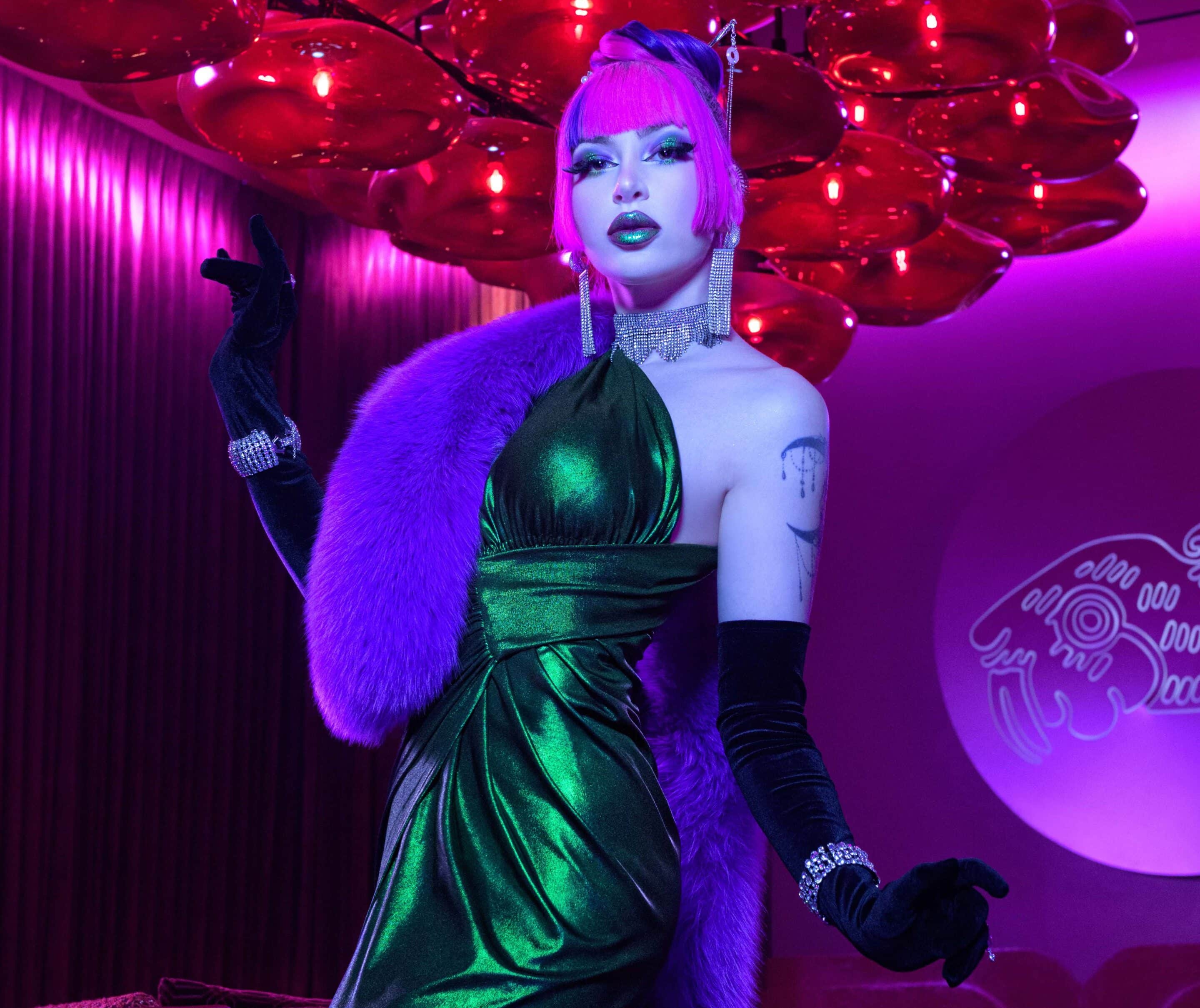
Your background in burlesque performance adds a sensual, theatrical layer to your music. How has that world shaped your stage presence and your approach to storytelling through song?
I am inspired by burlesque and have trained under various professional dancers to integrate that classic Old Hollywood style of movement into my performances. However, I myself was never a burlesque performer—maybe one day. The world of burlesque and vintage glamour is my favorite combination of elegant, sensual, and powerful. Combining it with hip hop and cyberpunk truly completes the fantasy of the retro-futuristic world of cyber jazz while simultaneously paying homage to the music and history of the jazz era.
“The Fontaine Blues” feels like a cinematic monologue, glamorous and broken at the same time. What inspired that song, and do you see parts of yourself in its character?
“The Fontaine Blues” is the chapter in the Midnight Angel journey where I’d left LA to escape the vices tearing me from my path. So I arrived in fabulous Las Vegas, and it was certainly fabulous. Perhaps too fabulous, though, and so the same temptations followed me. Instead of focusing on creating music, I’m frequenting The Fontainebleau, drunk on cocktails and opulence. I’m now the epitome of glamour, easily found dressed to the nines in their ritzy jazz club but never performing on its stage—just a poseur. Once again, I’d willingly stepped into the same trap.
The way you blend smoky jazz vocals with cyberpunk and lo-fi textures is unique. What draws you to that space between rhythms?
I’ve always loved jazz, which led to my love of lo-fi. The nostalgia in each loop is breathtaking, and I felt that if there was jazz in these instrumental beats, then a jazz singer like myself could find their place within. I also love the themes and visuals of the cyberpunk genre, so it felt natural to combine these 3 genres into one world. There is more overlap between them than people realize. That’s why I’m here.
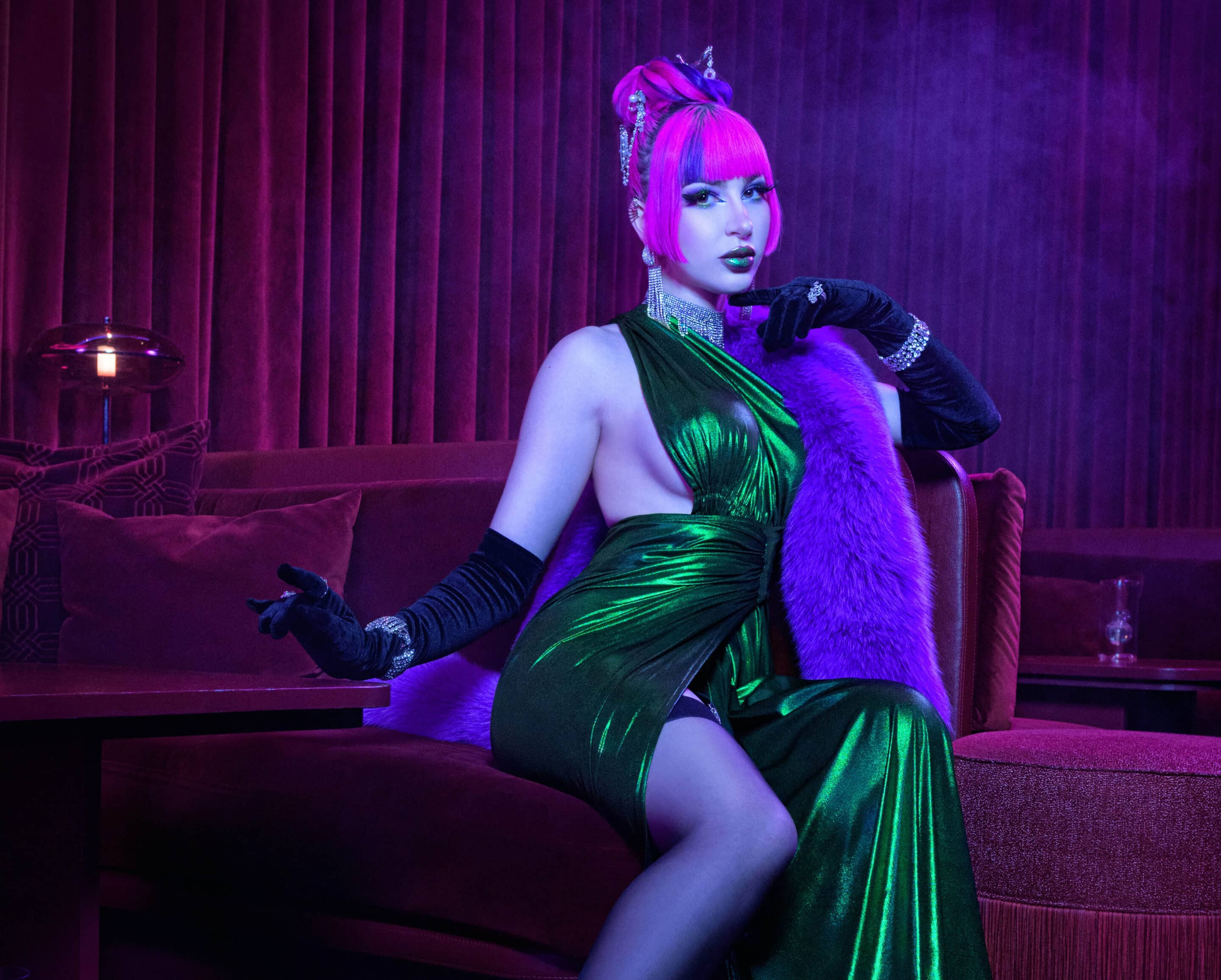
There’s a recurring theme of longing and self-redemption throughout Midnight Angel. Would you say this album is a confession, a transformation, or both?
Both. One cannot transform without acknowledging one’s mistakes. We are imperfect creatures led by conflicting desires in a country that expects you to be happy with the terrible cards you’re handed while dangling impossible dreams in our faces. In this album, I confess to my sins, acknowledge my inconsistencies, and admit to my morally gray nature as a result of fighting to survive in this corrupt industry—yet the transformation comes because I never stop trying to be better, and by the end of the album’s saga, I begin to see the rewards of my labor.
The visual side of your work, from your album art to your videos, feels like a film noir fantasy. How involved are you in visual storytelling?
Everything I create begins visually in my mind. The world of cyber jazz already exists fully in there, and the songs seek to bring it to life through stories and timelines. So when I have the opportunity to incorporate visuals, everything you see is primarily imagined by me. I know exactly how the world should look, feel, and sound. Every color and fabric is intentional. And as my means to create these visuals expand, you’ll see how large this world really is.
“Bad Man” introduces a darker, almost political undertone. What inspired that direction, and what message were you hoping to convey through it?
NIKO IS and I were in Puerto Rico when we spotted a mega yacht out in the distance. NIKO looks at this yacht and says, “You have to be a very bad man to own a yacht that big.” Instantly, that became the song we wrote later that evening, but in theme with the album, we altered it to be a tale of a very bad man striving to change his ways. I had just read a book talking about Florentino Aspilaga, who was a perfect example of redemption: one of Castro’s top spies who’d undoubtedly done some bad deeds but who decided enough was enough and defected to the US, which was a major blow to Castro’s regime. Listen, we can’t erase our pasts, but we can always change our futures.
You often mention performance as a kind of ritual. When you step on stage, what happens internally? Who is Solene Velvet in that moment?
Being on stage feels like the timeless space where my fans and I can finally connect and experience this world together. It’s like we’re all on the same frequency, or like we’re all jacked into the same space, sharing our love, pain, and dreams because we have all been touched by the same messages. It’s unity.
Do you have a favorite song on this album? Which one and why?
It depends on my mood. Right now, I’m feeling inspired, so my current favorite is “I’m Ready.” Sometimes it sings like a flirty, retro-futuristic song of seduction, but right now it feels like a love song to my music. It makes me feel like I’m ready to coalesce with the creative energies within to conceive something new. I’m ready to create the future.
As someone redefining jazz for a digital, genreless generation, what do you hope listeners take away from Midnight Angel and from the world of cyber jazz you’re building?
My goal with making cyber jazz began as a way to be a bridge for listeners—who might not have heard jazz before or who have a negative perception of it—to go back and explore jazz. For me, making jazz was such a fight because it was viewed as “old people’s music” that didn’t fit current trends, so I want to tear away that stigma so they don’t miss out on how transformative jazz can be. I also want them to hear the messages within “Midnight Angel” and hopefully learn something positive. Cyber jazz is a space for those with old souls and young hearts, and in that space between time, one can feel alone, but my world is now here for others like me who don’t quite fit in anywhere else.
Listening to Solene is like entering a realm where jazz becomes an emotional language, and listening to Midnight Angel is to recognize it as a declaration of identity and an aesthetic revolution. With each release, this woman expands the map of cyber jazz and demonstrates that the future of the genre lies not in breaking with the past, but in reinventing it with soul, desire, and technology.