
Electronic music has always been global. It’s a language built on pulse and emotion, where borders blur and communities form in the dark—under strobes, in basements, on festival fields, inside headphones at 3AM. But what happens when that same energy is lifted out of the club and placed inside one of the world’s most symbolic institutions?
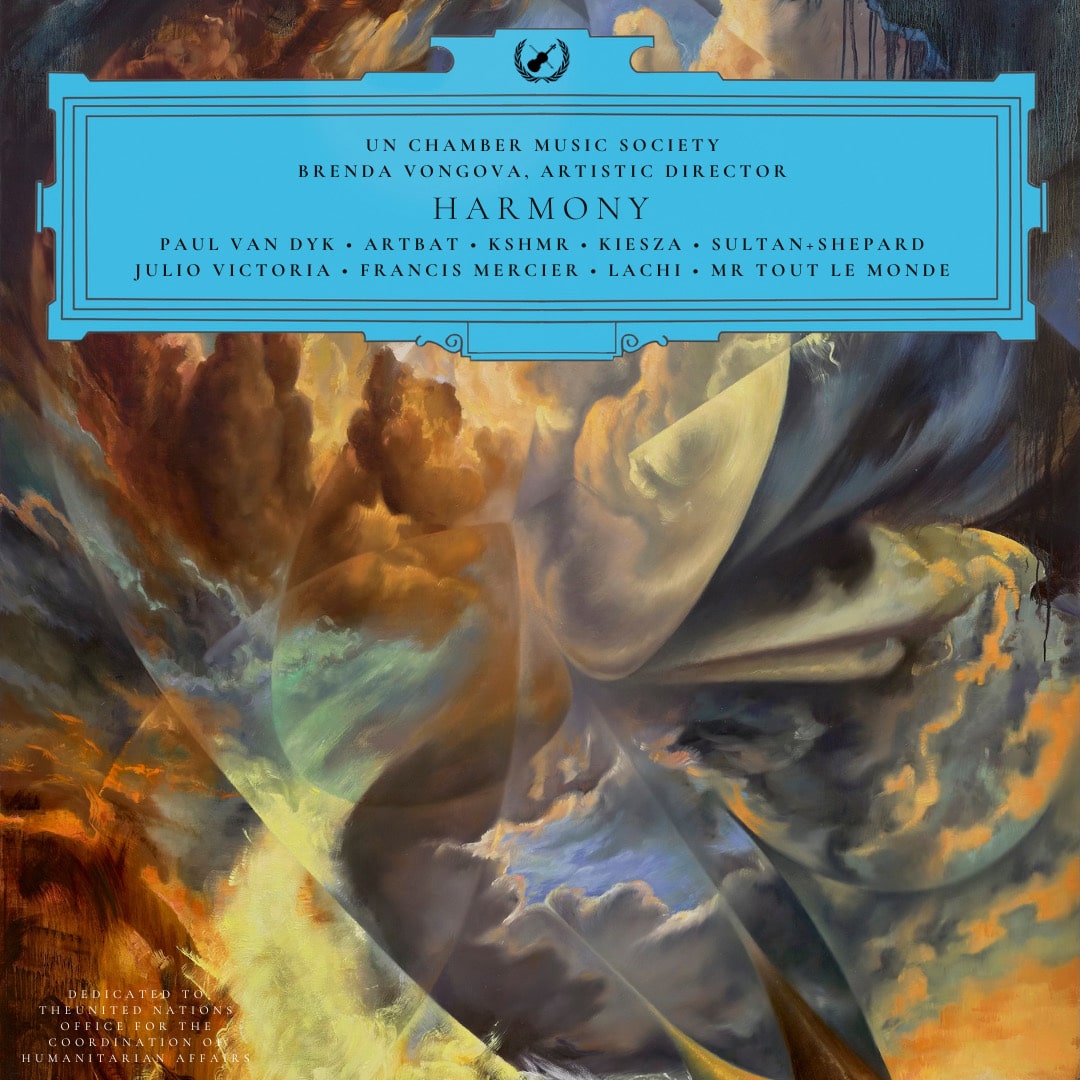
HARMONY was released on December 17, 2025, with a virtual launch broadcast via UN WebTV and UN YouTube. a groundbreaking global electronic music album created in commemoration of the United Nations’ 80th Anniversary. Featuring orchestral reinterpretations of iconic and contemporary electronic works—from Paul van Dyk to ARTBAT, Kiesza, Sultan + Shepard, KSHMR & Marnik, Francis Mercier, Julio Victoria, Lachi, and Mr Tout Le Monde—the project becomes something bigger than genre fusion: it’s cultural diplomacy in motion.
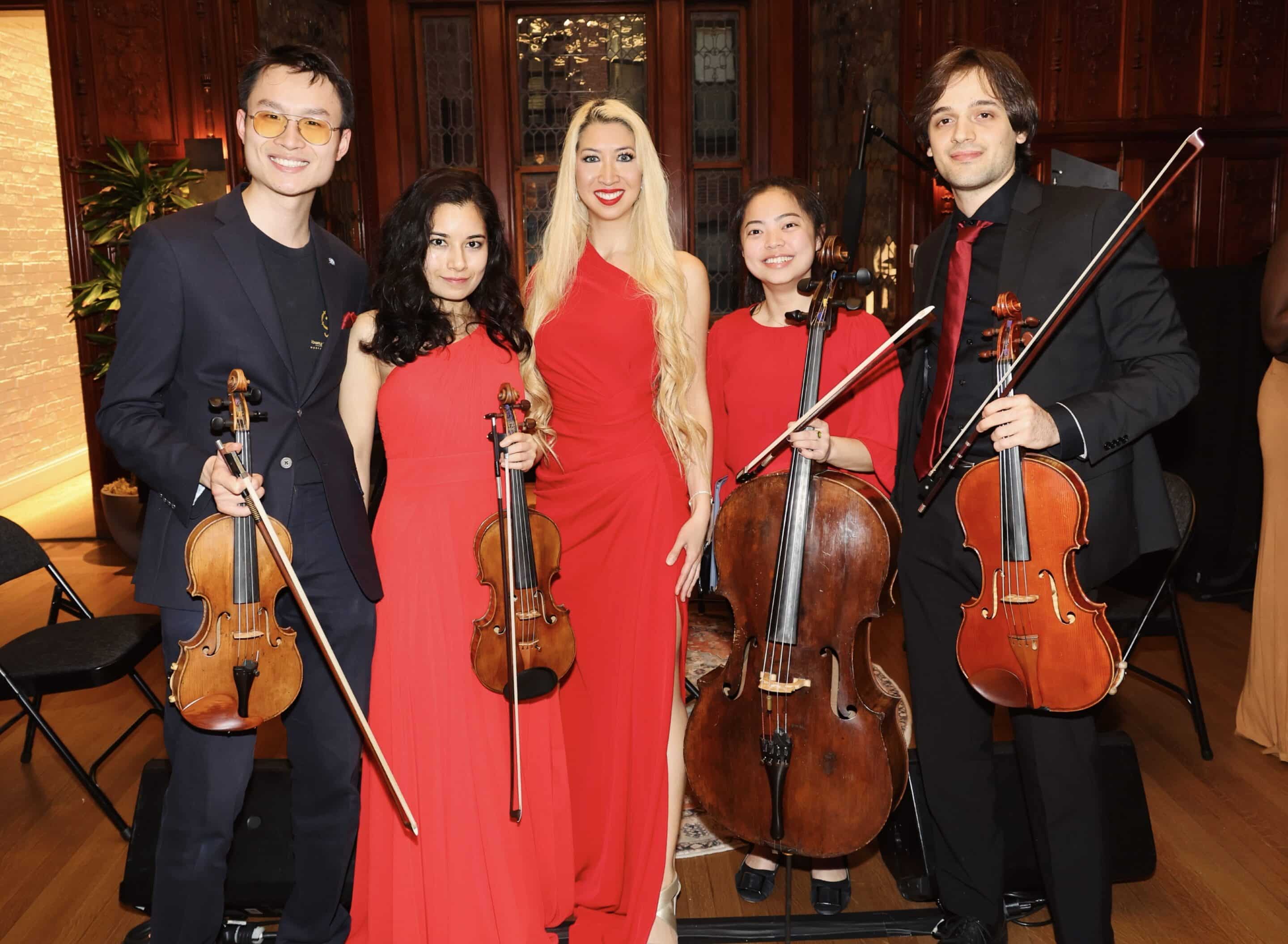
Recorded at Klavierhaus and co-produced by Lawrence Lui and Brenda Vongova, HARMONY is performed by the UN Chamber Music Society ensemble and arranged by A Bu, Donovan Seidle, Pedro Sarmiento, and collaborators across continents. Even more striking: 100% of streaming revenue is being donated to UN humanitarian efforts through UN OCHA, turning listening into direct action.
We spoke with Brenda Vongova, President and Artistic Director of the UN Chamber Music Society, behind HARMONY about the project’s origin, its emotional stakes, and what it means to make electronic music “official” without stripping it of its so
Interview: UN Chamber Music Society on HARMONY
1. HARMONY is positioned as the first-ever global electronic music project of its kind at the United Nations. When did the idea of reimagining electronic music through a chamber orchestra first emerge, and what made now—the UN’s 80th anniversary—the right moment to realize it?
The vision for HARMONY emerged from a fundamental recognition: electronic music has become one of the world’s most powerful unifying forces, transcending borders and bringing together diverse communities through a shared language of rhythm, melody, and emotion. Since founding the UN Chamber Music Society in 2016, we have consistently sought to demonstrate how music can serve as a bridge between cultures and generations, advancing the core values of the United Nations through artistic expression.
The 80th anniversary of the United Nations presented itself as the ideal moment to realize this particular vision. It offered both symbolic resonance and practical significance—an opportunity to honor eight decades of international cooperation while simultaneously looking forward, embracing contemporary musical forms that speak to younger generations worldwide. Electronic music, despite its relative youth as a genre, has achieved what the United Nations aspires to: creating spaces where differences dissolve and common humanity emerge. By translating these works into orchestral arrangements, we sought to demonstrate that innovation and tradition need not exist in opposition, but rather can enrich one another in service of a greater purpose.
2. Electronic music is often associated with clubs, festivals, and underground spaces. What changes when these tracks are stripped of their original context and reintroduced through orchestral arrangements inside an institution like the United Nations?
The transformation is perhaps best understood not as a removal from context, but as an expansion of context. The essence of these compositions – their emotional power, their capacity to unite diverse audiences – remains intact. What shifts is the framework through which we experience them.
Within the setting of the UN Chamber Music Society of the United Nations Staff Recreation Council, which was founded at the United Nations Headquarters to promote the values of the United Nations through the universal language of music, these works assume an additional dimension of meaning. The chamber orchestra allows us to hear these compositions in a new way – revealing the melodies, harmonies, and emotional storytelling that might be experienced differently in their electronic form. There is also an element of accessibility in this approach: by performing these works acoustically, we invite audiences who may not typically listen to electronic music to discover its beauty, while offering electronic music enthusiasts a fresh perspective on tracks they already love.
Most importantly, presenting these works at the United Nations elevates electronic music to its rightful place as a legitimate vehicle for cultural diplomacy and cross-cultural understanding. It affirms that music created in clubs and festivals carries the same capacity for profound human connection as works premiered in traditional concert halls—a message very much aligned with the United Nations’ commitment to inclusivity and equal dignity for all people.
3. Each track on HARMONY represents a different region of the world. How did you approach translating not just sound, but cultural identity, into a chamber music language without losing the soul of the original work?
This was perhaps our most delicate challenge, requiring deep respect for both the original compositions and the cultural contexts from which they emerged. Our approach was fundamentally collaborative. We worked closely with each artist to understand not only the technical elements of their compositions, but the cultural influences, personal narratives, and emotional intentions embedded within them.
Our arranger – particularly A Bu – approached each piece with the mindset of cultural translators rather than mere transcribers. The question was never “How do we make this sound classical?” but rather “How do we honor what makes this piece distinctly itself while revealing new dimensions through orchestral voicing?” This meant preserving signature melodic phrases, maintaining rhythmic patterns that carry cultural significance, and ensuring that the emotional arc of each composition remained true to the artist’s vision.
The chamber ensemble format itself offered unexpected advantages. The intimacy of our piano quintet instrumentation allowed for transparency and nuance. Each regional contribution retained its distinctive character: ARTBAT’s “Horizon” carries the haunting, expansive quality associated with Eastern European electronic music; KSHMR and Marnik’s “Bazaar” maintains its vibrant Asian-influenced textures; Francis Mercier’s “Ayibobo (Freedom)” preserves its Afro-Caribbean rhythmic vitality. The soul of each work remains intact because we approached the project not as transformation, but as thoughtful reinterpretation.
4. The collaboration between Sultan + Shepard stands out as a powerful human narrative. How conscious was the team of the political and symbolic weight behind certain collaborations, and did that awareness influence the arrangements or performances?
The SULTAN + SHEPARD collaboration represents precisely what we hoped HARMONY would achieve – a transcendence of unity through shared creative purpose. The duo – Palestinian-Canadian Ossama Al Sarraf and Jewish-American Ned Shepard – prove that harmony is not just a musical concept, but a way of life. Their partnership embodies the very essence of the United Nations’ founding principles, demonstrating that understanding between peoples, cultures, and sounds can build the peace our world desperately needs.
We were deeply conscious of this symbolic weight and treated it with the dignity it deserves. Rather than adding extra narrative or drawing explicit attention to the political significance, we allowed the music itself carry the message. The collaboration between Ossama and Ned is the statement – it speaks more powerfully than anything we could say about it.
In reimagining “RnR” through a classical lens with the UN Chamber Music Society, the partnership takes on an additional dimension – bringing together electronic innovation with the orchestral tradition, joining contemporary energy with the UN Chamber Music Society’s mission that has guided our work since 2016 – promoting peace, respect for human rights, and international cooperation through music.
When a Palestinian-Canadian, a Jewish-American, together with the UN Chamber Music Society – collaborate to transform an electronic anthem into chamber music – they end up creating something more than art, they demonstrate that understanding is possible even across the most painful divides. Their work embodies a core principle of the UN Charter: that cultural exchange and artistic collaboration can open pathways to mutual respect, even in the most complex relationships.
5. Kiesza’s “Go Back” serves as a central emotional anchor for the album. What made this track feel like the right choice to lead the project, and how did the orchestral reinterpretation shift its emotional impact?
“Go Back” possesses a quality that we felt essential to HARMONY’s mission: an emotional universality that transcends cultural and linguistic boundaries. The composition carries themes of memory, longing, and the desire to return to moments of connection – sentiments that resonate across all human experience, regardless of geography or background.
Arranged by Donovan Seidle and performed with Kiesza’s distinctive vocal artistry, the orchestral interpretation reveals layers of vulnerability within the piece. Where the electronic production provided energy and momentum, the chamber music arrangement creates space for reflection. The strings add a wistful quality, and the piano underscores moments of emotional intensity. The result is a more intimate listening experience that invites contemplation.
This shift felt particularly appropriate for the United Nations context. “Go Back” in its orchestral form becomes almost meditative—a moment to consider where we have been, where we aspire to go, and how we might bridge the distance between those two points. In a world that often feels fragmented, the track reminds us of our fundamental need for connection and our capacity to find our way back to one another. It serves as the album’s emotional north star, grounding the project’s more conceptual ambitions in deeply human feeling.
6. With artists like ARTBAT contributing during a time of ongoing humanitarian crisis in Ukraine, how did global events shape the emotional tone or urgency of HARMONY as a project?
The humanitarian crises unfolding across our world—in Ukraine, in Gaza, in Sudan, and in so many other regions—cast an inescapable shadow over this project. They also clarified its purpose. ARTBAT’s “Horizon” took on additional significance as we worked on HARMONY; it became not merely a contribution from Eastern Europe, but a voice from a nation enduring profound suffering, expressing resilience and hope through art even amidst devastation.
These realities shaped HARMONY’s emotional tone by infusing it with a sense of responsibility. This could not be merely an aesthetic exercise or a commemorative gesture. The project needed to honor the urgency of our current moment—the recognition that the ideals the United Nations was founded to uphold remain as necessary and as fragile as ever.
Rather than making the album explicitly somber, however, we chose to allow each piece to carry its own emotional truth, creating a collection that moves between hope and melancholy, celebration and reflection. This felt more honest due to the complexity of our global situation. The project’s commitment to directing 100% of streaming revenue to UN humanitarian efforts through the Office for the Coordination of Humanitarian Affairs (OCHA) ensures that HARMONY functions not only as artistic commentary but as tangible action – a meaningful contribution to alleviating the very crises that gave the project its purpose.
7. 100% of UN Chamber Music Society streams are being donated to UN humanitarian efforts. How do you see music functioning not just as awareness, but as tangible action in times of global instability?
The distinction you draw is crucial, and it reflects an evolution in how we understand the relationship between art and social impact. Awareness alone, while valuable, is insufficient when people are suffering. Music must do more than simply draw attention; it must activate concrete support.
By directing all streaming revenue to the UN Office for the Coordination of Humanitarian Affairs, HARMONY creates a direct link between artistic appreciation and humanitarian assistance. Each time someone streams the album, they contribute – however modestly – to efforts providing food, shelter, medical care, and protection to vulnerable populations worldwide. This transforms passive listening into participatory support.
Beyond the concrete support, there is a deeper philosophy at work. Music has always possessed the capacity to mobilize communities, to translate abstract concepts like solidarity into felt experience. When someone connects emotionally with ARTBAT’s “Horizon” and learns that the artists hail from Ukraine, or when they appreciate Francis Mercier’s “Ayibobo”, which translates to “Freedom” in English, and discover its Haitian influences, a relationship forms – not merely with the music, but with the people and places it represents. That relationship creates the foundation for sustained engagement with humanitarian concerns.
In times of global instability, when compassion fatigue and overwhelm are real challenges, music offers an entry point to continued engagement – a way of maintaining connection to crises that might otherwise feel too distant or too complex to address. HARMONY attempts to honor that potential while ensuring it generates concrete benefit for those most in need.
8. Bridging electronic music and classical performance can be technically and creatively complex. What were some of the biggest challenges—musical or logistical—in aligning producers, arrangers, and chamber musicians across continents?
The logistical challenges were considerable, though ultimately surmountable through careful coordination and a shared commitment to the project’s mission. We worked with artists spanning multiple continents and time zones, each bringing distinct creative processes. Ensuring that the arrangements honored the original producers’ visions while serving the capabilities and aesthetic of chamber music instrumentation required extensive communication and multiple rounds of review.
Perhaps the most profound challenge, however, was maintaining authenticity while creating something genuinely new. We needed to ensure that electronic music enthusiasts would recognize and appreciate the arrangements as faithful to the originals, while classical music audiences would experience them as works worthy of serious artistic consideration. Threading that needle required constant dialogue between all parties and a willingness to iterate until we achieved arrangements that satisfied both sets of expectations.
9. The virtual concert broadcast via UN platforms places HARMONY in front of a truly global audience. How do you hope listeners—whether electronic fans or classical purists—walk away feeling after experiencing this project?
My deepest hope is that listeners experience a sense of possibility – the recognition that boundaries between musical genres, like boundaries between nations and cultures, are more permeable than we often assume. For electronic music enthusiasts, I hope they feel a sense of pride and validation that music they love has been treated with the same dignity and artistic seriousness traditionally reserved for classical repertoire. For classical purists, I hope they discover that contemporary musical forms possess the same complexity, emotional depth, and cultural significance as the traditional canon.
Beyond these genre-specific aspirations, I hope all listeners walk away with a renewed sense that art can serve as a meaningful force for connection and understanding. In an era characterized by polarization and fragmentation, HARMONY attempts to model a different approach – one that seeks common ground, celebrates diversity, and demonstrates that collaboration across difference not only is possible but produces something more beautiful than any single tradition could achieve in isolation.
Ultimately, I hope the project reminds people why the United Nations matters. The organization’s work can sometimes seem abstract or remote from daily life. But HARMONY embodies the UN’s core principles in tangible form: international cooperation, cultural exchange, mutual respect, and the belief that our shared humanity outweighs our differences. If listeners come away feeling even slightly more connected to the broader human family, the project will have succeeded.
10. Looking beyond this release, do you see HARMONY as a singular commemorative moment, or as the beginning of a long-term model for how global institutions and contemporary music can collaborate?
While HARMONY was created to commemorate the UN’s 80th anniversary, I believe that the project demonstrates an approach that could extend far beyond this moment. The project has revealed a genuine appetite for connecting traditional institutions with contemporary music that speaks to younger, more diverse audiences.
The response we’ve received suggests tremendous interest in this type of cross-genre, cross-cultural work. Global institutions like the United Nations possess unique convening power and moral authority, but they must continually find ways to remain relevant to new generations. Contemporary electronic music offers a powerful way to do this – not by abandoning the institution’s serious purpose, but by showing that meaningful work can also be accessible and engaging.
Looking forward, I envision possibilities for expanding this model. Future iterations might explore further collaborations with artists from additional underrepresented regions, or tackle specific thematic concerns—climate change, gender equality, technological ethics—through musical interpretation. The UN Chamber Music Society remains committed to demonstrating that music can advance the organization’s goals while maintaining the highest standards of artistic excellence.
More broadly, I hope HARMONY encourages other global institutions to consider how they might engage with contemporary culture in meaningful, authentic ways. The challenges facing humanity—from humanitarian crises to existential threats like climate change—require mobilizing all available tools for building understanding and inspiring action. Music is among the most powerful such tools at our disposal. HARMONY represents not an endpoint, but an invitation to imagine new possibilities for how art, institutions, and social purpose might work in concert to create a more harmonious world.
A Global Tracklist With a Global Purpose
HARMONY isn’t just international in concept—it’s structured like a map. Each track represents a region, offering a sonic portrait translated into chamber instrumentation:
- Western Europe: Paul van Dyk — “For An Angel”
- Eastern Europe: ARTBAT — “Horizon”
- Asia: KSHMR & Marnik — “Bazaar”
- North America: Kiesza — “Go Back” / Sultan + Shepard — “RnR”
- Latin America: Julio Victoria — “Todo se detiene (Everything comes to a halt)” (feat. Lalo Cortés) / Francis Mercier — “Ayibobo (Freedom)” (feat. Lenny Auguste)
- Africa: Lachi — “We Be Stars”
- Western Europe: Mr Tout Le Monde — “Wonderful World”
And while the names alone are enough to pull electronic fans in, the concept pushes beyond fandom: 100% of streams go to UN humanitarian efforts, making HARMONY a rare case where cultural celebration becomes measurable support.
Final Word: A New Kind of “Main Stage”
HARMONY doesn’t sanitize electronic music—it legitimizes it without domesticating it. It argues that the club is not separate from culture, and that the dancefloor has always been political in the most human way: it’s where people meet as equals.
In the end, this isn’t just a chamber orchestra playing electronic songs. It’s the United Nations admitting something vital: the future doesn’t arrive politely. It arrives with rhythm, with reinvention, with collaboration, and—if we’re lucky—with a little harmony.
HARMONY is out December 17, 2025, with a virtual launch broadcast via UN WebTV and UN YouTube.
Find out more here: sym.ffm.to/un_harmony