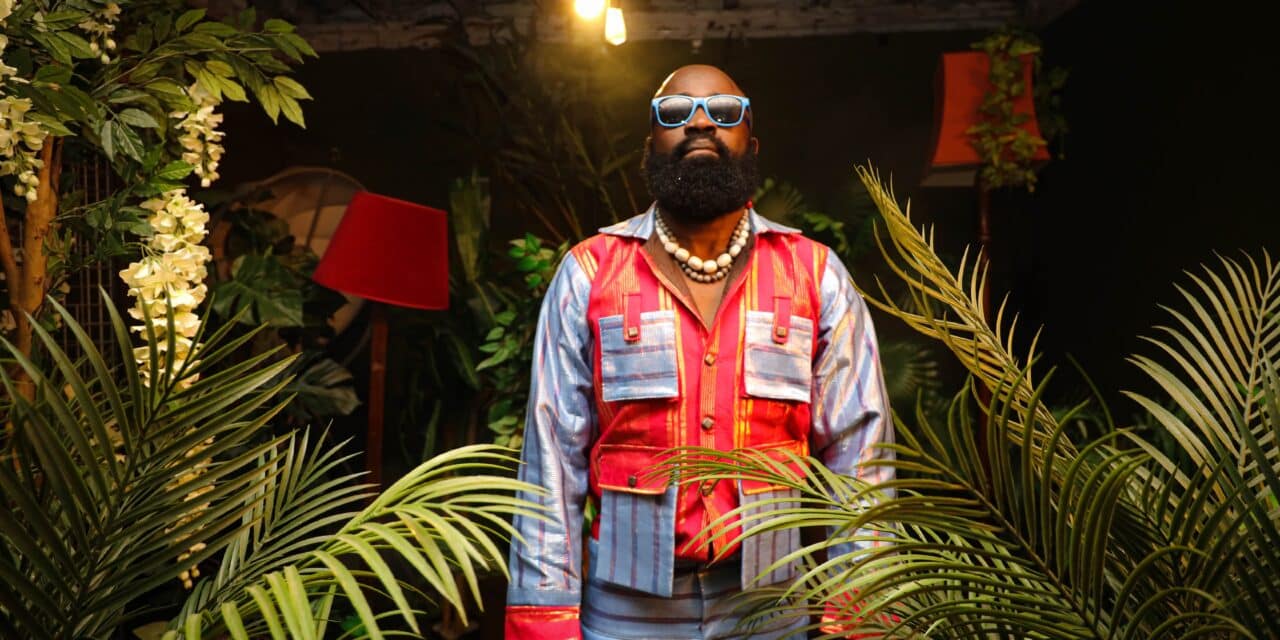
The Lagos-born afrofusion artist launches 2026 with intention, clarity, and a sound rooted in both ancestry and ambition.
There’s a difference between momentum and movement—and on “Gbera,” Sean Dampte makes it clear he’s operating in the latter.
Arriving as the opening statement for his 2026 run, “Gbera” isn’t just a single—it’s a declaration. A sonic shift that signals a new phase in Dampte’s trajectory, one defined not by reaction, but by intention. Built on infectious melodies and grounded in Afrobeats’ rhythmic DNA, the track carries a dual energy: celebratory on the surface, deeply philosophical underneath.
At its core, “Gbera” is about elevation—not the performative kind, but something quieter, sharper, and more disciplined.
“This is a new season song for me,” Dampte explains. “I wanted it to sound like elevation.”
A Soundtrack for Alignment
“Gbera” operates as both a mood-setter and a mission statement. It’s a record designed for movement—equally at home in street parties, playlists, and personal milestones—but its real weight lies in its messaging.
Dampte challenges one of Afrobeats’ most visible tropes: the conflation of success with spectacle. Instead of excess, he leans into restraint. Instead of noise, clarity.
There’s an intentional rejection of performative wealth woven into the songwriting—a reminder that growth isn’t always loud.
And yet, the track never loses its accessibility. That’s the balance Dampte has been refining: music that moves bodies while still speaking to something deeper.
“Gbera” feels like more than a single—it feels like a declaration. What shifted for you?
“Gbera” is 100% a declaration. It’s the moment survival energy matures into elevation energy. Growing up in Mile 2, Lagos, you’re always reacting just to stay afloat. But I reached a point where I realized I wasn’t just surviving anymore—I was building something intentional. This record is that shift. It’s a command: stand up, elevate, take your position.
You speak about elevation as spiritually guided. How does ancestry influence your work?
In African culture, nothing moves without the spirit. Your ancestors walk with you. For me, spirituality is awareness—it’s listening. If the alignment isn’t there, the success feels hollow. “Gbera” is about elevation guided by purpose, not desperation.

You reject performative wealth in your lyrics. What does disciplined success mean to you?
There’s a difference between display and discipline. Anyone can show wealth, but can you sustain it? That’s the real question. Disciplined success means growing into your capacity. It’s about structure, not just shine.
The visualiser in Nairobi—especially Ngong Hills—feels symbolic. Why that location?
Ngong Hills represents perspective. When you climb higher, everything looks different. From the bottom, life feels chaotic. From the top, you see patterns. That clarity is what the song is about.
Your philosophy “Awoodah” feels like more than branding. When did it become a worldview?
At first, it was just a vibe. But over time, I realized it was a blueprint. Awoodah is elevation through discipline. When people started shouting it back to me, I knew it had become something bigger—a code.
How did growing up in Mile 2 shape your understanding of ambition?
Mile 2 teaches you reality fast. It gives you resilience. But it also teaches patience. Ambition wants everything quickly. Intention builds something that lasts.
Do you think about crowd energy or long-term impact when creating?
Energy comes first—the crowd has to feel it. But I’m always thinking long-term. I want the music to still mean something years from now.
Your music blends English, Yoruba, and Pidgin seamlessly. Is that intentional?
That’s just how we speak. It’s natural. And as Afrobeats grows globally, it’s important not to dilute that. Language carries culture.
With your album Awoodah: Sounds of Kalakuta coming, what does it represent?
It’s revelation. Not reinvention—just the clearest version of who I am. It’s about independence, freedom, and Lagos energy meeting global perspective.
What does leadership in Afrobeats look like to you now?
It’s about evolving the sound without losing the roots. Artists like Burna Boy and Wizkid took it global. The next phase is about mindset—discipline, intention, and carrying culture forward.
Lagos Roots, Global Vision
Raised in the Mile 2 suburbs of Lagos, Dampte’s music carries the imprint of constant motion. His sound—an afrofusion blend of Afrobeats, street language, and melodic instinct—feels both hyper-local and globally fluent.
That duality is what defines his artistry. He doesn’t dilute his origins to scale—he amplifies them.
“Awoodah,” the philosophy that underpins his work, reflects that approach: part mindset, part identity, part evolution. It’s not just branding—it’s a framework for how he moves through both music and life.
And with Awoodah: Sounds of Kalakuta set for release in April, Dampte is positioning himself not just as a participant in Afrobeats’ global rise, but as part of its next ideological shift.
Elevation Without Noise
What makes “Gbera” resonate isn’t just its bounce—it’s its clarity.
In an era where visibility often outweighs substance, Sean Dampte offers something different: a reminder that growth can be intentional, grounded, and deeply personal.
Because elevation, in his world, isn’t about being seen.
It’s about seeing differently.