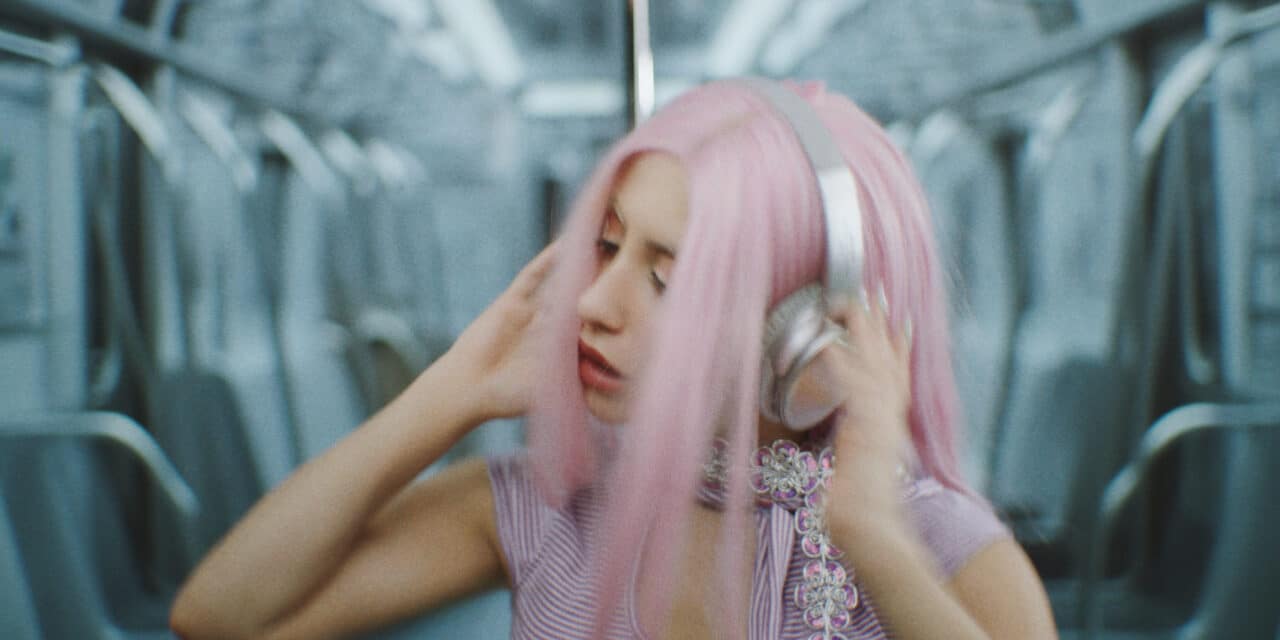
The LA-based dance-pop provocateur talks hardstyle, mall-pop, Persian Barbie, queer nightlife, and why being “Daddy” is really a mindset.
There’s a particular kind of crush that doesn’t feel romantic so much as chemically destabilizing. It hijacks logic, rewires routine, and turns every passing thought into a loop. On “Heart Eyez,” Disco Shrine captures exactly that state—not as a clean love song, but as a soft-glitched, overstimulated spiral where sweetness and chaos are locked in the same pulse.
Out February 20, the new single arrives as the latest evolution in the world Disco Shrine has been building for years: part dance-pop fantasy, part queer nightlife manifesto, part identity experiment pushed to its loudest, most self-aware edge. Sonically, “Heart Eyez” sits somewhere between euphoric and unhinged, pairing distorted textures with bright, lovestruck melodies in a way that feels both nostalgic and hyper-current. It is pop, but not polished into submission. It is club music, but emotionally legible. It is the sound of a crush taking over your operating system.
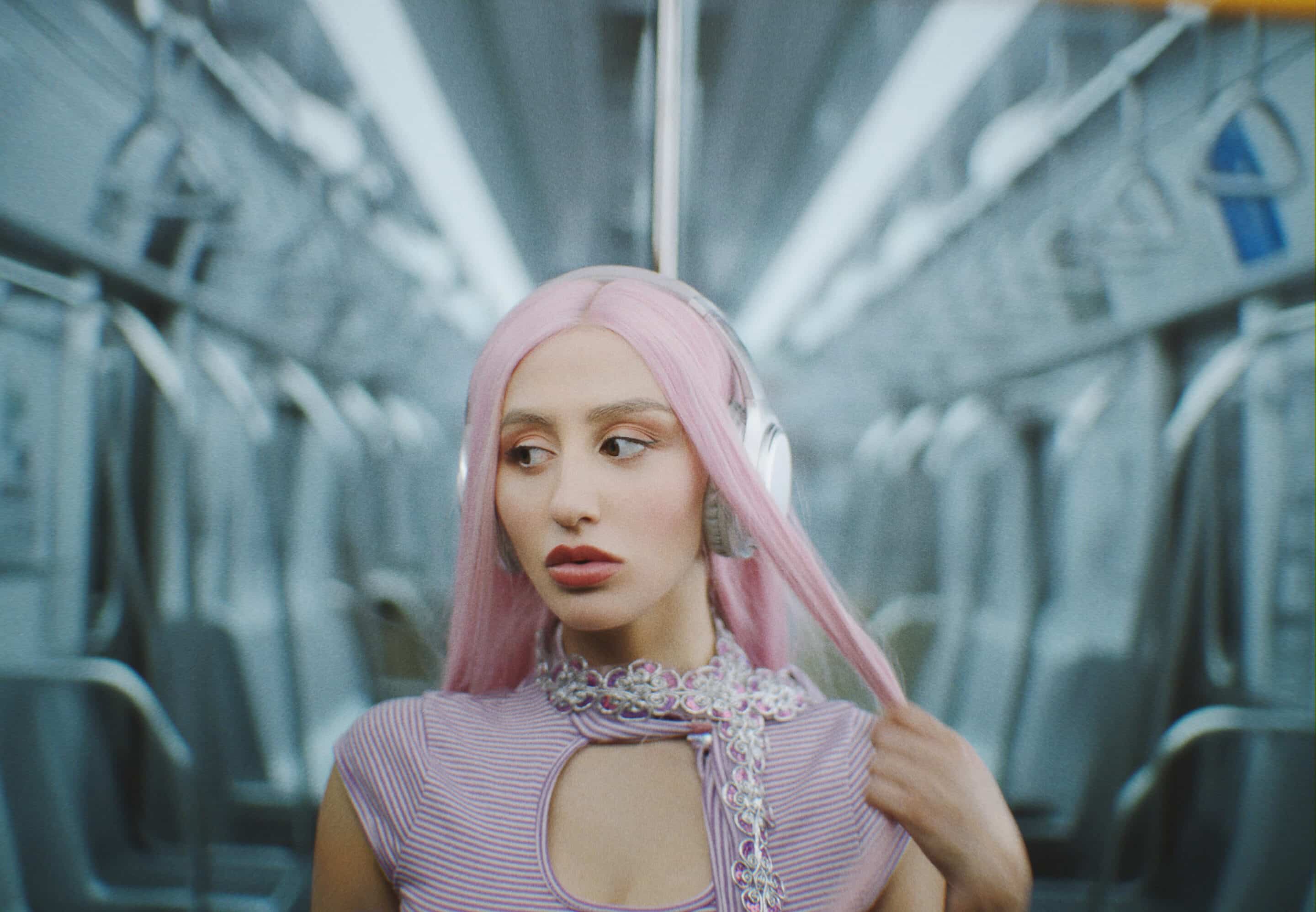
That duality feels central to Disco Shrine’s entire project. Her music has often been described as a collision of hardstyle and mall-pop, which sounds absurd until you hear it and realize it makes perfect sense. The juxtaposition is not a gimmick; it is biography. Raised as an 818 Valley girl with one foot in glossy suburban pop culture and the other in warehouse rave energy, Disco Shrine builds music that reflects both worlds at once. The result is a sound that is playful, aggressive, flirtatious, and deliberately overstimulating.
But what makes her especially compelling is that beneath the maximalist energy is a very clear point of view. Disco Shrine’s work has always been tied to identity—particularly her Persian-American background, her connection to queer community, and her commitment to creating spaces where self-expression feels both ecstatic and safe. Her debut single “Up in the Air” was rooted in immigrant experience and personal history. Her 2021 EP xoxo, disco introduced Persian Barbie, an alter ego that became less costume than catalyst: a way of reconnecting with heritage while stepping into a more expansive version of self. From there came Barbie Rave, a party and community space built around queer empowerment, release, and possibility.
Now, with “Heart Eyez” and a larger project due later this year, Disco Shrine feels poised for a new phase—one that keeps the underground pulse of her earlier work intact while pushing further into a bigger pop imagination. If Persian Barbie marked one transformation, the current era seems even less containable. More dominant. More playful. More excessive by design.
For Mundane Magazine, Disco Shrine talks about romantic chaos, sonic contradiction, alter egos, rebellion, nightlife as sanctuary, and why the next chapter will be “cuntier, clubbier, and way more chaotic.”
“Heart Eyez” captures that obsessive, almost glitchy feeling of a crush taking over your brain. What does that moment feel like to you and why did you want to sonically distort it?
Crushes are really cute, but they’re also completely irrational sometimes, so there’s this romantic chaos to them that I wanted to capture.
There’s something both soft and chaotic in this track, like vulnerability colliding with overstimulation. How intentional was that contrast when building the sound?
Super intentional. My favorite thing is playing around with the dichotomy of hard and soft sounds. In this case, it’s sweet lyrics but distorted vocals or an ethereal lead synth with a grimier bass underneath it.
Your music has been described as a collision between hardstyle and mall-pop. Where did that hybrid come from and why does that tension feel true to you?
I’m an 818 Valley girl who grew up as a mall rat, and then I started going to raves in downtown warehouses. So that duality is literally how I was raised. There’s the nostalgic, glossy pop side of me, and then there’s the version of me that wants the bass to hit hard and the drop to go crazy.
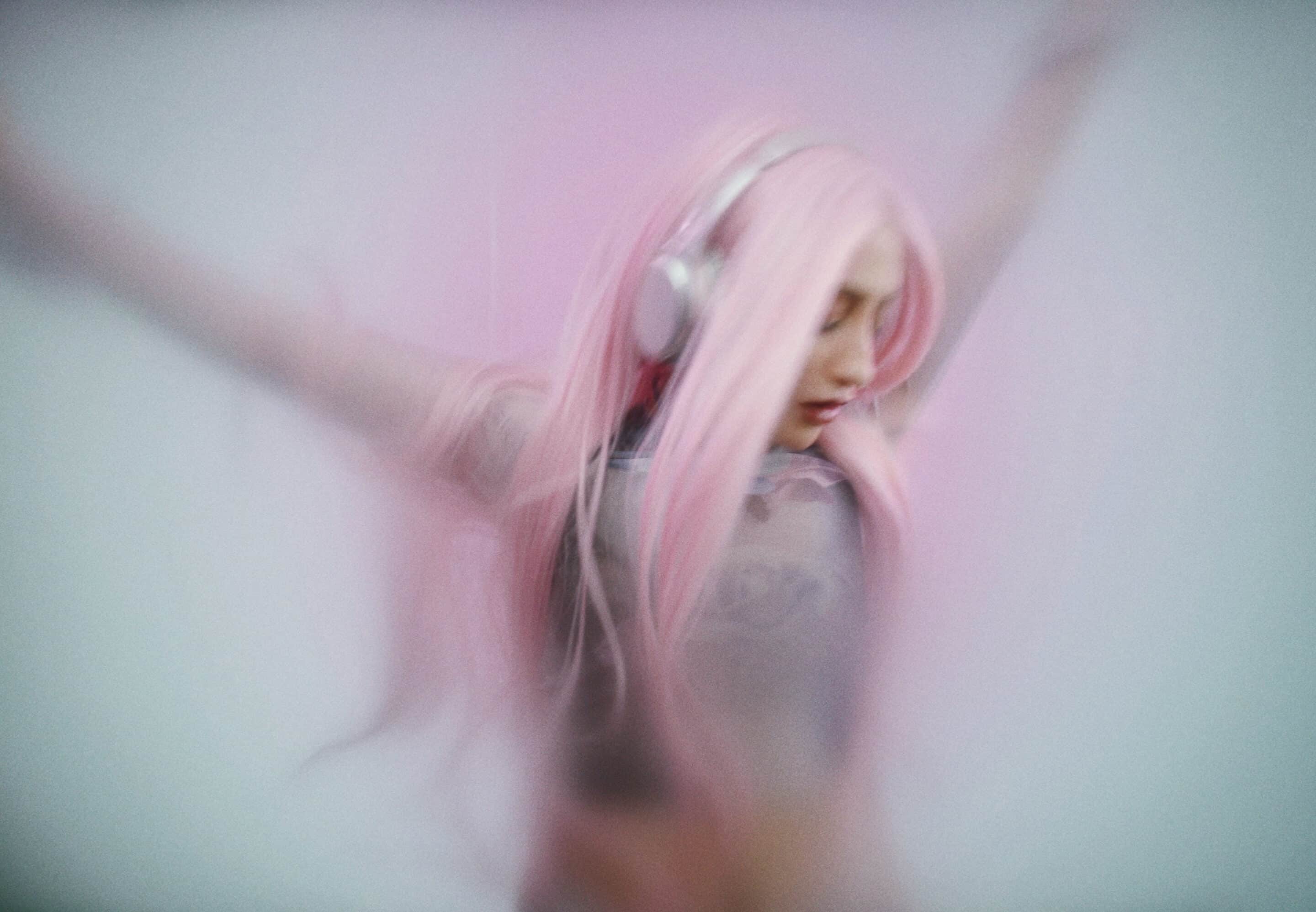
You’ve created this larger-than-life persona with Persian Barbie and Disco Daddy. What do those alter egos allow you to express that you maybe couldn’t before?
I’m always evolving, but these alter egos help me understand each era of myself more clearly. Persian Barbie was about reconnecting with my heritage and stepping into that identity. Disco Daddy is me fully letting go, no rules, no limits. It’s definitely my most unhinged era so far.
There’s a strong dommy energy in your presence—playful, powerful, a little dangerous. How do you define that energy in your own terms?
I always say “Daddy is a state of mind.” It’s about taking control of your life, being fearless, not letting anyone hold you back, and doing it all with a martini in hand.
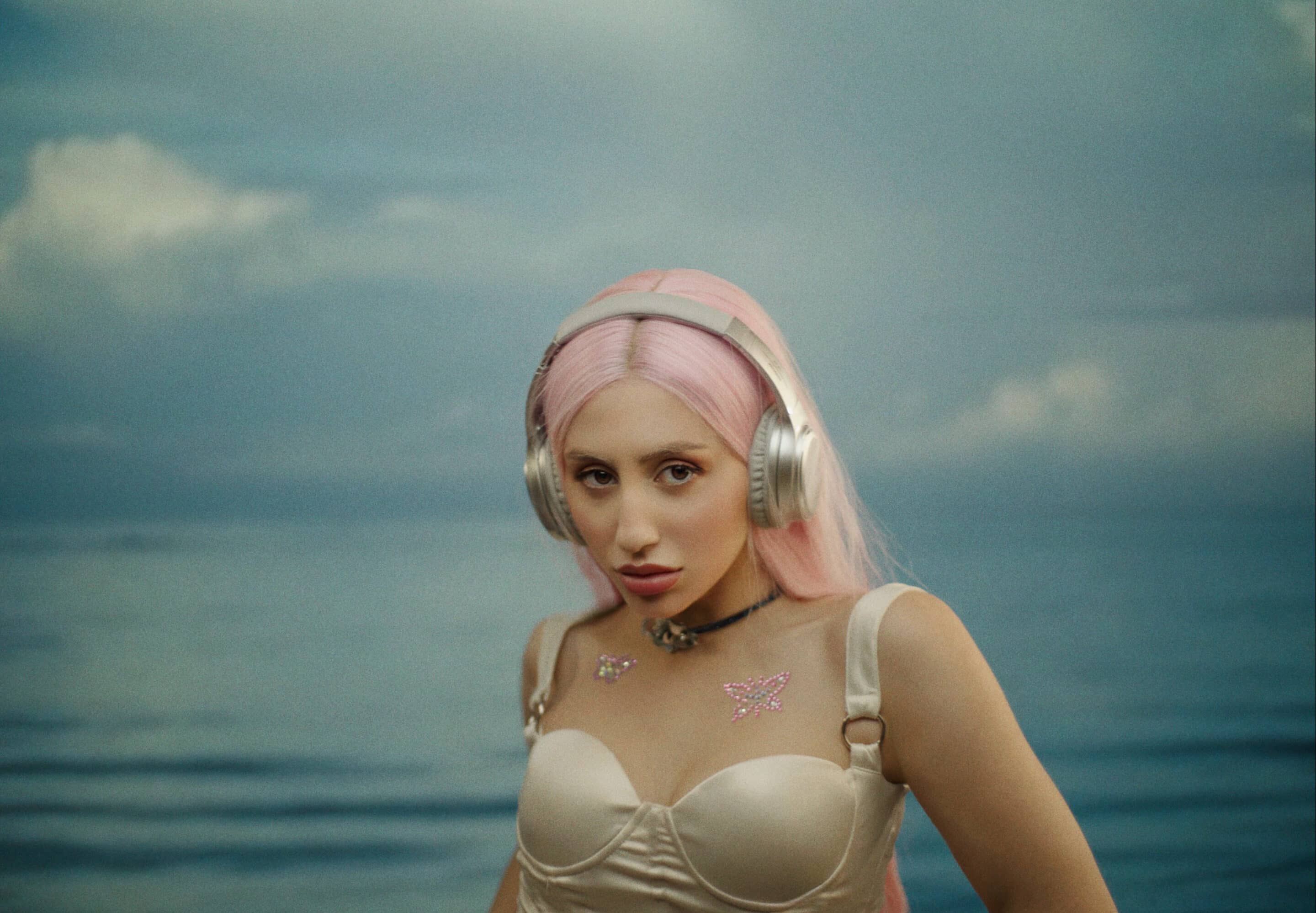
Your work sits at the intersection of club culture and identity, especially queer empowerment and your Persian-American background. How do those worlds inform each other in your art?
My family immigrated from Iran after the revolution, so I’ve always felt a responsibility to make their sacrifices mean something. As an Iranian woman in America, I have freedoms that women in Iran don’t. So my version of rebellion is creating music and spaces that celebrate women and queer communities, which is something I wouldn’t be able to do there right now.
“Heart Eyez” feels like a very modern love song—digitized, obsessive, almost algorithmic. Do you think love itself has changed in the hyper-online era?
Definitely. Everything is so digital now, even the idea of URL to IRL says a lot. But I do think there’s a shift happening. With recession-core coming back, people are craving non digital connection again, especially third spaces.
From underground icon to what feels like a potential Y2K pop breakout moment, how are you navigating that shift without losing the rawness of where you came from?
I have an amazing support system and community that will always keep me grounded <3
Your shows and Barbie Rave events feel like more than parties—they’re spaces. What are you trying to create for people when they step into your world?
I want people to feel like they can fully let go, have fun, and be themselves, but also feel safe. If I can give people that, then I’ve done my job.
With a bigger project coming later this year, what does this next chapter of Disco Shrine look like, sonically, visually, and culturally?
Cuntier, clubbier, and way more chaotic.
What makes Disco Shrine exciting right now is not simply that she understands aesthetics, though she clearly does. It’s that she treats aesthetics as infrastructure for something deeper: identity, release, safety, desire, rebellion. Her world is stylized, yes, but it’s also lived-in. The characters are not masks so much as methods of becoming. The club is not escape so much as reorientation. Even the chaos is intentional.
That’s what “Heart Eyez” gets right. It takes a feeling that could easily be flattened into a cute pop concept and lets it stay messy, irrational, overstimulated, and kind of hilarious. It doesn’t sanitize obsession. It turns it into a beat-driven fever dream and lets the distortion do part of the storytelling. In Disco Shrine’s hands, a crush is not just an emotion. It is a system overload.
And maybe that’s the larger promise of what she’s building now. Not a cleaner version of herself for broader consumption, but a bigger stage for the same unruly impulses that made her compelling in the first place. If this single is any indication, the next phase of Disco Shrine won’t be about softening the edges.
It will be about making them hit harder.