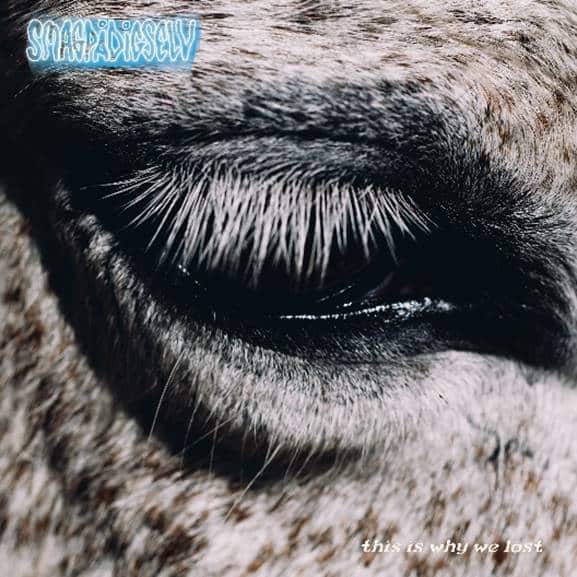
Two saxophones. One drum kit. Zero compromise.
Since emerging in 2018, Copenhagen trio Smag På Dig Selv (SPDS) have built a reputation as one of Europe’s most intense and unconventional live acts—blurring the lines between jazz improvisation, techno structures, punk energy, and 90s rave culture. With their second album This Is Why We Lost, out March 6 via Stunt Records, they push that hybrid even further—this time with sharper focus, deeper intention, and a more confrontational emotional core.
The ambition is deceptively simple: create music that works on a dancefloor but holds up as a full narrative experience.
The result is a record that feels less like a collection of tracks and more like a continuous, immersive arc—something you can lose yourself in with headphones, or surrender to in a packed room at 2AM.
From Chaos to Control
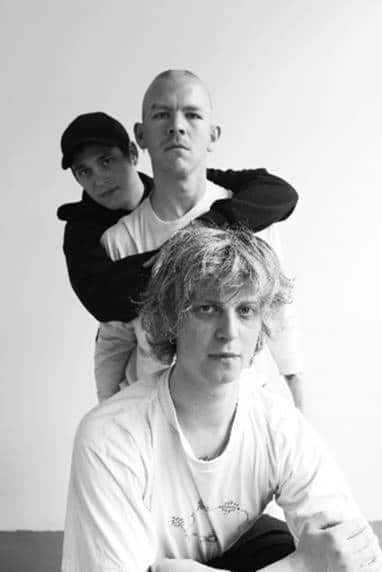
Made up of Oliver Lauridsen (tenor sax), Thorbjørn Øllgaard (baritone/bass sax), and Albert Holberg (drums), the trio has always thrived on tension—acoustic instruments mimicking electronic intensity.
But on This Is Why We Lost, that tension evolves.
Where earlier releases leaned into irony and unpredictability, this album feels more intentional, more vulnerable, and more direct. The humor hasn’t disappeared—but it’s no longer a shield.
Instead, the band leans into contrast:
- club propulsion vs. melodic storytelling
- raw physicality vs. emotional depth
- chaos vs. control
It’s an album that invites you in—but doesn’t let you stay passive.
Built for Both Headphones and Dancefloors
At its core, This Is Why We Lost exists in two parallel spaces:
- A seated, introspective listening experience
- A kinetic, collective club environment
That duality is entirely intentional.
Q&A with Smag På Dig Selv
Question: Your music sits between club culture and jazz improvisation. What kind of experience did you imagine for the listener?
Answer: It’s meant to be heard as a full album, from start to finish, eyes closed. But at the same time, some tracks can fit into a DJ set. We wanted something you can listen to, dance to, and zone out to.
Question: How do you build storytelling into instrumental music without lyrics?
Answer: All good music tells a story. You can do that with instruments just as well as with words. We also use interludes and spoken word to frame the narrative.
Question: Two saxophones and drums isn’t typical club music. What did that limitation unlock?
Answer: It’s a hard format—but also a flexible one. You can move through different genres and still sound cohesive. It becomes something entirely new.
Question: Your performances feel almost ritualistic. Do you see them as concerts or collective experiences?
Answer: When everything clicks, it becomes a collective physical experience. That’s what we’re aiming for—total immersion.
Question: This record feels more serious than your earlier work. What changed?
Answer: Self-irony can be a shield. With this album, we wanted to take responsibility for our music and own it. We’re a bit more mature now—but not fully grown.
Question: The album blends very different elements—your mothers’ voices, minimalist inspiration, and a Palestinian folk song. What connects them?
Answer: We wanted to expand what this format can do. It’s about contrast and creating a journey from start to finish.
Question: Do you leave space for interpretation, or is there a fixed emotional narrative?
Answer: We have a clear feeling in mind, but people can interpret it however they want.
Question: There’s a political undercurrent to the album. Why address that now?
Answer: It’s impossible not to. If you look around, the rise of right-wing politics is everywhere. We wanted to acknowledge that.
Question: Did your live energy influence the studio recordings?
Answer: Actually, no. We focused purely on making a strong studio album—even if that makes it harder to play live now.
Question: The title This Is Why We Lost feels confrontational. What do you want listeners to take away?
Answer: We just want people to listen to it from beginning to end. That’s how it’s meant to be experienced.
A Political Pulse Beneath the Rhythm
Beyond its sonic experimentation, This Is Why We Lost carries a clear political undercurrent.
Rather than pointing outward alone, the band also turns inward—questioning not just the rise of right-wing movements globally, but what failures or blind spots may have enabled that shift.
It’s a rare kind of reflection in instrumental music—subtle, but present.
The Sound of Tension
Produced by TMI Tammi, the album is a melting pot of contradictions:
- hypnotic yet aggressive
- structured yet improvisational
- emotionally open yet physically demanding
Critics have already taken note. Clash Magazine called it “impossible not to be physically moved,” while Notion Magazine highlighted its ability to balance “trance-ready propulsion with melodic vulnerability.”
The Next Phase: Live
SPDS will take This Is Why We Lost on an extensive 2026 international tour, bringing their high-intensity performances across Europe and the UK, including stops in Berlin, London, Stockholm, and Athens.
If the record is about immersion, the live show is about total surrender.
Something You Don’t Just Hear — You Feel
What makes Smag På Dig Selv unique isn’t just their sound—it’s the way they translate physical energy into music without relying on electronics or vocals.
This Is Why We Lost doesn’t ask for your attention in the background.
It demands it.
And if you give it that—fully, from start to finish—it offers something rare:
a record that doesn’t just move you emotionally or intellectually…
but physically.