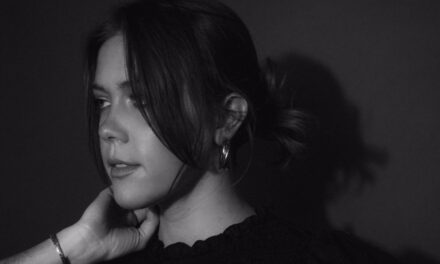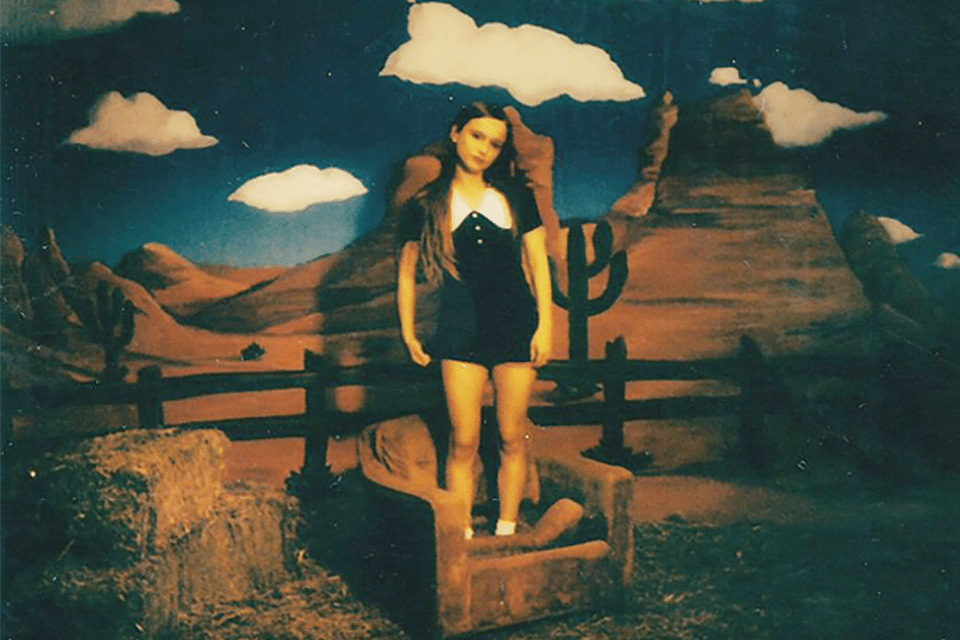
After years of quietly refining her songwriting, New York-based singer-songwriter Diva Smith is stepping confidently into the spotlight with her debut EP, Sunny Surrender. While listeners may only recently have discovered her through a string of acclaimed singles praised by NYLON, Ones To Watch, and MARVIN, Smith’s relationship with music stretches back much further. Teaching herself piano and guitar by the age of twelve and drawing inspiration from timeless songwriters like Fleetwood Mac and Bread, she spent years developing not just her craft but her artistic identity.
Now, following recent tour dates with Carol Ades and a supporting run alongside Holly Humberstone, Sunny Surrender arrives as both an introduction and a statement of purpose. Bright, emotionally honest, and anchored by storytelling rather than spectacle, the EP reflects an artist who has learned that confidence isn’t something you’re born with—it’s something you build song by song.
We caught up with Diva Smith to discuss finding her voice, moving from Los Angeles to New York, fashion, live performance, and why great songs should always survive with nothing more than a voice and an acoustic guitar.
Your debut EP arrives after years of quietly developing your artistry. What does this collection of songs reveal about who you are today that your earlier music couldn’t?
I think I simply needed to write a lot more songs.
I didn’t really begin writing seriously until I was eighteen, and for a long time I felt behind compared to artists who had been writing since childhood. I needed the time to discover my own voice, and I needed to work with a lot of different producers and collaborators before I found something that truly felt like my sound.
Even then, I don’t think your sound is ever finished. It’s always evolving.
This EP is the first project that genuinely feels like me.
You taught yourself piano and guitar at a young age and grew up listening to artists like Fleetwood Mac and Bread. How do those classic songwriting influences still shape your music today?
For me, the best songs are the ones that can survive with nothing more than a voice and an acoustic guitar.
That’s something I constantly think about because my live performances are still very stripped back. If a song can’t hold people’s attention in that setting, then I don’t think it’s finished yet.
Production should elevate a song—it shouldn’t be the song.
That’s probably the biggest lesson I’ve taken from those classic artists.
Moving from Los Angeles to New York transformed your life in many ways. How has the city shaped your songwriting and your confidence?
Moving to New York completely changed my life.
Growing up, I struggled with a lot of anxiety and was very much a homebody. Living in New York always felt like a dream that I wasn’t sure I’d ever be able to handle.
When I got into NYU, I decided to take the chance anyway.
The moment I arrived, everything somehow clicked.
My anxiety eased, my confidence grew, and I completely fell in love with songwriting.
I honestly don’t think I’d be the same artist if I hadn’t moved here.
Sunny Surrender feels like both an introduction and the beginning of a new chapter. Which song became the emotional center of the project?
Definitely “Sunny Surrender.”
It naturally became the heart of the EP, which is why it became the title.
The feeling inside that song reflected exactly where I was emotionally at that point in my life.
I wanted the whole record to carry that same brightness—to feel light, hopeful, and make people want to move.
You’ve spent years refining your craft before releasing this project. Looking back, was patience one of the greatest lessons?
Absolutely.
There can be so much pressure to release music quickly, especially today.
But I really needed those years of writing, experimenting, and figuring things out.
Now I feel much more confident that these songs represent who I actually am.
You’ve already received support from outlets like NYLON and Ones To Watch while building your own audience. How do you stay grounded as your career continues to grow?
Spending time with the people closest to me is the biggest thing.
I also try to keep track of my emotions as everything happens.
This career is full of incredible highs and difficult lows, and one thing I’ve learned is that both eventually pass.
There’s something really comforting about remembering that.
Fashion has become an important extension of your artistic identity. How do style and music influence one another for you?
Feeling comfortable is incredibly important to me, whether I’m on stage, in the studio, or just walking around New York.
I also naturally gravitate toward colorful clothing because that’s when I feel most like myself.
Fashion is another language.
Like music, it’s a way of expressing who you are before you’ve even spoken.
What you wear can invite people into your world.
You’re currently touring with Holly Humberstone after recently sharing stages with Carol Ades. What has performing live taught you about your songs?
This has been the first time I’ve played for audiences that are deeply invested in the artists they’re there to see.
Those fans arrive curious, attentive, and incredibly generous.
Hearing people sing my lyrics back to me for the first time completely changed my relationship with these songs.
They were once written purely for me.
Now they belong to other people too.
Knowing that certain lyrics make someone else feel understood—that’s the whole reason I make music.
Your songwriting balances vulnerability with quiet confidence. Do you see writing primarily as self-discovery or storytelling?
Storytelling, more than anything.
I’ve spent many years in therapy, so I’ve developed a pretty deep understanding of my emotions.
Songwriting allows me to transform those emotional experiences into stories that hopefully resonate with other people.
That process has been incredibly therapeutic.
As listeners discover Sunny Surrender, what do you hope they understand about Diva Smith beyond the music and the expectations that come with your background?
The most important parts of my life are being a friend, a daughter, and a sister.
Helping people through difficult moments means everything to me.
If my music can help someone understand themselves a little better—or simply make them feel less alone—then I’ve done what I set out to do.
More than anything, I hope these songs create a space where people feel safe enough to look inward and explore who they are.