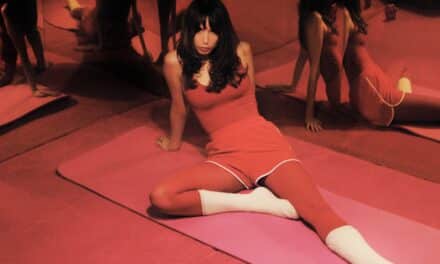
Summer songs are often built on carefree memories, endless sunsets, and fleeting romances. But on “Mannaggia a me,” Italian singer-songwriter dile explores something more bittersweet: the strange contradiction of living through beautiful moments while quietly carrying the weight of a broken heart.
Released as the soundtrack to those unforgettable Italian summers filled with seaside afternoons, village festivals, sleepless nights, and love stories destined to end with September, the single transforms melancholy into something unexpectedly cathartic. Following the success of songs like “Carnevale,” which sparked important conversations around mental health and eating disorders through his collaboration with Animenta, dile continues to prove that vulnerability can resonate far beyond personal storytelling.
We spoke with the Abruzzo-born artist about nostalgia, authenticity, songwriting, and why sometimes the saddest summers become the ones we remember forever.
“Mannaggia a me” captures a very specific feeling: being surrounded by sunshine, freedom, and beautiful moments while quietly carrying heartbreak inside. What made you want to explore that contrast?
I’ve always been fascinated by the contrast between what we show the world and what we’re actually living through inside.
There are moments when everything seems perfect on the outside—you’re at the beach, you’re with friends, you’re living an ideal summer day—but deep down you’re still carrying something heavy.
“Mannaggia a me” was born from exactly that feeling: smiling at life while a part of you is still trying to come to terms with something that’s over.
The song feels like a snapshot of an Italian summer, full of beaches, village festivals, sleepless nights, and fleeting romances. How much of it comes directly from your own experiences?
There’s a lot of me in it, but also a lot of what I’ve observed over the years.
Summer has this incredible ability to amplify everything: encounters, emotions, memories.
I took images and feelings that belong to my own life and my hometown and blended them with moments that belong to all of us, because certain summers, certain nights, and certain love stories all seem to share the same flavor.
“Mannaggia a me” is such a uniquely Italian expression. Why did it feel like the perfect emotional centerpiece for the song?
Because it’s such a simple, spontaneous, deeply Italian expression.
It’s not just about blaming yourself. Inside those words there’s irony, melancholy, affection, and acceptance.
It’s what you say when you realize maybe you could have done something differently, while also accepting what happened.
To me, it perfectly captures the spirit of the song.
Your music often transforms vulnerability into something deeply collective. How do you write songs that feel intensely personal while resonating so universally?
I always try to begin with something that’s true.
I believe a very personal story can become universal when it expresses an emotion that almost everyone has experienced at least once.
At the core, I’m always writing about my own life.
The most beautiful part is creating a space where someone can listen and think, “I’ve been through that too.”
Since debuting in 2019 you’ve accumulated more than 50 million streams and built an incredibly loyal audience. Has success changed your relationship with songwriting?
My relationship with songwriting has changed in terms of awareness, not in the way I approach it.
I’ve changed as a person many times since I started, and I hope I continue changing.
But the process itself has never really changed.
I pick up a guitar and start playing.
What happens after that… I’ve honestly never been able to explain.
Songs like “Carnevale” sparked important conversations around mental health and eating disorders through your collaboration with Animenta. How important is social impact within your artistic journey?
For me, music only truly matters when it creates a genuine connection.
If a song can make someone feel less alone or open a conversation about important issues, then it has achieved something far greater than simply being listened to.
Social impact isn’t something I actively chase.
It’s simply the natural consequence of telling honest stories.
Summer songs are usually associated with carefree happiness, yet “Mannaggia a me” embraces nostalgia and sadness as well. Do you think melancholy is an essential part of summer memories?
Absolutely.
I think melancholy belongs to summer just as much as happiness does.
It’s a season that intensifies everything.
The beautiful moments stay with you, but so do the absences.
“Mannaggia a me” comes directly from that contrast—from a memory that still shines even though it hurts a little.
Your lyrics often feel incredibly cinematic, almost like scenes from a film. When you’re writing, do you begin with images, stories, or emotions?
Usually I begin with emotions.
Those emotions gradually become images, and only afterward do they become a story.
It’s a fairly messy process, but it’s what comes naturally to me.
I don’t think there’s a right or wrong way to write a song.
After touring extensively across Italy and selling out shows, what has performing live taught you about the way people connect with your music?
Playing live teaches you something that’s almost impossible to understand inside a recording studio:
Music doesn’t truly exist until people breathe life into it.
On stage you watch songs transform.
Sometimes they become bigger.
Sometimes they become more fragile.
But it’s always the audience that completes them.
That’s when you realize music is never finished—it’s an ongoing exchange between you and the people listening.
Looking ahead, “Mannaggia a me” feels like another step in your evolution as a songwriter. What themes or experiences are you most interested in exploring next?
That’s actually one of the hardest questions for me to answer because I never decide on a theme before writing a song.
I don’t know if that’s the “right” approach, but honestly it doesn’t matter much to me.
As long as what I write feels honest and makes me feel good, then I know I’m moving in the right direction.