Growing older rarely comes with the clarity we’re promised. Sometimes it simply gives us better questions.
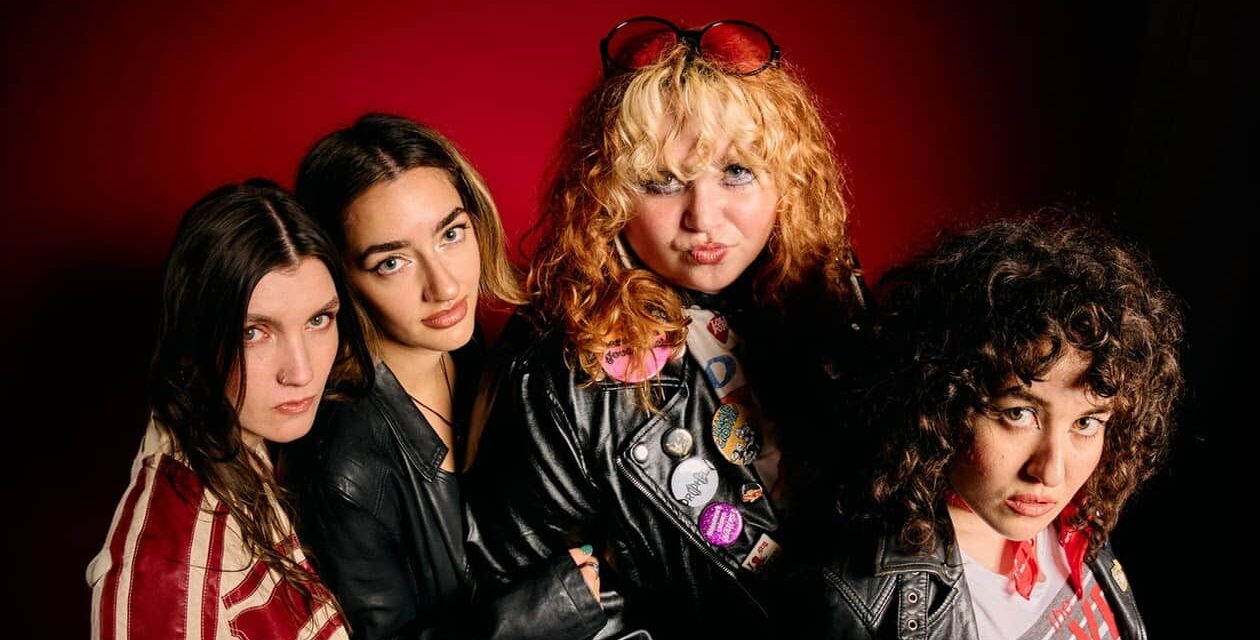
On their debut album Dirty Little Rock ‘N’ Roller, Los Angeles outfit Julez and the Rollerz trade the reckless abandon of youth for something far more compelling: an honest reckoning with identity, relationships, and the strange realization that you’re no longer the person you used to be. Led by the powerful new single “I Don’t Know You,” the record channels glam rock theatrics, arena-sized hooks, and emotional vulnerability into an album that embraces both sincerity and spectacle.
Produced by Grammy-nominated producer Alex Newport, Dirty Little Rock ‘N’ Roller captures a band evolving without abandoning the energy that first defined them, proving that growing up doesn’t have to mean growing quiet.
We caught up with frontwoman Jules Batterman to discuss turning thirty, confronting past versions of herself, embracing theatricality, and why she’s still searching for the answers.
“I Don’t Know You” feels like a conversation with your younger self. Was writing it more cathartic or unsettling, and did it change the way you see who you used to be?
Definitely cathartic.
I wrote it during a really transformative period of my life. I’d just turned 30, both of my parents had either turned or were about to turn 60, I was newly engaged and planning a wedding—I mean, that’s a lot of existential fuel all at once.
I wouldn’t necessarily say it changed how I see myself, but writing it was absolutely cathartic.
Turning thirty is often treated like a cultural checkpoint. How did that milestone reshape your relationship with identity, both onstage and off?
I’ve been doing this project in different forms for almost ten years now.
Being in my thirties is strange because there’s still this perception that artists who “make it” usually do so in their twenties. Although I do think that’s starting to change.
I actually wear my age as a badge of honor now.
Of course, there’s always that little fear of people thinking, “Wow… she’s still wearing weird outfits and touring?” while everyone else seems to be climbing career ladders or starting families.
I’m 31 now, and music is just my life.
I don’t think that’s ever going to change.
There’s a strong thread throughout the record about losing not only people but former versions of yourself. How do you embrace growth without mourning who you used to be?
That’s definitely a difficult balance.
I’ve accepted all the growth that’s happened over the last few years because life has changed so dramatically. But it’s hard not to miss the versions of myself that were less jaded—or the child who was endlessly excited by everything.
At the same time, I’m much more emotionally mature now and a lot more comfortable with who I am.
Dirty Little Rock ‘N’ Roller feels like it moves from chaos toward clarity. Was that progression intentional or simply a reflection of where life naturally took you?
As someone who lives in constant chaos, I’m glad you picked up on the clarity. (Laughs.)
I’d say that evolution happened naturally, although maybe there was a little subconscious intention mixed in too.
The album leans into glam rock theatrics, huge hooks, and larger-than-life performances. Is performing an escape from reality or a way of understanding it more honestly?
Absolutely both.
I’m a theater kid and a huge glam rock fan. The more theatrical, the better.
When I’m onstage, I feel completely free to wear ridiculous outfits, crazy makeup, and just let go without worrying about judgment.
But after every show—whether it was amazing or terrible—I always have this moment of clarity where I realize I’m actually doing what I’ve dreamed of doing my entire life.
You worked with Alex Newport, whose productions balance precision with raw emotion. How did he shape the emotional character of this album?
Alex was really committed to keeping the record as raw and authentic as possible.
Of course, if something wasn’t working we’d keep doing takes until we both felt that “aha” moment.
But if anything ever started sounding too polished or too “studio,” he’d point it out immediately.
He really played to our strengths while helping us work through our weaknesses, and I think that allowed as much emotion as possible to come through.
Earlier releases captured the blur of youth and late nights. What does “the morning after” sound like to you now?
The morning after sounds like a terrible hangover and catching up on sleep so I can actually function properly.
This record embraces sincerity while still leaving room for humor. Was leaning into emotional honesty a conscious response to the current musical landscape?
I’ll always appreciate irony—even in my own songs.
But I also genuinely love rocking out and screaming away bad feelings.
For this record I definitely found a balance between sincerity and irony, but I leaned more heavily into sincerity because I genuinely needed to process what I was going through.
The band began with a rotating lineup before evolving into a more collaborative unit. How has that shaped the way you think about authorship today?
Even though I usually write the lyrics and melodies, everyone contributed so much to this album.
I really hope that continues moving forward because this is our music—not just mine.
Everyone has something valuable to say, and this band wouldn’t exist without every person contributing what they bring.
At its heart, the album keeps asking one question: who are you when the party ends and the noise fades away? Have you found an answer?
I’m definitely still sitting with that question.
Hopefully I’ll have the answer soon. (Laughs.)
On Dirty Little Rock ‘N’ Roller, Julez and the Rollerz prove that growing older doesn’t mean turning down the volume—it means learning why you’re making the noise in the first place. By pairing glam-rock swagger with deeply human self-reflection, the band delivers a debut that celebrates both reinvention and uncertainty. Sometimes the greatest act of rebellion isn’t pretending to have life figured out—it’s admitting you’re still searching.