A self-titled album often signals an introduction.
For GIULIA BE, it represents something more complicated: a reintroduction, a reclamation, and the first project large enough to contain the different versions of herself that had previously been separated by language, geography, and industry expectations.
The Brazilian singer, songwriter, musician, and actress has officially completed GIULIA BE, an ambitious 21-track album unfolding across three interconnected seven-song chapters in Spanish, Portuguese, and English. Rather than translating one collection into three languages, GIULIA created three distinct emotional and sonic worlds that eventually converge into one cohesive portrait.
The Spanish chapter arrived first, followed by the Portuguese collection and, now, seven English-language songs that complete the album. Together, they reflect nearly a decade of writing, with some songs originating nine years ago and others completed only months before release.
For GIULIA, the self-titled name became necessary because this is the first time her music has represented her full linguistic and creative identity equally.
“I feel that each language brings out a different version of me,” she explains. “This album was a way for all those versions to exist together and speak to each other.”
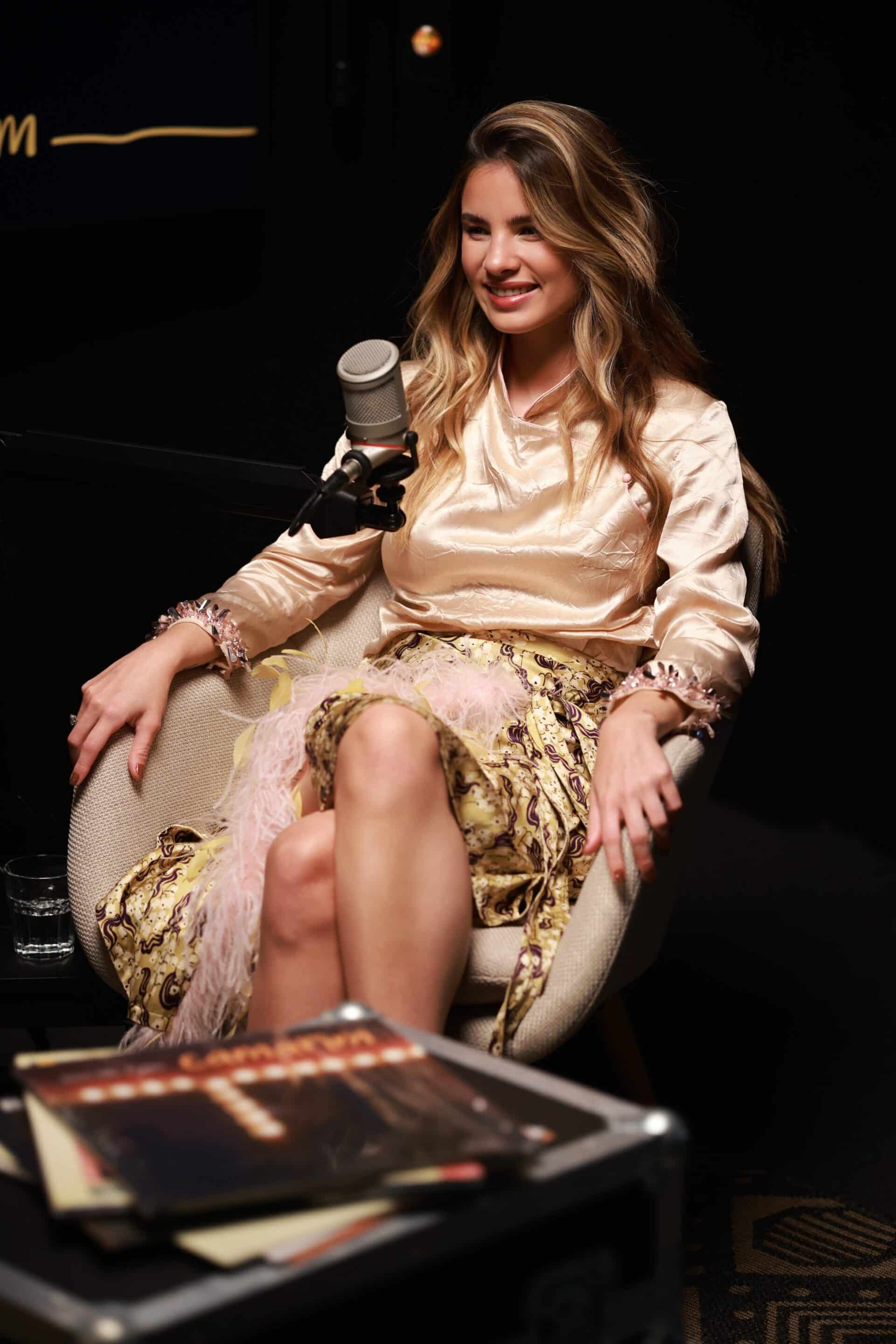
The project arrives during a period of significant international expansion. A two-time Latin GRAMMY nominee with more than two billion streams, GIULIA recently offered an exclusive preview of the album at the GRAMMY Museum’s The Drop series, where a moderated conversation was followed by her first-ever Los Angeles concert and a standing ovation.
She also performed the album’s emotional centerpiece, “911,” for the GRAMMY Global Spin series. Built around intimate piano and exposed vocals, the English-language ballad transforms the urgency of an emergency call into a metaphor for heartbreak severe enough to feel physical.
“Begging operator, please don’t let me die alone,” she sings before shifting toward a more restless coping impulse: “Somebody send an ambulance to take me out to dance.”
The lyric captures the album’s recurring tension between emotional collapse and the performance of recovery. GIULIA’s songs are filled with characters attempting to escape heartbreak through movement, nightlife, denial, humor, desire, and reinvention, only to discover that vulnerability continues following them across every language.
Yet GIULIA BE is not merely an album about heartbreak.
It is a project about artistic permission.
For years, GIULIA found herself associated primarily with the Portuguese-language pop that first established her career. After breakout songs including “Too Bad,” “menina solta,” and “(não) era amor,” expectations began forming around what a GIULIA BE song should sound like and which language it should use.
The success created opportunity, but it also created boundaries.
In conversation, GIULIA reflected on being pigeonholed following her early hits and encountering resistance when she wanted to release material outside Portuguese. The self-titled album directly challenges that limitation by placing all three languages on equal ground.
English, Spanish, and Portuguese are not side projects or alternate-market versions of the same artist.
They are all GIULIA BE.
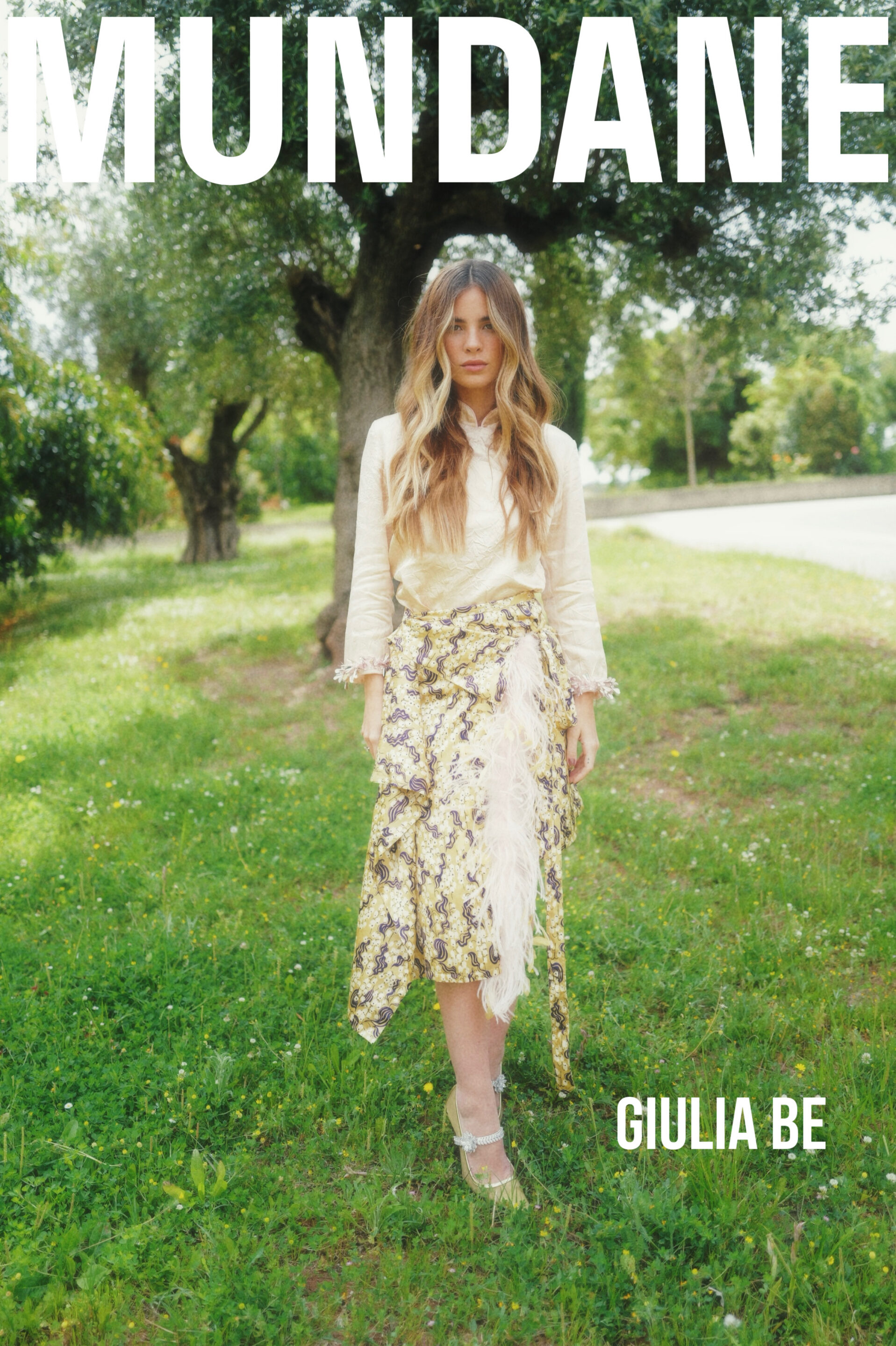
Photographer: Christy Barley https://www.instagram.com/christybarley
Stylist: Juliana Gimenez https://www.instagram.com/julianagmnz
Hair: Tom Perdigão https://www.instagram.com/tomperdigao
Make Up: Tom Perdigão https://www.instagram.com/tomperdigao
PR: Jordan Frazes https://www.instagram.com/frazescreative
Three Languages, Three Emotional Worlds
The album’s three chapters possess distinct sonic identities.
The Spanish songs lean toward Latin rhythms, dancehall, and reggaeton influences. Tracks including “bye bye bahia,” “tonta,” “grillos,” and “bebecito” move through impulsive attraction, rejection, silence, and emotional escape with rhythmic immediacy.
“bandera blanca” broadens the emotional scope by examining the end of a friendship, recognizing that platonic separation can create grief as intense as romantic heartbreak. “perder el vuelo” captures the desire to remain beside someone slightly longer, while “tú,” featuring Micro TDH, explores intimacy and the difficulty of fully releasing an emotional attachment.
The Portuguese chapter moves closer to GIULIA’s singer-songwriter instincts.
“viciada” and “delícia proibida” explore obsession, temptation, and desire, while “antes que você vá” reflects on the fear of losing someone before the separation becomes final. “peter pan” looks toward childhood and the discomfort of growing older, while “adulta” addresses adulthood, independence, and change more directly.
“te olhando daqui” captures emotional distance, and “se um dia o mundo se apagar” closes the section through cinematic reflections on love amid uncertainty.
The English chapter moves through pop, disco, electronic textures, and intimate balladry.
“fool for love” embraces irrational devotion with infectious energy, while “poltergeist” transforms ghosting into literal emotional haunting. “no problem” explores the pressure to appear unaffected, and “girls just wanna” channels confidence, spontaneity, and collective feminine freedom.
“911” brings the album to its most exposed emotional point before “grey zone” examines mixed signals and suspended relationships. The final track, “closure,” concludes the album through acceptance rather than dramatic resolution.
Although each chapter begins from a different musical vocabulary, GIULIA noted that they gradually arrive in a similar emotional place.
All three eventually move toward vulnerability.
The languages may alter the rhythm, genre, and personality of the songs, but the ballads reveal the shared emotional core beneath them.
Story Before Melody
Despite the project’s musical breadth, GIULIA considers herself a storyteller before anything else.
For her, songwriting begins with narrative.
She needs to understand what a song is about, whose perspective it occupies, and which emotion the listener should carry before the melody can fully emerge. The production, visuals, and performance are built around that emotional intention rather than treated as separate additions.
This approach helps explain why the 21-track project feels cohesive despite moving through multiple languages and styles.
The genres change, but the storytelling remains central.
GIULIA’s relationship with narrative also extends naturally into acting. She recalled discovering performance through school theater, including playing Juliet, before eventually entering film in an unexpectedly organic way.
A Netflix producer saw her performing piano on a Brazilian morning program and recognized the possibility of translating her musical presence to the screen.
That opportunity led to her starring role in the 2022 film Depois do Universo, expanding her public identity beyond music. She is now preparing to appear in the forthcoming film As Dez Vantagens de Morrer Depois de Você, scheduled for October.
The film follows two best friends and carries an unusual emotional structure. GIULIA’s character dies in a car accident but leaves behind ten letters containing challenges for her closest friend. She continues appearing as a ghost visible only to that friend, creating a story about grief, memory, friendship, and the ways people remain present after death.
The project carries additional intimacy because GIULIA filmed it alongside one of her real-life best friends.
For an artist whose album explores multiple selves communicating across emotional distances, the film’s concept feels particularly fitting. Both projects examine the traces people leave behind and the stories that continue after a relationship changes form.
The Brazilian Tradition of Saying More
GIULIA’s writing is also informed by Brazil’s rich history of poetic songwriting.
During the country’s dictatorship, censorship forced many musicians to communicate through metaphor, symbolism, and layered language. Artists learned to conceal political and emotional meaning inside poetic structures capable of passing through official scrutiny while remaining legible to listeners.
GIULIA sees that history as part of the country’s broader musical inheritance.
Brazilian songwriting often carries an intense relationship with vulnerability, metaphor, passion, and linguistic play. Even when contemporary artists are not responding to the same political conditions, the tradition remains present in how stories are constructed.
That influence appears throughout GIULIA BE.
A phrase can function romantically on the surface while carrying grief underneath. A dance track can contain emotional surrender. A playful image can reveal abandonment, and an emergency number can become shorthand for a broken heart.
The album’s trilingual structure allows these traditions to interact with global pop.
GIULIA draws from Brazilian songwriting, Latin rhythms, English-language pop, disco, electronic production, and singer-songwriter intimacy without treating those sounds as competing identities.
The project suggests that cultural specificity and international reach do not need to cancel one another out.
Moving Beyond the Language Barrier
The timing of GIULIA BE also reflects a broader change in global music.
For decades, many international artists were encouraged to translate, simplify, or abandon parts of their identities in order to reach English-speaking audiences. Today, some of the world’s biggest artists are proving that listeners are increasingly willing to cross linguistic boundaries without demanding complete assimilation.
GIULIA pointed toward the global success of artists including Bad Bunny and Karol G, as well as the extraordinary international reach of K-pop, as evidence that language is becoming less of a commercial barrier.
Audiences no longer require every lyric to arrive in English before connecting emotionally.
Rhythm, vocal delivery, personality, imagery, and performance can communicate before literal translation occurs.
GIULIA’s album goes a step further by refusing to choose one language as the definitive version of her artistry.
The Spanish, Portuguese, and English chapters are not arranged according to a hierarchy. Each language reveals something the others cannot reproduce in exactly the same way.
Together, they demonstrate that multilingual artists are not divided versions of one person.
They are expanded ones.
Growing Up in Public
GIULIA began writing songs long before the music industry entered the picture.
Her first composition, “Superhero,” was written at eight years old and inspired by Hannah Montana. The song belonged to a childhood imagination in which performance, songwriting, and personal identity were already intertwined.
The decisive moment arrived years later at Rock in Rio.
After hearing GIULIA sing, Maroon 5 guitarist James Valentine filmed her performance and told her that she should seriously pursue music. His encouragement gave her the conviction to reconsider the path toward law school and commit herself to an artistic career.
That decision eventually led to enormous success, but the early period was not without resistance.
GIULIA recalled being bullied for pursuing music and watching people dismiss a path that later became increasingly normalized through social media. Some of those same people eventually became content creators themselves, reflecting how dramatically ideas about creative careers changed within only a few years.
The pandemic accelerated GIULIA’s rise in unexpected ways.
Early TikTok culture gave her music a platform at a moment when audiences were spending unprecedented amounts of time online. Songs could move internationally without relying exclusively on traditional radio or regional industry systems, and her work found listeners across languages and borders.
Yet rapid visibility also meant learning how to grow while millions of people watched.
The self-titled album reflects the perspective she developed through that experience. It contains the confidence of someone who has already reached major milestones, but it also preserves material written before those achievements became imaginable.
The oldest and newest songs are allowed to coexist.
Rather than hiding earlier versions of herself, GIULIA lets them speak to the artist she is now.
“911” and the Body of Heartbreak
Among the album’s 21 tracks, “911” stands as one of its most emotionally direct moments.
The song begins from the idea that heartbreak can feel like a physical emergency. Emotional pain changes sleep, breathing, appetite, energy, and the body’s basic sense of safety. By framing the experience through an emergency call, GIULIA gives invisible suffering a concrete urgency.
Yet the song is not static.
The narrator moves between desperation and the desire to escape through dancing. She wants an ambulance, but she also wants movement, noise, nightlife, and temporary relief.
That contradiction feels deeply contemporary.
People are often expected to process emotional devastation while remaining productive, social, attractive, and visible. Pain exists beneath the carefully maintained image of someone who appears to be functioning.
“911” breaks through that performance.
Its live presentation for GRAMMY Global Spin places GIULIA at the piano, removing much of the distance between the song’s narrator and the artist delivering it. The performance emphasizes the musical foundation beneath her pop versatility: voice, instrument, story, and emotional clarity.
It also reveals how the self-titled project operates at its strongest.
Regardless of language or production scale, GIULIA’s songs return to narrative intimacy.
An Artist Without Translation
Calling the album GIULIA BE is ultimately an act of self-definition.
The project does not answer the question of who GIULIA is by reducing her to one sound, language, or emotional register. Instead, it argues that identity can remain coherent while containing contradiction.
She can be the Brazilian pianist shaped by poetic songwriting traditions.
She can write Spanish-language songs built for movement and English pop tracks informed by disco and electronic production.
She can be a musician, actor, storyteller, performer, romantic, adult, child, and international artist without one identity invalidating the others.
The self-titled album becomes less a definitive statement than a space where all those dimensions can finally meet.
GIULIA’s career began with a child writing “Superhero” after watching Hannah Montana. It gained direction when a musician she admired told her she should take her voice seriously. It expanded through Brazilian pop, TikTok virality, Latin GRAMMY nominations, acting roles, and eventually a global record deal.
Now, after years of being asked to fit into particular markets and expectations, she has created a project that refuses to translate her into something smaller.
The Spanish songs do not explain the Portuguese songs.
The English songs do not replace them.
They speak to one another.
And by allowing every version of herself into the same album, GIULIA BE has created something more meaningful than a crossover project.
She has created a portrait of an artist who no longer needs to cross over into anyone else’s world.
She has built one large enough to hold her own.