Pop music often asks artists to compress complicated emotional experiences into something immediate.
A relationship becomes a hook. Self-doubt becomes a chorus. Months of confusion become three minutes of clarity, polished enough to play loudly while still carrying traces of the experience that created it.
On her debut EP, Love Department, rising Los Angeles-based pop artist and actress Seanna Pereira embraces that contradiction.
The six-track project transforms the instability of young adulthood into sharp, replayable pop songs without smoothing away the uncertainty underneath them. Across the EP, Seanna writes about complicated relationships, emotional dependence, independence, perfectionism, attraction, and the gradual development of self-worth.
The production is polished and energetic, placing her music in conversation with the emotionally direct pop of artists such as Sabrina Carpenter and Tate McRae. Yet the perspective remains distinctly Seanna’s. Her songs are shaped by the specific mistakes, realizations, and internal arguments she has experienced while moving through early adulthood in real time.
“I think it’s less about the sound and more about the perspective,” she explains. “Nobody has lived my exact experiences.”
That perspective is especially visible in the EP’s title track.
“Love Department” places Seanna’s perfectionism and self-doubt directly at the center of the writing. Rather than presenting heartbreak as something done exclusively to her, she examines her own decisions, contradictions, and repeated willingness to enter situations she may already know are wrong.
One lyric captures that tension with disarming simplicity: “Let them call me stupid, sorry I’m just human / Might fall in love with the wrong person sometimes.”
The line does not attempt to defend the mistake or turn it into rebellion. It simply acknowledges the uncomfortable distance between knowing better and acting differently.
For Seanna, that honesty became one of the project’s most significant breakthroughs.
Writing the EP while actively living through many of its situations forced her to sit with emotions she had previously avoided. The process did not merely document a period of uncertainty. It gave her a new way of understanding herself, and unexpectedly, a greater sense of confidence.
“Writing these songs while I was actually living through the relationships and situations opened me up to understanding emotions I don’t think I ever really let myself sit with before,” she says. “It surprised me how much confidence I gained simply by being willing to reflect instead of avoiding it.”
The project follows recent singles “Options,” “Arsonist,” and “Chemistry,” each introducing elements of the emotional and sonic world Seanna develops more fully across Love Department. Atmospheric production, dynamic vocals, infectious hooks, and confessional writing give the record the feeling of a private journal reconstructed as a cinematic pop experience.
That cinematic quality comes naturally to Seanna.
Before releasing her debut project, she had already spent much of her life performing. Born and raised in Florida, she began working in entertainment at a young age and developed a career across film and television. Her credits include feature films Shoot or Die, An Enchanted Ruby, and Everglades, alongside appearances in Fox’s 24: Legacy and The CW’s Valor.
She recorded songs at eight years old for her starring role in An Enchanted Ruby, making music and acting interconnected parts of her creative identity from the beginning.
Yet songwriting requires a different kind of exposure.
Acting allows Seanna to enter another person’s story. Music removes that distance. There is no character to absorb judgment, no script separating the performer from the experience, and no fictional world to provide emotional protection.
“With acting, I get to hide behind a character,” she says. “With my music and writing, it’s just me and my actual life.”
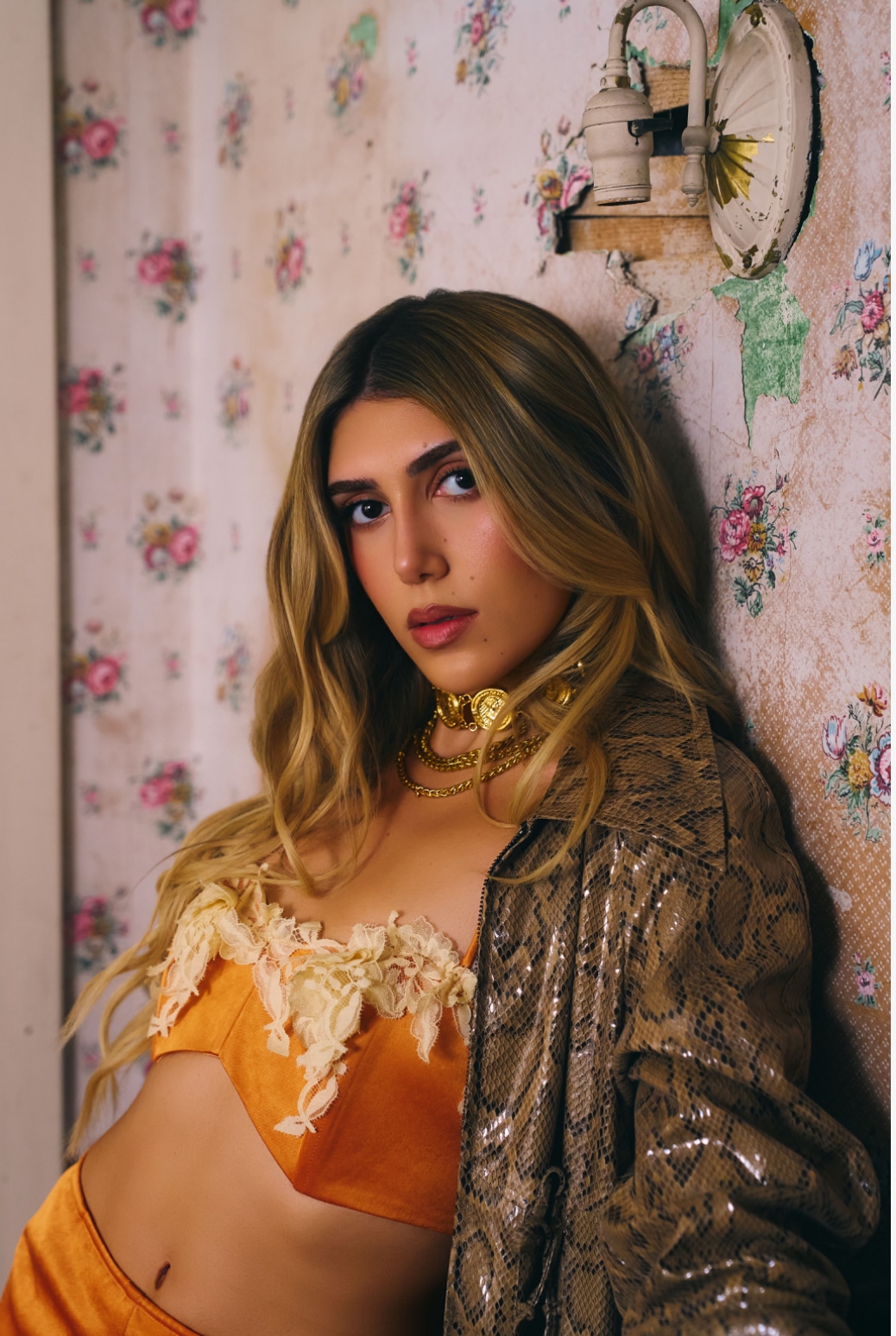
That vulnerability runs through Love Department, but so does a desire to create something visually expansive. Seanna imagines the aesthetic world of a song while writing it, considering fashion, atmosphere, character, and potential visuals before the track has fully left the studio.
Her interest in high fashion and cinematic storytelling gives the EP a visual identity that is not separate from the music but part of its emotional architecture.
We spoke with Seanna Pereira about writing through young adulthood, admitting when she has fallen for the wrong person, moving from acting into autobiographical music, and learning how to let confidence and vulnerability occupy the same song
Love Department explores the emotional highs and lows of young adulthood with remarkable honesty. What did making the EP teach you about yourself?
Writing these songs while I was actually living through the relationships and situations opened me up to understanding emotions I don’t think I ever really allowed myself to sit with before.
It surprised me how much confidence I gained simply by being willing to reflect instead of avoiding those emotions.
The project examines complicated relationships, independence, and self-worth. Was one song especially difficult to complete because of how vulnerable it required you to be?
“Love Department,” for sure.
That song came from a lot of self-reflection and places my perfectionism and self-doubt completely out in the open.
Writing it meant sitting with many realizations about myself as the words were coming out.
Your music combines polished pop production with deeply confessional songwriting. How do you balance commercial immediacy with emotional authenticity?
I’m a huge perfectionist.
I go back and forth with my producers a lot to find the sweet spot between the production and the vocals.
Sometimes that means going into the studio ten times. Sometimes it only takes a couple of sessions.
When I really want the vulnerability to come through, I lean toward stripping the production back so nothing interferes with the lyrics or the actual emotion.
You built a career as an actress before releasing your debut EP. How has storytelling on screen influenced your songwriting?
With acting, I get to hide behind a character, but with my music and writing, it is simply me and my real life.
My acting background definitely appears in the way I think about songs visually and emotionally.
I want people to feel something in the same way I would want an audience to feel something while watching a film.
I also love approaching music videos from an acting perspective.
Artists such as Sabrina Carpenter and Tate McRae have helped redefine modern pop by combining vulnerability with confidence. What do you hope listeners recognize as uniquely “Seanna”?
Honestly, I think it is less about the sound and more about the perspective.
We are all writing within the same pop space, but nobody has lived my exact experiences.
I would say confidence and vulnerability are what connect everything for me, along with wanting the visuals to feel very cinematic and chic.
The visuals surrounding Love Department feel as intentional as the songs. How important is visual storytelling to the project?
Visuals are everything to me.
When I am writing a song, I am already picturing the world I want to create around it, whether that comes directly from the lyrics or simply from how I am feeling in that moment.
I am extremely interested in high fashion, so that always makes its way into the work.
I want to continue evolving that part of my artistry as I grow.
You have performed for most of your life. How has your relationship with performance changed now that you are telling your own stories instead of someone else’s?
It is much more exposing.
With acting, I am playing a character, so there is a built-in distance that makes it easier to hide.
With music, especially when I am writing my own songs, everything is about me and my real experiences.
I have had to break down many walls connected to self-doubt and caring about what people think in order to become comfortable sharing those stories.
Pop is often most powerful when a personal detail becomes universally recognizable. Was there a lyric you nearly removed because it felt too revealing?
There is a line in “Love Department” that says, “Let them call me stupid, sorry I’m just human / Might fall in love with the wrong person sometimes.”
That line initially felt almost too honest.
It means admitting aloud that you know better, and that people are telling you something is not a good idea, but you still make the same mistake.
It became one of the lyrics I am most proud of because it is simple, but I think many people can relate to it.
Artists are now expected to create constant content while developing their music. How do you protect your creativity and identity amid that pressure?
It has been a learning curve, especially because I grew up with a very small and private circle.
I try to keep my content varied and allow my actual personality to come through instead of presenting only a polished version of myself.
That has made it feel fun rather than like an obligation.
It has become something I genuinely love because it allows me to connect with my fans, which matters most to me.
Love Department feels like the beginning of a much larger story. What kind of artist and storyteller do you hope to become?
I don’t want to place myself inside one genre or style.
I love a wide range of music, and I want to continue exploring so I can discover what both my audience and I connect with most.
I simply want to keep creating and allow that identity to reveal itself as I go, while hopefully growing alongside the people listening.
The title Love Department suggests a place where romance might be analyzed, organized, approved, or rejected according to some clear internal system.
The songs reveal the opposite.
Love refuses organization. It disrupts judgment, complicates independence, and exposes the distance between the standards people set for themselves and the situations they repeatedly accept.
Seanna does not approach these contradictions from a position of complete resolution. She is writing from inside them.
That immediacy gives the EP its emotional credibility.
Many debut projects are designed to introduce a finished identity: a precise sound, aesthetic, message, and public persona. Love Department is more compelling because it introduces an artist who is still actively discovering herself.
Seanna understands her perfectionism, but she has not eliminated it. She recognizes the patterns that lead toward the wrong people, but recognition does not always prevent repetition. She is developing greater confidence while remaining vulnerable to doubt.
The project does not treat those qualities as failures of personal growth.
They are the growth.
By reflecting rather than avoiding, Seanna begins changing her relationship with the experiences she documents. The songs do not rewrite the past, but they prevent it from remaining unexamined.
This distinction is particularly visible in the title track.
“Let them call me stupid” initially sounds defensive, but the following phrase changes its meaning: “Sorry I’m just human.”
Seanna is not celebrating poor decisions. She is releasing herself from the expectation that self-awareness should make her immune to them. Knowing what is best and choosing it consistently are separate skills, especially when intimacy, desire, and fear become involved.
That realization allows vulnerability and confidence to coexist.
Confidence is not presented as never making the wrong choice. It is the ability to confront that choice without allowing shame to become an identity.
Seanna’s acting experience strengthens this emotional framing.
She understands character, visual atmosphere, pacing, and the way an audience can be guided through a feeling without being told exactly what to experience. Yet her music reverses the usual relationship between actor and character.
In a film, Seanna enters a constructed person.
In a song, she constructs a world around herself.
The visuals offer a frame, but not a disguise. Fashion, cinematic imagery, and polished production make the emotions more vivid without making them less personal.
This is where the theatricality of Love Department becomes meaningful.
The project is not cinematic because Seanna wants to make ordinary emotions appear larger than they are. It is cinematic because those emotions already felt enormous while she was living through them.
Young adulthood is filled with experiences that can appear minor from the outside but reorganize a person internally: the first serious disappointment, the relationship that undermines self-worth, the moment independence becomes loneliness, or the realization that someone else’s attention cannot provide lasting confidence.
Pop music gives those experiences scale.
A chorus allows a private mistake to become communal. A visualizer allows an internal world to become visible. A lyric Seanna nearly considered too personal becomes the line most likely to make another listener feel understood.
Her increasing comfort with social media follows the same principle.
Rather than treating content as a continuous performance of perfection, she is learning to use it as an extension of connection. Her audience is not shown only the highly controlled artist image. Her personality, humor, and less curated moments are allowed to coexist with the cinematic world surrounding the songs.
That openness matters because the community Seanna hopes to build cannot depend entirely on aspiration.
Listeners may admire the fashion, production, and visual polish, but they connect through the imperfections underneath them.
Love Department arrives as Seanna’s debut statement, but she resists defining what every future chapter must sound like. She wants the freedom to move across genres, experiment with different forms of storytelling, and discover her identity through creation rather than deciding it in advance.
That willingness to remain open may be the project’s most important expression of confidence.
Seanna does not need to know exactly who she will become before allowing people to meet who she is now.
For the moment, she is an artist willing to admit she has loved the wrong person, ignored her better judgment, doubted her value, and still found something empowering within the process of telling the truth.
The department may not have everything under control.
But it is finally open.