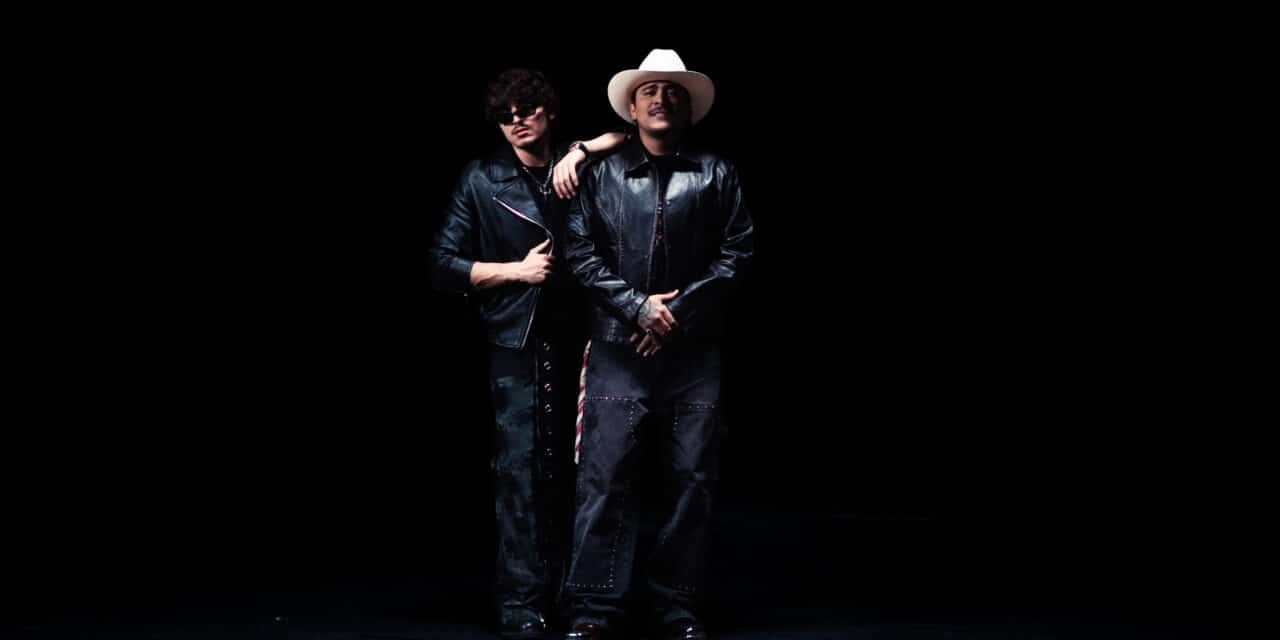
Alongside Gabito Ballesteros, the rising Mexican singer-songwriter brings rockabilly, Norteño, Country, and Tex-Mex into the same romantic universe—and makes the case that breaking musical rules can sometimes be the best way to honor where they came from.
Genre borders have always looked cleaner on paper than they sound in real life.
Follow an acoustic guitar long enough and it can lead you from American Country into Mexican ranchera.
Follow the accordion and it moves between Norteño, conjunto, Tex-Mex, polka, and generations of cross-border exchange.
Listen past language and geography and certain archetypes begin looking remarkably familiar.
The cowboy.
The ranchero.
The traveler.
The fighter.
The romantic.
People who work hard, love dramatically, tell stories about what they have lost, and tend to express emotion most comfortably when there is a melody underneath it.
For rising Mexican singer-songwriter Pepe Walker, that overlap is not an academic exercise.
It is where his music naturally lives.
“Cowboys and rancheros are both passionate people,” he says. “I think a lot of people overlook how much we actually have in common.”
His new single “A La Luz De La Luna,” recorded alongside Gabito Ballesteros, turns that cultural proximity into sound.
The song brings together Country, Norteño, Tex-Mex, and even rockabilly influences around a timeless premise: love at first sight.
Walker describes his broader musical language as “norteño light.”
The phrase is deliberately loose.
It acknowledges tradition without allowing tradition to become a restriction.
And perhaps most importantly, it leaves room for instinct.
“I think rules are made to be broken,” Walker says, “but tradition will always matter.”
Start With Rockabilly, Then Let It Wander
Despite the obvious Norteño and Tex-Mex vocabulary surrounding “A La Luz De La Luna,” Walker says the song’s instrumental foundation began somewhere slightly different.
“Rockabilly had a big influence on the song’s instrumentation.”
From there, categories became less important.
“We just let our sound and style naturally blend into the mix.”
That word—naturally—is important.
The most convincing genre hybrids rarely sound as though somebody entered a studio with a checklist.
Add some Country.
Now some Norteño.
Insert Tex-Mex here.
What makes “A La Luz De La Luna” interesting is the suggestion that those musical languages already coexist within Walker’s instincts.
The fusion is not necessarily the concept.
It is the consequence.
“It was a lot of fun to create.”
That ease reflects a broader generational shift taking place around regional music.
Artists increasingly have access to entire musical histories simultaneously.
Country does not need to exist in isolation from Música Mexicana.
Rockabilly does not have to remain frozen in a particular decade.
Norteño can preserve recognizable instrumentation and storytelling while allowing new production approaches to enter.
For Walker, the interesting question is not which box the song belongs in.
It is whether the combination feels true.
What Is “Norteño Light”?
Walker’s shorthand for his music is “norteño light.”
It is an intriguing phrase precisely because it sounds less like an established genre than a personal proposition.
His explanation begins with culture.
“I think it’s a combination of Mexican music culture and the fresh perspective that Golden Ink brings to everything we do.”
But freshness does not mean rejecting the source.
“I think rules are made to be broken, but tradition will always matter.”
That tension is the foundation.
Preserve enough of the architecture that the history remains audible.
Then allow instinct to decide what belongs beside it.
“We just try to find the right balance between honoring the roots and bringing something fresh.”
The phrase “norteño light” therefore seems useful precisely because it refuses excessive definition.
It creates permission.
Norteño can be the root without becoming the entire tree.
Tradition Doesn’t Have to Mean Obedience
Music built around tradition often faces a peculiar burden.
Innovate too aggressively and somebody accuses you of abandoning authenticity.
Remain too faithful and somebody else calls the work derivative.
Walker does not seem especially interested in satisfying either extreme.
His position is simpler.
Tradition matters.
Rules can still be broken.
Those ideas are not contradictory.
Tradition is not necessarily a set of instructions.
It can be a vocabulary.
An emotional inheritance.
A way of telling stories.
A rhythmic intuition.
A particular relationship between musicians and audience.
You can retain those things while changing the architecture around them.
Walker describes what he and his collaborators are doing not as destruction but addition.
“I believe we’re creating something new by building on what’s already there and adding fresh elements to the mix.”
That is a useful way to think about contemporary cross-border music.
Newness does not always require inventing ingredients.
Sometimes it comes from changing their proximity.
Pepe and Gabito
“A La Luz De La Luna” also extends an existing creative relationship between Walker and Gabito Ballesteros, one of the most recognizable voices in contemporary Regional Mexican music.
The two had already worked together from the songwriting side on “Perlas Negras.”
This time, they meet as performers.
The shift feels less like a manufactured collaboration than the next stage of an existing friendship.
“Gabo and I have been friends for a while, so the chemistry has always been there.”
That history matters.
Collaboration becomes much easier when artists do not need to invent familiarity inside the studio.
“It was only a matter of time before we worked together again.”
With voices now becoming part of the exchange, the relationship is no longer hidden behind the composition.
The chemistry becomes audible.
Fighters and Lovers
The lyrical premise of “A La Luz De La Luna” is almost aggressively timeless.
Love at first sight.
It is the kind of subject that could easily collapse into cliché because generations of songs have already explored essentially every available variation of instantaneous attraction.
Walker’s solution is not to reinvent romance intellectually.
It is to make the language personal.
“We’re fighters, we’re lovers, so romantic lyrics come naturally to us.”
Then comes the detail that matters:
“We just add a little bit of what we actually live day by day.”
That is usually where familiar songwriting subjects survive.
Not through discovering an emotion nobody has ever experienced before.
Through discovering the version only you could describe.
Love songs remain relevant because love keeps happening to different people.
The narrative may be ancient.
The lived details are not.
Cowboys and Rancheros
Perhaps the clearest explanation of Walker’s musical worldview arrives when he is asked what Country and Regional Mexican music actually share.
His response bypasses music theory entirely.
“Cowboys and rancheros are both passionate people.”
It sounds almost deceptively simple.
But the comparison opens a much larger cultural conversation.
Country and Regional Mexican traditions have both historically placed enormous value on storytelling.
Family.
Land.
Working life.
Pride.
Romance.
Heartbreak.
Drinking.
Distance.
Home.
Masculinity.
Loss.
The figure at the center may wear a different hat and sing in a different language, but emotional archetypes travel easily.
“I think a lot of people overlook how much we actually have in common.”
That observation helps explain why contemporary exchanges between the genres can feel less like unexpected fusion than recognition.
The traditions were never entirely strangers.
The Border Was Never Soundproof
There is a temptation to talk about contemporary genre hybridity as though young artists suddenly invented musical exchange.
They did not.
The border between the United States and Mexico has never been soundproof.
Musicians, instruments, rhythms, radio signals, family histories, migration routes, dances, and songs have crossed it for generations.
What may be changing is the degree to which younger artists feel compelled to explain those exchanges as exceptions.
Walker sees his own work as creating something new, but the method is additive rather than revolutionary.
“We’re creating something new by building on what’s already there.”
That distinction matters.
New genres rarely materialize from nothing.
They accumulate.
An instrument moves somewhere.
A rhythm encounters another rhythm.
A singer grows up hearing both.
Eventually someone stops treating the combination as unusual.
Instinct Over Formula
Walker is similarly resistant to over-intellectualizing production.
When deciding which traditional elements should remain raw and which can be modernized, there is no elaborate manifesto.
“That’s a tough question.”
The decisions happen while making the music.
“They’re based on instinct, good taste, and whatever feels right.”
That answer might seem almost too simple, but taste is often the invisible infrastructure behind musical identity.
Rules can tell you what belongs historically.
Instinct decides what belongs emotionally.
And if “norteño light” is going to become identifiable as Walker’s own language, that repeated instinct may ultimately matter more than any fixed list of instruments.
Learning Without Becoming Someone Else
Walker also treats collaboration as education.
When surrounded by more experienced artists, he watches closely.
“I love learning, and I believe life is the greatest teacher.”
In the response provided for this conversation, he specifically points to an artist named David as someone whose experience continues to teach him something whenever they work together.
“Every time I work with him, I learn something new that I can bring into my next songs.”
The important idea is cumulative growth.
A collaboration does not end when the song is finished.
Something from it travels forward.
A phrasing instinct.
A production decision.
A different way of approaching melody.
The next song quietly contains lessons from the previous room.
Making the Song Visible
That process of expansion continues outside the recording itself.
“A La Luz De La Luna” arrives with a cinematic visual component, and Walker views video not as promotional packaging but another form of storytelling.
“Very important,” he says of visuals.
“I believe every song deserves to be told through different forms of storytelling.”
A song already creates images inside the listener.
The video gives the artist an opportunity to complicate or extend them.
“Visuals add another layer to what people are hearing.”
Then Walker offers the simplest possible mandate for the future:
“So yes, let’s make more videos.”
How Do You Make a Sound Recognizable?
The real challenge facing Walker is not simply creating an appealing hybrid.
It is making that hybrid specific enough that eventually it no longer needs explanation.
The ambition behind “norteño light” is recognition.
Someone hears the record before seeing the metadata and knows who is responsible.
Walker points toward three ingredients:
“Freshness, great musical arrangements, and last but definitely not least, Pepe Walker right in the middle of it all.”
That final element is the hardest to define.
An artist can borrow instrumentation.
Production techniques can be replicated.
Genres can become trends.
Personality is more difficult.
Walker believes that identity is already becoming clear.
“I think we have a completely different sound from anything else that’s out there right now.”
And he intends to push it further.
“From what we say to the way we say it, norteño light is here to make its mark.”
The tagline arrives with a smile:
“It’s Pepe Walker… y puro Golden Ink.”
In Conversation With Pepe Walker
MUNDANE: “A La Luz De La Luna” brings Country, Norteño, and Tex-Mex influences into the same space. When you were building the song, which musical tradition provided the foundation, and where did the others naturally enter the arrangement?
PEPE WALKER: Rockabilly had a big influence on the song’s instrumentation, and then we just let our sound and style naturally blend into the mix.
It was a lot of fun to create.
MUNDANE: You describe your sound as “norteño light.” What does that phrase mean to you musically? Which elements of traditional Norteño do you consider essential, and where do you give yourself permission to bend the rules?
PEPE WALKER: I think it’s a combination of Mexican music culture and the fresh perspective that Golden Ink brings to everything we do.
I think rules are made to be broken, but tradition will always matter. We just try to find the right balance between honoring the roots and bringing something fresh.
MUNDANE: You and Gabito Ballesteros had already worked together as songwriters on “Perlas Negras,” but this time you’re sharing the performance. How did your musical chemistry change when you went from writing together to actually exchanging voices on a record?
PEPE WALKER: Gabo and I have been friends for a while, so the chemistry has always been there.
It was only a matter of time before we worked together again.
MUNDANE: “A La Luz De La Luna” deals with love at first sight, which is such a timeless songwriting subject. How did you approach telling that story in a way that felt specific to you rather than relying on the familiar language of a traditional love song?
PEPE WALKER: We’re fighters, we’re lovers, so romantic lyrics come naturally to us.
We just add a little bit of what we actually live day by day.
MUNDANE: Regional Mexican and Country music share a deep investment in narrative songwriting, memorable melodies, and acoustic instrumentation. When you listen closely to both traditions, what musical similarities do you hear that people might overlook because they tend to think of them as separate genres?
PEPE WALKER: Cowboys and rancheros are both passionate people.
I think a lot of people overlook how much we actually have in common.
MUNDANE: Gabito has become one of the defining voices of the current Regional Mexican movement. What did you learn from watching how he approaches melody, phrasing, or storytelling, and was there anything he brought to “A La Luz De La Luna” that completely changed your original vision for it?
PEPE WALKER: I love learning, and I believe life is the greatest teacher.
David is an incredibly experienced artist, so every time I work with him, I learn something new that I can bring into my next songs.
MUNDANE: There’s a long history of musical exchange across the U.S.–Mexico border, but a younger generation is now approaching that relationship without necessarily respecting old genre boundaries. Do you think artists like yourself are creating a new genre, or simply making those connections more visible again?
PEPE WALKER: I believe we’re creating something new by building on what’s already there and adding fresh elements to the mix.
MUNDANE: Your music feels contemporary while remaining rooted in very recognizable traditions. When you’re producing a song, how do you decide which elements should remain raw and acoustic and which can be modernized without losing the emotional character of the music?
PEPE WALKER: That’s a tough question.
Honestly, those decisions usually happen in the moment—they’re based on instinct, good taste, and whatever feels right.
MUNDANE: The single also arrives with a cinematic video. How important is visual storytelling to the world you’re creating around your music, and what did you want the imagery of “A La Luz De La Luna” to communicate that the song alone couldn’t?
PEPE WALKER: Very important.
I believe every song deserves to be told through different forms of storytelling, and visuals add another layer to what people are hearing.
So yes, let’s make more videos.
MUNDANE: If “norteño light” continues evolving over your next several releases, what do you want its defining characteristics to become? What would make someone hear a record without seeing your name and immediately know, “That’s Pepe Walker”?
PEPE WALKER: Freshness, great musical arrangements, and last but definitely not least, Pepe Walker right in the middle of it all.
I think we have a completely different sound from anything else that’s out there right now.
From what we say to the way we say it, norteño light is here to make its mark.
It’s Pepe Walker… y puro Golden Ink.
Give Tradition Somewhere New to Go
The most revealing thing Pepe Walker says about tradition is that it matters immediately after saying rules are made to be broken.
That contradiction is where the music becomes interesting.
If tradition meant following instructions perfectly, there would be little reason for another generation to participate beyond preservation.
If innovation meant forgetting everything that came before, the resulting music would lose the cultural memory that gives experimentation weight.
Walker wants both.
The roots.
And the permission to grow somewhere unexpected.
That is why “norteño light” feels more interesting as an attitude than a rigid genre designation.
It can absorb rockabilly.
Country.
Tex-Mex.
Norteño.
Modern production.
Romance.
Cinematic imagery.
Whatever else eventually makes sense.
The constant is taste.
And, increasingly, Walker himself.
Perhaps the best metaphor is hidden in his observation about cowboys and rancheros.
From a distance they belong to different iconographies.
One is coded American.
The other Mexican.
One belongs to Country mythology.
The other to Música Mexicana.
Look closer and both are connected to land, independence, pride, work, toughness, longing, romance, and songs large enough to hold all of those contradictions.
The border distinguishes them.
Music reveals the resemblance.
“A La Luz De La Luna” lives inside that resemblance.
It does not need to decide whether it is more Country or more Norteño in order to justify itself.
The traditions can meet.
Rockabilly can enter.
A love song can remain unapologetically romantic.
Rules can break without roots disappearing.
And if Pepe Walker keeps following that instinct, norteño light may eventually stop requiring a definition.
You will simply hear it and know.