The queer Kentucky-raised Latin art-pop artist has no interest in choosing between protest and pleasure, spirituality and sexuality, Appalachian music and Latin rhythms, or political confrontation and shaking ass. For Cain Culto, the contradictions aren’t a branding problem. They’re the entire point.
Cain Culto would like pop music to stop helping everyone escape for a minute.
Not forever.
He likes dancing.
He likes absurdity.
He likes provocation.
He has made a song called “BIMBAMBAU.”
Nobody making a song called “BIMBAMBAU” is campaigning for the abolition of fun.
But Culto is suspicious of what happens when entertainment becomes only escape.
“Right now I’m feeling a desire to push back against the over saturation of entertainment that is purely escapist in nature,” he says. “That type of media can be a tool for oppressors to distract into complacency.”
So what does he offer instead?
Apparently:
Political confrontation.
Queerness.
Mysticism.
Latin rhythms.
Appalachian folk music.
Violin.
Pop science.
Clowning.
Spiritual reckoning.
And, when appropriate, shaking ass.
The crucial word is and.
Cain Culto doesn’t appear particularly interested in choosing.
Suffering in One Hand. Joy in the Other.
Culto’s recent output makes considerably more sense once you understand that he doesn’t view confrontation and celebration as opposites.
His protest-minded work includes “¡Basta Ya!,” created with Xiuhtezcatl, while “BIMBAMBAU” launches itself in an almost entirely different emotional direction.
One confronts.
The other revels.
Culto needs both.
“Life is this way. You must hold suffering in one hand and joy in the other.”
That might be the cleanest thesis for his entire artistic universe.
Not because joy cancels suffering.
Not because dancing fixes the systems being criticized.
Because human beings somehow continue experiencing both simultaneously.
“Dancing through this duality is just the human experience.”
Culto has no desire to flatten that experience into one marketable emotional setting.
“I don’t want to be a one dimensional artist, or for people to ever box me in.”
His solution is straightforward.
“I intentionally switch it up often to keep people on their toes.”
Kentucky Is in the Music Too
Culto’s musical identity contains another combination that pop doesn’t encounter every day.
Latin rhythms.
Appalachian folk.
His Kentucky background matters.
“My background in Bluegrass gives me a unique perspective in Pop music.”
For Culto, that isn’t biographical trivia to be placed halfway down an artist bio.
It’s musical material.
“I had never heard an artist blend Latin rhythms with Appalachian folk music before so I wanted to contribute something genuinely new to music discourse.”
That’s an ambitious sentence.
But it reveals how Culto thinks about attention.
He understands that people have too much to look at.
Too much to hear.
Too much content arriving constantly.
“There is so much saturation right now so I want to offer something of value if I’m asking people to give me their attention.”
In other words:
If he’s going to interrupt your scroll, he wants to have a reason.
His larger body of work traces his relationship to cultural roots and queerness while allowing musical traditions that might ordinarily be separated by genre taxonomy to collide.
For Culto, identity doesn’t need to be simplified before it can become pop.
It can become the source of the sound.
He Does Not Wait for the Muse
There is a romantic version of songwriting where the artist sits down, touches an instrument and waits for truth to arrive.
Cain Culto is not doing that.
“I’m not the type to just sit with a guitar, start strumming and see what comes to me.”
His process is more deliberate.
Sometimes sound arrives first.
Sometimes imagery.
Sometimes a message.
But ideas can sit around for a long time before he develops them.
“There’s a calculated nature to the way I create though.”
He wrestles with lyrics.
He edits.
He thinks structurally.
“I love the editing process—the science and symmetry of pop writing.”
That’s an important part of understanding Culto’s apparent chaos.
The work can look unruly.
That doesn’t mean it’s accidental.
The provocations are considered.
The mythology is constructed.
The silliness has architecture.
Even chaos can be edited.
Please Send in the Clown
“BIMBAMBAU” pushes that philosophy toward camp.
Culto’s explanation begins in childhood.
“I’ve always been this way as a mischievous kid.”
Apparently the instinct to provoke people arrived early.
“I think I enjoy saying or doing shocking things to get a rise out of people.”
As his confidence has grown, so has the provocateur.
And Culto has found an archetype that gives him somewhere useful to put that instinct.
The Jester.
“The Jester is an archetype I’m comfortable dabbling in.”
The clown occupies an interesting cultural position.
Ridiculous enough to be dismissed.
Perceptive enough to say the thing everybody else has agreed not to say.
Culto is interested in that history too.
“‘Clowning’ as an art form also has a deeply political history that I feel connected to.”
So the absurdity isn’t necessarily a break from the serious work.
Sometimes it’s the delivery system.
And sometimes, thankfully, ridiculousness is simply necessary.
“Whenever I find myself taking life too seriously, I remind myself to embrace the silly and absurd.”
A useful spiritual practice, honestly.
Cain Culto Was Built Out of a Conflict
The spirituality running through Culto’s work isn’t decorative.
He spent his teens and early twenties deeply involved in church.
“I spent my teens and early twenties quite devout in the church.”
Part of that devotion, he says, came from a sincere attraction to mysticism.
But he also connects it to something else.
His difficulty accepting his own queerness.
That eventually produced a painful contradiction.
Culto says he wanted to continue serving his community.
“I am not very rebellious at my core.”
But after coming out, he says it became clear to him that he was no longer welcome within that community.
So rebellion became less an aesthetic choice than a necessity.
“I had to learn to stand alone in my convictions—to rebel against harmful social conditioning.”
And somewhere inside that process, Cain Culto became more than a stage name.
“In many ways, Cain Culto as a persona became the embodiment of that inner strength.”
That’s a useful way to understand the theatricality.
The character isn’t necessarily a mask hiding the person underneath.
It can be the mechanism that allows a part of the person to become visible.
The Persona Can Say It Louder
Pop personas are often treated as artificial.
The assumption is that removing theatricality reveals authenticity.
Culto complicates that idea.
Sometimes exaggeration can reveal something ordinary behavior suppresses.
The mystical imagery.
The jester.
The camp.
The confrontation.
The sexual confidence.
The provocation.
They don’t necessarily obscure his biography.
They metabolize it.
A person who says he once struggled to accept his queerness creates a persona capable of standing defiantly inside it.
A person who says he isn’t naturally rebellious builds an artistic language where rebellion becomes possible.
The costume can sometimes tell the truth faster than the street clothes.
Complexity Is Terrible for the Elevator Pitch
Of course, there is a practical problem with being difficult to categorize.
The music business loves categories.
Pop.
Latin.
Alternative.
Queer artist.
Political artist.
Visual artist.
Singer.
Violinist.
Pick a shelf.
Culto admits there are moments when mainstream palatability crosses his mind.
“If I’m honest, yeah sometimes.”
He thinks strategically about creating more accessible moments.
But accessibility isn’t the same thing as surrender.
“Even that is strategic for me.”
Culto doesn’t subscribe to the idea that commercial thinking automatically corrupts art.
“I believe good business and good art can coexist.”
The boundary is principle.
He can change the packaging.
He can think about reach.
He can consider how something enters the mainstream.
But he says he intends to stand by the ideas underneath it.
Enter the Shadow
The occulto projects aren’t simply collections of unrelated tracks.
They’re part of a larger narrative leading into CULTO.
“Many of the songs on these two EPs will be in my debut album CULTO.”
Culto describes that album as the story of his becoming over the past decade.
Not becoming famous.
Becoming integrated.
“In this journey, I enter my shadow and eventually come out the other side more integrated.”
The language is psychological and spiritual at once.
The project becomes a reckoning.
With himself.
With ancestry.
With upbringing.
With the world around him.
“Thematically it’s a reckoning—with my internal world, my ancestors, my upbringing, and the systems at work in the world around me.”
That’s a lot to fit inside pop songs.
Which is presumably why Culto also needs the clown.
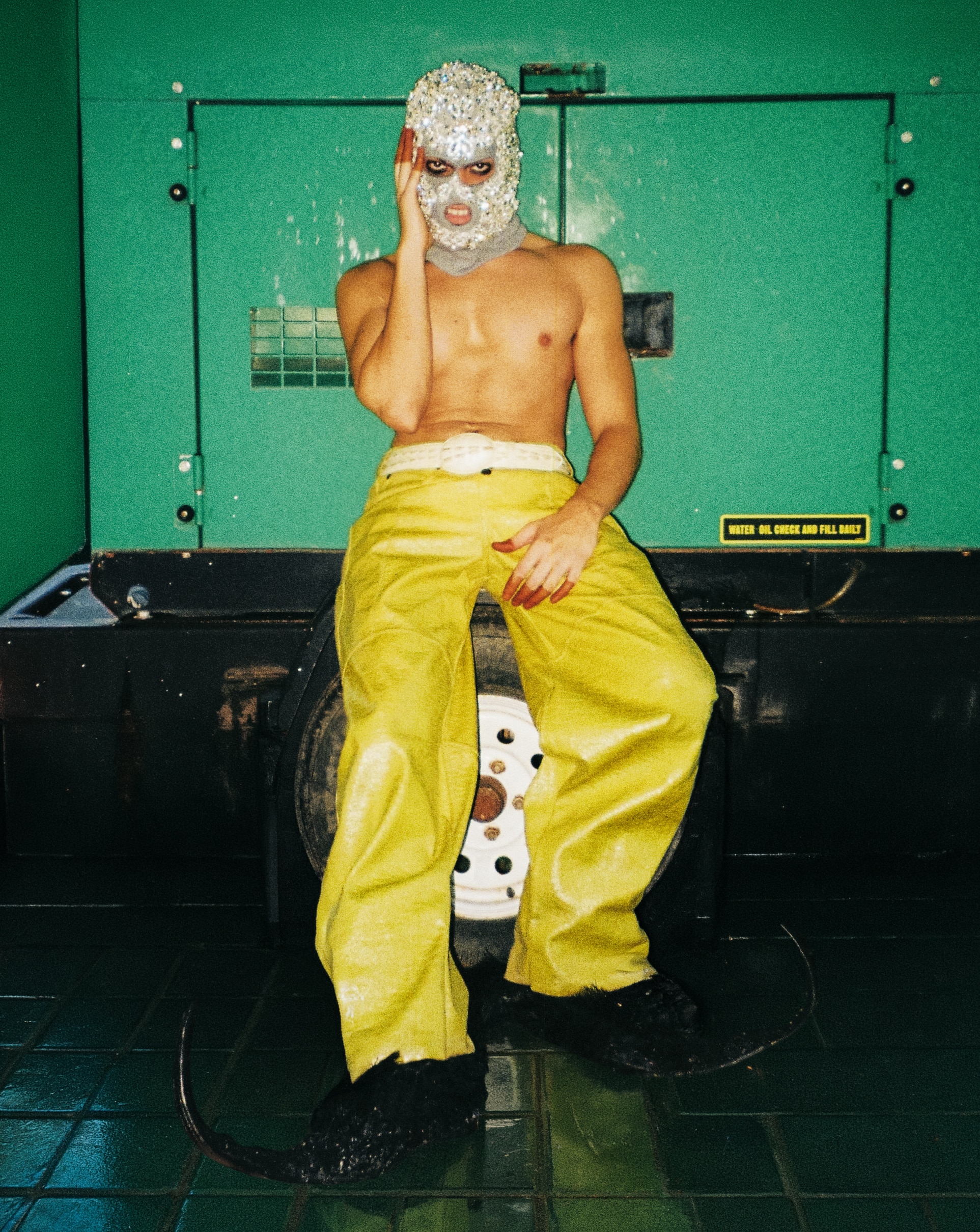
The Algorithm Would Prefer 15 Seconds
Then there is the other system every contemporary artist has to reckon with.
The feed.
Culto is refreshingly direct about its influence.
“The algorithm definitely dictates the marketing strategies of how I deliver my art to my audience.”
Everything needs compression.
Shorter.
Faster.
Immediate.
Visually legible.
Sonically legible.
“It’s all about the 15 second clips.”
That doesn’t mean Culto has decided to make only 15-second ideas.
He specifically points to the four-minute “a plague, a pestilence.”
The larger work can remain large.
But he has to think about how someone encounters it.
What’s the doorway?
What fragment makes someone curious enough to enter?
“So even when I’m making a 4 minute epic like ‘a plague, a pestilence’ I think about the most effective way to hook people in to be curious to see the full work.”
That’s the strange bargain contemporary musicians increasingly make.
Create the universe.
Then advertise it in 15 seconds.
Going Viral for Craft Would Be Nice
Culto isn’t opposed to virality.
He’d simply like to change what artists are trying to make viral.
“I hope my work inspires other artist to prioritize ‘going viral’ for attention to detail, craft, and artistry.”
That’s almost perversely optimistic in an ecosystem designed around velocity.
But it fits him.
He understands the machinery.
He isn’t pretending it doesn’t exist.
He’s trying to use it without allowing its incentives to determine the substance of the work.
Culto also says he has encountered moderation problems on TikTok with political material, claiming that some political-song posts are flagged and hidden. That’s his account of his experience rather than something independently established here, but it adds another tension to his relationship with platforms: the same systems that can rapidly amplify art can also shape how artists package—or experience the distribution of—politically explicit work.
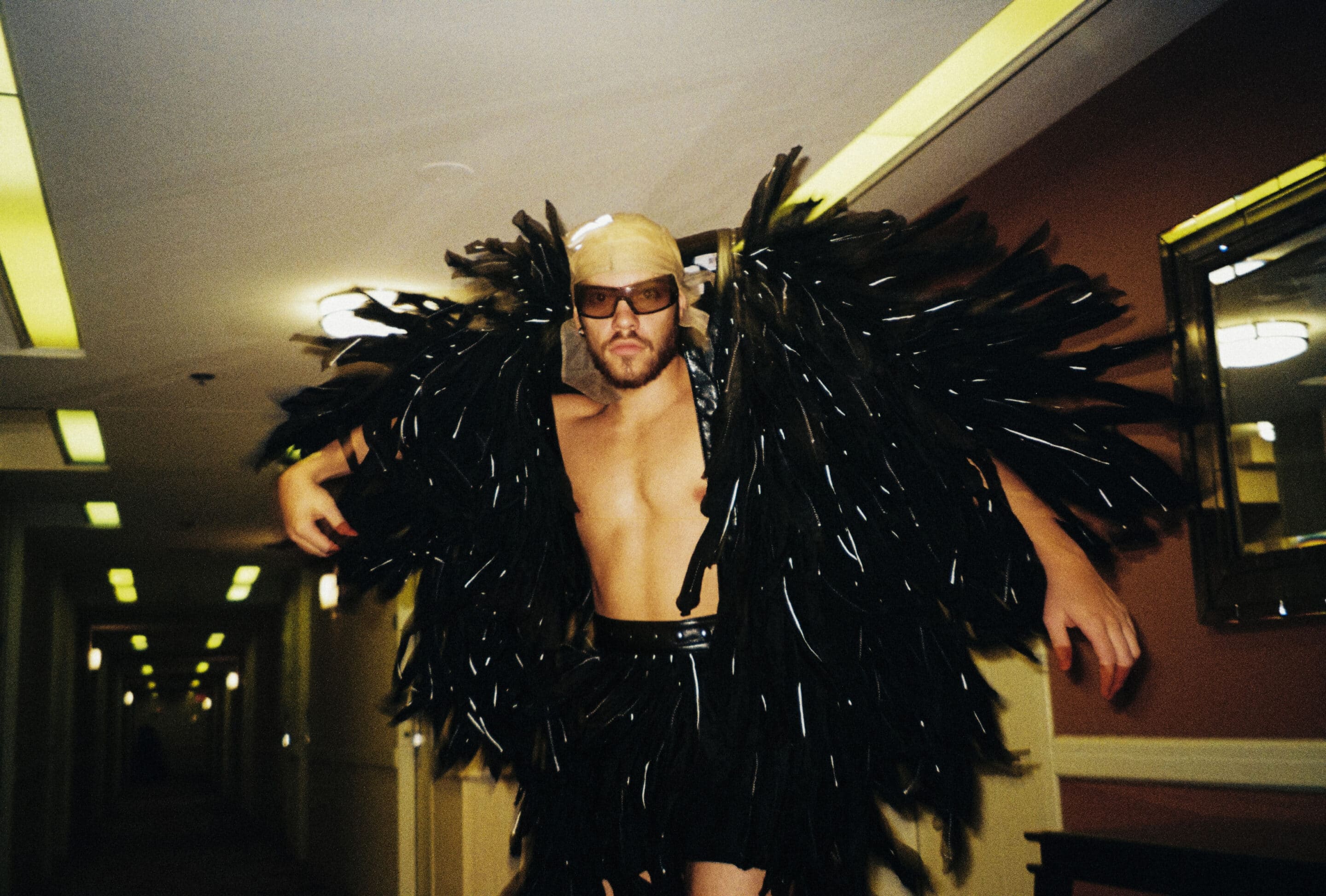
He Is Not Trying to Make You Comfortable
There is a temptation to evaluate provocative art by asking whether everybody understood it correctly.
Culto doesn’t seem especially interested in policing the result.
“If I offends them, let them be offended.”
If somebody finds healing?
“Let them be healed.”
Confusion is allowed too.
That doesn’t mean intention is irrelevant.
Quite the opposite.
Culto cares intensely about intention.
He just understands where his control ends.
“All I can control is the love and intention I put into my art, anything beyond that is none of my business really.”
For somebody whose work is explicitly designed to generate reaction, that’s an unexpectedly peaceful philosophy.
Make the thing carefully.
Say what you mean.
Let people react.
Move on.
Suffering in One Hand
Maybe that’s why Cain Culto’s contradictions don’t really feel contradictory.
The politics and the party aren’t separate departments.
Neither are queerness and spirituality.
Neither are Kentucky and Latin music.
Neither are pop craftsmanship and absurdity.
Neither are strategy and artistic integrity.
They’re tensions he wants to keep alive rather than resolve.
“Suffering in one hand and joy in the other.”
That’s the image.
One hand holds the things that demand confrontation.
The other holds everything that makes surviving them worthwhile.
And somewhere between the two, apparently, Cain Culto is playing violin, interrogating inherited systems, invoking the Jester, making extremely calculated pop music and reminding himself not to take existence so seriously that he forgets to dance.
Maybe escapism isn’t the problem.
Maybe forgetting to come back is.
In Conversation With Cain Culto
Your work feels unapologetically political, theatrical, and deeply personal all at once. Do you see your music primarily as entertainment, activism, or something that refuses to separate the two?
I’m very inspired by the intersection of the unexpected. So yes, I think my work naturally holds the tension of my personal world in conversation with global issues. Right now I’m feeling a desire to push back against the over saturation of entertainment that is purely escapist in nature. That type of media can be a tool for oppressors to distract into complacency. I hope my art is an inspiring and activating force as opposed to a pacifying one.
As a queer, Latino artist from Kentucky now based in Los Angeles, you’ve navigated multiple identities and cultural worlds. How have those experiences shaped the stories you’re compelled to tell?
My background in Bluegrass gives me a unique perspective in Pop music. I had never heard an artist blend Latin rhythms with Appalachian folk music before so I wanted to contribute something genuinely new to music discourse. There is so much saturation right now so I want to offer something of value if I’m asking people to give me their attention. My album tells the story of my journey embracing my cultural roots and queerness.
“¡Basta Ya!” became a powerful protest anthem, while “BIMBAMBAU” embraces absurdity, humor, and spectacle. What attracts you to moving between confrontation and celebration instead of staying in one emotional lane?
Life is this way. You must hold suffering in one hand and joy in the other. Dancing through this duality is just the human experience. I don’t want to be a one dimensional artist, or for people to ever box me in. I intentionally switch it up often to keep people on their toes.
The visual world surrounding your music is just as important as the songs themselves. When you’re creating a project, which comes first—the sound, the imagery, or the larger mythology you’re trying to build?
Often it’s the sound that comes first, sometimes I have a really clear visual idea. I sit on concepts for a while before I begin to actually flesh them out. Sometimes it’s a specific message that comes first. There’s a calculated nature to the way I create though. I’m not the type to just sit with a guitar, start strumming and see what comes to me. I wrestle with my lyrics. I love the editing process—the science and symmetry of pop writing.
“BIMBAMBAU” feels deliberately outrageous, almost daring people to question what’s happening on screen. What role does camp and theatricality play in challenging cultural expectations?
I’ve always been this way as a mischievous kid. I think I enjoy saying or doing shocking things to get a rise out of people. This inner provocateur has only grown as I’ve become more confident in my own skin. The Jester is an archetype I’m comfortable dabbling in. ‘Clowning’ as an art form also has a deeply political history that I feel connected to. Whenever I find myself taking life too seriously, I remind myself to embrace the silly and absurd.
Throughout your work, there’s a recurring tension between spirituality, identity, and rebellion. How do those themes naturally intersect in your creative process?
I spent my teens and early twenties quite devout in the church. Partially because of my sincere tendencies towards mysticism but also probably because of my inability to accept my own queerness. I am not very rebellious at my core. I wanted to keep serving my community but it became clear I was not welcomed anymore when I came out of the closet. I had to learn to stand alone in my convictions—to rebel against harmful social conditioning. In many ways, Cain Culto as a persona became the embodiment of that inner strength.
You’ve developed a distinct aesthetic that blends art-pop, Latin influences, queer culture, and political commentary. Have you ever felt pressure to simplify your identity for a wider audience, or has complexity always been the point?
If I’m honest, yeah sometimes. I think about having more palatable moments in my career for mainstream appeal. But even that is strategic for me. I intend to always stand by my principles and to move in ways that both serve my short-term and long-term goals. I believe good business and good art can coexist.
Your upcoming occulto 002 project suggests an ongoing artistic universe rather than a collection of standalone songs. What can listeners expect from this next chapter, and what ties the project together conceptually?
Many of the songs on these two EPs will be in my debut album CULTO. It is the story of my becoming these last 10 years. In this journey, I enter my shadow and eventually come out the other side more integrated. Thematically it’s a reckoning—with my internal world, my ancestors, my upbringing, and the systems at work in the world around me.
Social media has played a huge role in amplifying your work, from viral remixes to provocative visuals. How do you balance creating art that sparks conversation without letting algorithms dictate your creativity?
The algorithm definitely dictates the marketing strategies of how I deliver my art to my audience. Everything has to be more compact and concise. Visually and sonically. It’s all about the 15 second clips. So even when I’m making a 4 minute epic like ‘a plague, a pestilence’ I think about the most effective way to hook people in to be curious to see the full work. I hope my work inspires other artist to prioritize ‘going viral’ for attention to detail, craft, and artistry. Unfortunately with TikTok, I’ve had to give up a little now with their new censorship guidelines. Anytime, I post one of my political songs it gets flagged and hidden immediately.
Whether you’re making people dance, laugh, or confront uncomfortable truths, your work consistently invites a reaction. When people leave your music or visuals feeling challenged, inspired, or even confused, what do you hope they’re ultimately taking away from the experience?
I want people to connect with my work on any level they are able to. If I offends them, let them be offended. If it heals them in some way, let them be healed. All I can control is the love and intention I put into my art, anything beyond that is none of my business really.
Since the original pitch predates the releases, I’d publish this with the chronology updated: occulto 002 is now out, and CULTO was released September 24 rather than referring to either as forthcoming. (Apple Music – Web Player)