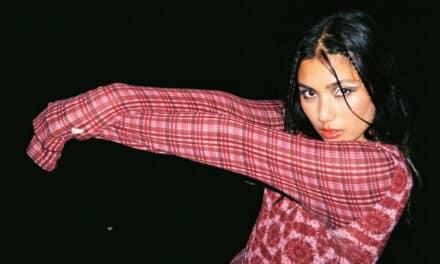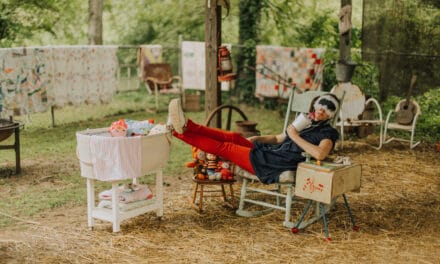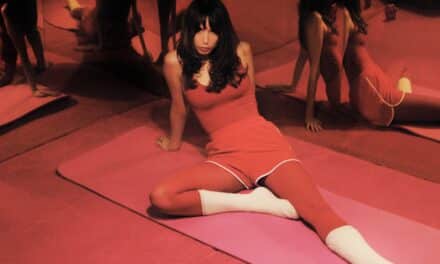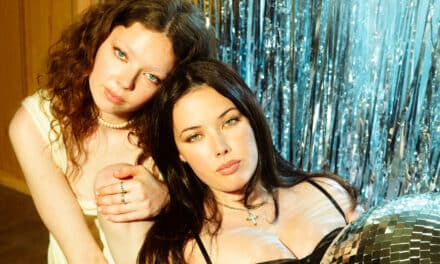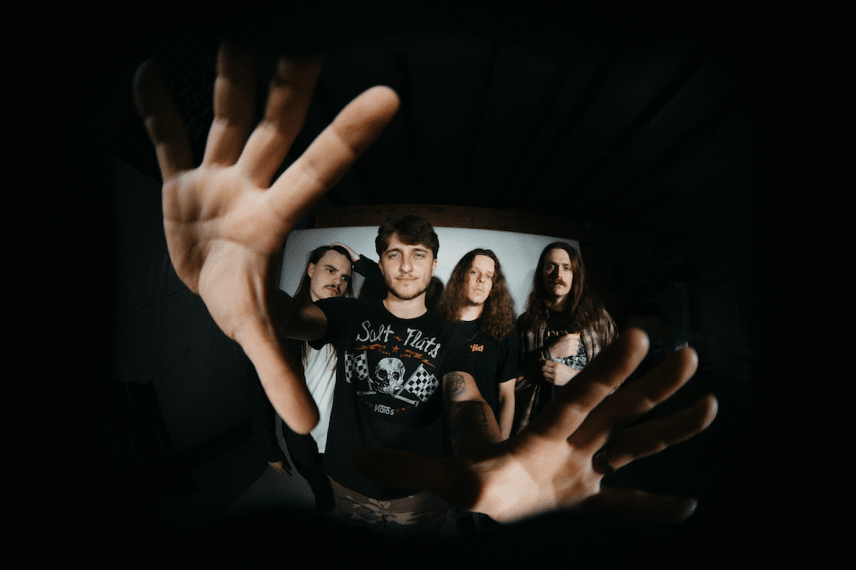
The Muscle Shoals alternative rock band has watched artists with enormous online audiences struggle to fill small venues. So they’re building Lightwatch differently: road-testing unreleased songs, shaking hands, selling physical music and treating the connection between band and audience as the entire reason for doing this in the first place.
Lightwatch would like to see your face.
Not your username.
Not your profile picture.
Not the little heart appearing underneath a Reel before you continue scrolling and forget what you just watched.
Your actual face.
Preferably in a room.
Preferably while something very loud is happening.
“We’re doing it the old-school way,” the Muscle Shoals alternative rock band says. “We want to shake your hands and put physical music in them.”
This isn’t some elaborate rejection of the internet.
Lightwatch exists online.
You can presumably follow them.
Please do.
But after spending the last few years touring, watching audiences and sharing stages with other artists, the band has arrived at a conclusion about the difference between attention and connection.
They are not the same thing.
“We’ve learned through firsthand and secondhand experiences that online followings do not translate to ticket sales, at least not in the proportion you would think.”
They’ve watched artists with hundreds of thousands of collective followers struggle to put 50 people in a room.
Not because those artists aren’t good.
Not because they aren’t working.
Because clicking follow and physically leaving your house are very different commitments.
Lightwatch wants the second one.
The Show Is the Whole Reason
This isn’t simply a touring strategy.
It explains the band.
“For us, the show is the whole reason behind doing this.”
That’s about as uncomplicated a mission statement as you can get.
Lightwatch released their debut album, Into the Evers, in December 2024 and spent much of 2025 taking those songs across the eastern United States.
But the goal was never simply to reproduce the recording accurately in different buildings.
The band talks about live music almost like a temporary social condition.
“The connection between a band and its crowd is deeply personal and intimate.”
People cry.
Laugh.
Yell.
Laugh until they cry.
Together.
In a room.
“Because we’re human and want to be seen and understood.”
There it is.
Underneath the guitars, touring, records and ambition is a remarkably simple proposition.
People want to be seen.
Lightwatch Became Lightwatch While Making the Record
Into the Evers wasn’t simply Lightwatch’s first full-length album.
In some ways, the album created Lightwatch.
“We honestly learned so much about ourselves while making Into the Evers.”
The identity wasn’t completely settled when recording began.
“It was during the making of the record that we decided to name the band Lightwatch.”
That’s an unusual origin point.
Normally, the band gets a name.
Then makes the album.
Here, the songs were actively transforming the thing making them.
“The songs kind of transformed the band in real time during that month of tracking.”
So the debut isn’t simply documentation of an established identity.
It’s evidence of an identity forming.
That makes the prospect of album two considerably more interesting.
The first record was Lightwatch discovering what Lightwatch was.
Now they have to decide what Lightwatch can become.
Muscle Shoals Is More Than a Sound
And they’re doing it from a place where musical identity carries unusual weight.
Muscle Shoals, Alabama.
The name arrives with history attached.
But Lightwatch doesn’t particularly sound like a band attempting to recreate the region’s most recognizable musical traditions.
“You don’t hear a lot of soul or roots influences in the music.”
The influence operates somewhere deeper.
“You feel the power and integrity behind the songs.”
For Lightwatch, that’s what Muscle Shoals actually represents.
“‘Soul’ in the literal sense.”
Not genre.
Commitment.
Putting everything into the work.
“We just put everything we have into what we do like every legendary musician from this area before us did.”
That’s a considerably more useful relationship with musical heritage than cosplay.
They don’t need to sound like the past to inherit something from it.
Thirty Minutes. No Fluff.
Into the Evers contains ten songs in roughly thirty minutes.
Lightwatch likes the word concise.
“‘Concise’ is the perfect word.”
The brevity wasn’t accidental.
The band actively cut the songs down from their demos.
“We wanted to hit listeners hard between the ears and not leave any unnecessary fluff to consider.”
Consequently, many tracks land under three minutes.
Arrive.
Make the point.
Leave.
“We wanted to be quick and to the point about our sound.”
There’s confidence in that.
A debut can easily become an attempt to prove everything simultaneously.
Look how much we can do.
Look how many directions we can go.
Look how serious this is.
Lightwatch instead gave themselves thirty minutes.
Here’s the band.
Here are the songs.
See you at the show.
The Second Record Gets to Breathe
The concision of Into the Evers also created permission for whatever comes next.
The band established the language.
Now they can expand the vocabulary.
“We can expand on it and elaborate musically.”
That’s where album two enters.
Lightwatch is clear that the sophomore record will be different.
“It’ll still be us, but like the second evolution of a Pokémon.”
Finally, a useful musicological framework.
Same creature.
More powerful.
Slightly different shape.
“A little different, a little stronger.”
But the most important evolution isn’t necessarily sonic.
It’s in the writing.
“We’ve really worked on writing songs that people can relate to instead of just writing cool riffs and throwing words on a page.”
They aren’t disowning the debut.
“That isn’t to say that the first record was shallow at all.”
They’ve simply lived more life.
“We’ve just grown a lot deeper.”
Half the Set Doesn’t Technically Exist Yet
Lightwatch isn’t waiting for the sophomore album to be finished before discovering whether the songs work.
They’re already playing them.
A lot of them.
“I’d say half of our set is unreleased music.”
That’s not just impatience.
It’s part of the recording process.
The audience becomes a kind of unofficial laboratory.
The band watches.
Listens.
Feels where the energy changes.
Discovers what survives outside the rehearsal room.
“We discover how the crowds receive the new stuff.”
Then they take that information back into the studio.
It can even influence “exactly how we want them to be tracked.”
That’s an increasingly unusual feedback loop.
Write song.
Play song.
Watch actual humans encounter song.
Then record song.
Instead of:
Write song.
Record song.
Release song.
Post song.
Study analytics.
Lightwatch prefers bodies.
A Crowd Can Tell You Things a Studio Can’t
This makes sense when you consider how central performance is to the band’s identity.
A song can work beautifully through headphones and die in a room.
Another can seem relatively straightforward in rehearsal and suddenly become enormous when 100 people are standing in front of it.
Lightwatch wants to know which is which before committing the definitive version to tape.
The crowd isn’t necessarily deciding what the band should write.
It’s revealing what the song already knows how to do.
That distinction matters.
Road-testing isn’t focus-grouping.
It’s discovering the physical architecture of the music.
Where people move.
Where they stop.
Where they shout.
Where the band itself changes when people start shouting back.
For Lightwatch, those aren’t secondary considerations.
Again:
“The show is the whole reason.”
Followers Aren’t People in a Room
The band’s skepticism toward online metrics comes directly from experience.
They’ve seen the discrepancy.
Large following.
Small crowd.
“We’ve shared stages with artists (who are wonderful) with hundreds of thousands of collective followers that struggle to put 50 people in a room.”
Lightwatch isn’t using that observation to attack those artists.
They explicitly acknowledge that those musicians are trying.
The problem, as they see it, is structural.
Online platforms make an enormous quantity of low-commitment attention possible.
Listen for ten seconds.
Like.
Swipe.
Forget.
A live show asks considerably more from you.
Money.
Travel.
Time.
Presence.
And Lightwatch believes people increasingly crave exactly that.
“Our generation yearns for real, one-on-one connection rather than the one-sided unbroken fourth wall of social media.”
So they want to meet you.
“And how cool is it to meet the band in person instead of liking a reel and forgetting?”
Hard to argue with that one.
The First Album Started Four Years Ago
There is another reason album two sounds different.
Time.
Lightwatch began writing material for the debut more than four years ago.
“Trey wasn’t even 21 yet.”
People change rather inconveniently over four years.
Especially in your early twenties.
“There have been a lot of changes, a lot of good times and a lot of hard times.”
All of that eventually enters the writing.
“All that comes out of the pen.”
So when Lightwatch describes the sophomore album as more mature, it isn’t necessarily announcing some dramatic artistic reinvention.
They’re older.
They’ve toured.
They’ve watched songs change in front of crowds.
They’ve built audiences in different cities.
They’ve experienced things the people who began writing Into the Evers hadn’t experienced yet.
“The sound of the next record is just more mature, with a clearer direction.”
Sometimes evolution isn’t a strategy.
Sometimes enough time passes that making the same record becomes impossible.
The Sophomore Album Problem
Second albums come with a problem debut albums don’t have.
People are waiting.
The debut is made largely in the dark.
Then listeners arrive.
Now those listeners have expectations.
Lightwatch doesn’t seem particularly frightened by that.
“The only pressure we ever feel is from ourselves.”
They know what they expect from the band.
They also trust a fairly traditional equation.
Integrity.
Passion.
Drive.
“If you do anything with integrity, passion and drive, people will come.”
Maybe.
Lightwatch intends to test the theory.
The band believes existing listeners will respond to the new material while the broader songwriting will also reach people who didn’t connect with the first record.
They aren’t trying to abandon their audience.
They’re trying to make the room bigger.
Literally.
Pokémon Evolution, But Make It Alternative Rock
There is something refreshingly unpretentious about describing your artistic maturation through Pokémon.
The music industry has no shortage of phrases for this.
New era.
Next chapter.
Sonic evolution.
Expanded palette.
Lightwatch:
Second evolution of a Pokémon.
Much clearer.
The fundamental DNA remains.
The energy.
The guitars.
The live intensity.
The Muscle Shoals sense of integrity.
But the writing gets deeper.
The direction gets clearer.
The songs have lived in front of people before entering the studio.
The band knows itself better.
Same creature.
Higher stats.
Success Is a Bigger Room
Ask Lightwatch what would make this period feel like a genuine step forward and the answer isn’t mysterious.
Sold-out shows.
More of them.
“Every band dreams of selling out venues across the country.”
They’ve already managed it in several markets.
Now they want to sell out the clubs they’ve spent the last year playing and graduate to larger spaces.
That’s their metric.
Not followers.
Not views.
Not some mysterious number floating on a dashboard.
People.
Tickets.
Rooms.
“We’ve been fortunate to do that in several markets this year, but reaching the next level would mean selling out the clubs we’ve been playing for the past year and moving to the bigger rooms.”
It makes perfect sense.
If your entire philosophy is built around connection between band and crowd, success should probably be measured by whether the crowd shows up.
The Old-School Way
There is nothing particularly revolutionary about Lightwatch’s strategy.
That’s sort of the point.
Write songs.
Get in the van.
Drive somewhere.
Play them.
Meet people.
Come back.
Play again.
Bring new songs.
Find out what happens.
Put physical music in somebody’s hands.
Shake that hand.
Eventually play a bigger room.
Repeat.
The machinery around music has transformed dramatically.
The basic human experience Lightwatch is chasing hasn’t.
A group of people stands on one side of a room.
Another group stands opposite them.
Somebody plays the first note.
For a while, the distinction between the two groups becomes less important.
Crying.
Laughing.
Yelling.
Laughing until somebody cries.
“Because we’re human and want to be seen and understood.”
Lightwatch doesn’t want to go viral instead of building that.
They want to build that until the room has to get bigger.
So yes.
Follow them.
Like the Reel.
Whatever.
Just don’t forget to buy the ticket.
In Conversation With Lightwatch
Into the Evers was your first full-length statement as a band. Looking back after touring those songs extensively, what did you learn about Lightwatch that you couldn’t have learned while making the record?
We honestly learned so much about ourselves while making Into the Evers. It was during the making of the record that we decided to name the band Lightwatch. The songs kind of transformed the band in real time during that month of tracking.
You come from Muscle Shoals, a place with an enormous musical history and a very specific identity. How does being an alternative rock band from that environment influence the way you see yourselves?
The influence shows itself randomly, honestly. You don’t hear a lot of soul or roots influences in the music, but you feel the power and integrity behind the songs. That’s what Muscle Shoals really is. “Soul” in the literal sense. We just put everything we have into what we do like every legendary musician from this area before us did.
The debut is remarkably concise—ten songs in roughly thirty minutes. Was that immediacy intentional, and does it reflect the kind of energy you want Lightwatch to have?
“Concise” is the perfect word. We did whittle the songs down quite a bit from their demos, but only because we wanted to hit listeners hard between the ears and not leave any unnecessary fluff to consider. That’s why many of the tracks are under three minutes. We wanted to be quick and to the point about our sound, so that now we can expand on it and elaborate musically.
You’ve built much of your audience through touring and playing rooms across the eastern United States. How has seeing people react to these songs in real time changed your songwriting?
For us, the show is the whole reason behind doing this. The connection between a band and its crowd is deeply personal and intimate. Crying, laughing, yelling, laughing to the point of tears, all together in the same room because we’re human and want to be seen and understood. It’s unlike anything else.
Your live show is a major part of Lightwatch’s identity. When you’re working on new material, are you already imagining what those songs will feel like in a crowded room?
We’ve honestly been road-testing a lot of new material this year. I’d say half of our set is unreleased music. It’s important to do that for us because that’s where we discover how the crowds receive the new stuff, and so that we can find out exactly how we want them to be tracked in the studio.
There’s something increasingly valuable about bands developing audiences city by city rather than relying entirely on an online breakthrough. What has that grassroots approach taught you about building a community around the band?
We’ve learned through firsthand and secondhand experiences that online followings do not translate to ticket sales, at least not in the proportion you would think. We’ve shared stages with artists (who are wonderful) with hundreds of thousands of collective followers that struggle to put 50 people in a room. It isn’t because they aren’t trying. It’s because our generation yearns for real, one-on-one connection rather than the one-sided unbroken fourth wall of social media.
So, we’re doing it the old-school way. We want to shake your hands and put physical music in them. And how cool is it to meet the band in person instead of liking a Reel and forgetting?
After spending 2025 so deeply immersed in Into the Evers, was there anything about that record that you consciously wanted to leave behind when approaching album two?
Record two will certainly be different than Into the Evers, in a lot of ways. It’ll still be us, but like the second evolution of a Pokémon; a little different, a little stronger. We’ve really worked on writing songs that people can relate to instead of just writing cool riffs and throwing words on a page. That isn’t to say that the first record was shallow at all, we’ve just grown a lot deeper.
A sophomore album can be an interesting challenge because, unlike a debut, you’re creating it with an existing audience and expectations around you. Has that made you feel more pressure, or has it given you more confidence to take risks?
The only pressure we ever feel is from ourselves. We know what we want and expect out of this band. We also know that if you do anything with integrity, passion and drive, people will come. We’re all really excited about this next record and know our existing fans will love it, but we also know a lot of the new songs will bring in a whole new demographic.
You’ve described this upcoming record as the next phase of Lightwatch. Without giving too much away, what feels fundamentally different about the band entering this era?
We started writing the first record over four years ago. Trey wasn’t even 21 yet. There have been a lot of changes, a lot of good times and a lot of hard times. All that comes out of the pen when we write. So, the sound of the next record is just more mature, with a clearer direction.
With another extensive tour ahead and the sophomore album taking shape, what would need to happen for you to look back on this period and feel that Lightwatch genuinely moved to another level?
We’re already looking back on this year and are seeing so much growth. I think for us to reach the next level in our minds it’ll be more sold-out shows. Every band dreams of selling out venues across the country. We’ve been fortunate to do that in several markets this year, but reaching the next level would mean selling out the clubs we’ve been playing for the past year and moving to the bigger rooms.
So if you’re looking for fresh, genuine, loud rock music, check us out and buy a ticket!