
The Los Angeles four-piece didn’t set out to make an EP, didn’t always know what their songs were about and didn’t follow one consistent way of recording them. On Plexus, that uncertainty becomes part of the point.
Artists are supposed to understand their own records.
By the time the press cycle begins, there’s usually a story.
The album represents growth. The single marks a new chapter. The production reflects some carefully articulated conceptual shift. A collection of songs written across different months, rooms and emotional circumstances suddenly acquires the coherence of something that was apparently inevitable from the beginning.
Starling aren’t particularly interested in pretending that happened with Plexus.
The Los Angeles four-piece’s new EP wasn’t originally going to be an EP at all.
Songs started appearing individually throughout 2026. Some had existed in the band’s live set for a while. Others emerged in the recording space. One was repeatedly dismantled and reconstructed. The music video for another song was originally conceived for a track that didn’t even survive the project.
Eventually, Starling looked at what they’d accumulated and recognized something connecting it.
Or, perhaps more accurately, recognized that they needed to connect it.
“We needed to tie together these songs as a unit, to make way for what is to come next.”
There’s something unusually refreshing about the answer.
No mythology.
No claim that Plexus revealed itself in a transcendent moment.
Sometimes a record exists because a band has made a group of songs and realizes those songs belong to a particular period that needs to be finished before the next one can begin.
And Plexus, released via broke Records, captures Starling at exactly that kind of transitional point.
A Record Doesn’t Need to Know What It Is Before You Make It
Starling began with lead singer and guitarist Kasha Souter Willett working alone in 2023.
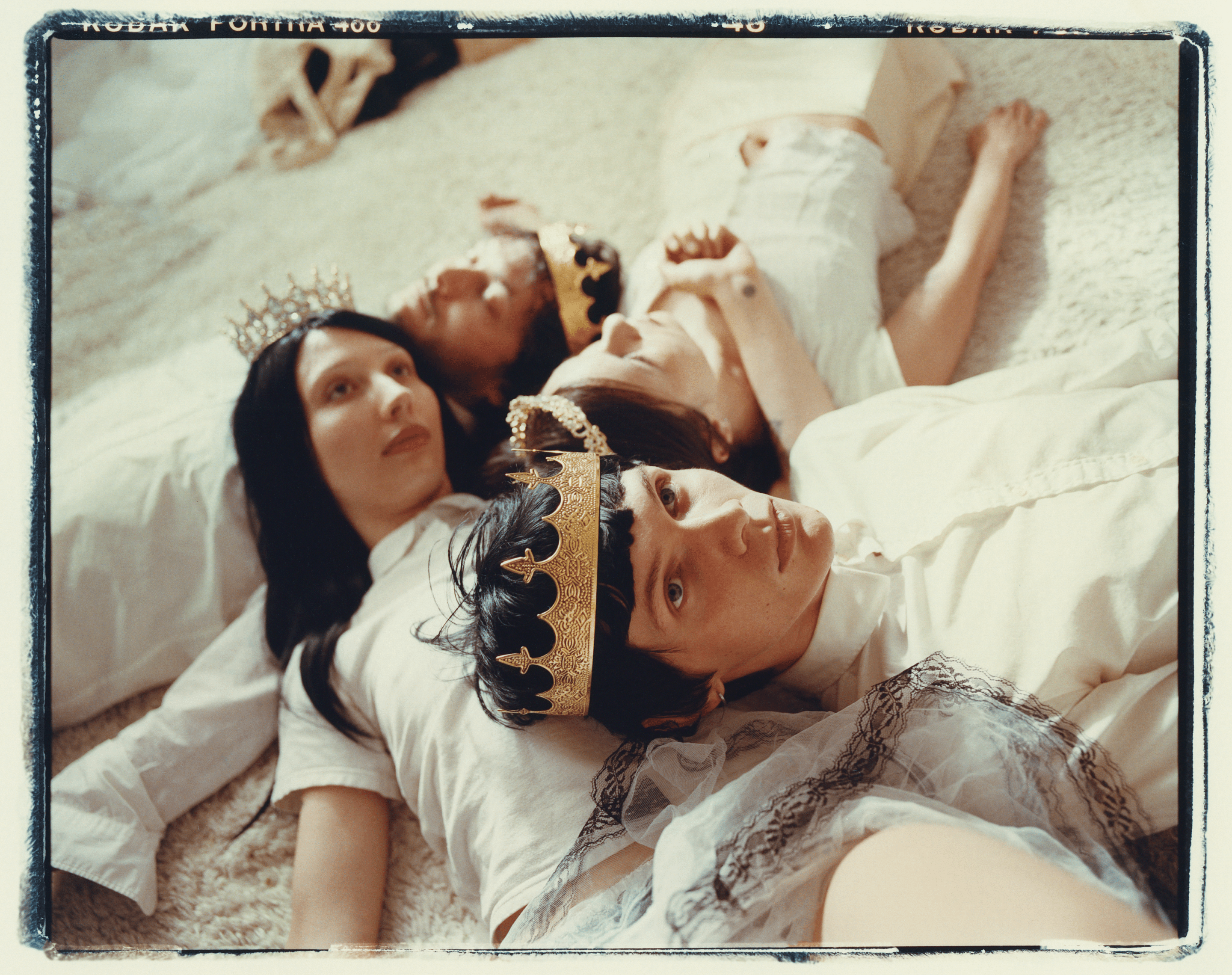
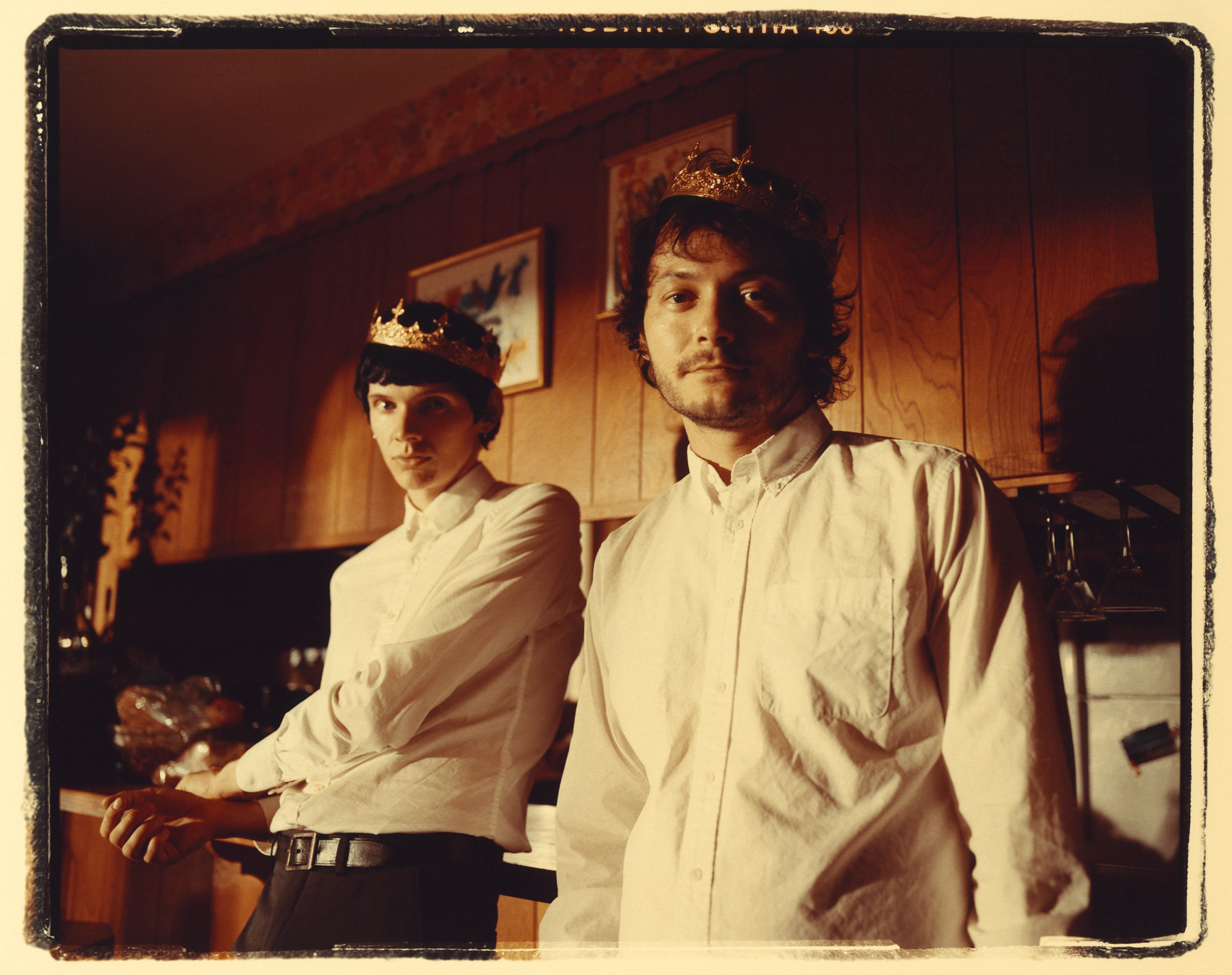
Erik Sathrum Johnson, Grace Rolek and Gitai Vinshtok joined in 2024. The project became a band not merely because additional musicians had appeared, but because playing live and eventually writing together began fundamentally altering what the songs could be.
The transition wasn’t immediate.
“It only really became balanced though in the past year,” they explain.
Now the distinction is unequivocal.
“It is 100% music that none of us could make without each other.”
That shift matters when listening to Plexus because the EP feels less like a declaration of a finalized identity than evidence of four musicians actively negotiating one.
They’re challenging each other about songwriting.
Challenging each other about performance.
Discovering which parts of their previous identity still fit and which descriptions already feel outdated.
Even the band’s characterization of its music as possessing a kind of “soft heaviness”—a phrase that nicely describes the tension between distorted guitars, melodic sensitivity and emotional vulnerability in their work—is something they’re already questioning.
“This statement is from an older band bio that only half resonates now.”
That’s how quickly identity can become obsolete when a band is actually evolving rather than simply branding its evolution.
Playing Live Changed What Starling Wanted From a Song
Starling’s earlier material existed before the musicians had really discovered themselves as a live band.
That changed things.
After experimenting with longer compositions on 2025’s Forgive Me, the band found themselves wanting the songs on Plexus to move differently.
Faster.
More immediate.
More enjoyable to physically perform.
And more capable of moving the audience.
“We realized power and tempo can still convey the emotional material we write about.”
It’s an important discovery for a band whose work frequently gravitates toward yearning, vulnerability and introspection.
Emotional weight doesn’t necessarily require slowness.
Sadness doesn’t have to stand still.
A song can contain complicated feelings while still making someone’s body move.
“And a very powerful tool of performance is getting people to move their bodies,” the band says. “We wanted to connect with the crowd in that way too.”
That realization becomes part of Plexus: emotional music increasingly informed by the physical reality of playing it in a room with other people.
The songs aren’t only things Starling writes anymore.
They’re things Starling has to inhabit.
Stop Looking at the Good Thing Before You Ruin It
“571” contains one of the EP’s most psychologically recognizable ideas.
Something good finally happens.
And almost immediately, you become terrified of losing it.
The obvious temptation is to analyze.
Why is this happening?
How long will it last?
What could go wrong?
What if I accidentally destroy it?
“Over intellectualizing anything can prevent you from feeling it in the moment and therefore experiencing it,” the band says.
But they push back slightly against interpreting the song as a philosophical warning against introspection.
The feeling is more instinctive.
“The message is more not wanting to fuck up a good thing.”
Sometimes you’ve spent so long wanting something that obtaining it merely introduces a new anxiety.
Now you have something to lose.
“Sometimes you spend a lot of time trying to obtain something, but once you get it you dread when/if it will go. Like summer.”
It’s a wonderfully simple comparison.
Summer feels precious precisely because it ends.
And sometimes trying too hard to preserve an experience is exactly what prevents you from being inside it.
Desire Brings Suffering. But Pretending You Don’t Desire Anything Doesn’t Work Either.
That anxiety connects to something larger in Starling’s songwriting.
Their songs repeatedly return to yearning.
For another person.
For contentment.
For another place.
For some imagined version of life that appears to exist slightly beyond the current one.
It’s tempting to assume the solution to longing is eventually obtaining the thing you’ve been longing for.
Starling aren’t convinced.
“The road to self improvement is never ending. Once you get what you want, you focus on the next thing. It’s the human condition.”
There it is again.
The good thing arrives.
And the mind immediately finds the next absence.
“Desire brings suffering.”
But Starling aren’t arguing for emotional detachment either.
“Conversely, stuffing all of this down is no good.”
That’s where art enters.
The objective isn’t necessarily to resolve longing.
It might be to give longing somewhere to go.
To externalize the internal argument.
To turn private dissatisfaction into something another person can recognize inside themselves.
“It is a universal experience, and art is a means to work through internal battles and connect with others through that work.”
Maybe Starling would still have plenty to write about if they found whatever they’re searching for.
Human beings are extraordinarily talented at discovering something else to want.
Sometimes the Song Knows Before You Do
“Sunbeam” is an exception within Starling’s writing process.
The song began with an image: a woman standing in water illuminated by reflected sunlight.
Kasha constructed a narrative around that visual starting point before the band developed the arrangement around it.
But Starling don’t usually work that way.
“Usually the song tells you what it wants to be about, not the other way around.”
That sentence could function as a philosophy for much of Plexus.
The band repeatedly describes a process in which meaning isn’t imposed so much as discovered.
Songs develop.
Ideas mutate.
Something originally intended for one purpose becomes useful somewhere else.
Even the “Sunbeam” music video followed that logic.
Created with director Meriel O’Connell, the video incorporates dolls and stop-motion animation alongside the band. Its imagery can suggest children’s stories and fairy-tale logic, but Starling weren’t consciously attempting to create a childhood fantasy.
In fact, when asked about the apparent influence of Where the Wild Things Are, their response is immediate:
“We didn’t think of Where the Wild Things Are, but it’s very fun to hear you got that out of it.”
Their original ambition was considerably more practical.
Make a rock video that isn’t simply a rock band standing around playing a rock song.
The narrative developed from there.
“This process was also kind of like songwriting, where the ideas unfolded as they wanted to without us forcing any kind of narrative.”
Perhaps interpretation doesn’t always need to begin with intention.
Sometimes artists make something, audiences find something inside it, and both experiences can coexist.
The Messy Process Might Actually Be the Right Process
“Anti-sonata” presents another challenge to the mythology of the perfectly realized creative process.
Unlike much of Starling’s live-first material, the song underwent extensive reconstruction during recording.
The band is quick to correct the idea that it was built around Kasha’s poem—the poem was added over the intro rather than serving as the foundation of the song.
But the larger lesson from the process is almost comically practical.
“It made us realize it is much better to have a song fully realized before starting the recording process, at least in terms of ease of recording.”
A perfectly reasonable conclusion.
Except there’s a problem.
“Anti-sonata” became one of their most popular songs.
And one of their favorite recordings.
“So maybe it doesn’t matter so much what the process is.”
There is probably no sentence more frustrating—and liberating—to anyone searching for a universal creative method.
Sometimes efficiency produces great work.
Sometimes chaos produces great work.
Sometimes the workflow you swear you’ll never repeat creates exactly the result you wanted.
The song doesn’t care whether making it was convenient.
Starling Doesn’t Sound Like One Person Anymore
The evolution from Kasha’s solo project into a four-piece has similarly resisted a clean transition.
Once the band began playing shows and writing collaboratively in June 2024, the musicians knew they wanted Starling to function as an actual group.
They changed the project’s name and gradually changed the way songs were written.
But equal creative ownership took longer.
Only during the past year has the process started feeling genuinely balanced.
That balance doesn’t mean constant agreement.
Quite the opposite.
“We are constantly challenging each other—in a productive way—about what songwriting and performing should be.”
The friction is part of the identity.
And because Plexus remains entirely self-made—produced by the band and mixed by drummer Erik Sathrum Johnson—those negotiations aren’t handed over to an external authority when recording begins.
The band has to decide what Starling sounds like.
Together.
Again and again.
The resulting music can move between grunge, shoegaze, alternative rock and quieter songwriter instincts, but those categories increasingly feel secondary.
Starling’s identity might lie less in a specific sonic vocabulary than in the tension between four people deciding what the songs require.
Heaviness Doesn’t Have to Be Loud
That tension also helps explain why the old description “soft heaviness” still partly works even if Starling feel themselves moving beyond it.
“Heaviness can just be about depth of emotion and subject matter.”
Distortion can be heavy.
So can silence.
A huge guitar can overwhelm someone.
So can the right vocal melody delivered almost quietly.
“Some of our softest moments can be the most impactful when it strikes the right feeling.”
It’s another way Plexus complicates easy binaries.
Fast songs can carry difficult emotions.
Soft songs can feel heavy.
A recording process can be inefficient and still produce the right record.
A band can know exactly what it wants while still not knowing exactly what it is becoming.
Maybe They’re Not Supposed to Understand Plexus Yet
The final question surrounding Plexus is the one music journalism loves asking.
Now that it’s finished, what did the record teach you?
What does it mean?
What have you learned?
What has been revealed?
Starling don’t have an answer yet.
“It kind of feels like we are still too close to these songs to see the whole picture.”
And perhaps that’s the most revealing answer they could give.
We’re accustomed to demanding instant meaning from art.
A record comes out and immediately the artist is expected to understand its place within their career.
But sometimes meaning requires distance.
The same band that worries in “571” about examining a good thing until it disappears isn’t particularly interested in dissecting Plexus before they’ve had enough time to understand what it became.
“I think this will be revealed more in the future.”
That feels appropriate for a collection that didn’t know it was a collection when it began.
Plexus captures Starling between definitions.
A solo project became a band.
A live band became a writing unit.
Long songs gave way to faster ones.
Studio experimentation disrupted familiar methods.
Old descriptions stopped fitting perfectly.
And songs released individually eventually became evidence of an era that needed a name before the band could move toward whatever comes next.
Starling may eventually look backward and understand exactly what Plexus represented.
For now, they’re doing something considerably more interesting.
They’re moving before they have the explanation.
In Conversation With Starling
** Plexus wasn’t initially conceived as an EP—the songs began arriving individually before you realized they belonged together. What did you eventually recognize connecting them, and what makes this collection specifically representative of this era of Starling?**
We needed to tie together these songs as a unit, to make way for what is to come next.
After experimenting with longer compositions on Forgive Me, you deliberately wanted these songs to be faster and more fun to perform. Did spending more time onstage change your definition of what makes a Starling song?
Definitely. We realized power and tempo can still convey the emotional material we write about. And a very powerful tool of performance is getting people to move their bodies. We wanted to connect with the crowd in that way too. The early Starling songs we wrote before we had ever played live together as a band.
“571” revolves around the fear that examining something beautiful too closely might somehow make it disappear. Do you think there’s a point where trying to understand happiness can actually prevent you from experiencing it?
Over-intellectualizing anything can prevent you from feeling it in the moment and therefore experiencing it. But I think in that lyric the message is more not wanting to fuck up a good thing. Sometimes you spend a lot of time trying to obtain something, but once you get it you dread when/if it will go. Like summer.
“Anti-sonata” was built and rebuilt in the studio around Kasha’s poem rather than emerging through your usual live-first process. What did working almost in reverse teach you about songwriting—and did the studio become less of a place for documenting songs and more of an instrument itself?
It wasn’t built around Kasha’s poem, that was something that was added on top of the intro track. It made us realize it is much better to have a song fully realized before starting the recording process, at least in terms of ease of recording. But it is one of our most popular songs now and one of our favorite recordings, so maybe it doesn’t matter so much what the process is.
Starling describes its music through a kind of “soft heaviness,” moving between grunge, shoegaze and more intimate songwriter traditions. What does heaviness mean to you when it isn’t necessarily about volume or aggression?
This statement is from an older band bio that only half resonates now, but heaviness can just be about depth of emotion and subject matter. Some of our softest moments can be the most impactful when it strikes the right feeling.
“Sunbeam” began with the image of a woman standing in water illuminated by reflected sunlight. Do songs often begin visually for you, and how much of the eventual narrative is about discovering what an image means rather than deciding beforehand what you want it to represent?
Usually the song tells you what it wants to be about, not the other way around. “Sunbeam” was an exception, a particular exercise we don’t typically do but was fruitful in this instance.
The “Sunbeam” video borrows from The Princess and the Pea and Where the Wild Things Are, moving between reality and stop-motion animation. What interested you about bringing childhood fantasy and playfulness into music that otherwise carries so much yearning?
We didn’t think of Where the Wild Things Are, but it’s very fun to hear you got that out of it. This process was also kind of like songwriting, where the ideas unfolded as they wanted to without us forcing any kind of narrative.
Our goal wasn’t to bring childhood fantasy into a video, it was to make a rock band video with a rock band song that was not just a rock band playing. We wanted to focus on something more narrative-driven and shot-focused, but didn’t necessarily set out for it to be fantastical or childlike.
Starling began as Kasha’s solo project before becoming a four-piece, and Plexus is again entirely self-made, including production by the band and mixing by Erik. At what point did the music stop feeling like one person’s world being expanded by other musicians and become something that could only exist through the four of you?
Once we started playing shows and writing together, we knew we wanted this to be a full band, so we changed our name and slowly transitioned how we write songs. This was in June 2024.
It only really became balanced though in the past year. It is 100% music that none of us could make without each other. We are constantly challenging each other, in a productive way, about what songwriting and performing should be.
Your songs repeatedly return to yearning—for contentment, another person or somewhere else. Do you think longing has become part of Starling’s creative language because it remains unresolved, and would it actually become harder to write these songs if you finally found whatever you’re searching for?
The road to self-improvement is never ending. Once you get what you want, you focus on the next thing. It’s the human condition. It is important to find contentment wherever you are in life, because anything you obtain will not necessarily bring you happiness. Desire brings suffering.
Conversely, stuffing all of this down is no good. It is a universal experience, and art is a means to work through internal battles and connect with others through that work.
Plexus emerged from a year of songs being performed, dismantled, rewritten and eventually connected. Now that the record exists as a finished object, what did these songs reveal about Starling that you couldn’t see while you were still making them?
It kind of feels like we are still too close to these songs to see the whole picture. I think this will be revealed more in the future.