There is a particular kind of exhaustion that comes from constantly explaining what you need to someone who has already decided how much they’re willing to give you.
It’s not necessarily the dramatic heartbreak that inspires cinematic breakup songs. Sometimes it’s quieter than that. A series of conversations that never quite resolve anything. An emotional investment that remains suspiciously one-sided. The realization that you’ve spent so much time trying to understand somebody else’s intentions that you’ve stopped paying attention to your own.
And then, occasionally, the other person writes a song about how hard they tried.
For Texas-born singer-songwriter Calla, that was apparently the final straw.
While revisiting old recordings and voice memos during the creation of her forthcoming EP, Between 10PM & 4, she came across a song written by an ex-boyfriend portraying himself as someone who had given everything to their relationship.
She remembered things rather differently.
“He portrayed himself as someone who had given 110% to our relationship, and that wasn’t how I experienced the relationship at all.”
Instead of reopening the argument, Calla decided to do something considerably more productive.
She wrote her own song.
“Oh no, I’m writing my version of the story,” she remembers thinking.
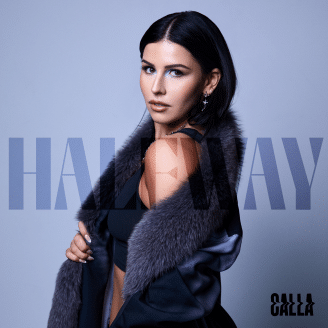
The result is “Halfway,” the lead single from Between 10PM & 4, a project that marks a significant shift in how the emerging pop and R&B artist understands relationships, creativity and her own identity.
But the song isn’t simply a rebuttal to an ex.
It’s about the moment when explaining yourself becomes less important than believing yourself.
And for Calla, that distinction has taken years to understand.
The Difference Between Being Wanted and Being Chosen
Modern dating has developed an impressive vocabulary for avoiding commitment.
Situationships.
Talking stages.
Keeping things casual.
Seeing where things go.
Each expression offers a slightly different way of describing the same uncomfortable possibility: two people can participate in what looks remarkably like a relationship without necessarily agreeing on what that relationship means.
For someone seeking clarity, the ambiguity can become exhausting.
That’s the emotional territory “Halfway” explores.
Calla describes the song as an expression of what happens when you’re emotionally invested in somebody who isn’t offering the same level of certainty or commitment.
“I think a lot of people have experienced that confusing space where you’re emotionally invested in someone, but the relationship doesn’t have the clarity or commitment you need.”
The frustration isn’t necessarily about wanting more attention.
It’s about wanting an honest answer.
And understanding that asking for one shouldn’t require an apology.
“I want ‘Halfway’ to remind people that it’s okay to ask for more and that wanting clarity doesn’t make you needy or unreasonable.”
That sentiment might sound straightforward, but it challenges an emotional habit that can be surprisingly difficult to break.
People often become so concerned about appearing demanding that they begin negotiating against their own needs.
They minimize what matters to them.
They reinterpret inconsistency as mystery.
They convince themselves that patience is always a virtue, even when patience has become another word for avoidance.
Calla’s perspective is refreshingly uncomplicated.
“You’re allowed to know what you want, and you’re allowed to walk away when someone isn’t able or willing to meet you there.”
The point isn’t to win the breakup.
It’s to stop participating in a relationship that requires you to abandon yourself.
Between 10PM and 4AM, Everything Gets Louder
There’s something psychologically peculiar about the hours between late evening and early morning.
During the day, it’s relatively easy to distract yourself.
There are responsibilities.
Conversations.
Work.
Messages.
Places to be.
But at night, the emotional noise has fewer places to hide.
A text message can suddenly feel monumental.
An unanswered question becomes impossible to ignore.
A memory you’ve successfully avoided for twelve hours returns with extraordinary precision.
Calla knows that territory intimately.
The title Between 10PM & 4 comes from a lyric in the EP track “So Much Better,” but eventually became a framework for understanding the entire project.
Those hours represented different stages of a relationship she now describes as toxic.
They were the hours when the relationship began.
When her ex would reach out.
And later, when she found herself awake, writing in her journal and trying to understand how to leave.
“The hours between 10PM and 4AM became a very specific part of that experience.”
It’s an unusually effective title because it describes both a period of time and a psychological condition.
The hours when boundaries become blurred.
When loneliness can be mistaken for love.
When you can feel completely certain about leaving somebody at noon and somehow find yourself reconsidering everything by midnight.
But those same hours also became the space where Calla began to understand what she wanted.
Writing gave her the opportunity to examine patterns that were difficult to recognize while she was living through them.
And eventually, the journal entries became songs.
“The EP is really a snapshot of that entire journey. There’s heartbreak, independence, faith, self-discovery, vulnerability and definitely some sass.”
That last detail is important.
Because Calla isn’t particularly interested in making a record where emotional growth requires abandoning personality.
She wants the vulnerability.
But she also wants the attitude.
A Houston Girl Who Was Never Going to Fit Into One Genre
Long before she began writing songs about emotional boundaries, Calla was growing up in Richmond, Texas, just outside Houston, in a household where musical taste was anything but predictable.
Her mother, an interior designer with a natural singing voice, and her guitar-playing father introduced her to an unusually broad range of music.
Beastie Boys.
Stone Temple Pilots.
Soundgarden.
Country.
Gospel.
EDM.
There wasn’t an obvious genre hierarchy.
And there certainly wasn’t a rule that one style of music had to exclude another.
That environment helped shape Calla’s approach to pop and R&B.
But she makes an important distinction between growing up in Texas and growing up near Houston.
“Houston is such a melting pot of cultures, so I grew up with an appreciation for all different styles of music.”
For Calla, the city’s hip-hop culture, R&B traditions and particular sense of grit remain part of her musical identity.
“I was never raised to believe that music had to fit neatly into one genre.”
It’s a philosophy that continues to inform her work.
Her songs can move between confessional pop songwriting, R&B textures and dance-driven production without necessarily needing to declare allegiance to one musical tradition.
The goal is less about blending genres for the sake of novelty than allowing different parts of her personality to coexist.
Which, as it turns out, is also the central idea behind her forthcoming EP.
Before the Songwriter, There Was the Dancer
Calla’s relationship with performance began early.
She started taking voice lessons around the age of six and earned her first solo in first grade.
But singing wasn’t her only creative outlet.
Throughout childhood and adolescence, dance and competitive cheerleading became central parts of her life.
She participated in nationwide hip-hop dance competitions, earning bronze, silver and gold placements at The Dance Worlds during her final three years.
The experience gave her something that can’t necessarily be learned through vocal lessons alone.
An understanding of how music exists in the body.
“As a dancer, you’re trained to hear all of the little details—the backbeats, the pockets, the moments where a song naturally wants you to move.”
For Calla, performance isn’t simply a matter of delivering a vocal accurately.
It’s about understanding the entire arrangement.
The rhythm.
The space between sounds.
The moments that demand movement.
“I don’t just hear the vocal; I hear the entire performance.”
That instinct becomes especially important on “Slippin’,” an upcoming EP track that reconnects her pop-R&B sound with the playful, movement-driven energy of Y2K-era music.
The song represents another side of an artist who doesn’t want to be confined to heartbreak narratives.
“I want people to be able to cry to one song and then dance to the next.”
There’s a larger creative principle underneath that statement.
Emotional depth doesn’t require perpetual seriousness.
And an artist can write about painful experiences without making pain the entirety of her identity.
Nashville Taught Her That Being Different Wasn’t a Problem
At 18, Calla moved to Nashville to pursue music professionally.
It was a significant transition for someone whose ambitions had initially seemed more like a distant fantasy than a practical career path.
Growing up, she imagined a future involving music, dance and fashion.
But she didn’t necessarily understand how to turn those interests into a profession.
That changed when her mother encouraged her to pursue music seriously.
“I’ll never forget my mom sitting me down in my room and telling me that if I really wanted to pursue music, I could.”
The encouragement came with an equally important expectation.
She would have to work.
By her senior year of high school, Calla had entered artist development with AMP U, taking part in writing sessions, vocal and piano lessons, performance coaching and studio work.
Nashville offered a new environment in which to develop those skills.
But it also presented a challenge.
As a pop-R&B artist in a city so closely associated with country music, Calla sometimes struggled to locate her place.
“Being a pop-R&B artist in Nashville sometimes felt like being a needle in a haystack.”
Over time, however, that sense of difference became less intimidating.
Instead of treating her musical identity as something that needed to be adjusted to fit the environment, she began recognizing it as an advantage.
“The things that make me different are the things that make me special.”
It’s an idea that sounds obvious until you consider how much of the music industry is organized around categories.
Genres.
Scenes.
Demographics.
Algorithms.
Market positioning.
The pressure to become easily identifiable can make individuality feel inconvenient.
For Calla, learning to trust her instincts became one of the most important parts of her development.
“I don’t need to fit perfectly into a scene or a box to have a place in music.”
The Voice Wasn’t the Destination
Calla’s career has already included experiences that many emerging artists spend years pursuing.
Her single “Solo” received airplay on SiriusXM.
“Self-Sabotage” developed into a remix EP.
She appeared on Season 24 of The Voice as a member of Gwen Stefani’s team.
She also worked as a personal assistant to country artist Sara Evans, gaining another perspective on the professional realities of the industry.
Later, she signed a publishing deal with Made In Memphis Entertainment and participated as a featured songwriter at a K-pop writing camp for HYBE.
Each experience expanded her understanding of what a career in music could look like.
But when Calla reflects on The Voice, she doesn’t focus primarily on television exposure or industry connections.
She remembers learning that she could survive experiences that initially frightened her.
“There were definitely moments where I felt anxious or overwhelmed.”
And now, when a new opportunity feels intimidating, she has a point of reference.
“I remind myself that I’ve already done things that once felt impossible. I can do hard things.”
It’s a different way of measuring professional growth.
Not simply through the number of people watching.
But through the amount of uncertainty you’re willing to tolerate.
Learning to Write the Truth Without Losing the Joy
Some of the most significant relationships in Calla’s career have developed through songwriting.
During the pandemic, she returned to Texas and spent extensive time writing with songwriter Shane Stevens.
His mentorship became important not only creatively but personally.
Calla credits him with encouraging her to trust her instincts, strengthen her faith and imagine possibilities beyond the limitations she might otherwise place on herself.
“He’s taught me to lean into my faith, trust my gut as an artist and songwriter, and dream bigger.”
Her relationship with Elizabeth Evans developed differently.
The two met while participating in The Voice and subsequently became close collaborators.
Their songwriting draws partly from the shared experiences of navigating relationships, identity and adulthood as women in their twenties.
For Calla, those sessions offer a space where personal experiences can become something more universal.
But collaboration has also taught her that finding an artistic voice doesn’t mean shutting out everybody else’s perspective.
“Finding your voice doesn’t mean you stop learning from other people.”
That openness is particularly important on Between 10PM & 4, a project written largely by Calla either independently or alongside Evans.
The record is personal, but it isn’t insular.
It allows her to examine her own experiences while making room for other perspectives.
And perhaps most importantly, it gives her the opportunity to stop treating every difficult chapter as something that needs to be hidden.
“Breathe” and the Songs That Wait for Their Moment
Not every song on Between 10PM & 4 was written recently.
“Breathe,” a track about the freedom of leaving a relationship behind, has been part of Calla’s life since she was 18.
She held onto it for years.
Not because she stopped believing in the song.
But because she wanted it to have a genuine opportunity to connect with listeners.
“I never wanted ‘Breathe’ to fall onto deaf ears.”
It’s an understandable concern for an independent artist.
Releasing a song isn’t the same thing as ensuring it will be heard.
And when a piece of music feels particularly important, the decision about when to share it can become complicated.
But Calla’s relationship with the song has survived the intervening years.
She still recognizes herself in its emotional intensity.
“I can still relate to the song in the boldness and strong feelings it holds.”
That continuity gives the EP another dimension.
It’s not simply a collection of songs documenting one recent relationship.
It’s a conversation between different versions of Calla.
The teenager who was beginning to understand independence.
The young woman who struggled to establish boundaries.
And the artist who now feels ready to share those experiences publicly.
Faith, Silence and the Courage to Listen
For Calla, faith isn’t an accessory to her artistic identity.
It’s foundational.
She sings and serves at her church and speaks openly about the role Christianity plays in her life.
But the relationship between faith and music isn’t simply about lyrical subject matter.
It also informs how she understands success, uncertainty and self-worth.
“My faith is really my foundation. It reminds me that my identity isn’t dependent on how a song performs, what opportunity comes next, or what other people think of me.”
That perspective becomes particularly meaningful in the context of an industry where public validation is so often treated as evidence of personal value.
A song performs well.
An artist feels successful.
A release underperforms.
Suddenly, everything becomes uncertain.
Calla is learning to separate those experiences.
And during the creation of Between 10PM & 4, that process required something she hadn’t always been willing to give herself.
Silence.
While revisiting her journal entries, she began noticing recurring descriptions of relationships in which she didn’t feel adequately valued.
Eventually, the repetition became difficult to ignore.
“Sometimes seeing something you’ve written multiple times makes something really clear to you.”
She realized that the answer might not require another conversation or another attempt to explain herself.
It might require leaving.
But reaching that conclusion meant becoming quiet enough to listen.
“I also learned that sometimes I need to be still and actually listen to myself and to what God is telling me.”
For Calla, the process of writing the EP became inseparable from the process of understanding her own life.
And the songs emerged from that intersection.
Softness Isn’t the Opposite of Strength
One of the more interesting ideas running through Calla’s new music is her refusal to treat confidence and vulnerability as mutually exclusive.
Pop music often encourages women to occupy recognizable emotional archetypes.
The heartbroken romantic.
The untouchable independent woman.
The glamorous performer.
The introspective songwriter.
The unapologetic provocateur.
But Calla doesn’t want to choose one.
She wants to be vulnerable without being powerless.
Confident without becoming emotionally inaccessible.
Playful without sacrificing depth.
And ambitious without losing her relationship to faith and family.
“I think there are so many different sides to who I am—the vulnerable side, the sassy side, the performer, the songwriter, the dancer, the girl who loves fashion, and the girl who is deeply grounded in her faith.”
That multiplicity feels central to Between 10PM & 4.
“Halfway” establishes boundaries.
“Breathe” explores release.
“Slippin’” makes room for pleasure, movement and attitude.
And the project as a whole examines what it means to reclaim an identity that has become tangled in somebody else’s expectations.
Calla describes that journey as “losing pieces of yourself, finding them again and learning that you can choose yourself without losing your softness.”
It’s a particularly useful distinction.
Because self-respect doesn’t have to make somebody harder.
Sometimes it simply makes them clearer.
Success Is Starting to Look Different
Calla has no shortage of ambitions.
She wants to write number-one songs.
She wants to create a clothing line.
She wants to perform at the Super Bowl.
Those aren’t exactly modest goals.
But her understanding of success has become more expansive than professional achievement alone.
“Success to me looks like creative freedom.”
She wants to build a life in which music remains something she genuinely enjoys making.
Where meaningful relationships matter as much as industry milestones.
Where artistic ambition doesn’t require perpetual dissatisfaction.
And where the process of creating remains valuable even when the outcome is uncertain.
“I don’t want to lose the joy of creating while chasing the next milestone.”
It’s a perspective that seems especially relevant to the emotional territory of her forthcoming EP.
Because the relationship described in “Halfway” isn’t the only situation in which people can begin negotiating away their own needs.
Creative careers can produce similar patterns.
You chase recognition.
You adjust expectations.
You convince yourself that fulfillment will arrive with the next achievement.
And then the next.
And the next.
Calla is learning that a meaningful life can’t be postponed indefinitely.
Happiness, she says, increasingly means being present.
Spending time with people she loves.
Creating something she’s proud of.
Laughing.
Experiencing moments of faith.
And appreciating where she is without constantly worrying about where she needs to go.
Still Becoming
When asked what she would call a book about her life, Calla chooses a title that could just as easily describe the philosophy behind her new music.
Still Becoming.
It’s an appropriate choice.
Because Between 10PM & 4 doesn’t present personal growth as a dramatic transformation from one fixed identity into another.
There is no suggestion that Calla has solved every emotional contradiction or permanently eliminated uncertainty from her life.
Instead, the EP documents the process of learning to recognize herself more clearly.
The girl who grew up listening to rock, gospel, country and R&B.
The dancer who learned to understand music through movement.
The teenager who moved to Nashville without knowing exactly what would happen.
The songwriter who discovered the importance of telling her own story.
The woman who learned that asking for clarity isn’t asking for too much.
And the artist who wants all those identities to coexist.
“I don’t think we ever completely arrive at some final version of ourselves.”
Perhaps that’s the most important realization behind “Halfway.”
The song isn’t really about convincing someone else to understand your worth.
It’s about recognizing that you no longer need their agreement.
And if Calla’s forthcoming EP has a larger message, it may be that growing into yourself doesn’t always require a dramatic reinvention.
Sometimes it begins with a journal entry.
Sometimes with a conversation you’ve been avoiding.
And sometimes with the realization that somebody else’s version of your story doesn’t have to become your own.
In Conversation With Calla
Hi Calla, thank you for joining us. To start, could you tell us a little about yourself?
Thank you for having me! My name is Calla and I’m a singer, songwriter and performer from Richmond, Texas, just outside of Houston. I’ve always been a creative person and music has been the biggest outlet for me throughout my life.
My sound lives somewhere in the pop and R&B space, and I really love creating music that feels honest, relatable and shows my personality. I’m at a really exciting point in my career where I’m learning to trust myself more, take up space and create from a place that feels completely authentic to who I am.
Describe yourself and your sound in three words.
Intentional, relatable, raw.
You started singing and taking voice lessons at a very young age. When did you first realize that music could become more than a hobby and something you wanted to pursue professionally?
Growing up, I used to fantasize about the life I wanted with music, dance and fashion, but I didn’t really know how to make those dreams a reality. I honestly didn’t know being an artist was an option for me as a career until I was getting close to graduating high school and trying to figure out what college I was going to attend.
I’ll never forget my mom sitting me down in my room and telling me that if I really wanted to pursue music, I could. That conversation changed everything for me. With that came the understanding that if I was going to take this seriously, I had to work for it.
My mom is a very driven person, so there was never really an option to sit around and wait for something to happen—I knew I needed to be working and busy.
Growing up in Texas, you were surrounded by everything from rock and country to gospel and EDM. How did that mix of influences help shape the artist you are today?
Growing up in Texas definitely shaped who I am as an artist, but I think Houston specifically shaped my sound. Houston is such a melting pot of cultures, so I grew up with an appreciation for all different styles of music.
I’ve always loved the hip-hop culture, the pop and R&B presence, and the grit that Houston carries. I think you can hear pieces of all of that in my music. I was never raised to believe that music had to fit neatly into one genre, so I’ve always felt comfortable pulling from different places and making it my own.
Before focusing fully on music, dance and competitive cheerleading were a major part of your life. How has your background as a dancer influenced your stage presence and the way you approach your music?
Dance completely changed the way I experience music. As a dancer, you’re trained to hear all of the little details—the backbeats, the pockets, the moments where a song naturally wants you to move.
So when I hear music, I don’t just hear the vocal; I hear the entire performance. I think that’s why movement feels so natural to me when I’m performing. I spent so much of my childhood on a stage that performing became something I was comfortable with very early on.
There’s no way I can have this love for dance and this love for music and have them not mesh. I’m really excited to let those two sides of me exist together.
You moved to Nashville at 18 and have experienced several different chapters in your career since then. What do you think has changed the most about you as an artist and songwriter during that time?
Moving to Nashville at 18 and experiencing all of those different chapters completely changed my perception of myself and the music business.
I learned to trust my gut, take risks and, most importantly, bet on myself. Being a pop-R&B artist in Nashville sometimes felt like being a needle in a haystack, but it also taught me that the things that make me different are the things that make me special.
I don’t need to fit perfectly into a scene or a box to have a place in music. I’ve learned that being authentically myself is the most valuable thing I can bring into a room.
Your new single “Halfway” was inspired in part by hearing an ex tell his side of your relationship through a song. What made you feel like it was finally time to write your own version of the story?
When I started creating this EP, I went back through old music and voice memos on my phone to see if there was anything worth revisiting.
I came across a song my ex had written where he portrayed himself as someone who had given 110% to our relationship, and that wasn’t how I experienced the relationship at all.
I had bitten my tongue a lot toward the end because I knew certain things were being said just to get a reaction out of me. When I heard his version again, I remember thinking, “Oh no, I’m writing my version of the story.”
It wasn’t about trying to change anyone’s mind. It was about finally giving myself permission to tell the story from my perspective.
“Halfway” deals with wanting clarity and refusing to stay in a relationship that exists somewhere between casual and committed. What do you hope listeners take away from the song?
I hope people feel seen by it. I think a lot of people have experienced that confusing space where you’re emotionally invested in someone, but the relationship doesn’t have the clarity or commitment you need.
I want “Halfway” to remind people that it’s okay to ask for more and that wanting clarity doesn’t make you needy or unreasonable. You’re allowed to know what you want, and you’re allowed to walk away when someone isn’t able or willing to meet you there.
“Halfway” introduces your upcoming EP, Between 10PM & 4. What does that title represent to you, and what can listeners expect from the project as a whole?
The title came from a lyric in one of the songs on the EP, “So Much Better,” but it ended up becoming this perfect representation of the entire project.
I wrote a lot of these songs from journal entries from when I was in and healing from a toxic relationship. The hours between 10PM and 4AM became a very specific part of that experience—it was when I fell into the relationship, when my ex would reach out to me, and later, when I would be up journaling and trying to understand how to find my way out of it.
The EP is really a snapshot of that entire journey. There’s heartbreak, independence, faith, self-discovery, vulnerability and definitely some sass. It’s about losing pieces of yourself, finding them again and learning that you can choose yourself without losing your softness.
Some of the songs on the EP explore relationships, independence, faith and self-discovery. Did creating this project teach you anything new about yourself?
Absolutely. While I was writing the EP, I was journaling a lot, and sometimes seeing something you’ve written multiple times makes something really clear to you.
I remember going through my journal looking for inspiration and realizing I kept writing about not being treated the way I deserved in a relationship. Eventually I had to admit to myself that maybe it was time to leave.
I also learned that sometimes I need to be still and actually listen to myself and to what God is telling me. It’s so easy to get caught up in outside noise, expectations and fear, but sometimes you need the silence to hear clearly.
Making this EP taught me that trusting yourself can also mean trusting God enough to slow down and listen.
You reached a national audience on The Voice as part of Gwen Stefani’s team. What did that experience teach you that you still carry with you today?
That experience taught me that I’m capable of doing hard things. Being on The Voice was such a huge experience, and there were definitely moments where I felt anxious or overwhelmed.
Now, whenever I’m faced with something scary or uncertain, I remind myself that I’ve already done things that once felt impossible. I can do hard things. That experience gave me a confidence that goes beyond music.
With a new single, an upcoming EP and this next chapter beginning, what are you most excited for people to discover about Calla?
I’m excited for people to see the full picture of me.
I think there are so many different sides to who I am—the vulnerable side, the sassy side, the performer, the songwriter, the dancer, the girl who loves fashion, and the girl who is deeply grounded in her faith.
I don’t want people to feel like they have to choose one version of me. I’m excited to show that all of those things can exist in the same person and, hopefully, make people feel a little more comfortable embracing all of their own sides too.
You’ve worked with writers like Shane Stevens and Elizabeth Evans. What have those collaborations taught you about your own voice as a songwriter?
Working with Shane Stevens has opened my eyes in more ways than one. He’s taught me to lean into my faith, trust my gut as an artist and songwriter, and dream bigger. He also taught me the importance of visualizing my goals as if I’ve already achieved them.
Shane has guided me through a lot of the obstacles a new, independent artist faces and I feel blessed to have his mentorship and to be his “adopted” niece.
Working with Elizabeth Evans has been so special because we’ve been able to share our experiences of what it’s like being girls in our 20s, dating and trying to figure ourselves out, and then translate those experiences into music.
We met while we were on The Voice, and it feels so special knowing I have a sister for life.
Both Shane and Elizabeth are incredible writers and artists, and it’s amazing to watch how their brains work when they’re creating. Those rooms have taught me that finding your voice doesn’t mean you stop learning from other people.
“Breathe” is a song you’ve held onto since you were 18. Why did this feel like the right project and the right moment to finally share it?
I never wanted “Breathe” to fall onto deaf ears. When you’re starting out as an artist, you don’t naturally have a huge audience, and I wanted this song to actually have a chance to be heard.
I’ve carried it with me since I was 18, and I can still relate to the song in the boldness and strong feelings it holds. It feels like the right time to finally let people hear it.
“Slippin’” reconnects you with your dance background and brings a Y2K energy into your sound. How important was it to show that more playful, movement-driven side of yourself on the EP?
Very important. Dance has been such a huge part of my life, and I never wanted my music career to mean leaving that part of myself behind.
“Slippin’” lets me bring back that playful, confident, Y2K side of me and really have fun with it. I think it also shows that this EP isn’t just about heartbreak.
There’s attitude, energy, movement and personality in it too. I want people to be able to cry to one song and then dance to the next.
Faith has remained an important part of your life throughout your career. How does it influence the way you approach songwriting, uncertainty, and the decisions you make as an artist?
My faith is really my foundation. It reminds me that my identity isn’t dependent on how a song performs, what opportunity comes next, or what other people think of me.
I’ve learned to trust God through the uncertainty instead of feeling like I have to control every outcome. That also gives me freedom creatively. I can be honest about the darker or messier parts of my life because I know they don’t define me.
I’m never afraid to talk about Jesus because I genuinely wouldn’t be who I am without Him.
After everything you’ve experienced so far—from Nashville and The Voice to songwriting camps and your publishing deal—what does success look like to you now?
Success to me looks like creative freedom. There are definitely things I want to achieve—I want to have a clothing line, write number-one songs and perform at the Super Bowl—but at the end of the day, I think the most successful life I could have is one where I’m surrounded by people I love and I’m able to create.
I don’t want to lose the joy of creating while chasing the next milestone. If I can make art that means something to people and build a life that I genuinely love, that’s success to me.
How would your best friend describe you?
I think my best friend would probably describe me as loyal, driven, funny and a little bit of a perfectionist.
I care really deeply about the people I love, and when I believe in something, I’m going to give it everything I have. I also think they would say I can be charismatic and confident.
I take my dreams seriously, but I definitely don’t take myself seriously all the time.
Is there a place you have visited that changed you in a meaningful way, either creatively or personally?
When I lived in Nashville, I used to hike a lot, and one of my favorite places was Radnor Lake.
I would go in the mornings and leave my headphones at home so I could just listen to the sounds around me. It became really therapeutic for me.
I would talk to God a lot while I was there and just let myself be still. I think there’s something about being in nature that changes the way your brain feels and gives you space to hear your own thoughts again.
Those mornings taught me that I don’t always need more noise or more answers—sometimes I just need to be quiet.
What are your top three countries to travel to, and which destinations are still on your bucket list?
My top three would probably be Italy, the Maldives, and the UK. I love places that have a strong sense of culture, fashion, food, music, and are just simply so beautiful, so those are all places I’d love to experience more deeply.
On my bucket list are Japan, France, Spain, and South Korea. Quite honestly, I would love to travel everywhere, so any place I haven’t been is on my bucket list.
Which fictional character would be the most exciting to meet in real life?
I think I’d be most excited to meet Carrie Bradshaw from Sex and the City. I’d want to do a deep dive in her closet, go shopping, and then grab a drink with her.
If you were a book, what would the title be and why?
I think my book would be called “Still Becoming.”
I feel like that describes where I am in life right now. I’ve grown so much, but I don’t think we ever completely arrive at some final version of ourselves.
I’m still learning, still creating, still figuring things out and still becoming the woman and artist I’m meant to be.
What is next for Calla in the last months of 2026?
The biggest thing is continuing to introduce people to this new chapter of my music. “Halfway” is the beginning, and then I’m really excited for people to experience Between 10PM & 4 as a whole.
I’m also excited to keep performing, creating, collaborating and building the world around this project.
There are a lot of things I’ve been working toward behind the scenes, so I’m really looking forward to letting people see more of what I’ve been creating.
What is your definition of happiness?
Happiness to me is feeling present. It’s being surrounded by people I love, creating something I’m proud of, laughing until my stomach hurts, having moments with God, and being able to appreciate where I am without constantly worrying about where I’m going next.
I think I used to associate happiness with achieving something, but now I’m learning that happiness can be found in the little moments along the way.
If you could meet anyone, living or historical, who would it be and why?
I would love to meet Rihanna.
As an artist, she’s obviously incredible, but what fascinates me is the level of intention behind everything she does—the music, the fashion, performance, business, longevity, and how she can still be a mom.
I’d love to sit down with her and hear about how she protects her creativity and stays grounded while operating at that level.
What is something your audience would be surprised to learn about you?
I think people might be surprised by how much I love interior design and how I am such a DIY queen.
I love creating in all forms, so sometimes building furniture, painting, coloring in a coloring book, or restyling a room are a great way to keep my creative juices flowing.
Do you support any charities or causes that are close to your heart?
Faith and serving my community are really important to me. I’ve always believed that if you’re given a platform, you should use it to encourage people and make them feel less alone.
I’m especially drawn to causes that support young people and give them access to creative outlets, mentorship and opportunities to believe in themselves.
What is your favorite song to belt out in the car or at karaoke?
I feel like it’s a toss-up between “Love on the Brain” by Rihanna and “1+1” by Beyoncé.
Where can our readers follow you?
My Instagram and TikTok are @callamusic, my YouTube is @iamcallamusic, and you can find my music on Spotify and Apple Music under Calla.
When is your birthday?
March 23, 2001.
What’s your favorite sports team?
Being a Houston girl to my core, it will always be the Houston Astros!