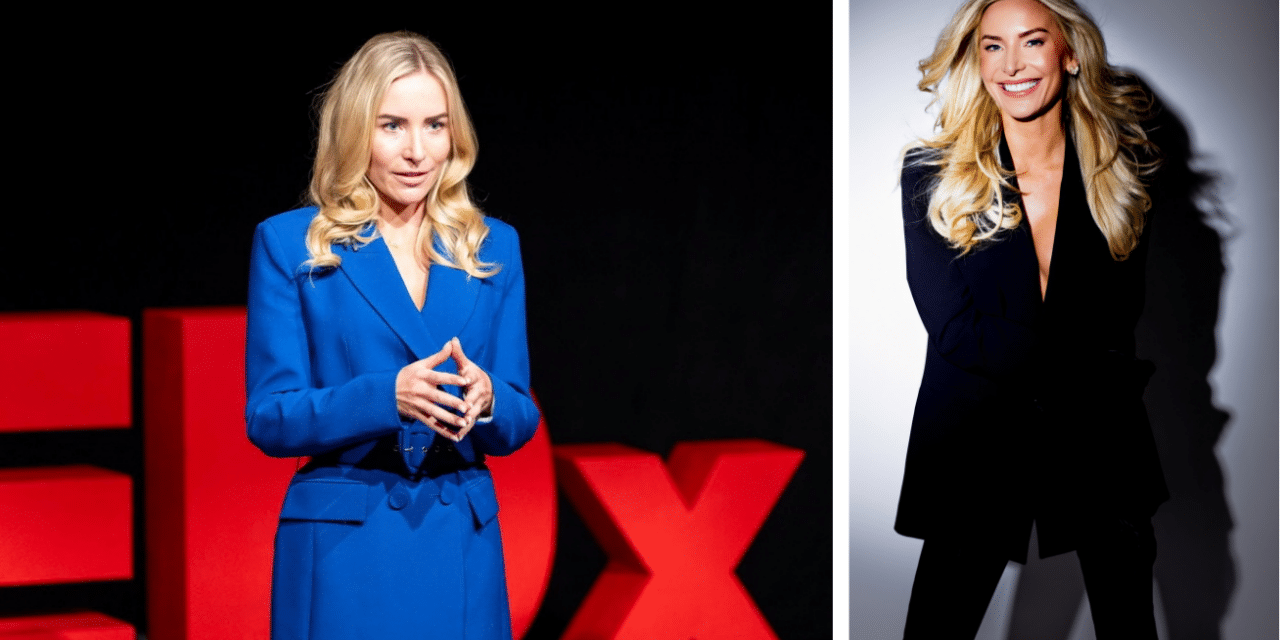
After surviving a traumatic brain injury at fourteen, Lauren Fields became fascinated by the psychology of human transformation. Now, as the founder of Fieldswell and author of the forthcoming SEND IT, she’s challenging the self-improvement industry’s obsession with preparation, perfection, and productivity—and asking what it actually takes to turn the life we imagine into the one we’re living.
We live in an era obsessed with becoming better versions of ourselves.
We read books about self-awareness, listen to podcasts about personal growth, collect advice from successful people, and spend enormous amounts of time trying to understand why we behave the way we do.
But somewhere along the way, self-improvement can become another form of procrastination.
What happens when understanding yourself becomes a substitute for actually changing your life?
For Lauren Fields, TEDx speaker, author, and founder and CEO of Fieldswell, that contradiction sits at the center of her work.
“I believe one of the biggest traps in personal development is confusing self-awareness with self-actualization,” she tells MUNDANE. “We can become so consumed with understanding ourselves that we end up postponing the very lives we’re trying to create.”
It’s a realization rooted in her own experience.
Fields describes spending years pursuing degrees, certifications, and new knowledge, believing that more preparation would eventually make her ready to act.
“Eventually, I realized that much of what I called preparation was actually imposter syndrome in disguise.”
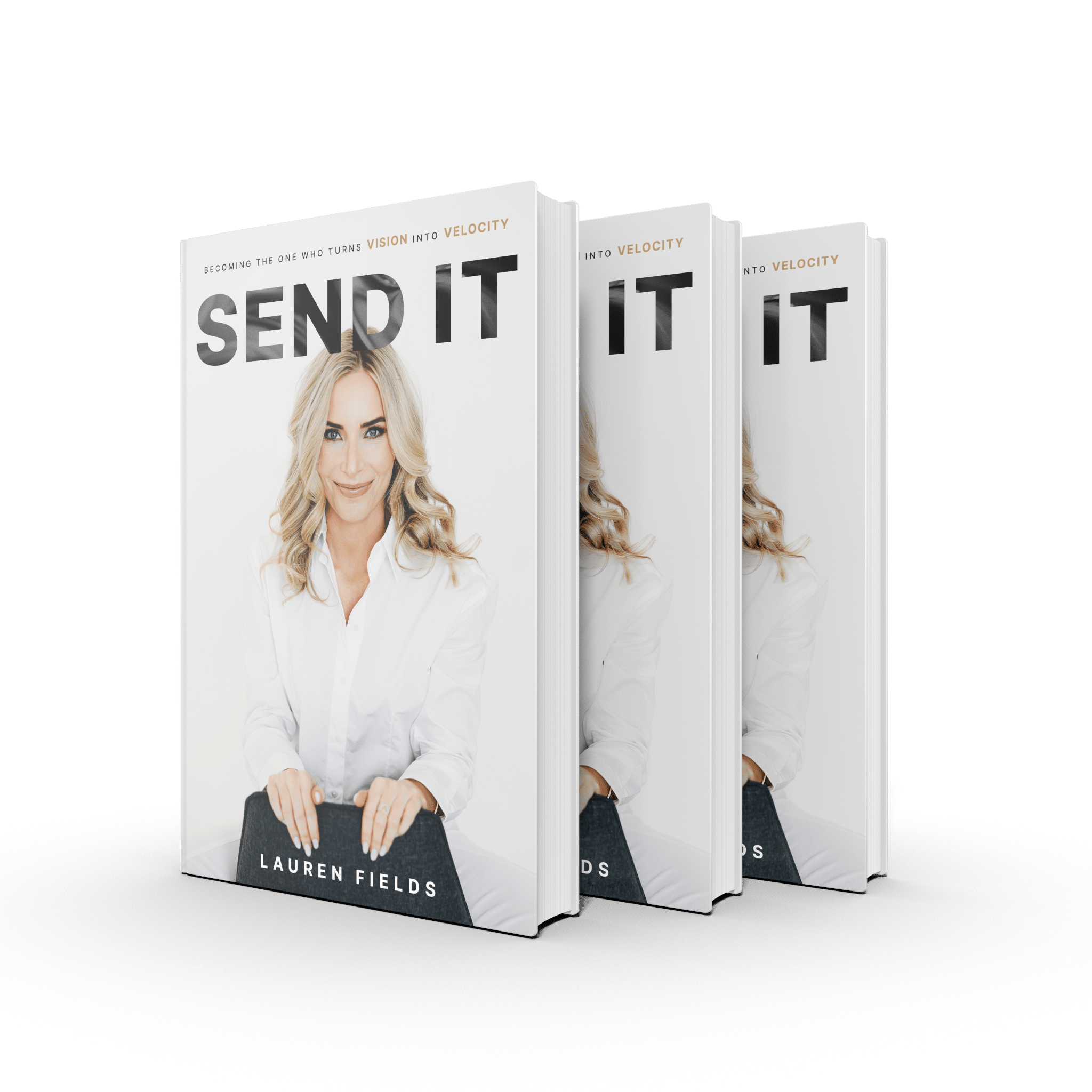
Her forthcoming book, SEND IT: Becoming the One Who Turns Vision into Velocity, arriving January 2027, challenges that mentality.
Rather than promising transformation through positive thinking alone, Fields explores how mindset, environment, lifestyle, and disciplined action can help close the distance between imagining a different life and actually creating it.
When Life Forces You to Start Again
Fields’ fascination with the human mind began long before she built a personal-development company.
At fourteen, she suffered a traumatic brain injury in an equestrian accident and underwent brain surgery. The experience dramatically changed her understanding of identity, resilience, and the unpredictability of life.
“Surviving a traumatic brain injury forced me to confront the fragility of life at an age when most kids feel invincible,” she recalls.
The experience also introduced her to neurological challenges that her peers struggled to understand.
“In many ways, I’ve felt like I’m living on borrowed time ever since.”
Rather than allowing that awareness to become paralyzing, Fields says it created an urgency to live more intentionally. Her interest in the brain eventually led her to earn a master’s degree in psychology.
But perhaps the most important lesson was that identity isn’t necessarily fixed by circumstances.
“I can appreciate who I am today while remaining curious about who I’m capable of becoming,” she explains.
It’s a philosophy that rejects the idea that personal growth requires disliking who we currently are.
Confidence Doesn’t Come Before Action
One of the central arguments of SEND IT is that people frequently misunderstand the relationship between confidence and action.
We imagine that confidence is something we must acquire before taking a risk.
Fields believes the opposite.
“We build confidence through experience, not by waiting to feel it,” she says.
Her childhood experience with show jumping offers a particularly vivid metaphor.
“When you’re riding a 1,200-pound animal toward a fence, you learn that not all fear is created equal.”
Some fear is protective. Other fear prevents us from discovering what we’re capable of.
For Fields, the challenge is learning to distinguish between the two rather than allowing uncertainty to make every decision.
“At some point, your desire for the life you want has to become greater than your fear of pursuing it.”
That philosophy informs her F.I.E.L.D.S. Framework, which stands for Frame of Mind, Intention, Environment, Lifestyle, Discipline, and SEND IT.
But she is careful to distinguish meaningful action from the relentless productivity culture that often dominates conversations about success.
“You can move a hundred miles an hour and still go nowhere meaningful,” she explains.
For Fields, momentum isn’t about filling every hour with activity. It’s about directing energy toward something that genuinely matters.
“What’s the point of building your dream life if you’re too busy chasing the next thing to actually enjoy it?”
Why Mindset Alone Isn’t Enough
The personal-development industry frequently suggests that changing how we think is the key to changing our circumstances.
Fields agrees that mindset matters, but argues that transformation requires more than affirmations or visualization.
“Belief alone doesn’t build the life you want.”
Through more than 150 conversations with entrepreneurs, authors, and thought leaders on The Fieldswell Podcast, including David Meltzer, Tim Storey, Lindsey Metselaar, Scott Clary, and E! Entertainment co-founder Larry Namer, she has noticed that achievement is often supported by ordinary systems.
Daily routines, relationships, physical well-being, and environmental conditions can be just as important as ambition.
“Your intentions give you direction, your environment influences your growth, your lifestyle reflects your priorities, and your discipline determines whether you follow through.”
She also acknowledges that not everyone has equal control over their circumstances.
The goal, she explains, is to act intentionally wherever meaningful agency exists.
It’s a perspective that makes her framework less about manifesting a perfect future and more about examining the conditions of everyday life.
The Problem With Always Trying to Become Better
There is another contradiction within the culture of self-improvement: the more focused we become on our ideal future selves, the easier it is to treat our present selves as inadequate.
Fields approaches this through an artistic metaphor.
She references Michelangelo’s David and the idea of a masterpiece already existing within a block of marble, waiting to be revealed.
“It’s not about fixing ourselves or becoming worthy of love,” she explains. “It’s about uncovering the potential that already exists within us.”
For Fields, practices such as movement, meditation, learning, and creativity are not punishments designed to correct personal deficiencies.
They’re expressions of self-respect.
“I’m not punishing myself into becoming someone better. I’m loving myself into becoming everything I’m capable of being.”
That distinction is particularly relevant in a culture where wellness and productivity are frequently marketed through the suggestion that something about us is fundamentally incomplete.
Fields’ approach proposes a different starting point: growth doesn’t have to begin with self-rejection.
Building a Business Around Human Transformation
Through Fieldswell, Fields has developed a platform spanning podcasting, media production, live experiences, and personal development.
But turning transformation into a business creates its own questions.
How do you create products and experiences around personal growth without reducing something deeply individual to a marketable formula?
“The moment we start treating personal growth as a product, we lose sight of the person we’re actually trying to serve,” Fields says.
She describes Fieldswell as a platform designed to create meaningful experiences rather than manufacture predetermined outcomes.
“We’re not manufacturing transformation. We’re creating the conditions for people to come alive.”
That philosophy also informs the conversations she hosts.
After interviewing more than 150 guests, Fields says she has abandoned the assumption that successful people possess some inaccessible quality that everyone else lacks.
Many simply began before they felt completely prepared.
“The people you admire weren’t necessarily more ready than you are. They were simply willing to begin.”
Learning to Let Life Happen
Perhaps the most revealing part of Fields’ philosophy emerges when she discusses something she hasn’t yet mastered.
For years, she believed that love and partnership were experiences she needed to earn through achievement.
She imagined reaching a particular set of professional milestones before allowing herself to pursue marriage and family.
“I had convinced myself that once I’d accomplished everything I set out to do, then I’d be ready for marriage and a family.”
Eventually, she began questioning that assumption.
“We don’t earn love through achievement. There’s no version of myself I need to become before I’m worthy of experiencing it.”
It’s an unexpectedly vulnerable admission from someone whose professional identity revolves around creating momentum and making things happen.
Fields has become skilled at pursuing goals she can influence. Now she’s learning to make space for experiences she cannot orchestrate.
“I’ve spent so much of my life learning how to make things happen. Now I’m learning how to let beautiful, unexpected things happen, too.”
That tension may be the most compelling idea behind SEND IT.
The book encourages people to act, but Fields doesn’t believe every meaningful outcome can be controlled.
Sometimes a vision changes. Sometimes a plan fails. Sometimes the future offers something entirely different from what we originally imagined.
Her guiding philosophy is simple: “This or something better.”
And perhaps that is the real difference between pursuing a meaningful life and trying to control every detail of it.
For Lauren Fields, transformation isn’t about becoming an optimized version of yourself or accumulating enough accomplishments to finally feel worthy.
It’s about recognizing what matters, taking action where you can, and remaining open to everything you cannot predict.
Because sometimes the greatest obstacle between the life we imagine and the life we want isn’t a lack of knowledge.
It’s the belief that we still need permission to begin.
In Conversation With Lauren Fields
MUNDANE: SEND IT is built around the gap between knowing what we want and actually creating it. Why do you think self-awareness can sometimes become another form of procrastination?
Lauren Fields: I believe one of the biggest traps in personal development is confusing self-awareness with self-actualization. We can become so consumed with understanding ourselves that we end up postponing the very lives we’re trying to create. I know this because I lived it. I was a forever student, constantly pursuing another degree, certification, book, or breakthrough, convinced that the more I knew, the more prepared I’d be. Eventually, I realized that much of what I called preparation was actually imposter syndrome in disguise.
The personal-development industry can unintentionally reinforce the belief that another layer of healing or another qualification stands between us and the lives we want. But self-awareness only becomes transformative when we integrate what we’ve learned into how we actually live. You can spend your entire life becoming an expert on yourself and never actually become who you want to be.
MUNDANE: A central argument in your work is that action often has to come before confidence. How do you distinguish between fear that should be pushed through and hesitation that might actually be telling us something important?
Lauren Fields: We often wait for confidence to arrive before we act, but I’ve learned it works in reverse. We build confidence through experience, not by waiting to feel it. Courage is like a muscle. The more you flex it, the stronger it gets.
When I think back to myself as a little girl show jumping, I realize I’ve been learning to dance with fear my entire life. When you’re riding a 1,200-pound animal toward a fence, you learn that not all fear is created equal. Some fear protects you, while other fear keeps you from discovering what you’re capable of. For me, the distinction comes from quieting the noise, getting clear on what I truly want, and asking, “What’s the worst that could realistically happen? And would I be okay?”
MUNDANE: How did surviving a traumatic brain injury at fourteen change your understanding of identity?
Lauren Fields: Surviving a traumatic brain injury forced me to confront the fragility of life at an age when most kids feel invincible. In many ways, I’ve felt like I’m living on borrowed time ever since. Rather than letting that awareness paralyze me, it’s given me an urgency to live intentionally, be present, and make the most of the time I have.
That experience taught me early on that our identity isn’t fixed by our circumstances or limitations. I’ve learned that ambition and contentment can coexist. I can appreciate who I am today while remaining curious about who I’m capable of becoming.
MUNDANE: Do we place too much responsibility on mindset while ignoring the conditions people are actually living in?
Lauren Fields: I believe wholeheartedly in the power of our minds, but creating the life we envision requires more than positive thinking. That’s why a resilient frame of mind is the first pillar of my F.I.E.L.D.S. Framework. But belief alone doesn’t build the life you want.
Through my conversations with high performers on The Fieldswell Podcast, I’ve noticed that success often has a system behind it. It’s not just about how these individuals think, but how they design their days, from the people they surround themselves with to their sleep, nutrition, movement, and daily disciplines. Not everyone has equal control over their circumstances, but we can be intentional wherever we have agency.
MUNDANE: How do you pursue momentum without turning your entire life into another performance of productivity?
Lauren Fields: Somewhere along the way, we started wearing busyness like a badge of honor, and I was guilty of it too. I used to equate a packed calendar with ambition and productivity, but you can move a hundred miles an hour and still go nowhere meaningful.
For me, turning vision into velocity isn’t about doing more. It’s about being intentional with where I direct my time, energy, and attention. I’ve started seeing my life, and everything I create, as art, whether it’s building a business, writing a book, or designing my days. Because what’s the point of building your dream life if you’re too busy chasing the next thing to actually enjoy it?
MUNDANE: Is there a danger in becoming so focused on our future selves that we start treating our present selves as inadequate?
Lauren Fields: I often think about Michelangelo’s sculpture of David and the beautiful idea that the masterpiece was already within the marble. His job was simply to chip away at everything hiding it.
I think about personal growth in much the same way. It’s not about fixing ourselves or becoming worthy of love. It’s about uncovering the potential that already exists within us. I’m not punishing myself into becoming someone better. I’m loving myself into becoming everything I’m capable of being.
MUNDANE: After interviewing more than 150 entrepreneurs and thought leaders, what belief about success have you stopped believing?
Lauren Fields: I’ve stopped believing that the people we look up to have something we don’t. Many people we admire didn’t have a perfectly mapped-out plan or a secret formula. They were willing to begin before they had everything figured out.
We spend so much time looking at other people’s accomplishments and wondering what makes them more qualified than us. But I think a better question is, “Why not you?”
MUNDANE: How do you build a business around transformation without reducing personal growth to a product?
Lauren Fields: The moment we start treating personal growth as a product, we lose sight of the person we’re actually trying to serve. At the heart of Fieldswell is a simple belief: what people ultimately want is to feel well.
Whether it’s a podcast conversation, coaching session, or live event, I’m constantly thinking about how someone will feel and what they’ll take away. I can intentionally design an experience to evoke a feeling, spark a realization, or inspire change, but I can’t control how someone receives it. We’re not manufacturing transformation. We’re creating the conditions for people to come alive.
MUNDANE: What are you still waiting to feel ready for in your own life?
Lauren Fields: For a long time, I subconsciously believed I needed to achieve certain things before I was worthy of the love and partnership I truly wanted. I had convinced myself that once I’d accomplished everything I set out to do, then I’d be ready for marriage and a family.
But I’ve come to realize that we don’t earn love through achievement. There’s no version of myself I need to become before I’m worthy of experiencing it. I’ve gotten very good at pursuing a vision and creating things I can control, but what I’m learning now is how to make space for something I can’t orchestrate.
I’ve spent so much of my life learning how to make things happen. Now I’m learning how to let beautiful, unexpected things happen, too.
MUNDANE: If someone follows your framework but doesn’t achieve the life they envisioned, can that process still be considered successful?
Lauren Fields: I come back to this philosophy often: “This or something better.” We can have a clear vision and be deeply committed to it, but there’s also something powerful about surrendering the need to control when and how it happens.
That’s why I see the F.I.E.L.D.S. Framework as something we continually revisit, not a rigid formula that guarantees a particular outcome. Sometimes we have to ask whether the vision we’re pursuing still reflects what we truly want, or whether we’ve outgrown it.
Sometimes success isn’t getting exactly what you envisioned. It’s becoming the person you were meant to be through the pursuit of it.
SEND IT: Becoming the One Who Turns Vision into Velocity is scheduled for release in January 2027.
Learn more: Fieldswell | SEND IT | The Fieldswell Podcast | Instagram | TEDx Talk