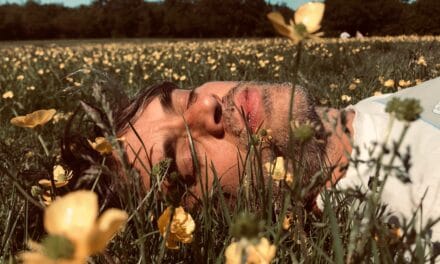
On A Beautiful World To Lose, the Manchester indie-rock quartet confronts grief, change, friendship, and the fragile nature of everything worth holding on to. From recording in Malta to performing on the Main Stage at Reading & Leeds, Corella reflect on how far they’ve come—and why the possibility of losing it all makes the present even more meaningful.
There’s a particular kind of beauty in knowing that nothing lasts forever.
The relationships we build, the places we call home, the friendships that shape us, and the moments we wish we could preserve are all defined, at least partly, by their impermanence.
For Manchester indie-rock quartet Corella, that contradiction sits at the heart of their album, A Beautiful World To Lose.
It’s a title that sounds simultaneously hopeful and devastating, suggesting that the more deeply we appreciate life, the more vulnerable we become to losing the things that make it meaningful.
“We’ve experienced loss, heartbreak and grief, but ultimately, it’s about finding the light in those situations,” the band tells MUNDANE.
“Every cloud has a silver lining, and we’ve learned that when one door closes, another one opens.”
Written during a period of significant personal change, the record explores the emotional territory between gratitude and uncertainty, celebrating what remains while acknowledging how quickly everything can disappear.
The Beauty of Having Something to Lose
For Corella, A Beautiful World To Lose isn’t simply a record about grief.
It’s also about recognizing the value of what they’ve built together.
Over the years, the four-piece has grown from a group of friends making music into a band performing on some of the UK’s most celebrated stages, including the Main Stage at Reading & Leeds.
But success has also introduced a new awareness of how fragile those achievements can be.
“The more success you have, the more you realise how much you have to lose,” they explain.
That perspective gives the album an emotional complexity beyond straightforward nostalgia.
There’s gratitude for the journey so far, but also an understanding that neither success nor happiness can be taken for granted.
Rather than allowing that uncertainty to become a source of fear, Corella use it as motivation to appreciate the present.
The result is a record that finds hope not in the promise that everything will last, but in the recognition that meaningful experiences are worth celebrating while they’re here.
Four Friends, One Shared Identity
At the center of Corella’s identity is something surprisingly simple: friendship.
Despite their growing success, the band insists that the relationship between its four members remains the foundation of everything they create.
“We’re all best friends and see each other as brothers, and that’s something that will never change.”
That closeness doesn’t mean they always agree.
Writing music as a four-piece requires compromise, criticism, and the willingness to challenge one another creatively.
“It can be difficult to get four people on the same page musically sometimes, but we’re always pushing each other and challenging each other to be better.”
For Corella, that creative tension is part of what makes their music recognizable.
“We know that when all four of us love a song we’ve written, it feels like a Corella song through and through.”
Interestingly, the band didn’t enter the recording process with a definitive vision for the album.
When they traveled to Malta to record A Beautiful World To Lose, they deliberately allowed the songs to develop without forcing them into a predetermined direction.
“We didn’t really have a clue how it would turn out or what direction it would take,” they admit.
That openness became an essential part of the record’s identity.
Sometimes the most honest creative work emerges when artists stop trying to control exactly what they’re making.
Music That Belongs to Everyone
Corella have always understood the importance of live performance.
Their energetic, guitar-driven sound is built around the kind of communal experience that turns individual songs into shared memories.
“We really come alive when we’re playing live, and that’s where we feel we win over a lot of our fans,” they explain.
That relationship with audiences directly influences their songwriting.
Even during the earliest stages of writing, they’re imagining how particular moments might translate onstage and how crowds might respond.
But there’s something deeper happening when a song moves from the studio to a live audience.
Once listeners begin attaching their own experiences to the music, its meaning changes.
“Once a song is out there, it can mean something completely different to every person who listens to it,” the band reflects.
“If someone can hear one of our songs and have it take them back to a certain person, place or moment in their life, then hopefully, in some small way, the song can help them hold on to that feeling.”
It’s a particularly fitting philosophy for an album concerned with memory and impermanence.
Music cannot stop time, but it can preserve the emotional significance of moments that have already passed.
The Songs That Define This Chapter
When asked which track best represents Corella’s current identity, the band points to “Lost a Friend.”
“It’s real, honest guitar music with a lot of passion and meaning behind it, and it feels like a good representation of where we are as a band right now.”
The song also captures the connection between their personal songwriting and their live identity.
Meanwhile, “WOLF” has become a standout moment on the road, receiving an enthusiastic response from audiences.
“You never quite know how people are going to react to new music,” they explain.
“Seeing that reaction has been amazing. It’s a reminder that once a song is out in the world, it becomes something shared with the audience, rather than just something that belongs to us.”
For a band that places such importance on collective experiences, that transformation is central to the music’s purpose.
Finding Meaning in the Moment
As Corella look toward the future, their ambitions remain as strong as ever.
Performing at Reading & Leeds once seemed almost unimaginable. Now, those achievements have expanded their understanding of what’s possible.
“If you’d told us when we first started out that we’d be playing the Main Stage at Reading & Leeds, I don’t think I’d have believed you,” they admit.
But beneath the growing ambition, the band’s identity remains grounded in the friendship that brought them together.
“We’re just four normal, down-to-earth lads from the North of England who love writing and playing music together.”
It’s a refreshingly straightforward description from a band whose latest record confronts some of life’s most complicated emotions.
Perhaps that’s what makes A Beautiful World To Lose resonate.
It doesn’t attempt to resolve the contradiction between loving life and fearing loss.
Instead, it recognizes that the two feelings are inseparable.
The possibility of losing something doesn’t diminish its beauty.
Sometimes, it’s what makes that beauty impossible to ignore.
In Conversation With Corella
MUNDANE: A Beautiful World To Lose contains both wonder and impending loss in the same phrase. Where did that title come from, and what does “the beautiful world” represent to you?
Corella: We’ve all been through some life-changing moments over the past couple of years, and a lot of the themes and meanings behind these songs tie into the title of the record. We’ve experienced loss, heartbreak and grief, but ultimately, it’s about finding the light in those situations. Every cloud has a silver lining, and we’ve learned that when one door closes, another one opens. For us, that’s what the beautiful world represents.
MUNDANE: Does the record feel more like a celebration of what we have or a warning about how easily we can lose it?
Corella: I think it’s a bit of both, really. We’ve got so much to celebrate over the years, and we’ve accomplished some incredible things as a band. But at the same time, everything can be taken away from you in the blink of an eye. The more success you have, the more you realise how much you have to lose, so there’s always that balance between appreciating what you’ve got and being aware of how quickly things can change.
MUNDANE: Your music has an inherently communal quality. How much do you imagine the live experience when you’re writing?
Corella: We really come alive when we’re playing live, and that’s where we feel we win over a lot of our fans. So the live experience definitely plays a massive part in how we write music. We’re always imagining how a song will translate on stage and how the crowd might react to certain moments. We’ve kept that in mind a lot while writing this record, because ultimately, we want to create music that people can connect with and sing along to together.
MUNDANE: As Corella has grown, how have you maintained the friendship and chemistry that originally made you want to create music together?
Corella: We’re all best friends and see each other as brothers, and that’s something that will never change. That bond is so important, especially when you’re spending so much time together and trying to make something you’re all proud of. We’re also really open with each other when it comes to criticism. It can be difficult to get four people on the same page musically sometimes, but we’re always pushing each other and challenging each other to be better. We know that when all four of us love a song we’ve written, it feels like a Corella song through and through.
MUNDANE: Was there a specific moment when you realized what A Beautiful World To Lose needed to be?
Corella: Absolutely not! When we went over to Malta to record the album, we didn’t really have a clue how it would turn out or what direction it would take. We went in with an open mind and let the songs develop naturally, which made the whole process really exciting. We’re super proud of what we’ve created, and I think that uncertainty was part of what made the record what it is.
MUNDANE: How has success changed your perspective on the ambitions you had when you first started the band?
Corella: We’ve played some amazing shows over the years and ticked off some real dream venues, but if anything, that’s only made us want to push ourselves further. If you’d told us when we first started out that we’d be playing the Main Stage at Reading & Leeds, I don’t think I’d have believed you. Those experiences make you realise what’s possible, and they just make you hungry for more. The ambition has always been there, and I think that’s what keeps a band going through the tougher times.
MUNDANE: There’s something inherently nostalgic about trying to preserve a beautiful moment through a song. Do you think songwriting is partly an attempt to stop time?
Corella: I think there’s definitely an element of that. We took a deep dive into some really personal subjects when writing these songs, and we’ve been very honest and raw with the lyrics. Once a song is out there, it can mean something completely different to every person who listens to it, and I think that’s the beauty of songwriting. If someone can hear one of our songs and have it take them back to a certain person, place or moment in their life, then hopefully, in some small way, the song can help them hold on to that feeling.
MUNDANE: What part of this album feels most representative of who Corella are right now rather than who you’ve been before?
Corella: I’d probably say “Lost a Friend.” It’s real, honest guitar music with a lot of passion and meaning behind it, and it feels like a good representation of where we are as a band right now. We absolutely love playing it live, too, which is a big part of what Corella is all about.
MUNDANE: Has playing these songs for audiences changed your understanding of any of them?
Corella: For sure. Playing “WOLF” on the road has been incredible. You never quite know how people are going to react to new music, especially when they haven’t had as much time with it as you have, so it’s always interesting to see which songs connect with people straight away. “WOLF” has gone down a treat, and seeing that reaction has been amazing. It’s a reminder that once a song is out in the world, it becomes something shared with the audience, rather than just something that belongs to us.
MUNDANE: If someone discovered Corella for the first time through this album, what would you hope they understood about the four of you by the time it finished?
Corella: That we’re just four normal, down-to-earth lads from the North of England who love writing and playing music together. We go through the tough times and the good times together, just like anyone else, and a lot of that finds its way into our music. We don’t try to be anything other than ourselves, and hopefully, people can feel that honesty when they listen to the album. More than anything, we want people to connect with the songs and feel like they’re a part of it, too.