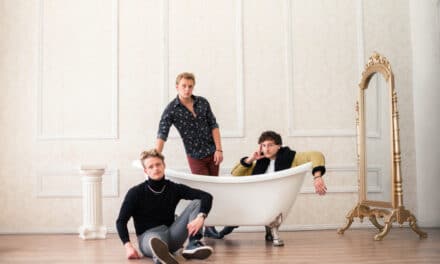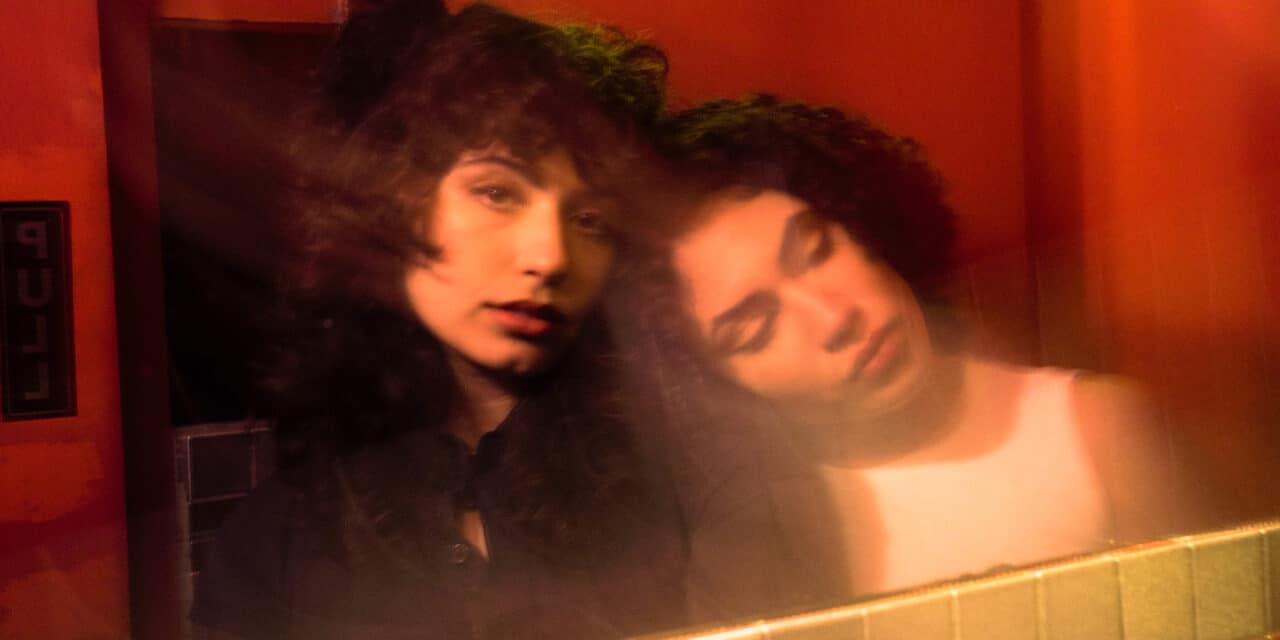
Part punk show, part coming-of-age musical, and entirely DIY, Lost Grrrl Found is challenging the boundaries between independent theater and music. With their debut EP Pupal Phase, creators Penelope Gould, Holly Nance, and Marina Carlstroem turn the chaos of first love, queer friendship, and growing up into something loud, vulnerable, and unapologetically communal.
What happens when a punk show becomes a musical, a teenage heartbreak becomes a political statement, and the audience becomes part of the story?
For the creators of Lost Grrrl Found, the answer is a project that refuses to fit neatly into either the music or theater industries.
Born out of a shared obsession with riot grrrl, queer storytelling, and the DIY ethos of underground punk, Lost Grrrl Found is a 22-song coming-of-age musical that has been making its way through New York City’s independent venues since 2024.
Its creators, Penelope Gould, Holly Nance, and director Marina Carlstroem, have developed a production that combines the emotional intimacy of musical theater with the confrontational energy of a punk concert.
They’ve even earned a particularly fitting description: “the only play with a mosh pit.”
Now, with the release of their debut four-song EP, Pupal Phase, they’re bringing the project’s music beyond the stage, introducing listeners to a world of queer desire, fractured friendships, first heartbreaks, and the complicated process of finding your people.
But perhaps the most interesting thing about Lost Grrrl Found isn’t simply its unconventional format.
It’s the way the project embodies the very artistic philosophy that inspired it.
Rather than waiting for the theater or music industries to create space for their work, its creators have built that space themselves.
“These grrrls didn’t wait for labels or promoters to put on their work,” they tell MUNDANE. “They just made it happen, and we have done the same.”
From Bikini Kill to Musical Theater
The origins of Lost Grrrl Found trace back to Gould and Nance’s freshman year in NYU’s Dramatic Writing program.
The two connected through a shared interest in Bikini Kill, feminist punk culture, and Carrie Brownstein’s memoir Hunger Makes Me a Modern Girl.
That book became their introduction to the riot grrrl movement, the early-1990s feminist punk scene that used music, zines, performance, and grassroots organizing to challenge established ideas about gender, power, and artistic expression.
From there, they discovered bands including Heavens to Betsey and Bratmobile, eventually exploring the adjacent queercore scene and artists such as Team Dresch and L7.
What fascinated them wasn’t only the music.
It was the idea that artistic expression didn’t need permission from an established institution to exist.
“Riot grrrl music is often narrative and theatrical, so it aesthetically felt like a great fit for making a piece of theater,” they explain.
“But the DIY spirit of riot grrrl is really the inspiration that gave us the confidence to make this idea a reality.”
That philosophy became especially important when the pandemic interrupted their early creative process.
Separated and working from their childhood bedrooms, Gould and Nance continued writing through phone calls, voice notes, lyrics, and outlines exchanged twice a week.
At a time when live performance was largely inaccessible, the musical became a way to remain connected to the artistic community they missed.
When they eventually returned to New York, they had developed much of the script but still needed to figure out how to bring it to life.
Carlstroem, a director and musician whom Gould met through the downtown theater scene, became the missing piece.
Together, the three began assembling a cast and band drawn from New York’s independent music and performance communities.
The production premiered at The Parkside Lounge in June 2024.
Since then, it has regularly sold out performances across Brooklyn, Manhattan, and Queens, finding homes in unconventional spaces including Stone Circle Theatre, The Sultan Room, and TV Eye.
The result is something that feels less like a traditional theatrical production and more like a living extension of the punk community that inspired it.
The Radical Importance of Queer Friendship
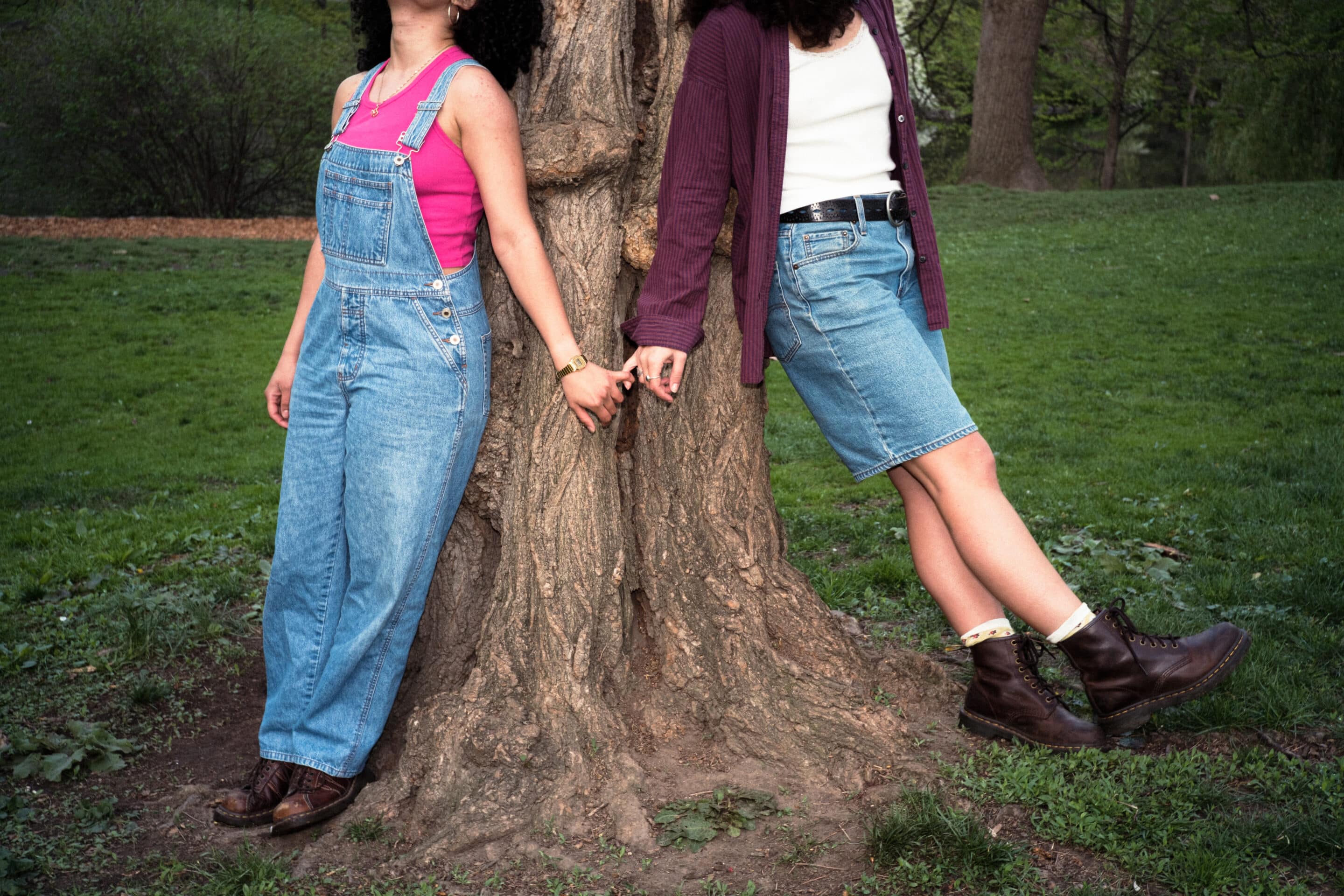
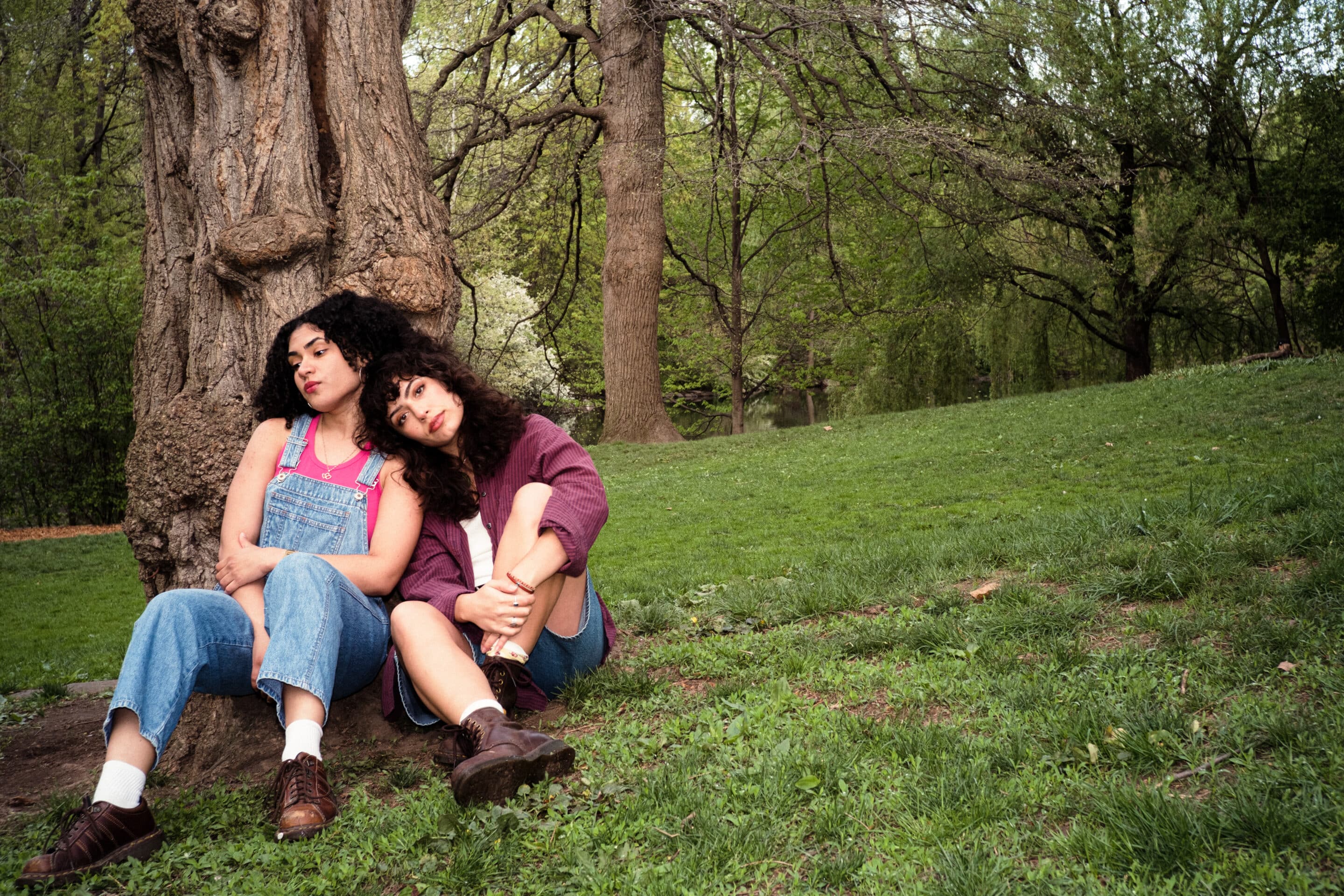
Set in the Pacific Northwest during the early 1990s, Lost Grrrl Found follows college freshmen Izzy and Morgan as they navigate queer desire, friendship, heartbreak, and the local punk scene.
The characters are played by Abby Mohaddes and Marvelyn Ramirez, respectively, whose performances have helped shape the production over successive iterations.
While the musical includes 22 original songs, Pupal Phase distills its emotional center into four tracks.
The EP focuses on the relationship between Izzy and Morgan, particularly the complicated process of growing together, growing apart, and finding their way back to each other.
For Gould and Nance, that relationship represents something fundamental about coming of age.
“For us, that process is about finding your people and learning how to be kind to each other,” they explain.
It’s a deceptively simple idea.
Coming-of-age stories often prioritize romantic relationships as the defining emotional experiences of adolescence.
But Lost Grrrl Found places friendship at the center of that journey.
Romantic heartbreak matters, but so does the community that helps someone survive it.
The creators see that distinction as particularly meaningful within queer experiences, where friendships and chosen communities can provide essential spaces for identity, belonging, and emotional support.
“These songs reflect some of the most vulnerable moments of the project,” they explain.
By releasing them independently of the theatrical production, the team hopes audiences will have the opportunity to experience those emotions more intimately.
Without the physical intensity of a live punk show, the music can reveal another side of the characters.
The noise remains.
But so does the tenderness underneath it.
“Lesbian Spinsters” and the End of the World at Nineteen
The EP’s focus track, “Lesbian Spinsters,” captures one of the musical’s most emotionally charged moments.
Inspired by queercore pioneers Team Dresch, the song follows Izzy and Morgan after both experience their first lesbian breakups.
At nineteen, romantic disappointment can feel less like an unfortunate experience and more like the collapse of an entire imagined future.
“A lesbian breakup at age nineteen feels like a world-shattering, earth-crumbling, life-altering situation,” the creators explain.
The song grew from their own memories of wanting to abandon romance entirely after being hurt.
Its central declaration about becoming lesbian spinsters at nineteen transforms that feeling into something simultaneously melodramatic, funny, and deeply sincere.
But the song isn’t simply about heartbreak.
It’s also the moment that brings Izzy and Morgan back together.
Their individual romantic disappointments become the catalyst for rediscovering their friendship.
That emotional reversal is what gives the track its larger significance.
The characters may feel as though love has failed them, but their connection to each other offers another kind of love worth holding onto.
“We hope this song can be an anthem for people experiencing their first queer heartbreak,” the creators say, “and a reminder that the strength of your friends and queer community can get you through.”
The track embodies one of the musical’s most compelling contradictions.
It is loud and irreverent, but its emotional foundation is remarkably tender.
And in that combination, Lost Grrrl Found finds a language that feels true to both its punk influences and its coming-of-age narrative.
Making a Musical That Doesn’t Belong Anywhere
One of the most revealing aspects of Lost Grrrl Found is the practical reality of creating work that doesn’t fit established industry categories.
The project is too theatrical to function like a conventional punk band, but too loud and musically unconventional to fit comfortably within traditional musical theater.
It requires rehearsal spaces that can accommodate drums and amplified instruments.
Its songs contain dialogue and narrative context that can complicate conventional music promotion.
And producing the work independently means navigating the financial demands of both theater and music.
Those challenges directly influenced the creation of Pupal Phase.
“A big part of that decision was that recording music in a studio is expensive,” the creators explain when asked why they selected only four songs from the full production.
“As a completely independent project, we didn’t have the funds to record all 22 songs.”
Rather than waiting until they could afford a complete soundtrack, they selected the songs that best represented the emotional heart of the musical.
It’s a decision that reflects the DIY philosophy behind the entire project.
Make what you can.
Use the resources available.
Find collaborators who believe in the work.
And don’t wait for an established system to decide whether your idea deserves to exist.
The EP was produced by Gould, Nance, and Carlstroem, with studio engineering by cast member Zac Wilson.
Its release also serves a practical purpose: making the music accessible to audiences who haven’t been able to attend a live performance.
Although the production has established a following in New York, its creators hope to bring the show to new cities, including an upcoming Los Angeles performance at Zebulon on January 21.
For now, Pupal Phase allows the project’s world to travel independently of the stage.
Riot Grrrl Was Never Just About the Music
There’s an interesting tension in reviving the spirit of a movement associated with a particular cultural moment.
The original riot grrrl scene emerged in response to the sexism, exclusion, and limitations women encountered within punk culture and beyond.
Its artists developed their own networks of performance, publishing, and collaboration because the existing infrastructure often failed to represent them.
Decades later, Lost Grrrl Found approaches those ideas from a different generational perspective.
Its creators aren’t attempting to recreate the early 1990s as a museum piece.
They’re using the movement’s artistic language and organizing principles to explore contemporary questions about queer identity, friendship, and creative independence.
The parallels between the story and the production itself are difficult to ignore.
Izzy and Morgan are searching for community through music.
Meanwhile, Gould, Nance, and Carlstroem have built a creative community around the act of making that story possible.
The fictional punk scene and the real-world collaboration begin to reflect one another.
That connection is especially apparent in the creators’ understanding of what the project has become.
They describe its development as an experience rooted in queer friendship, collective creativity, and the desire to make art that reflects their own lives.
In other words, the process is as important as the final performance.
And that may be the most authentic connection to riot grrrl of all.
Growing Up Without Growing Out of Yourself
The title Pupal Phase suggests a period of transformation: an uncomfortable, uncertain stage between what something once was and what it might eventually become.
It’s a fitting metaphor for a musical about young people discovering themselves through friendship, desire, and art.
But it also describes the evolution of Lost Grrrl Found itself.
What began as a collaboration between two college freshmen has become a growing creative project involving actors, musicians, producers, and independent venues.
Its creators have learned to navigate two industries that weren’t necessarily designed to accommodate their work.
And instead of resolving that contradiction, they’ve made it part of their identity.
There’s something fitting about a coming-of-age musical that has itself had to learn how to grow up.
Not by becoming quieter.
Not by abandoning its original influences.
And certainly not by waiting for someone to tell it where it belongs.
With Pupal Phase, Lost Grrrl Found offers a reminder that artistic independence is rarely about doing everything alone.
Sometimes it’s about finding the people willing to make something strange, ambitious, and deeply personal alongside you.
And sometimes the most radical thing a punk musical can do is remind its audience that even when your first heartbreak feels like the end of the world, your friends might still be waiting for you on the other side.
In Conversation With Lost Grrrl Found
MUNDANE: Lost Grrrl Found is heavily inspired by the 1990s riot grrrl movement, a feminist punk movement that used music, zines, and DIY art as tools for activism and self-expression. How did you first discover riot grrrl, and what about the movement inspired you to create this project?
Lost Grrrl Found: We first discovered riot grrrl as teens through Carrie Brownstein’s memoir Hunger Makes Me a Modern Girl. From there, we found the music of Bikini Kill, Heavens to Betsey, and Bratmobile and then began to seek out the music of the adjacent queercore and punk scenes, including bands we love like Team Dresch and L7.
Riot grrrl music is often narrative and theatrical, so it aesthetically felt like a great fit for making a piece of theater, but the DIY spirit of riot grrrl is really the inspiration that gave us the confidence to make this idea a reality. These grrrls didn’t wait for labels or promoters to put on their work, they just made it happen, and we have done the same.
MUNDANE: Lost Grrrl Found was originally conceived as a 22-song musical, and Pupal Phase offers listeners a four-song introduction to the world of the show. How did you decide which songs to include on the EP, and what do you hope listeners take away from experiencing these songs outside of the theatrical setting?
Lost Grrrl Found: A big part of that decision was that recording music in a studio is expensive. As a completely independent project, we didn’t have the funds to record all 22 songs—though we would love to if anyone is interested in helping us make that happen, of course!
We chose these four songs to highlight the queer friendship at the heart of our coming-of-age story. For us, that process is about finding your people and learning how to be kind to each other, which we see the two characters Morgan and Izzy discover across these songs.
These songs reflect some of the most vulnerable moments of the project, and we hope the opportunity to listen to it outside of a theater will allow the delicacy of these tender emotions to shine through.
Additionally, while we would love to tour the whole WORLD, we have yet to do a show outside New York (though we are coming to Los Angeles on January 21!), so we wanted to create a way for people who aren’t in the places we perform to be able to experience Lost Grrrl Found.
MUNDANE: “Lesbian Spinsters” explores the intense heartbreak of a first queer breakup, a formative experience for many coming-of-age stories. Why was this song important to the story of Lost Grrrl Found, and what do you hope listeners who have experienced similar feelings take away from it?
Lost Grrrl Found: A lesbian breakup at age nineteen feels like a world-shattering, earth-crumbling, life-altering situation. We pulled from our own feelings of wanting to swear off love. “We’ll be lesbian spinsters at nineteen / lock up our hearts, throw away the key,” became a mantra, and then lyrics. However, while this song is about the pain of a first breakup, it is also the experience that brings Izzy and Morgan back to each other and re-cements their friendship.
We hope this song can be an anthem for people experiencing their first queer heartbreak, and a reminder that the strength of your friends and queer community can get you through.
Pupal Phase — Tracklist
- Pupal Phase
- Time To Grow Up
- Spiraling Down
- Lesbian Spinsters
Listen and watch:
Upcoming live performance
January 21, 2027 — Zebulon, Los Angeles, with DJ Allison Wolfe of Bratmobile. Tickets
Photo: Abby Mohaddes as Izzy and Marvelyn Ramirez as Morgan. Photography by Chloe Fuller.