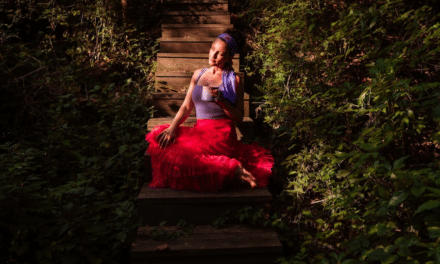
After her debut single “Guilty” amassed millions of streams in a matter of days, emerging singer-songwriter Sammi Heaney found herself connecting with an audience through one of the most painful experiences of her life. Now, with her follow-up single “Anything At All,” she explores the desperation of loving someone who cannot love you back in the same way, the emotional contradictions of relationships, and the difference between loneliness and feeling isolated from someone you love. In an exclusive conversation with MUNDANE, Heaney reflects on the unexpected success of her debut, the responsibility of turning private experiences into public art, and why she wants her music to offer comfort without pretending that everything will be okay.
There is a particular kind of loneliness that has very little to do with being alone.
It happens when you’re sitting next to someone you love but can no longer reach them emotionally. When a relationship technically still exists, yet the intimacy that once sustained it has quietly disappeared. When you find yourself bargaining with your own expectations, convincing yourself that even the smallest demonstration of affection might be enough to keep something alive.
Sometimes, that feeling is more frightening than the end of the relationship itself.
For emerging singer-songwriter Sammi Heaney, understanding those emotional contradictions has become central to her music.
Her debut single, “Guilty,” arrived with the kind of immediate response most new artists can only imagine.
After she shared a preview online, the song accumulated more than 100,000 views overnight. It went on to surpass one million streams in just three days and has since accumulated over four million streams.
But behind those impressive numbers was a deeply personal account of betrayal, jealousy, and the peculiar devastation of discovering that someone you love, or once loved, has been intimate with someone else.
For Heaney, the response was simultaneously validating and heartbreaking.
“It’s been such a beautiful but also really sad experience seeing how many people relate to the song.”
The success revealed something she hadn’t necessarily anticipated: an experience that had once made her feel profoundly alone was shared by an enormous number of strangers.
And perhaps more surprisingly, the song she initially doubted became the one that introduced her to those listeners.
“When I first wrote ‘Guilty,’ I honestly didn’t think it was that good.”
Now, with the arrival of “Anything At All,” Heaney is exploring another complicated dimension of romantic loss.
Where “Guilty” examines the pain of betrayal, her new single inhabits the desperation of trying to preserve a relationship when the emotional investment has become painfully unequal.
It’s not simply a song about missing someone.
It’s about knowing you deserve more and still wanting to stay.
When Loving Someone Becomes a Form of Bargaining
Heartbreak is often presented as a relatively straightforward emotional progression.
Two people fall in love.
Something goes wrong.
The relationship ends.
And eventually, both people learn to move on.
But the reality is rarely so orderly.
Sometimes the most painful moments occur before a relationship has officially ended, when one person has already begun withdrawing while the other is still desperately trying to restore what existed before.
That’s the emotional territory Heaney explores on “Anything At All.”
“It’s more about that desperation to keep a love alive with someone who doesn’t necessarily treat you well or love you in the same way that you love them.”
There’s something particularly unsettling about this kind of emotional imbalance.
The person who loves more often becomes the person willing to compromise more.
Affection turns into negotiation.
Hope becomes a justification for remaining in situations that no longer provide emotional security.
And the possibility of losing someone can become more frightening than the reality of how they are treating you.
Heaney understands that contradiction intimately.
“It’s about being so invested in someone that you’re willing to keep trying, even when you know deep down that you’re not getting the same love back.”
Unlike songs that approach heartbreak exclusively through anger or empowerment, “Anything At All” is interested in the vulnerability of wanting something you know may not be good for you.
It doesn’t necessarily offer a triumphant declaration of independence.
Instead, it allows the listener to inhabit the uncomfortable emotional space before that independence becomes possible.
For Heaney, those moments deserve as much attention as the aftermath.
“There are so many different stages of heartbreak, and I think they’re all worth writing about.”
The Difference Between Being Alone and Feeling Abandoned
One of the most revealing aspects of Heaney’s songwriting is her understanding of the difference between loneliness and emotional isolation.
Although the two experiences are frequently treated as interchangeable, she sees them as fundamentally different.
Loneliness, in her view, can contain a certain emotional stillness.
There is sadness, certainly, but there can also be acceptance.
Emotional isolation within a relationship, however, produces something far more destabilizing.
“When I am lonely, yes I am sad, but when I feel emotionally disconnected from someone who I love, I feel a sense of panic in trying to regain that feeling I once felt.”
It’s a striking distinction.
Being alone means confronting an absence.
Feeling disconnected from someone you love means confronting the possibility that something is disappearing while you’re still trying to hold onto it.
And that uncertainty can create a particularly intense form of emotional distress.
Heaney’s songwriting offers her a way to examine those experiences from a distance.
Rather than simply documenting what happened, writing allows her to reconsider how she understood it at the time.
She has even experimented with composing songs from the perspectives of former partners.
That exercise has helped her recognize the limitations of viewing every failed relationship through the question of whether she was good enough.
By imagining someone else’s emotional experience, she can develop greater compassion toward herself.
It’s an important development for an artist whose work is rooted in intensely personal memories.
Songwriting becomes more than an opportunity to express pain.
It becomes a way of questioning the stories we tell ourselves about why that pain occurred.
The Strange Responsibility of Going Viral
For a new artist, an unexpectedly successful debut can be both a breakthrough and a burden.
When a song reaches millions of listeners almost immediately, the excitement of recognition can quickly become entangled with the pressure to reproduce it.
What happens when your first major release establishes expectations before you’ve had the opportunity to fully explore your artistic identity?
For Heaney, following “Guilty” with another single was understandably intimidating.
“To be honest I did feel a lot of pressure releasing my second single after ‘Guilty’ did so well.”
But she is consciously trying to resist the temptation to measure her development through streaming numbers alone.
The most important thing, she explains, is remaining emotionally honest.
That means accepting that the song that introduced her to the world cannot become the blueprint for everything she creates afterward.
“I am a human being with a million other emotions and things I want to say.”
It’s a particularly important statement in an industry where emerging artists are often encouraged to identify what works and repeat it as efficiently as possible.
Social media can transform a personal creative breakthrough into a measurable formula.
A successful preview becomes a content strategy.
An emotional moment becomes a recognizable brand.
And the pressure to maintain momentum can make experimentation feel commercially risky.
Heaney doesn’t want that pressure to determine what she writes.
For her, success is increasingly about releasing music she genuinely believes in, even when it doesn’t replicate the performance of her debut.
It’s a deceptively simple philosophy.
But for someone whose career began with such immediate public attention, it may also be one of the most important principles to protect.

When Vulnerability Becomes an Artistic Expectation
The contemporary singer-songwriter landscape is full of artists who invite audiences into their most intimate emotional experiences.
Heartbreak, anxiety, insecurity, and loneliness have become familiar subjects within a culture that increasingly values public expressions of vulnerability.
But the popularity of confessional songwriting raises an uncomfortable question.
How do we distinguish genuine emotional honesty from the performance of emotional honesty?
For Heaney, the answer has less to do with the subject of a song than with the reason it was written.
“Genuine vulnerability to me, is writing because you have to in order to process things and have an outlet.”
Her most personal songs weren’t necessarily conceived as releases.
They emerged from moments when she needed to understand what she was feeling.
Sometimes that meant sitting on her bed in tears, trying to make sense of an experience that felt overwhelming.
But she is also careful not to equate vulnerability exclusively with sadness.
Writing about attraction, excitement, or the possibility of rejection can be equally exposing.
She recalls recently writing a song about someone she had only been on one date with.
Surprisingly, expressing those feelings proved more difficult than writing about some of her most painful experiences.
Because admitting that you care about someone, particularly before you know whether those feelings are reciprocated, requires a different kind of emotional courage.
And while Heaney allows herself complete freedom during the writing process, she recognizes that not every song needs to become public.
Some compositions will remain private.
Not because they lack artistic value, but because honesty also requires considering the people whose lives intersect with her own.
It’s a thoughtful acknowledgment of the responsibilities that accompany confessional art.
A songwriter may own her feelings.
But she isn’t necessarily the only person who belongs to the story.
Why Healing Doesn’t Have to Erase the Past
Another recurring theme in Heaney’s work is the complicated relationship between emotional memory and hindsight.
After a painful breakup, it can be tempting to reinterpret an entire relationship through the circumstances of its ending.
A betrayal can make every previous expression of affection seem dishonest.
Anger can transform once-cherished memories into sources of resentment.
But Heaney resists the idea that a relationship’s conclusion should determine the meaning of everything that preceded it.
“I have written love songs about people after they broke my heart, because I can still appreciate how I felt at the time.”
It’s a perspective that allows contradictory emotions to coexist.
Someone can hurt you without making every moment you shared meaningless.
A relationship can end badly without invalidating the happiness it once brought.
And moving forward doesn’t necessarily require rejecting the person you were when you loved someone.
For Heaney, preserving those emotional truths is an essential part of songwriting.
She believes the anger and sadness of heartbreak shouldn’t completely overshadow the joy that existed before it.
After all, intimacy is meaningful precisely because it makes us vulnerable to both extraordinary happiness and profound disappointment.
As she puts it, “We were born to feel.”
That philosophy also informs her relationship with “Guilty” today.
Although the song remains emotionally significant, she no longer experiences the same feelings that inspired it.
And she doesn’t attribute that change to the song’s popularity.
Instead, she recognizes the more ordinary, less dramatic process of emotional healing.
“Sometimes time really does heal.”
Making Music That Doesn’t Demand You Feel Better
Perhaps the most distinctive aspect of Heaney’s artistic philosophy is her refusal to treat music as an obligation to provide emotional resolution.
She doesn’t believe every song about sadness needs to end with a lesson.
Nor does she believe that music must transform pain into empowerment to be meaningful.
Sometimes, the greatest comfort comes from recognizing that someone else understands what you’re experiencing.
“I want my music to be a place where people can connect and not necessarily have to feel ‘better.'”
It’s an important distinction.
Popular culture often frames healing as a process of overcoming negative emotions as quickly as possible.
Sadness becomes something to fix.
Heartbreak becomes a temporary obstacle on the way to personal growth.
But Heaney is interested in creating room for experiences that haven’t yet been resolved.
She speaks openly about mental health and wants listeners to feel comfortable acknowledging difficult emotions without believing those emotions define them.
Her objective isn’t to romanticize depression or insist that everything will eventually work out.
It’s to offer recognition.
To communicate that feeling terrible about something doesn’t mean you’re experiencing it alone.
And sometimes, that recognition is enough.
In Conversation With Sammi Heaney
MUNDANE: Your debut single “Guilty” connected with listeners almost immediately, reaching over 100,000 views overnight and eventually surpassing four million streams. What inspired the song, and how did it feel to discover that something rooted in your own emotional experiences resonated with so many strangers? Did that response change the way you understood your own songwriting?
Sammi Heaney: “Guilty” was inspired by that really specific kind of heartbreak you experience when you find out someone you love, or once loved, has slept with someone else. It’s been such a beautiful but also really sad experience seeing how many people relate to the song. On one hand, it’s incredible to know that something so personal to me has made people feel seen and understood, but it’s also heartbreaking to realise just how many people have experienced that same feeling.
I think the response has made me believe in my songwriting a lot more as when I first wrote “Guilty,” I honestly didn’t think it was that good, so to see it connect with so many people has been a massive reminder that sometimes the songs you least expect can be the ones that mean the most.
MUNDANE: Your new single “Anything At All” explores heartbreak and longing, emotions that are universally recognizable but deeply personal in the way we experience them. What distinguishes the emotional perspective of this song from “Guilty,” and are you more interested in capturing the immediate intensity of heartbreak or the complicated feelings that emerge once the relationship is already over?
Sammi Heaney: I think “Anything At All” explores a slightly different side of heartbreak to “Guilty”. It’s more about that desperation to keep a love alive with someone who doesn’t necessarily treat you well or love you in the same way that you love them. It’s about being so invested in someone that you’re willing to keep trying, even when you know deep down that you’re not getting the same love back.
I think I’m equally interested in exploring both the immediate intensity of heartbreak and the emotions that come after a relationship ends. To me, the process of grieving a relationship is just as important as exploring the problems within it. There are so many different stages of heartbreak, and I think they’re all worth writing about.
MUNDANE: You’ve described songwriting as something you initially turned to because you felt alone, and later because you felt disconnected from people you thought you loved. How has music helped you understand the difference between loneliness and emotional isolation, and do you find that writing about difficult relationships brings you closer to understanding other people or primarily helps you understand yourself?
Sammi Heaney: I think that for me the difference between loneliness and emotional isolation is that I feel there is more of a sense of calm in loneliness than there is emotional isolation. When I am lonely, yes I am sad, but when I feel emotionally disconnected from someone who I love, I feel a sense of panic in trying to regain that feeling I once felt and it makes me really lose my mind.
I also think writing about difficult relationships has really helped me gain more of a bird’s-eye view on things and be able to see the bigger picture. I’ve written a couple of songs from the perspective of past partners and it is actually quite cathartic as I am able to see things from their lens and have a more compassionate view of myself, instead of searching for all the reasons I was never enough for them, if you know what I mean.
MUNDANE: Your music has gained considerable attention at a very early stage in your career, particularly through social media, where a short preview of “Guilty” introduced your songwriting to thousands of listeners. How do you navigate the pressure of following an unexpectedly successful debut, and do you worry that the expectations created by viral success might influence the emotional honesty that made people connect with your music in the first place?
Sammi Heaney: To be honest I did feel a lot of pressure releasing my second single after “Guilty” did so well, but I am trying to be easier on myself and not measure success on numbers. I think the most important thing to me is making music that is authentic and not trying to “recreate” “Guilty,” because that is one song and I am a human being with a million other emotions and things I want to say.
At the end of the day as long as I am putting songs out that I am wholeheartedly proud of and that feel authentic to me, that is success.
MUNDANE: You’ve said that one of your biggest goals is to give people somewhere to put their emotions, even if listening to a song doesn’t necessarily make their pain disappear. Do you believe music’s greatest power lies in helping us heal or simply reminding us that we’re not alone in what we’re experiencing, and how has sharing your own vulnerability changed your relationship with the people listening?
Sammi Heaney: I am someone who is very open about their mental health, as it has been such a big part of my life and who I am and I want my music to be a place where people can connect and not necessarily have to feel “better.”
I am not writing songs to glamorise depression or, on the other hand, to say don’t be sad, but a middle ground of “this is how I feel right now and it’s pretty shit so if you feel it too I get you.”
A lot of my favourite songs don’t necessarily aim to make you feel better, but realise that yes other people feel the same and you are not alone.
MUNDANE: Songs about heartbreak often focus on identifying who was responsible for a relationship falling apart, but emotional reality is rarely that straightforward. When you’re writing about love and loss, how do you approach the contradictions between what you felt at the time and what you understand in hindsight, and is it important to you to leave room for ambiguity rather than offering listeners a definitive explanation?
Sammi Heaney: When I write I kind of allow myself to be transported back in time to how I felt at the time. I have written love songs about people after they broke my heart, because I can still appreciate how I felt at the time, which I think is a beautiful thing.
I also think it’s important to not let the anger or sadness of the heartbreak outweigh the happiness you did once feel, because at the end of the day when you are so intimate with someone, no matter how it ends, those moments are special and important to the human experience.
We were born to feel.
MUNDANE: The singer-songwriter space has become increasingly populated by artists who share intensely personal experiences with their audiences. What do you think separates genuinely vulnerable songwriting from music that simply performs vulnerability, and how do you decide which parts of your personal life you’re comfortable transforming into something public?
Sammi Heaney: Genuine vulnerability to me is writing because you have to in order to process things and have an outlet. My most honest songs I did not set out to write, I just sat on my bed in tears and needed to understand how I was feeling.
In saying that, I don’t think a song needs to be sad to be vulnerable. I think as long as a song has come from a place of truth or emotional connection it is inherently vulnerable.
For example, I wrote a song the other day about a guy I went on one date with and it was harder to write than some of my saddest songs, because there is also a vulnerability in being honest with how you feel about someone and that fear of rejection.
In terms of how much I share in my songwriting, nothing is off limits while I am writing, however there are some songs I have written that will never see the light of day because there is also a fine line between being honest about your experiences whilst also respecting the fact that there are other parties involved that are affected.
MUNDANE: With “Guilty” reaching millions of listeners before you’ve even established a substantial catalog, your audience is discovering your artistic identity almost in real time. What influences have shaped your approach to storytelling, and what do you hope will distinguish your voice from the many emerging artists exploring similar themes of heartbreak, longing, and self-discovery?
Sammi Heaney: I have been influenced by a multitude of different artists and I want that to be reflected in my music as I continue to grow my project.
Growing up I listened to whatever my parents did, a lot of Nick Cave, Martha Wainwright, Tex Perkins and artists who were super honest in their writing, which I think is where I draw from the most.
I also have taken massive inspiration from artists like Lorde and Gracie Abrams, who tell stories so intimately you have to kind of digest the lyrics to understand.
I hope that my voice will be distinguished because people feel represented by my music and find solace in the fact that it is okay to feel all the feelings.
MUNDANE: There’s often a strange contradiction in turning painful experiences into something beautiful and commercially successful. Has the unexpected popularity of “Guilty” changed your relationship with the memories that inspired it, and does performing or revisiting a deeply personal song eventually transform its original emotional meaning?
Sammi Heaney: I don’t think so to be honest, obviously a lot of time has passed since I wrote “Guilty” and when I sing the song now it is still emotional, but I don’t feel the way I did at the time of writing it, and I can kind of separate myself from the song.
I wouldn’t say this has been the case because of the success of the song, but simply because time has passed and despite my past prejudice, sometimes time really does heal.
MUNDANE: With “Anything At All” following the success of your debut, you’re beginning to build a larger body of work around love, loneliness, and the need for emotional connection. What have these first releases taught you about the kind of artist you want to become, and what aspects of your personality or experiences are you most excited to explore beyond heartbreak as your songwriting evolves?
Sammi Heaney: I want to be the type of artist who is somebody’s comfort person. For me it was always Billie Eilish, I just had this kind of (slightly parasocial lol) connection to her, where I felt a comfort in not only her music, but also her personality.
I also watch a lot of interviews and artists like Noah Kahan and Lewis Capaldi have this authenticity that makes them so funny and human, and I want to be the same kind of person to my audience.
There are so many things about life that I want to explore with my music, and I think my biggest fear is being put in a box. I am someone who wants to try everything, and that extends to my music.
I want to try EVERYTHING. Who knows, I might put out a rap one day.
Beyond Heartbreak: Becoming Someone’s Comfort Person
Although Heaney’s first releases explore the painful complexities of romantic relationships, she has no intention of allowing heartbreak to define the entirety of her artistic identity.
Her influences extend well beyond contemporary confessional pop.
Growing up, she listened to artists including Nick Cave, Martha Wainwright, and Tex Perkins, whose emotionally direct songwriting helped shape her understanding of storytelling.
She also admires the intimacy of Lorde and Gracie Abrams, alongside the emotional connection she developed with Billie Eilish as a listener.
But what interests her most isn’t necessarily the idea of becoming someone’s favorite singer.
It’s becoming someone whose music and personality make listeners feel understood.
“I want to be the type of artist who is somebody’s comfort person.”
That ambition extends to the way she presents herself publicly.
She admires artists such as Noah Kahan and Lewis Capaldi for their ability to remain funny, approachable, and recognizably human despite their success.
And she wants to preserve that same sense of authenticity as her own audience grows.
There is also an unmistakable desire to experiment.
Heaney is wary of being placed into a narrowly defined artistic category simply because her debut resonated through heartbreak.
She knows there are countless other experiences she wants to explore.
Other emotions.
Other musical styles.
Other sides of her personality.
She even jokes about potentially releasing a rap song someday.
It’s an encouraging reminder that an artist’s first success doesn’t necessarily reveal everything they have to offer.
And perhaps that is the most meaningful lesson emerging from Heaney’s early career.
“Guilty” introduced her to millions of listeners through an experience of betrayal and emotional pain.
“Anything At All” expands that emotional territory by exploring the desperation of wanting love from someone who cannot fully reciprocate it.
But neither song needs to become a permanent definition of who she is.
For Heaney, songwriting remains an evolving conversation with herself and the people who find something familiar in her words.
And as her audience grows, she is beginning to recognize that the value of those songs cannot be measured exclusively through streams, views, or commercial milestones.
Sometimes, a song matters because it reaches someone at exactly the moment they need to hear it.
Not because it solves their problems.
Not because it offers a perfect explanation.
And not because it promises that tomorrow will be better.
But because it makes the loneliness feel a little less absolute.
Because sometimes the most powerful thing music can do isn’t to heal a broken heart. It’s to remind us that even when we’re hurting, we don’t have to experience that hurt entirely on our own.