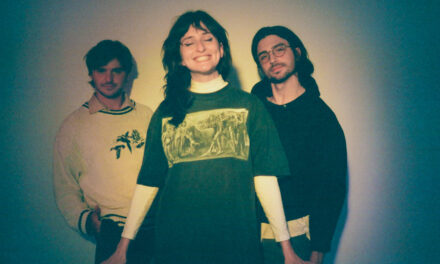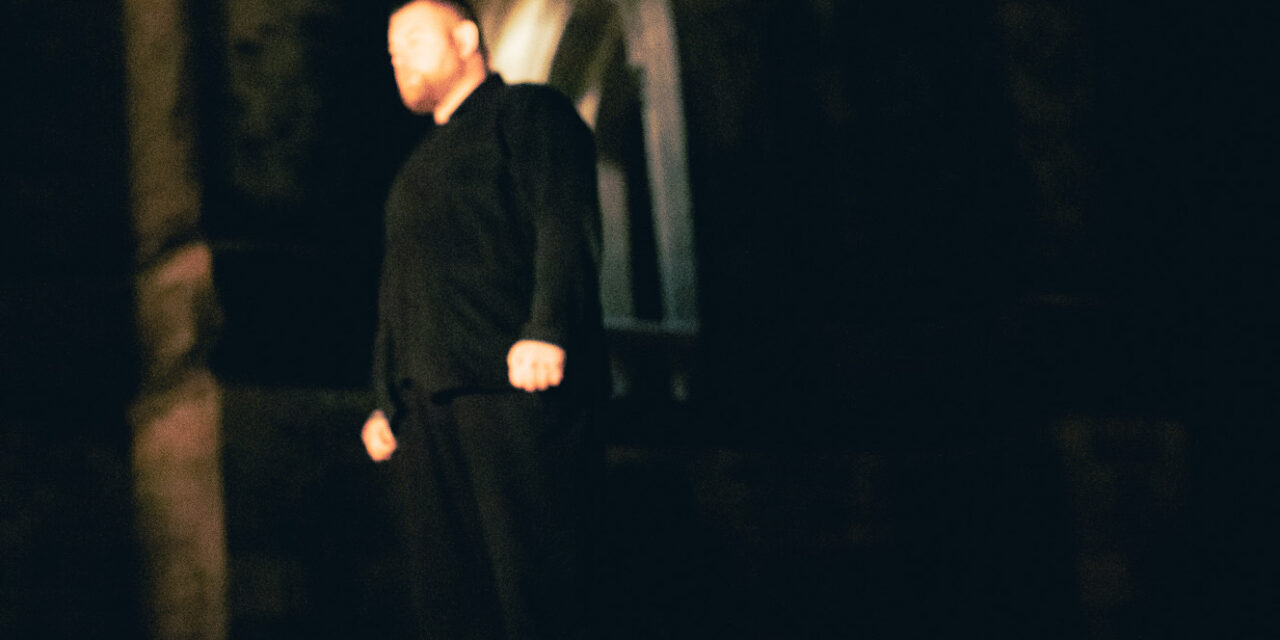
On their collaborative EP Overcast, Northern England’s Quiet Husband and Medlock transform industrial memory, abandoned infrastructure, and the psychological weight of place into an immersive electronic landscape. Moving between hypnotic techno, noise, field recordings, and slow-burning psychedelic textures, the project explores what remains when industries disappear but their environments continue to shape the people who inhabit them. In an exclusive conversation with MUNDANE, Medlock reflects on the emotional contradictions of growing up in Oldham, the relationship between sound and collective memory, the legacy of underground rave culture, and why the most powerful music doesn’t always need to arrive anywhere.
There is something peculiar about places that have outlived their original purpose.
Factories become empty shells. Warehouses lose their machinery. Industrial towns are left negotiating identities built around industries that no longer define their economic existence.
But the disappearance of physical activity doesn’t necessarily erase its presence.
Sometimes, what remains is less tangible.
A particular atmosphere.
A feeling of stagnation.
The memory of machinery that once operated continuously.
Or the sense that a place is still carrying the emotional weight of everything that happened there.
For Quiet Husband and Medlock, those lingering impressions form the foundation of Overcast, their collaborative EP released through N3Wlow.
Rooted in the industrial landscapes of Hull and Oldham, two Northern English towns separated by the Pennines, the record exists somewhere between hypnotic techno, experimental noise, and environmental sound art.
Its compositions unfold gradually, favoring accumulation over dramatic transformation.
Motifs repeat.
Textures erode.
Industrial sounds merge with electronic manipulation until the distinction between a physical landscape and a psychological one begins to disappear.
But Overcast is not an exercise in industrial nostalgia.
Nor is it an attempt to romanticize the economic and social decline of Northern England.
Instead, it explores a more complicated relationship between people and the places that shape them.
For Medlock, growing up around Oldham’s industrial remnants created feelings of frustration, disconnection, and creative fascination that remain difficult to separate.
“Part of me feels disconnected from the place, and part of me knows it’s shaped who I am.”
It’s a contradiction that runs throughout the record.
The desire to escape an environment while recognizing that its influence may never entirely disappear.
And perhaps, more importantly, the possibility of transforming that influence into something meaningful.
The Sound of a Place That Has Fallen Silent
Oldham and Hull share histories shaped by industrial labor, manufacturing, and the physical infrastructure of production.
Mills, docks, warehouses, and abandoned buildings continue to define aspects of their urban landscapes, even as their original economic functions have changed.
For Medlock, these environments have influenced his musical identity as much as any particular artist or genre.
Engineering and workplace sounds have become essential components of the way he understands rhythm and texture.
Machinery.
Grinding metal.
Continuous drones.
The repetitive patterns of industrial processes.
“I think my musical identity comes as much from the environments I’ve worked in as the places I grew up.”
It’s a fascinating perspective because it challenges the distinction between music and noise.
A mechanical rhythm might be considered meaningless in one context and hypnotic in another.
The constant repetition of industrial labor can become a compositional structure.
The sound of machinery can suggest a particular emotional atmosphere long after the machine itself has disappeared.
Medlock also describes a personal fascination with the stories his grandfather told him about Oldham’s industrial past.
He remembers hearing about a town once so engulfed in smoke and smog that visibility could become severely limited.
Those memories belong to a period he never personally experienced, yet they continue to influence his imagination.
“I think the sounds from Oldham’s mills tell us more about the past than photos can.”
The observation raises an interesting question about cultural memory.
Photographs preserve the appearance of a place.
But sound can communicate something about what it felt like to exist there.
The constant noise of machinery, the density of industrial activity, and the rhythms of daily labor suggest an experience that visual documentation alone cannot fully reconstruct.
For Medlock, those sonic memories provide a connection between personal history and artistic experimentation.
They are not simply references to the past.
They are raw materials for constructing something new.
When Field Recordings Become Psychological Landscapes
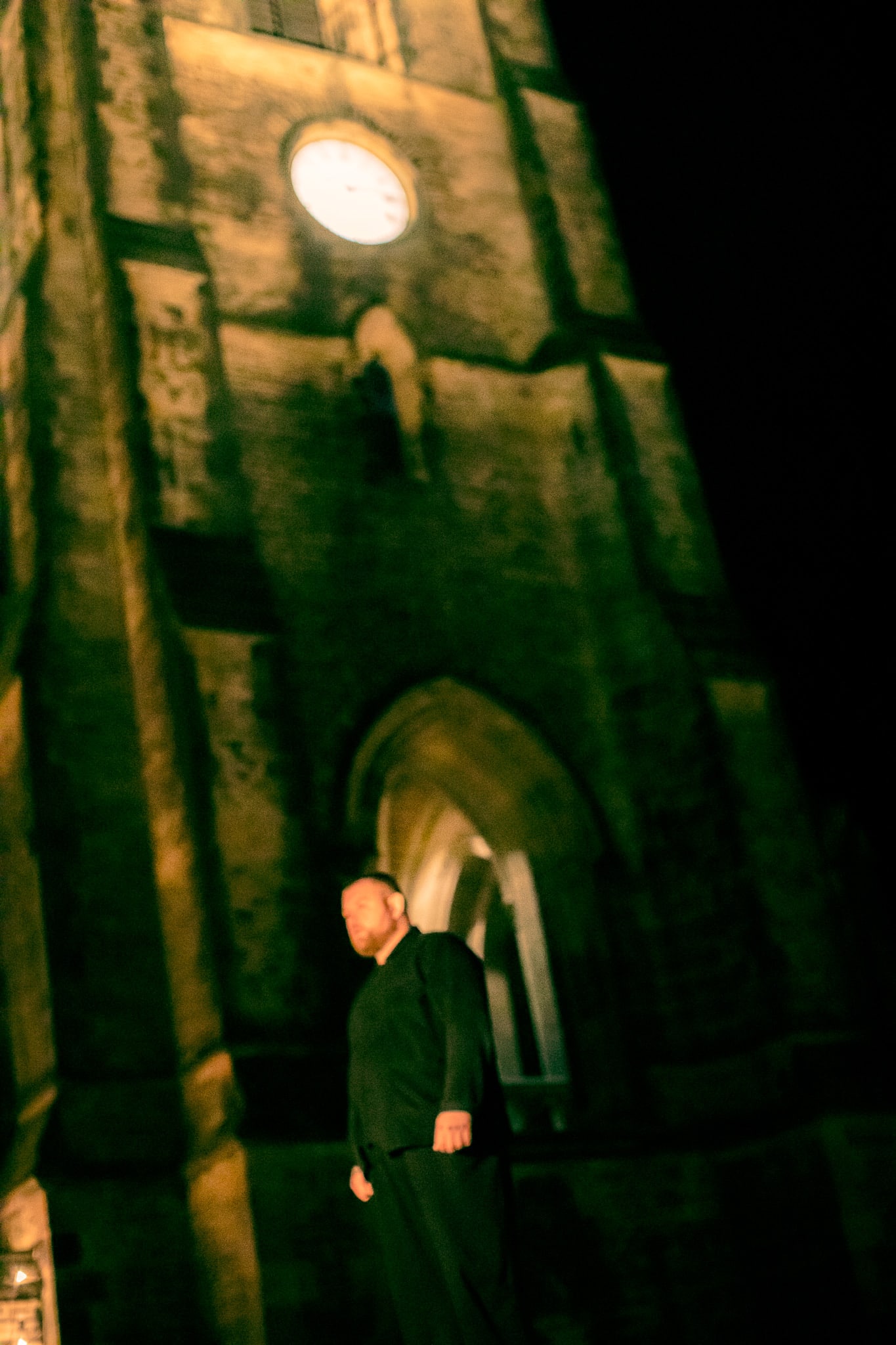
The collaboration between Medlock and Quiet Husband emerged from a shared interest in the relationship between environment, repetition, and sonic transformation.
Quiet Husband, also referred to as Richie in Medlock’s account of their work, approaches composition through a practice informed by contemporary art and experimental noise.
Medlock brings a production sensibility rooted in sequencing, atmospheric development, and the gradual accumulation of tension.
Their creative approaches intersect through an interest in sounds that evolve without necessarily announcing their transformation.
One of the most significant elements of Overcast came from the field recordings Quiet Husband supplied.
These recordings captured industrial environments alongside unexpected traces of natural life.
Dark mechanical textures existed beside birdsong.
The contrast immediately fascinated Medlock.
“I loved that contrast between the bleakness of the industrial landscape and the presence of something natural and alive within it.”
It’s an image that captures much of the project’s underlying tension.
Industrial infrastructure is often associated with permanence, control, and the imposition of human activity upon the natural world.
Yet these environments are never entirely separated from nature.
Birds continue singing.
Weather continues changing.
Life persists in the spaces between abandoned structures.
The recordings therefore contain multiple histories simultaneously.
They suggest the remnants of industrial production while revealing the continuing presence of something beyond it.
Medlock approached the material through sequencing and extensive effects processing, reshaping the recordings while attempting to preserve their environmental identity.
The challenge was not simply to make the sounds more musical.
It was to transform them without erasing what made them distinctive.
“Even with all the FX and manipulation, I wanted those industrial sounds to shine through in the tracks, so you could still feel the environment they came from.”
The result is a collaboration in which neither artist’s contribution completely dominates the other.
Instead, the material exists in a space between environmental documentation and electronic abstraction.
As Medlock explains, the two artists created something neither would have arrived at independently.
The Art of Making Time Feel Different
Much of contemporary electronic dance music is structured around anticipation.
Tension builds toward a drop.
Rhythms intensify.
A dramatic transition rewards the listener’s patience.
But Overcast operates according to a different understanding of musical progression.
Its compositions often develop through subtle changes that become apparent only after sustained attention.
A texture shifts.
A rhythmic element gradually emerges.
A familiar motif returns with a slightly different character.
For Medlock, this approach reflects a longstanding preference for music that evolves slowly rather than relying on dramatic structural events.
“I’ve always been drawn to music that slowly evolves rather than relying on drastic changes or obvious drops.”
The objective isn’t necessarily to eliminate movement.
It’s to redefine what movement can mean.
Instead of treating music as a sequence of distinct events, Medlock is interested in creating an environment that listeners can inhabit.
The experience becomes less about anticipating what happens next and more about noticing how the present moment is changing.
“Sometimes the beauty is in the journey itself, rather than building towards a specific payoff.”
There’s something almost philosophical about that approach.
Much of everyday life is organized around progress, productivity, and measurable outcomes.
We are encouraged to move forward, reach conclusions, and continually demonstrate improvement.
Music that refuses those expectations can create a different relationship with time.
It allows repetition to become meaningful.
It suggests that transformation doesn’t always need to be dramatic.
And it recognizes that sometimes a piece has reached its natural conclusion without requiring a climax.
For Medlock, knowing when to stop is as important as knowing what to add.
A composition can continue accumulating elements indefinitely, but more complexity doesn’t necessarily make it more effective.
Sometimes the most powerful ending is simply the moment when nothing else needs to happen.
The Emotional Contradictions of Northern England
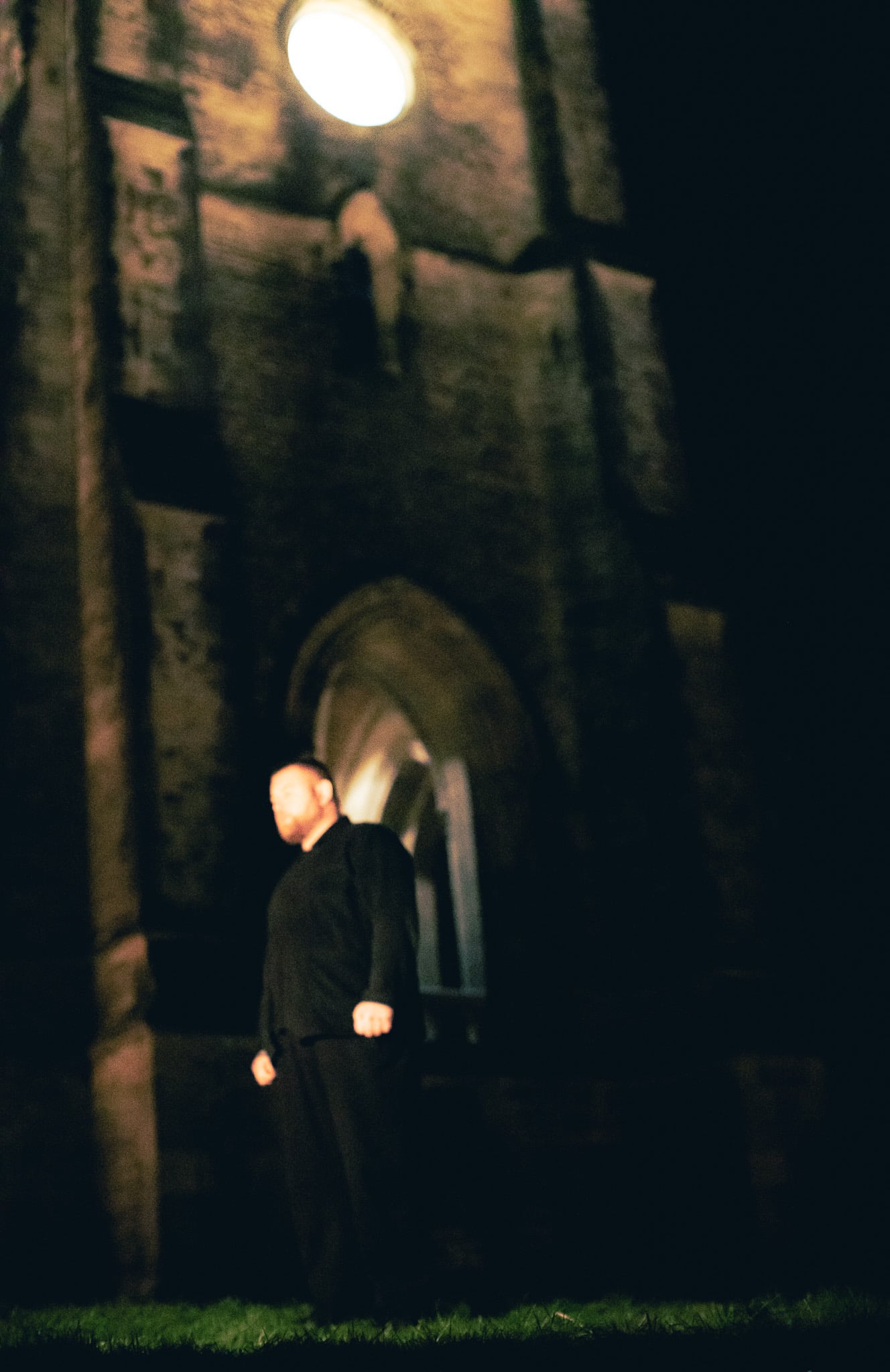
Perhaps the most revealing aspect of Overcast is the way it explores the relationship between creative identity and geographical belonging.
For Medlock, Oldham is not a place he can describe through uncomplicated nostalgia or civic pride.
His relationship with the town is marked by frustration.
He describes an environment that can feel quiet, neglected, and constrained by limited opportunities.
“I wouldn’t necessarily say Oldham is a place I’ve always felt proud to be from.”
It’s an unusually candid acknowledgment of the emotional complexity surrounding one’s hometown.
The expectation that artists should celebrate their origins can sometimes flatten the realities of growing up in places experiencing economic and cultural marginalization.
But Medlock is unwilling to turn Oldham’s difficulties into an aesthetic fantasy.
“I don’t want to romanticise Oldham’s decline or make the reality of the place seem beautiful when, for the people living there, it can be genuinely difficult.”
Instead, he describes a complicated mixture of resentment, fascination, and recognition.
The town’s atmosphere can feel oppressive.
Its social expectations can seem restrictive.
And the pressure to conform to conventional ideas about work and success can make creative ambition feel like an act of rebellion.
Medlock remembers feeling that people from his school might have dismissed or ridiculed the path he eventually chose.
But rather than allowing those attitudes to define his ambitions, he gradually learned to distance himself from them.
That process of separation became part of his artistic development.
Yet leaving a mindset behind doesn’t necessarily mean escaping the emotional influence of the place where it developed.
“There’s a certain shadow that seems to follow me when I’m there.”
And perhaps that shadow is what makes Overcast more than a collection of atmospheric electronic compositions.
The music is not attempting to resolve Medlock’s relationship with Oldham.
It’s allowing that relationship to exist in all its contradictions.
The frustration.
The history.
The isolation.
And the possibility of transforming those experiences into a new creative language.
From Abandoned Factories to Underground Dance Floors
The relationship between electronic music and industrial space is hardly accidental.
Warehouse parties, abandoned buildings, and temporarily repurposed environments have played significant roles in the development of underground dance culture.
For Medlock, that history is also personal.
His experiences within free-party culture shaped his understanding of what music can do to a physical environment.
An abandoned or unused space can become something entirely different when people gather around a sound system.
A place previously associated with emptiness or neglect can temporarily become a center of collective energy.
“There’s something quite powerful about taking a place that’s been forgotten or left behind and giving it a new purpose, even if it’s only temporary.”
It’s a philosophy that connects directly to the environments explored on Overcast.
Industrial spaces that have lost their original functions can acquire new meanings through music.
Their architecture becomes part of the experience.
Concrete walls, cavernous interiors, and the acoustics of abandoned infrastructure shape how sound is heard and felt.
The transformation may be temporary, but its emotional significance can endure.
Medlock recognizes that electronic music now operates within a globalized cultural ecosystem.
Digital platforms allow listeners and producers to participate in musical communities without necessarily sharing the same physical spaces.
But he doesn’t believe that globalization has erased the relationship between music and geography.
Instead, it allows locally shaped experiences to reach people whose environments may be entirely different.
The sounds of Northern England can resonate with someone listening thousands of miles away.
Not because they share the same industrial history, but because the music communicates an emotional experience that extends beyond its origins.
Between Headphones and the Dance Floor
Although Overcast rewards patient listening, Medlock is clear that its physical dimension remains essential.
The EP was created with the dance floor in mind.
Its immersive textures and slowly evolving structures are intended to unfold through powerful sound systems, where low frequencies become something listeners experience through their bodies.
But Medlock also recognizes another way of encountering the music.
He frequently listens through headphones while traveling by train.
Watching the landscape change outside the window while becoming absorbed in music can create an almost psychedelic experience.
The physical world and the sonic environment begin influencing one another.
“You almost become detached from your surroundings, and the music starts to change how you perceive what you’re looking at.”
That experience mirrors the relationship between geography and sound explored throughout the record.
The listener moves through a landscape while simultaneously inhabiting another one created by music.
Through headphones, the experience becomes intimate and introspective.
On a dance floor, the same compositions acquire a collective physical intensity.
For Medlock, Overcast belongs to both worlds.
It is music that can transform a solitary journey into an immersive psychological experience.
But it is also music designed to be played loudly, surrounded by other bodies, inside a dark room.
In Conversation With Medlock
MUNDANE: Your musical identity seems inseparable from the industrial environments of Northern England. How have the places you’ve lived and worked shaped the way you understand rhythm, texture, and sound?
Medlock: I think my musical identity comes as much from the environments I’ve worked in as the places I grew up. Engineering and workplace sounds — machinery, metal grinding, constant drones and repetition — have had a massive influence on how I hear and make music. There’s rhythm and texture in those environments that most people might just hear as noise.
There’s also a reaction against the everyday grind, the routine and the expectation that life follows the same pattern every day. I suppose there’s a bit of a fuck you to that way of living, a desire to break away from it. Those environments give me the raw materials, but the music lets me transform them into something of my own.
MUNDANE: Industrial towns often preserve their histories through architecture and photographs, but sound can communicate something less tangible. What do you think the sonic memory of Oldham reveals about its past?
Medlock: I think the sounds from Oldham’s mills tell us more about the past than photos can. You can imagine the constant clattering of machinery and the noise of people working all day. I’ve also been told by my grandad that Oldham used to be so full of smoke and smog that sometimes you could barely see anything. Obviously, that was before my time, but hearing these stories from him helps me picture what life was like back then. It shows how sound and people’s memories can keep a place’s history alive, even when the place itself has changed.
MUNDANE: Quiet Husband’s field recordings are an essential part of Overcast. How did those recordings influence your production process, and how did you balance preserving their original character with transforming them electronically?
Medlock: The field recordings Richie sent me for these tracks really stood out. They captured something of the old industrial link between Oldham and Hull — these dark, moody industrial noises with birds tweeting in the background. I loved that contrast between the bleakness of the industrial landscape and the presence of something natural and alive within it. The recordings had a real sense of place and history, but they also felt quite abstract, almost cinematic.
From my side, I did my thing with the sequencing and added lots of effects to get that Medlock sound, shaping and transforming the material while trying to preserve the character of the original recordings. It was about finding a balance between processing the sounds and letting them speak for themselves. Even with all the FX and manipulation, I wanted those industrial sounds to shine through in the tracks, so you could still feel the environment they came from.
I think that’s what made the collaboration work. Richie brought these incredible sounds and a sense of place, and I could take them somewhere else sonically without losing their identity. Neither of us was trying to force the material into a conventional structure; we were allowing the sounds, the space and the tension to dictate where the music went. The result was something that felt distinctly like both of us, but also like a world neither of us would have created on our own.
MUNDANE: Your compositions often develop through gradual accumulation rather than dramatic drops or obvious climaxes. What draws you toward that slower understanding of musical progression?
Medlock: I’ve always been drawn to music that slowly evolves rather than relying on drastic changes or obvious drops. I love keeping things moving throughout a track, introducing subtle changes and new layers that gradually build on each other. For me, it’s about creating a sense of progression without necessarily needing a big moment of resolution. I like the idea of letting the listener settle into a feeling or atmosphere and allowing it to develop naturally over time. Sometimes the beauty is in the journey itself, rather than building towards a specific payoff.
MUNDANE: Overcast exists somewhere between techno, noise, and experimental electronic music. How useful are genre labels when you’re creating something that doesn’t necessarily fit into one established category?
Medlock: I think genre labels can be useful as a reference point, but I don’t think they should define how people experience music. At the end of the day, if the music is good, it’s good. Whether you hear something for the first time through a label you love, on BBC Radio 6, in a Spotify playlist, or through a radio mix from one of your favourite artists, why should the genre really matter? What matters is how the music makes you feel and whether it connects with you.
I’ve never been too concerned with fitting into one particular category. I’m more interested in exploring sounds, creating an atmosphere and letting the music develop naturally. I think putting too much emphasis on genre can sometimes stop people from discovering things they might otherwise connect with. If you approach music with an open mind, without needing to categorise it straight away, you might find something completely unexpected that you love.
MUNDANE: You’ve spoken about the frustration and emotional weight associated with growing up in Oldham. How do you transform those feelings into creative inspiration without romanticizing the difficulties experienced by people who still live there?
Medlock: I think Oldham has a certain moodiness to it. It can feel run-down, quiet and like there isn’t a great deal going on. Whenever I’m there, I get this underlying feeling of frustration, almost like there’s something missing or something holding the place back. At the same time, that feeling inspires me creatively. There’s an emotional weight to the environment that I find difficult to explain, but it’s always stayed with me.
I wouldn’t necessarily say Oldham is a place I’ve always felt proud to be from, especially in today’s world, where places like it can sometimes feel forgotten or overlooked. There’s a certain shadow that seems to follow me when I’m there, and I’m still trying to understand how to turn that into something positive.
I also think about the people I went to school with and how some of them would probably laugh at me for going out and doing what I’ve done. A lot of people seem to stay within that same small-town mentality, where anything outside of what’s considered normal can be looked down on or misunderstood. In a way, I’ve reached a point where I find myself laughing at some of those attitudes now, because I’ve realised how limiting they can be. I think leaving that mindset behind has been part of finding my own identity and having the confidence to do something different, even if the people I grew up around don’t understand it.
I don’t want to romanticise Oldham’s decline or make the reality of the place seem beautiful when, for the people living there, it can be genuinely difficult. I think it’s more about being honest with what I see and feel: the frustration, the lack of opportunity, the sense of being stuck, but also the identity and history that still exist beneath the surface. For me, the inspiration comes from that tension rather than the decline itself.
I suppose there’s a strange contradiction in it all. Part of me feels disconnected from the place, and part of me knows it’s shaped who I am. Even when I try to move beyond it, that shadow is still there. But maybe the aim isn’t to get rid of it completely; it’s to take something that once felt like a limitation and turn it into something meaningful, using it as a source of creativity rather than allowing it to define me.
MUNDANE: When a piece of music evolves almost imperceptibly, how do you recognize that it has reached its natural conclusion? Is there a particular feeling that tells you nothing else needs to be added?
Medlock: I think you just know when a piece has reached its natural conclusion. For me, it’s about gradually building the track up, letting the different elements come together and allowing it to progress in its own way. Even if the changes are subtle and almost imperceptible, you can feel the track developing and moving towards something.
At some point, you reach a stage where you feel you’ve taken it as far as it needs to go. It doesn’t necessarily need a big climax or an obvious moment of resolution; sometimes, it’s just a feeling that everything has found its place and there’s nothing more that needs to be added. I think it’s about recognising when the track has said what it needs to say.
There’s also something important about knowing when to stop. You can keep adding elements and pushing things further, but that doesn’t always mean you’re improving the piece. Sometimes, the most natural ending is simply allowing everything you’ve built up to reach its endpoint without forcing anything beyond it.
MUNDANE: Electronic music has a long history of transforming abandoned industrial spaces into places of collective expression. How has your experience with free-party culture shaped your understanding of the relationship between music, geography, and community?
Medlock: I relate to this through my own background in free party’s , where there’s always been something about taking abandoned or unused spaces and making the most out of them. There’s something quite powerful about taking a place that’s been forgotten or left behind and giving it a new purpose, even if it’s only temporary. You’re creating an environment for people to come together, and the space itself becomes part of the experience. It’s not just about the music; it’s about the atmosphere, the people and the feeling of being somewhere that exists outside of everyday life.
Coming from somewhere like Oldham, where you’re surrounded by the remnants of an industrial past and areas that can feel a little forgotten, I think you become more aware of the atmosphere of a place. That feeling of isolation, frustration or emptiness can influence the way you approach sound and the emotions you want to convey through it.
Obviously, electronic music is much more global now, and the internet means people can connect with scenes and sounds from all over the world without necessarily being part of a particular physical community. But I don’t think that means the connection to place has disappeared. If anything, I think it makes it interesting how people can take their own experiences and environments and translate them into something that connects with others who might live somewhere completely different.
For me, the physical environment is still important. I think there’s a real connection between the free party ethos of making use of spaces that might otherwise be overlooked and the wider history of electronic music. Both are about finding possibilities in places that society might have written off. Where you come from stays with you in some way, and I think those experiences inevitably find their way into the music you make.
MUNDANE: Overcast feels equally suited to immersive headphone listening and a powerful club sound system. How do you imagine those different environments changing the listener’s relationship with the music?
Medlock: I think both experiences have their own place. I’m a big listener through headphones myself, and because I travel by train every week, music becomes quite an immersive experience for me. Watching the landscape change as you travel through different places while listening to music can feel quite psychedelic in itself. You almost become detached from your surroundings, and the music starts to change how you perceive what you’re looking at. I think there’s something quite special about that, especially with music that develops slowly and draws you into its own world.
With Overcast, the EP is quite psychedelic overall, so I can imagine it working really well in that kind of setting, where you can sit with the sounds and get lost in them. But ultimately, We made the music with the dance floor in mind. I want it to have that physical intensity and work through a powerful sound system, in a dark room where you can really feel the low end and become immersed in the sound.
I think the setting definitely changes the experience. Through headphones, it can become quite personal and introspective, whereas on a dance floor, the same music takes on a more physical and collective energy. You’re experiencing it alongside other people, and the sound becomes something you feel as much as hear. For me, Overcast sits somewhere between those two worlds. It has that psychedelic, immersive quality that rewards patient listening, but at its core, it was made to be played loud and experienced on a dance floor.
MUNDANE: Looking back on the collaboration, what did Overcast teach you about the relationship between where we come from and the creative identities we develop? Is it possible to move beyond a place without carrying some part of it with us?
Medlock: I think the collaboration reinforced how much the places we come from shape the way we see and experience the world, often without us even realising it. We called the EP Overcast because that’s generally how the weather is in the places we come from. It’s something familiar to us, and in a way, it’s how we’d describe those places at their best. There’s a certain atmosphere to it that goes beyond just the weather; it’s a feeling that becomes part of your surroundings and, eventually, part of you.
I think growing up around these environments gives you a particular perspective. There’s a certain melancholy to them, but also something quite inspiring in their moodiness and the way they make you feel. I think that comes through in the music, particularly in the more psychedelic and atmospheric elements. We weren’t necessarily trying to recreate a specific place or tell a particular story, but I think those experiences naturally found their way into the sounds.
Working together also made me realise how you can share similar feelings about where you come from without necessarily experiencing them in exactly the same way. For me, Overcast is about capturing that feeling of being shaped by your surroundings, even when you’re trying to move beyond them. It’s that constant presence in the background, something that follows you wherever you go. Rather than seeing it as something negative, I think the EP became a way of embracing that atmosphere and turning it into something creative.
The Places We Carry With Us
Perhaps the most compelling thing about Overcast is that it doesn’t attempt to offer a simple resolution to the relationship between people and their environments.
For Medlock, Oldham remains a source of frustration as much as inspiration.
Its industrial history carries both cultural significance and the consequences of economic change.
Its atmosphere can feel restrictive, yet that same atmosphere has shaped his understanding of sound.
The EP doesn’t ask listeners to admire the decline of Northern England.
It asks them to consider how environments continue influencing us long after their original functions have disappeared.
And perhaps the most interesting transformation happens when those influences are no longer experienced solely as limitations.
A mechanical rhythm becomes a compositional idea.
An abandoned building becomes a temporary gathering place.
A field recording becomes the foundation of an electronic landscape.
And the emotional weight of a hometown becomes something that can be shared with strangers on a dance floor.
There’s a quiet optimism hidden within that process, even if the music itself remains dark and unsettling.
Because creating something new from the remnants of something old is, in its own way, an act of resistance.
Quiet Husband and Medlock aren’t trying to recreate Northern England’s industrial past.
They’re interested in what its echoes might become.
And Overcast suggests that the most meaningful connections to a place aren’t always the ones we consciously choose.
Sometimes they’re the rhythms we carry without realizing it.
The atmospheres that shape our instincts.
The memories we inherit from people who lived there before us.
And the sounds that remain somewhere in our imagination, long after the machinery has stopped.
Because sometimes moving beyond where you come from doesn’t mean escaping its influence. It means learning how to transform the things that once held you back into something that belongs entirely to you.
Artists: Quiet Husband + Medlock
EP: Overcast
Label: N3Wlow
Release date: October 9
Formats: Digital / CD
Genre: Experimental Techno / Ambient Noise / Psychedelic Electronic
With Overcast, Quiet Husband and Medlock transform the industrial memory of Northern England into an immersive electronic experience that exists between physical landscape, psychological tension, and the enduring power of place.