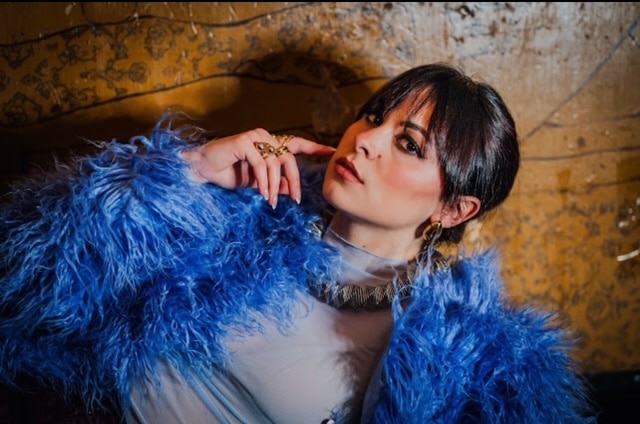
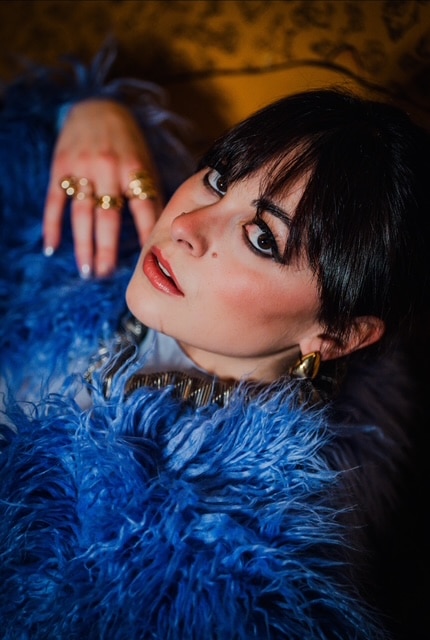
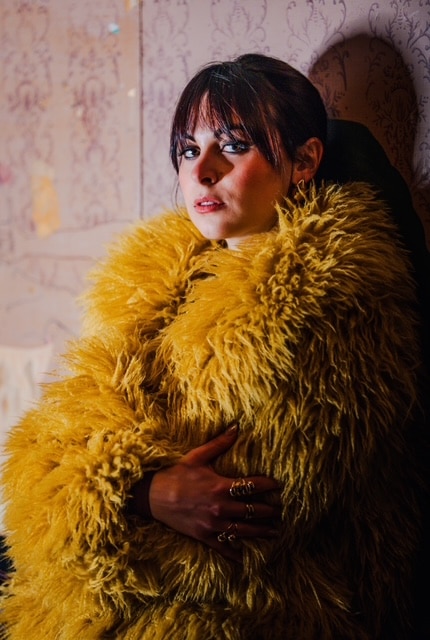
After years of releasing music under the name Elly, Italian singer-songwriter Chiara Bertelli is reclaiming more than her identity. With “La fiera del niente” (“The Fair of Nothing”), the Brescia-based artist returns to the soul, jazz, and R&B influences that shaped her musical education, transforming years of emotional uncertainty and artistic experimentation into a deeply personal statement about vulnerability, authenticity, and rebirth. Written entirely by Bertelli and co-produced with Andrea Ragnoli at Monolith Studio, the single marks a departure from the expectations that once defined her career. In an exclusive conversation with MUNDANE, she reflects on the emotional cost of sensitivity, the illusion of perfection, and why learning to embrace who she really is might be the most important artistic decision she has ever made.
There is a peculiar kind of loneliness that comes from feeling everything too deeply in a world that seems increasingly determined not to feel anything at all.
It’s the sensation of noticing what other people overlook. Of carrying emotions that seem too large for the situations that produce them. Of searching for sincerity in relationships, experiences, and environments that often reward appearances over substance.
And eventually, it’s the uncomfortable realization that perhaps the problem isn’t your inability to adapt to the world.
Perhaps the problem is the expectation that you should.
For Italian singer-songwriter Chiara Bertelli, that realization has become the foundation of a profound artistic transformation.
After spending several years releasing music under the pseudonym Elly, Bertelli is returning to her birth name with a renewed understanding of the relationship between identity, vulnerability, and creative freedom.
Her single “La fiera del niente,” released September 25, represents the beginning of that journey.
Rooted in soul, jazz, R&B, and the traditions of Black music that shaped her musical education, the track is both an intimate autobiographical reflection and a broader critique of a society increasingly preoccupied with appearances.
Its title, which translates to The Fair of Nothing, evokes a world filled with noise, spectacle, and endless distractions, yet frequently lacking the emotional substance that makes human experiences meaningful.
For Bertelli, the song is about recognizing that contradiction without allowing it to destroy her relationship with herself.
It’s about learning that sensitivity doesn’t necessarily make someone fragile.
And that the pursuit of artistic authenticity sometimes requires abandoning the identities we’ve spent years trying to maintain.
When Your Own Name Becomes an Act of Rebellion
An artist’s name is often treated as a relatively straightforward component of their public identity.
It becomes a recognizable symbol, a searchable brand, and a convenient way of distinguishing the person from the work.
But for Bertelli, the pseudonym Elly eventually became something more complicated.
It wasn’t originally a name she had chosen for herself.
It had been selected during her earliest productions, and although she initially liked it, she gradually began to experience it as a barrier between her emotional identity and her artistic expression.
“The pseudonym ‘Elly’ was chosen for me during my first productions,” she explains.
“Although I liked it at first, I always felt that it didn’t represent me because it placed a filter between what I felt, my art, and my image.”
Over time, that disconnect became increasingly difficult to ignore.
After years of releasing music and experiencing a prolonged period of creative stagnation, Bertelli began questioning whether the problem was truly a lack of inspiration.
What she discovered was something more fundamental.
She no longer recognized herself in the artistic identity she had constructed.
The expectation that she should belong to a particular musical genre, maintain a recognizable image, and fit within an existing category had gradually become incompatible with her creative instincts.
What initially appeared to be writer’s block was, in many ways, a crisis of identification.
And the solution wasn’t to invent another persona.
It was to abandon the need for one.
“That’s why I decided to reclaim my birth name in my releases, and with it, my identity.”
There is something quietly radical about that decision.
In an industry where artists are constantly encouraged to construct distinctive identities, Bertelli’s transformation begins by removing one.
Instead of asking who she needs to become to make her music successful, she is asking who she already is when she stops trying to satisfy expectations.
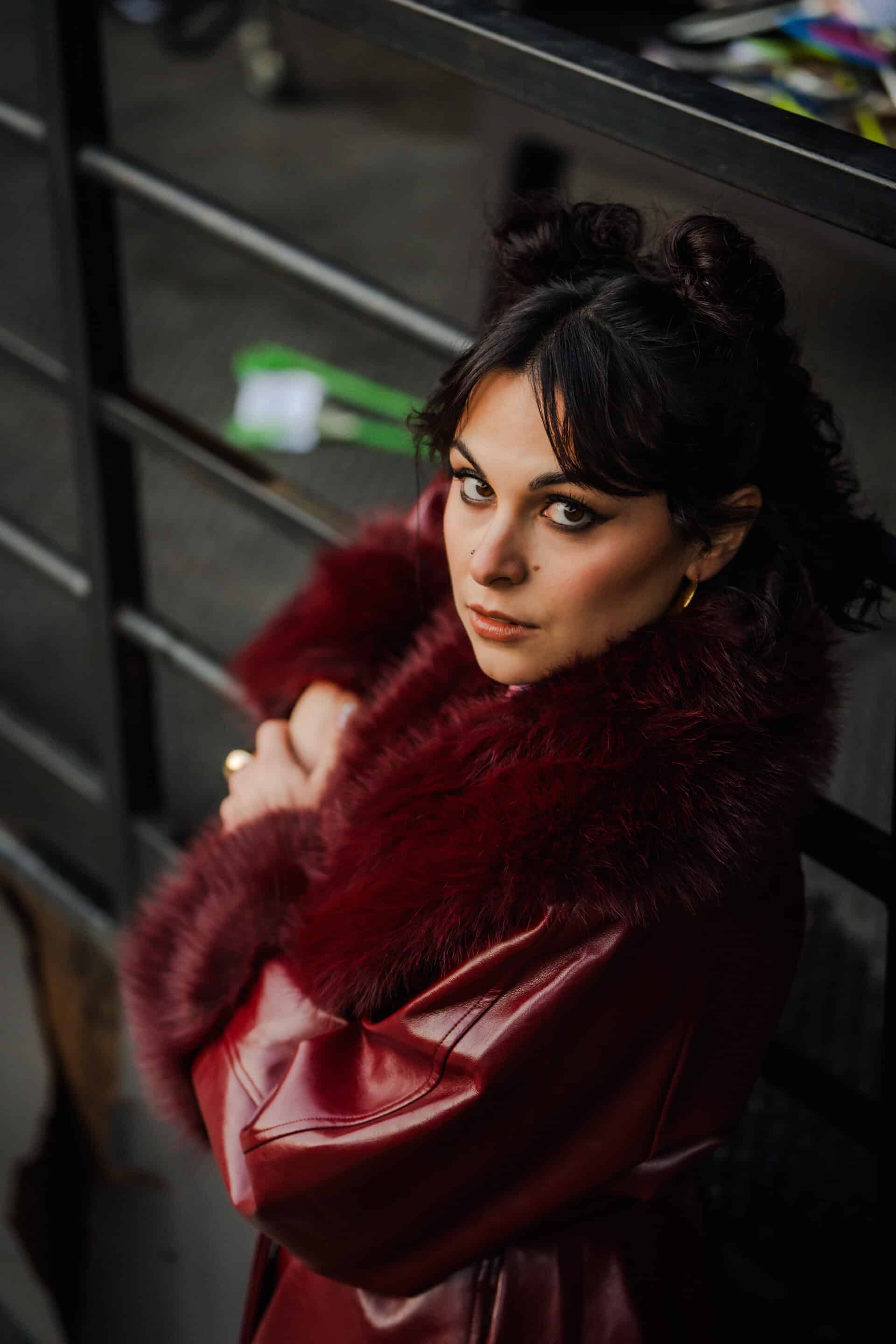
Returning to the Music That First Made Her Feel
Bertelli’s return to her own name also coincides with a return to the musical traditions that originally shaped her understanding of singing.
Having studied voice since childhood, she developed a strong technical foundation that eventually led her to jazz studies at the Conservatory in Brescia, where she also studied with Boris Savoldelli.
Over time, however, that education produced an unexpected contradiction.
The more technically accomplished she became, the easier it was to approach singing primarily as a discipline.
Her voice became an instrument she knew how to control.
But somewhere along the way, she began losing contact with the emotional instinct that had originally drawn her to music.
“Having studied voice since I was a child, and also being a teacher, my voice became a real instrument for me,” she explains.
“I lost some of the connection with myself and with what the act of singing had always meant to me.”
For an artist whose relationship with music is deeply emotional, that realization was particularly significant.
Technical ability had given her extraordinary tools.
But those tools had also introduced the temptation to prioritize execution over expression.
The new chapter of her career is an attempt to reverse that relationship.
Instead of using songs to demonstrate what her voice can accomplish, Bertelli wants her voice to serve the emotional truth of the songs.
That shift has brought her back toward soul, jazz, and R&B, genres in which she finds a musical language closely connected to her personal identity.
“Perhaps for the first time, I found the courage to create something that was truly mine.”
It’s not simply a stylistic change.
It’s a return to the reasons she wanted to make music in the first place.
The Emotional Cost of Feeling Too Much
At the center of “La fiera del niente” is a deeply personal exploration of sensitivity.
Bertelli has always experienced the world through an intense emotional awareness.
She describes herself as someone who has been profoundly empathetic since childhood, often absorbing the feelings and experiences of the people around her.
But she is careful to distinguish emotional intensity from weakness.
“I’ve always been an emotional child, girl, and then woman. Not fragile, but very emotional and empathetic.”
That distinction is fundamental to the song.
Throughout her life, Bertelli has encountered situations in which her emotional responses were dismissed as excessive.
In relationships and professional environments, she often felt that the depth of her feelings exceeded what other people were prepared to understand.
She was told, directly or indirectly, that she felt too much.
That her reactions were disproportionate.
That her emotional intensity was something she needed to correct.
For a long time, those experiences contributed to a sense of alienation.
But as she grew older and began working more consciously on her relationship with herself, her perspective changed.
She started recognizing that being perceived as excessive doesn’t necessarily mean someone is experiencing emotions incorrectly.
Sometimes it means the people around them lack the tools to understand what they’re witnessing.
That realization also required her to reconsider the responsibilities that accompany empathy.
Being sensitive doesn’t mean absorbing everything.
It doesn’t mean accepting every emotional demand.
And it certainly doesn’t mean abandoning personal boundaries in order to make other people comfortable.
For Bertelli, learning to establish healthy boundaries has become an essential part of living peacefully with her emotional nature.
She no longer wants to treat sensitivity as a problem that needs to be solved.
Instead, she is learning to understand it as something that requires awareness, protection, and care.
The transformation is subtle but profound.
Rather than asking how she can become less sensitive, she is asking how she can remain sensitive without losing herself.
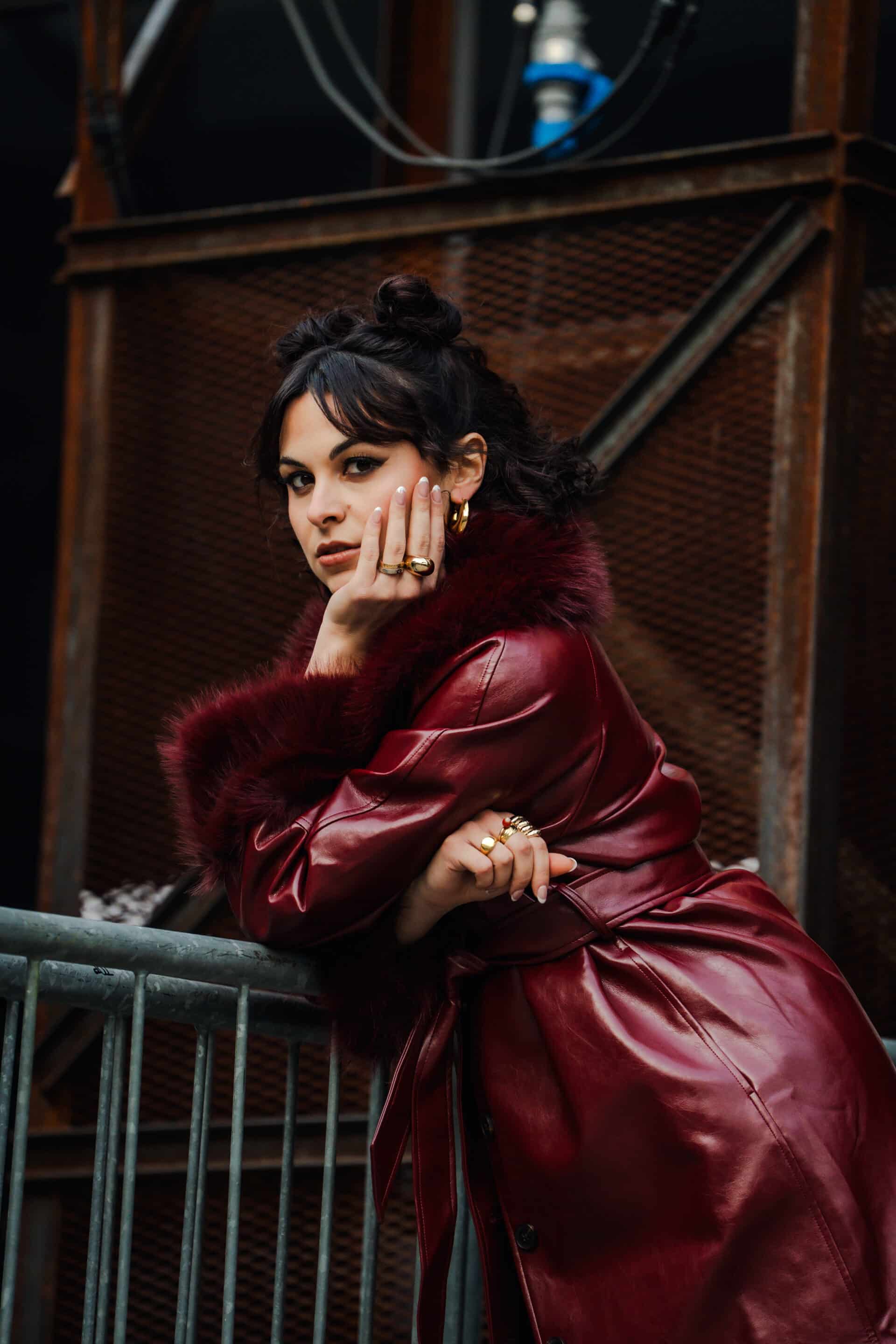
The Fair of Nothing: A World That Confuses Appearance With Meaning
The title “La fiera del niente” suggests a place overflowing with activity.
A fair is typically associated with spectacle, noise, movement, and an endless succession of things competing for attention.
But Bertelli’s fair is built around an absence.
It is a metaphor for a world in which appearances increasingly substitute for substance.
“For me, ‘La fiera del niente’ is the metaphor for everything — things, relationships, and situations — that merely appears to have value without possessing any real substance.”
She sees that contradiction reflected in contemporary culture.
The constant need to display experiences.
The pressure to consume.
The obsession with visibility.
And the tendency to mistake attention for significance.
“It’s the contemporary world with its continuous display window: so much noise, so much spectacle, but very little that remains.”
The observation extends beyond social media or the entertainment industry.
For Bertelli, it describes a broader emotional environment in which superficial interactions can become normalized while sincerity begins to feel increasingly difficult to find.
The song explores the discomfort of inhabiting that environment as someone who values emotional depth.
It captures the sensation of feeling out of place not because one lacks something, but because the surrounding world seems unable to accommodate certain forms of sensitivity.
Yet Bertelli doesn’t approach the subject exclusively through social criticism.
She also introduces a spiritual dimension.
The song becomes a conversation between the external world and her internal experience of it.
Between what she observes and what she feels.
Between the emotional wounds she continues to carry and the possibility of transforming them into understanding.
Between Light and Shadow
One of the most revealing aspects of “La fiera del niente” is the relationship between its emotional themes and musical structure.
Bertelli imagined the song as a dialogue between light and darkness.
The verses represent the shadow.
They embody the unresolved, vulnerable, and sometimes angry part of herself that continues searching for answers.
It’s the side of her identity that feels confused by the world and uncertain about how to navigate it.
The choruses, meanwhile, represent light.
They introduce hope, spiritual awareness, and the possibility that difficult experiences can become part of a larger process of personal evolution.
“The verse is the shadow: my more earthly side, still unresolved and fragile, angry and confused, continuing to ask questions without finding answers.”
“The choruses, instead, are the light and hope.”
This contrast gives the song a meaning that extends beyond its autobiographical origins.
Bertelli isn’t suggesting that healing requires eliminating darkness.
Instead, she imagines light and shadow as inseparable aspects of human experience.
The unresolved parts of ourselves don’t necessarily disappear when we grow.
They become part of the process through which we understand who we are.
The song also references the idea of confronting ancient fears, emotional patterns that may extend beyond individual experiences and into the histories we inherit.
For Bertelli, personal transformation involves acknowledging those fears rather than pretending they don’t exist.
It’s a process of learning to recognize the darker aspects of oneself without allowing them to define the entirety of one’s identity.
And in that sense, “La fiera del niente” becomes less a song about escaping the world than about discovering a more conscious way of existing within it.
Choosing Truth Over Perfection
The production of “La fiera del niente” reflects the same philosophy that informs its lyrics.
Written and composed entirely by Bertelli, the single was co-produced with Andrea Ragnoli at Monolith Studio in Montirone, with an ensemble of musicians contributing to its organic sound.
The decision to work with live instruments and musicians was deliberate.
For Bertelli, authenticity isn’t simply something that should be communicated through words.
It should also exist in the physical construction of the music.
“The central theme of this project is truth,” she explains.
“The connection with musicians, real sounds, real instruments… it’s all part of the attempt to show myself, for the first time in my life, not only searching for technical perfection but for artistic truth.”
That approach also reflects her evolving relationship with control.
Initially, Bertelli wanted the song to represent every aspect of her new artistic identity.
The musical style.
The lyrics.
The vocal interpretation.
The production.
The emotional meaning.
But she eventually recognized the impossibility of expressing an entire identity through a single composition.
Rather than forcing every element to communicate a predetermined message, she allowed the songwriting process to unfold more naturally.
She stopped treating the vocal performance as an opportunity to demonstrate technical ability.
And she began allowing the music to determine what it needed.
“Control isn’t always the best choice.”
It’s a particularly meaningful realization for someone who has spent years studying and teaching the technical aspects of singing.
The challenge isn’t a lack of knowledge.
It’s learning when to stop allowing that knowledge to dominate the creative process.
Sometimes the most expressive performance isn’t the most technically perfect one.
It’s the one that communicates something the listener can recognize as human.
Brescia, Belonging, and the Search for a Musical Home
Although “La fiera del niente” marks a new personal chapter, Bertelli’s artistic identity remains deeply connected to the place where she developed much of her musical education.
Originally from Val Camonica, a mountainous valley in northern Italy, she eventually moved to Brescia, where she has lived for nearly a decade.
The transition from a small mountain town to a more active urban environment was both challenging and transformative.
For Bertelli, Brescia offered access to musical opportunities and communities that had been less available in her earlier surroundings.
Her years at the conservatory remain particularly meaningful.
She remembers them as some of the happiest of her life.
The city became more than a place to study.
It became part of her identity.
“Brescia is a beautiful city. Provincial, yes, but more active and dynamic than people might think.”
Although she recognizes the difficulties faced by independent artists whose work doesn’t fit neatly within mainstream commercial categories, she remains appreciative of the support she has received locally.
At the same time, she hopes to expand her opportunities beyond the regional scene.
It’s another example of the balance that defines this new chapter.
Bertelli wants to remain connected to her roots without allowing them to become limitations.
She wants to acknowledge the traditions that shaped her without feeling obligated to reproduce them.
And she wants to develop an artistic identity that can exist beyond geographical and stylistic expectations.
The Beautiful Curse of Being an Artist
For Bertelli, songwriting has never been an entirely comfortable process.
It can offer clarity, helping her organize emotions that otherwise feel overwhelming.
But it can also force her to confront experiences she would prefer to leave unresolved.
That contradiction has sometimes contributed to creative stagnation.
Writing requires emotional honesty.
And emotional honesty can be frightening when the feelings involved are particularly intense.
In recent years, she has become increasingly aware that the prospect of confronting difficult emotions can itself become an obstacle to creating.
Yet she also recognizes that those experiences are inseparable from her artistic identity.
“Writing helps put things in order and keeps you more connected to what you feel.”
“At the same time, seeing and feeling certain things is very painful and frightening.”
For Bertelli, the relationship between creativity and emotional vulnerability is therefore neither entirely liberating nor entirely destructive.
It contains both possibilities.
The same sensitivity that makes everyday experiences more difficult can also provide the emotional material from which meaningful art emerges.
And the process of transforming that material into music can become an opportunity for self-understanding.
She describes this contradiction with a particularly memorable expression.
“I’ve always considered all of this the beautiful curse of being an artist.”
It’s a phrase that captures the emotional complexity of her work.
Art doesn’t necessarily make difficult experiences easier.
Sometimes it makes them impossible to ignore.
But it also offers a way to transform those experiences into something that can exist beyond the individual.
Something another person might hear and recognize.
Something that makes private emotions communicable.
And perhaps, in that exchange, something that makes those emotions easier to carry.
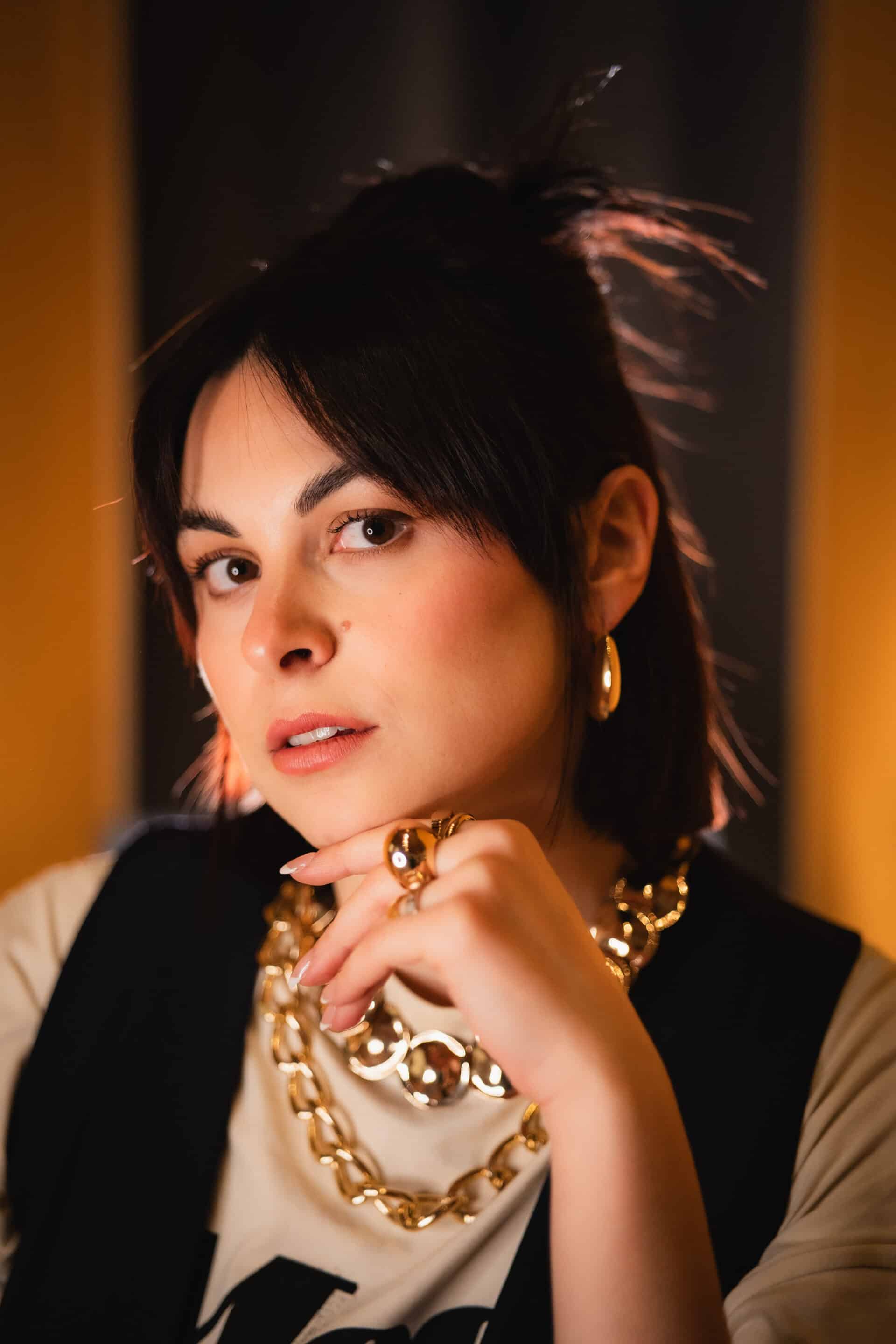
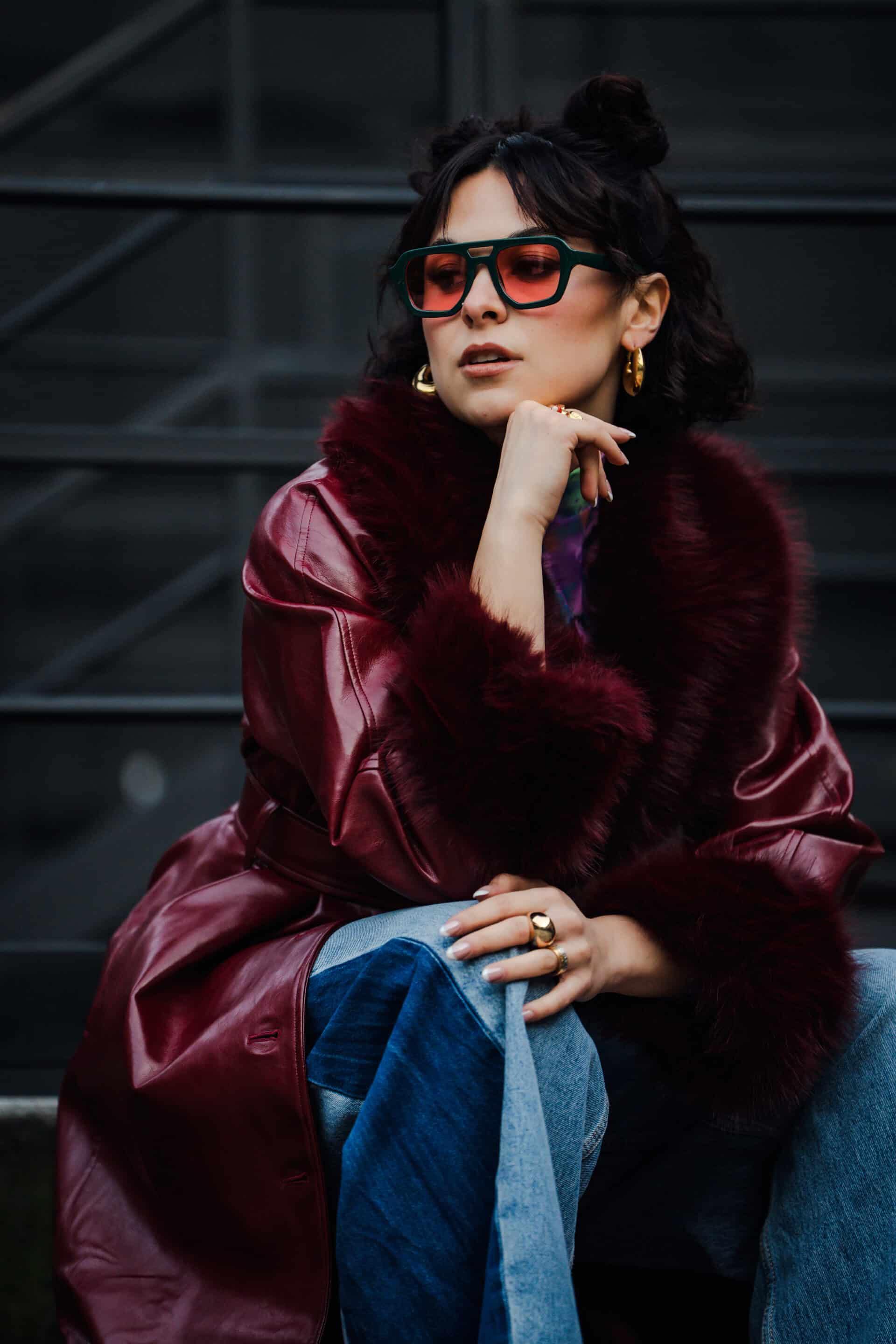
In Conversation With Chiara Bertelli
MUNDANE: “La fiera del niente” marks not only the release of a new song but also your return to your own name, Chiara Bertelli, after years performing as Elly. What was it about your previous artistic identity that no longer represented you?
Chiara Bertelli: The pseudonym “Elly” was chosen for me during my first productions. Although I liked it at first, I always felt that it didn’t represent me because it placed a filter between what I felt, and therefore my art, and my image.
After years of releases and a period of stagnation in my songwriting, I realized that what was holding me back wasn’t creative block, but the fact that I could no longer identify with what I was doing.
Having to choose a single musical genre, being represented by a pseudonym, and having to identify myself with something that already existed were all things that had stopped helping me connect with myself.
That’s why I decided to reclaim my birth name in my releases, and with it, my identity.
MUNDANE: In this new chapter, you’re returning to your soul, jazz, and R&B roots. Rather than a change of genre, does this return feel like rediscovering something that had always remained inside you?
Chiara Bertelli: Yes, definitely. Perhaps for the first time, I found the courage to create something that was truly mine.
Having studied voice since I was a child, also thanks to my jazz training at the conservatory, and being a teacher myself, my voice became a real instrument for me. I lost some of the connection with myself and with what the act of singing had always meant to me.
I realized that returning to the music that moves my soul, while bringing something of my own into it, was the only way to return to myself.
MUNDANE: “La fiera del niente” comes from the feeling of being out of place when you experience the world with particular sensitivity and empathy. When did you begin to see that sensitivity not as a weakness, but as something to protect and transform into creative strength?
Chiara Bertelli: I’ve always been an emotional child, girl, and then woman. Not fragile, but very emotional and empathetic.
Feeling so much has often brought me face-to-face with superficiality, indifference, selfishness, and emotional immaturity. Because of this, I’ve often suffered, particularly in relationships but also professionally.
Many times, people have pointed out that I was “exaggerated” in what I felt, almost as though the external container was never large enough to hold everything I could express emotionally, both positively and negatively.
As I grew older, and through a lot of personal work, I understood that when we’re perceived as excessive or “wrong,” it’s often because the person in front of us doesn’t have the necessary tools to manage or simply understand what we’re experiencing. Out of fear, they judge us or put up a wall.
On the other hand, sensitive people need to learn to establish healthy boundaries and consciously choose who or what is worth absorbing like a sponge.
By becoming aware of these things, and learning how to work with the limits of tolerance of my own emotions and those of others, I’ve learned that it’s possible to live peacefully with what you feel, without judging yourself.
MUNDANE: The title “La fiera del niente” evokes a place full of noise, distractions, and things that seem important but may ultimately be empty. What does this “fair” represent to you, and how closely does it resemble the contemporary world around us?
Chiara Bertelli: For me, “La fiera del niente” is the metaphor for everything — things, relationships, and situations — that merely appears to have value without possessing any real substance.
It’s the contemporary world with its continuous display window: so much noise, so much spectacle, but very little that remains.
In the song, I tried to describe this world through a perspective that wasn’t only analytical, but also instinctive, visceral, and at times spiritual.
What emerges is the feeling of not being good enough, of feeling out of place in the face of superficiality, haste, and obsessive consumption, when all you desire is something real and simple.
There’s also the discomfort of coming into contact with your emotions and observing a world that isn’t ready to welcome them.
Bringing this broader concept into the personal and musical dimensions, I imagined the different parts of the song as a dialogue between light and shadow, which coexist within each of us.
The verse is the shadow: my more earthly side, still unresolved and fragile, angry and confused, continuing to ask questions without finding answers.
The choruses, instead, are the light and hope, my more spiritual and lucid side, the part that remembers how everything I’ve experienced and am experiencing is leading me toward an important evolution.
It’s the part that isn’t afraid to “look into ancient fears,” as the lyrics say, fears that aren’t only mine but belong to all of us, and that perhaps we’ve been carrying for generations.
MUNDANE: You wrote and composed the song entirely yourself, as well as co-producing it with Andrea Ragnoli. How important was it to have such direct control over the song at a moment when you were redefining your artistic identity?
Chiara Bertelli: Having a starting point certainly makes the path ahead more defined, including for the future.
I began by trying to write a song that, because it represented my new beginning, would represent me 100% in every respect: musically, sonically, lyrically, vocally, artistically, and so on. Almost as though I had to put everything into this one song.
Obviously, it’s impossible to express every part of yourself in a single track.
So I allowed the words to come naturally, and I stopped asking my voice to demonstrate anything about my abilities. Instead, I let it be entirely at the service of the song.
Control isn’t always the best choice.
MUNDANE: For this project, you chose an organic approach, working with an ensemble of musicians and returning to a musical language strongly connected to Black music. What can real instruments and musicians communicate that might be more difficult to achieve through entirely digital production?
Chiara Bertelli: The central theme of this project is truth.
As I reclaimed my identity, my greatest desire was to remain as truthful and authentic as possible.
That’s not always entirely achievable in terms of image, because we’re constantly influenced by the outside world, even when we’re aware of it.
But artistically, I’ve tried, and continue to try, to create productions that feel as real as possible.
The connection with musicians, real sounds, real instruments — all of it is part of what I hope has been a successful attempt to show myself, for the first time in my life, not only searching for technical perfection but for artistic truth.
MUNDANE: An important part of your musical education took place in Brescia, including your studies with Boris Savoldelli at the conservatory. How much do you feel the city and your musical journey there continue to influence the way you write and perform today?
Chiara Bertelli: Brescia is a beautiful city. Provincial, yes, but more active and dynamic than people might think.
Although I wasn’t born in the city but in Val Camonica, Brescia quickly became part of me, part of my home, especially since I’ve now lived here for almost ten years.
Coming from a small mountain town in a valley, my first encounter with the city was intense but also incredibly stimulating for my growth, both as a person and as an artist.
Moving from an environment where the musical scene was relatively static to one where music has its own space and importance was very rewarding, particularly when I think about my years at the conservatory, which I remember as the most beautiful years of my life.
Of course, an artist presenting a project like mine today encounters various difficulties in terms of promotion and recognition.
But my city has always supported me, as much as it could, and recognized my abilities and my journey.
Having greater access to other musical environments nationally would undoubtedly enrich my experience and my music, as it would for any artist.
MUNDANE: There’s an interesting paradox in being a highly sensitive artist: the very thing that can make navigating the world more difficult can also become the most powerful material to transform into music. Does writing help you understand what you’re feeling, or does it sometimes force you to confront emotions you would have preferred to leave unresolved?
Chiara Bertelli: Both.
In recent years, however, I’ve realized that feeling forced to confront emotions I would have preferred to leave unresolved through writing has been a significant obstacle to my creativity.
But that also says something about me, about how feeling so much can sometimes be exhausting and complicated to manage, while at the same time being the only way to understand myself better and explore the personal, internal questions I’ve struggled with throughout my life, just like everyone else.
Writing helps put things in order and keeps you more connected to what you feel.
At the same time, seeing and feeling certain things is very painful and frightening.
I’ve always considered all of this the beautiful curse of being an artist.
MUNDANE: You’ve gone through several years of experimentation before arriving at this new point. What did you have to unlearn artistically to return to something that felt genuinely yours?
Chiara Bertelli: I don’t actually think I’ve unlearned anything.
I simply try to forget the more technical aspects that, even though they’ve become automatic after so many years of studying, I still instinctively try to control in an unrealistic and ultimately unsuccessful pursuit of perfection.
I believe my journey, which has also been very varied stylistically, has taught me not to confine myself to models, stereotypes, or ideals.
The thing I often repeat to myself, and still struggle to fully absorb, is this: you don’t have to prove anything to anyone.
The only thing that matters is putting everything you know, and everything you continue to learn, at the service of music, feelings, and truth.
MUNDANE: If “La fiera del niente” is the first chapter of this new phase, what would you like us to discover about Chiara Bertelli through the music to come — something we perhaps never had the chance to know through Elly?
Chiara Bertelli: I’d like to allow myself to appear vulnerable, fragile yet courageous, and frightened.
These are all things I’ve never really allowed myself to experience fully, not even in private, because I was afraid of being imperfect.
Over the years, I’ve discovered that perfection is an unrealistic ideal and that, ultimately, things only reach people’s hearts when they’re true.
Musically, I’d love to introduce listeners to the R&B and soul nuances that have always been part of me, but that until now I’ve never had the opportunity to experiment with and explore in an original way in my own language.
The Freedom of No Longer Having Anything to Prove
There is something deeply revealing about the fact that Chiara Bertelli’s artistic rebirth begins with a decision to stop trying to be perfect.
After years of studying music, developing her vocal abilities, experimenting with different styles, and navigating the expectations attached to an artistic identity she never fully chose, she has arrived at a deceptively simple conclusion.
She doesn’t need to prove anything.
Not to an audience.
Not to an industry.
And perhaps most importantly, not to herself.
It’s a realization that challenges one of the central contradictions of contemporary creative culture.
Artists are often encouraged to be authentic while simultaneously being expected to maintain a consistent image, recognizable sound, and marketable identity.
They’re told to express themselves freely, but only within boundaries that make their work easy to categorize.
They’re celebrated for vulnerability, provided that vulnerability can be transformed into something aesthetically appealing.
For Bertelli, those contradictions eventually became impossible to ignore.
And “La fiera del niente” represents her decision to confront them.
The song doesn’t offer a simple rejection of the world around her.
Instead, it explores the emotional consequences of trying to exist authentically within a culture that often prioritizes appearance over meaning.
Its movement between light and shadow reflects an understanding that personal growth doesn’t require eliminating uncertainty, fear, or emotional intensity.
Sometimes it requires learning to live alongside those experiences without allowing them to determine your worth.
And perhaps that is what makes this new chapter so significant.
Bertelli isn’t simply returning to the soul and jazz traditions that shaped her musical education.
She’s returning to the emotional instincts that made those traditions meaningful to her in the first place.
She’s allowing her voice to become something more than an instrument of technical precision.
She’s choosing musical collaboration over the illusion of complete control.
And she’s beginning to understand that the qualities she once felt compelled to hide might be precisely the ones that allow her work to connect with other people.
Looking toward the future, she hopes to explore the R&B and soul influences that have always been part of her identity, developing a musical language that feels genuinely personal while remaining rooted in her native Italian.
But beyond stylistic ambitions, her greatest desire is to reveal the parts of herself she previously struggled to accept.
The vulnerable parts.
The frightened parts.
The courageous parts.
The imperfect parts.
Because for Bertelli, artistic authenticity no longer means constructing the most convincing version of herself.
It means allowing the real one to exist.
And in a world she describes as a fair of empty appearances, that might be the most meaningful form of rebellion available.
Sometimes finding your voice isn’t about learning how to sing louder, better, or more beautifully. Sometimes it’s about finally allowing yourself to be heard without hiding behind the person you thought you were supposed to become.
Artist: Chiara Bertelli
Single: “La fiera del niente” (The Fair of Nothing)
Release date: September 25, 2026
Written and composed by: Chiara Bertelli
Produced by: Andrea Ragnoli and Chiara Bertelli
Recorded at: Monolith Studio, Montirone, Italy
Musical influences: Soul, jazz, R&B, Black music
Origin: Val Camonica / Brescia, Italy