From Chihuahua to dancefloors around the world, the Mexican disco-funk five-piece turns nostalgia, fleeting romance, and life on the road into a celebration of everything that keeps us grounded.
Sometimes it takes traveling thousands of miles away from home to understand what home actually means.
For Midnight Generation, the Mexican disco-funk and synth-pop band whose infectious grooves have carried them from Chihuahua to some of the world’s biggest festival stages, that realization lies at the heart of their new album, ROOTED.
Across ten tracks, the band explores the contradictions of a life spent in constant motion: the excitement of discovering new places, the loneliness of temporary connections, the pursuit of success, and the growing realization that the most meaningful things in life often exist far beyond the spotlight.
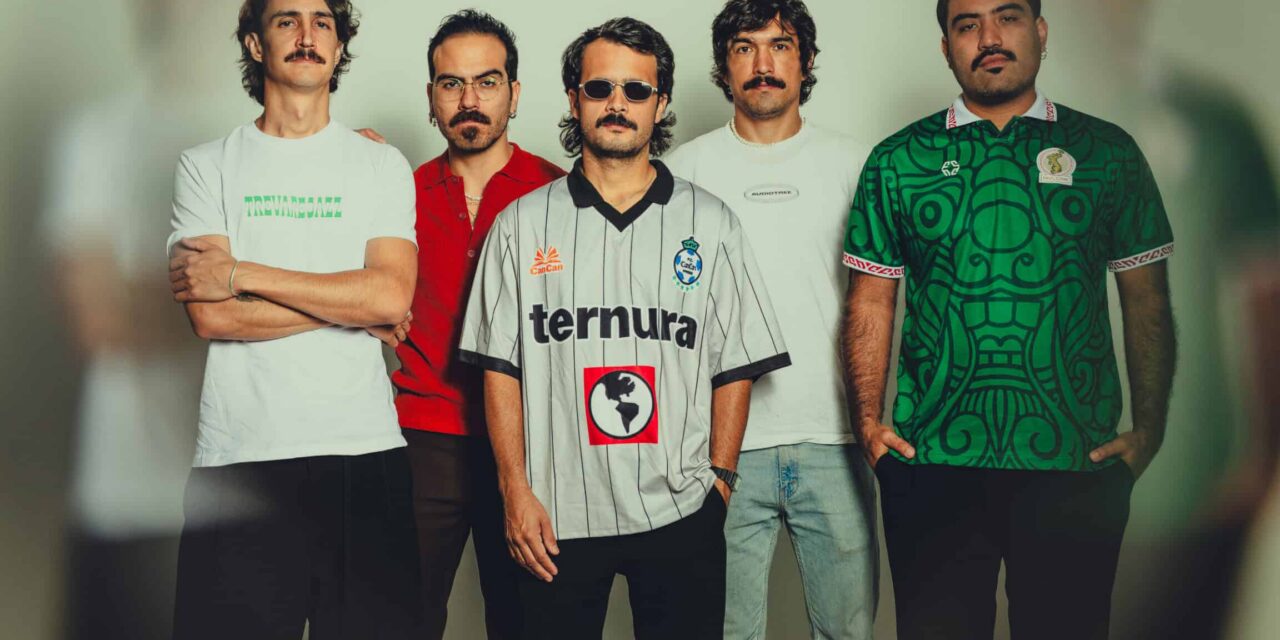
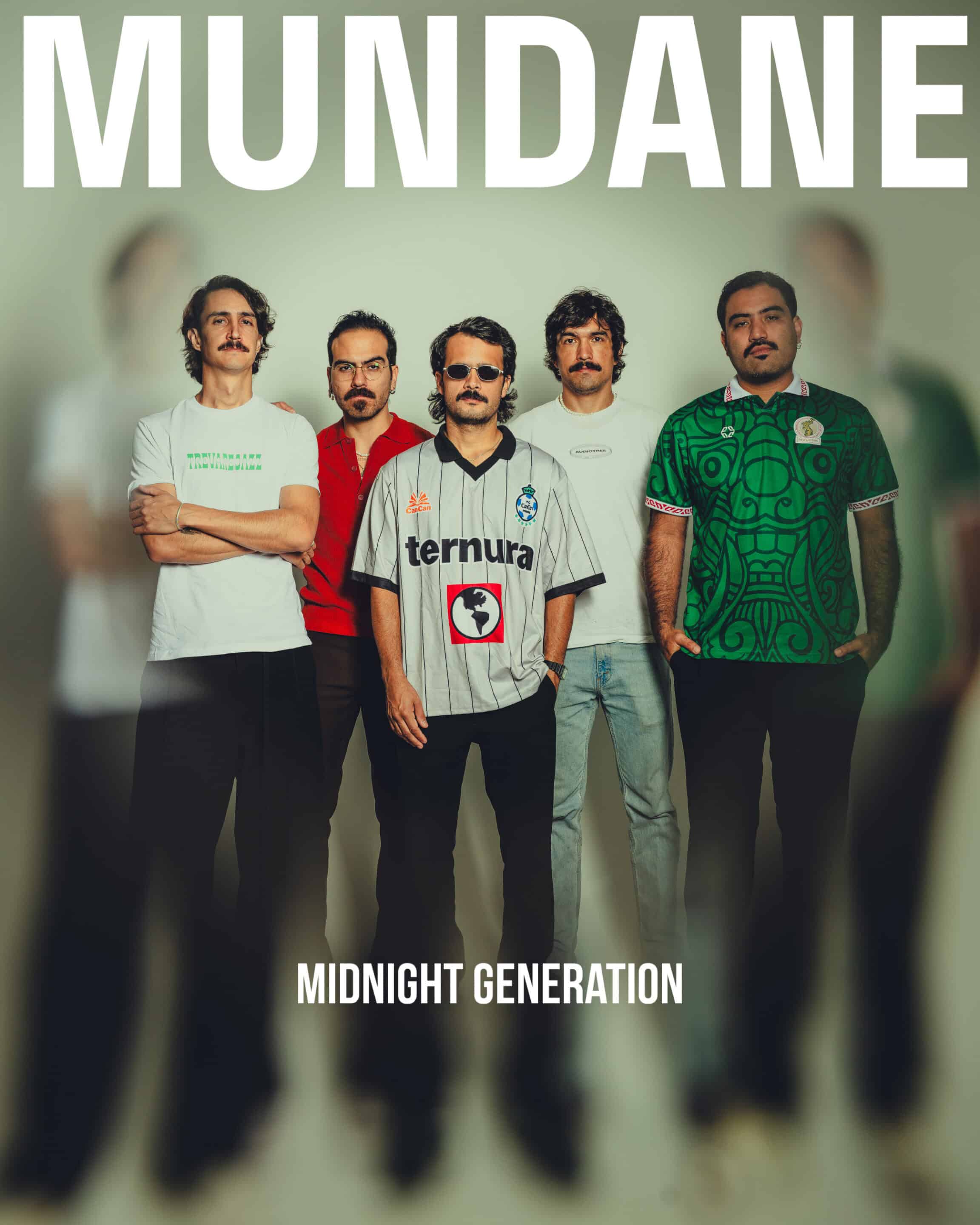
Led by singer, songwriter, and producer Fernando Mares, alongside Luis Carlos “Bica” Balderrama, Carlos Amaya, Samuel Márquez, and Diego Bustillos, Midnight Generation has built an international following by combining the nostalgic warmth of disco and funk with futuristic synthesizers and contemporary electronic production.
Their latest record, however, looks beyond the dancefloor.
“A tree grows as far down as it grows up. The part that keeps it standing is the part nobody sees,” Mares explains when describing the album’s inspiration.
It’s a fitting metaphor for a band whose growing international success has brought them closer to understanding the people, memories, and cultural influences that shaped them in the first place.
The Dancefloor as a Place to Belong
At the emotional center of ROOTED is “To Be Someone,” a track that challenges conventional definitions of success by suggesting that fulfillment comes not from what we accumulate, but from what we mean to the people around us.
Elsewhere, “Norway” transforms a fleeting romantic encounter during a European festival run into a nostalgic disco fantasy, while “Almost My Own” examines the peculiar heartbreak of a relationship that never fully materialized.
Tracks like “Rumba!” and “El Rap De Piter Pan” bring Spanish lyrics, family memories, and Mexican cultural references into the band’s retro-futuristic universe, challenging the assumption that cultural identity must be expressed through traditional musical genres.
Yet perhaps the album’s most compelling contradiction is its ability to turn uncertainty into celebration.
“Runaways” addresses instability and the anxiety of navigating an unpredictable world, while closing track “Can You Tell Me How You Feel?” reflects on collective vulnerability. Rather than abandoning their dancefloor sensibilities, Midnight Generation embraces the possibility that music can simultaneously acknowledge difficult emotions and offer temporary liberation from them.
Produced by Mares with arrangements developed alongside Florian Gouello, ROOTED arrives as the band prepares for an extensive 2027 world tour across North America, Latin America, Europe, and the UK.
We spoke with Midnight Generation about the meaning of home, the complexities of unfinished love, the evolution of Mexican identity, and why the dancefloor might be one of the few places where we can truly reconnect with ourselves.
In Conversation With Midnight Generation
Your new album ROOTED explores the idea that we often discover what truly grounds us only after we’ve been pulled away from home. What experiences inspired this concept, and how has spending so much time traveling the world changed your understanding of belonging, identity, and the things that remain constant even as your surroundings change?
Traveling to play our music around the world has brought us many blessings, and among them, the opportunity to look back at our life at home among our families, friends and partners, our pets, and everything that makes life meaningful to us.
While being away we’ve had the opportunity to create new bonds and call former strangers, friends. And while creating these connections, we can’t help but look back at the treasures that await us home as well.
Touring extensively will challenge you physically, mentally and emotionally at times, and with the right lens this provides you with an opportunity to choose how to show up every day for yourself, your teammates and the people around you.
So in a way, this has unexpectedly helped us grow in many ways we didn’t imagine. Everything can be a blessing under the right perspective.
The album’s emotional centerpiece, “To Be Someone,” suggests that fulfillment comes less from material success than from being someone the people we love can depend on. How has your definition of success evolved as Midnight Generation has grown internationally, and has the experience of achieving your professional ambitions changed what you value most in your personal lives?
Our definition of success has become one of uniting people in a common experience, which is to be able to let go of whatever feels heavy for a moment, and enjoy the joy of music together.
To dance, to sing and connect in meaningful ways has always been a core aspect of why we do what we do, and it has become even more so as we’ve been able to take our music farther away from home.
We definitely value more everything back home than we did before, that health and downtime are also sacred, and connection is a medicine.
Your music has always combined the nostalgia of disco and funk with futuristic electronic production, creating a sound that feels simultaneously familiar and contemporary. What initially drew you to these musical traditions, and how do you approach reinventing genres so deeply associated with particular cultural moments without becoming confined by nostalgia?
What drew us initially was the music that our parents listened at home when we were kids. It left an important imprint in each of us, as we grew up to enjoy it just as much as them. It later became a trademark influence in what we do today in many ways.
That said, we’ve also delved into the world of synthesizers with endless curiosity, which has led us to love them and make them an absolute part of our sound in whatever way they present themselves.
It’s in this merging of our lifelong influences and our love for synthesizers that the nostalgia mold is broken open to bring about a fresh sound that can range from the old days and into the future in a single track.
Coming from Chihuahua, Mexico, you’ve developed an international following while maintaining a musical identity that doesn’t necessarily conform to conventional expectations of what Mexican music should sound like. Have you ever felt pressure to represent your cultural background in a particular way, and how has your understanding of Mexican identity evolved as your music has reached audiences across Europe, North America, and Latin America?
We’ve had a few instances where an interviewer (from another country) has insisted to ask how our music reflects the traditional Mexican musical genres. The short answer is, it really doesn’t.
We haven’t seen this happen in Mexico, because here, we know that as a people we’re multi-faceted, multi-cultural in many ways.
We Mexicans are deep, complex and versatile for the lack of a better word, and we know that putting us in a box doesn’t really make sense.
This has become more clear to us as we’ve brought our music to other continents, and the response has been overwhelmingly warm.
Songs like “Rumba!” and “El Rap De Piter Pan” incorporate Spanish lyrics, family memories, and distinctly Mexican cultural references into your disco-funk universe. How intentional was the decision to make these elements more prominent on ROOTED, and do you see incorporating your cultural background into the music as a form of personal rediscovery or as a way of challenging the boundaries of contemporary electronic pop?
It happened organically as we explored the recurring themes of who we are and where we come from, it made perfect sense to talk about some of these things as they are undeniably a part of what home represents for us.
For us the creative process always comes from whatever stage in our life we’re currently experiencing, it’s always been an inside-to-outside process rather than a mission to impact the music industry.
However, we feel very lucky to have been able to leave a small mark out there while doing so.
“Norway” was inspired by a fleeting romantic encounter during your European festival run, while “Almost My Own” explores the emotional aftermath of a relationship that never fully materialized. What fascinates you about unfinished love stories, and do you think the temporary, constantly changing nature of life on tour intensifies the connections we make or makes it more difficult to distinguish genuine intimacy from fleeting excitement?
Unfinished love stories are something everyone can relate to, as each of us have, so we think there’s something really deep there. It’s a feeling that speaks to the core of so many of us and we find that a fascinating and complex human experience worth looking into.
As for touring and intimacy, spontaneous connections can certainly feel more intense, but genuine intimacy is built with time, effort, and vulnerability.
The willingness to be fully seen by the other person, and that is not something that really happens overnight.
There is no such thing as a perfect love that doesn’t involve friction, openness, and repair, and these are all things that are cultivated rather than spontaneous.
You’ve described the album as emerging from a period of uncertainty, with songs like “Runaways” addressing instability and “Can You Tell Me How You Feel?” reflecting anxieties about the state of the world. How do you reconcile the celebratory nature of dance music with the more unsettling realities that inspire your lyrics, and do you believe the dancefloor can function as a space for collective reflection as much as escapism?
We approach our creative process as honestly as we can, and part of that is accepting that life is not black and white, and that many things can be true at the same time.
So this is a very interesting question, because as human beings, we can for example, be experiencing grief and find beautiful moments of connection in between those times.
Music is really a beautiful medium in which these feelings can be expressed subjectively.
We also believe the dance floor is a container for whatever intention you want to give it, and more often than not it serves as a safe space to let go of what’s heavy, to become present in your mind and body, and to connect with yourself and others around you.
It’s really a healing place too if you allow it.
ROOTED was produced entirely by Fernando Mares, with arrangements developed alongside Florian Gouello, while the band’s live identity depends on the chemistry of five musicians. How does your creative process balance an individual production vision with the collective personality of Midnight Generation, and how has that dynamic evolved as your performances and recordings have become increasingly ambitious?
It’s been a really rewarding process, bringing out the best in each member of the band.
Whenever I can pull something great out of Charlie, Diego, or Bica, I always go for it.
The shows are a reflection of what we produce in the studio, but they also give us the chance to rework a lot of the arrangements, and that’s really cool.
The unexpected viral success of “Don’t Wait Up” helped accelerate your career, and you’ve since performed at major international festivals, toured with Empire of the Sun, and reached audiences far beyond Mexico. How did that sudden momentum affect your creative priorities, and what have you learned about maintaining artistic independence and a genuine connection with your audience while navigating the expectations of an increasingly global music industry?
Nothing has changed. Making music has always been a joy.
Touring internationally and having success can take away your hunger, but if you keep your feet on the ground, I think it’s almost impossible not to write something good or interesting.
There’s a compelling contrast between the title ROOTED and the reality of a band whose career revolves around constant movement, new audiences, and unfamiliar places. As you enter this next chapter, how do you hope to preserve the values and relationships that shaped Midnight Generation while continuing to evolve creatively, and what would you like listeners to understand about the people behind the music that they might not discover on the dancefloor?
As the title suggests, we have developed a better understanding of who we are and where we come from, who and what shaped us and who has supported us along the way through the years.
This more than ever is really important to us and we’ll carry this forward as we continue on our musical journey.
We’d like the people to know we’re five chill guys, down to earth that like to have a good time on and off-stage.
We love doing what we do, this is what we’re here for and that we feel extremely lucky that people out there enjoy it with us.
For a band whose identity has become synonymous with movement, ROOTED represents something of a paradox: an album about staying grounded while constantly moving forward.
But perhaps that contradiction is precisely the point.
As Midnight Generation continues its journey across international stages, the band seems increasingly aware that artistic success means little without the relationships and experiences that give it meaning.
The music remains exuberant, nostalgic, and irresistibly danceable, but beneath its shimmering synthesizers lies a more intimate realization.
Home isn’t necessarily a destination. Sometimes it’s the people who remind us who we are, the memories we carry across borders, and the music that allows strangers to feel connected, even if only for a few minutes.
And maybe that’s what the dancefloor has always been about.
Midnight Generation’s ROOTED is out now via Drop The Synthesizer Records under exclusive license to Sony Music Entertainment US Latin LLC. The band will embark on an extensive world tour in 2027.
Listen: ROOTED — Midnight Generation
Tour information: midnightgeneration.com
Photography: Rebeca Cusi.