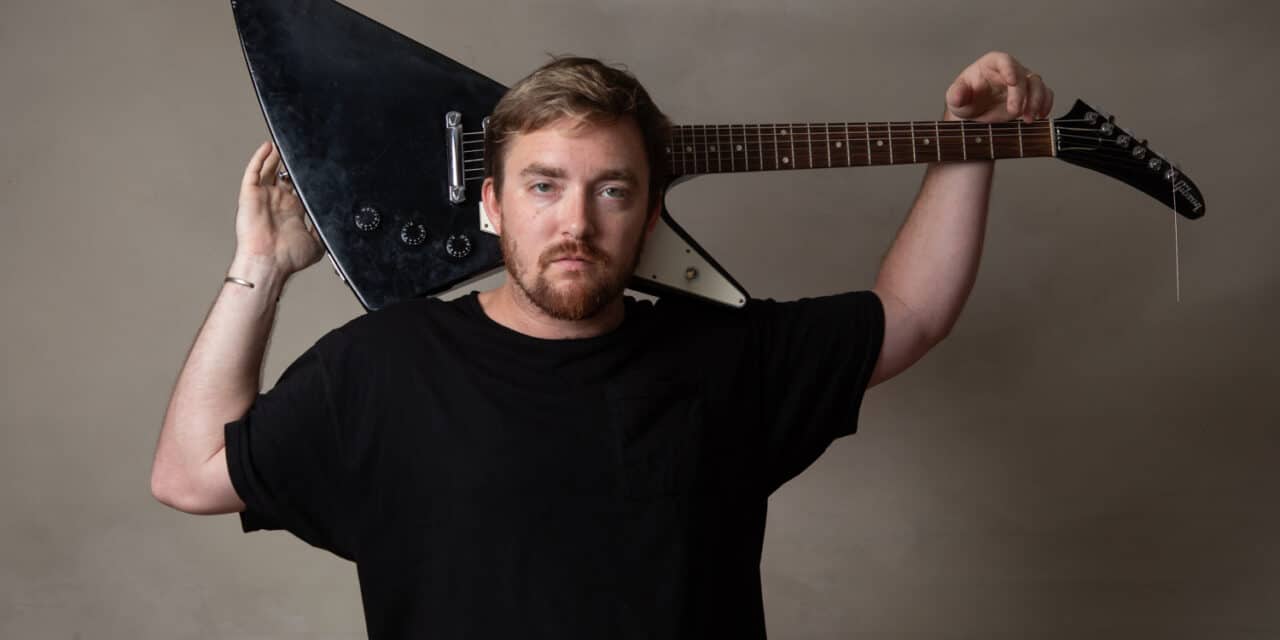
Following the release of his debut EP Summer Rain, Brooklyn-based indie punk musician Ian McFarland returns with “Problem Child,” a blistering, guitar-driven confrontation with the destructive patterns we recognize but struggle to escape. Between explosive guitar solos, DIY filmmaking, and a growing role in New York’s independent music community, McFarland discusses the uncomfortable relationship between anger and self-awareness, the creative freedom of punk rock, and why sometimes writing a song isn’t about finding redemption.
There is a particular kind of frustration that comes from knowing exactly what you’re doing wrong and continuing to do it anyway.
It’s the uncomfortable space between self-awareness and self-destruction, where recognizing a problem doesn’t necessarily mean possessing the ability, or even the willingness, to change it.
For Brooklyn-based indie punk musician Ian McFarland, that contradiction became the foundation of his latest single, “Problem Child,” out November 13, 2026.
A frantic explosion of distorted guitars, relentless rhythms, and an elaborate melodic guitar solo, the track represents one of McFarland’s most confrontational releases to date. But underneath its aggressive exterior lies something more complicated than anger alone.
“Problem Child” is about the exhausting experience of confronting your own destructive tendencies without being able to escape them.
Rather than offering a conventional narrative of personal growth or redemption, McFarland embraces the discomfort of remaining trapped inside those patterns.
The song doesn’t apologize, resolve its contradictions, or attempt to reassure the listener that everything will eventually work out.
Instead, it turns frustration into something physical.
“‘Problem Child’ is about being fucking pissed,” McFarland explains. “At yourself, at other people, at the mistakes you keep making over and over again. I wanted the song to feel like a rage room, like smashing everything in sight in blind fury rather than sitting around trying to make sense of it.”
It’s an approach that marks a notable evolution for an artist whose previous releases have explored connection, isolation, and the emotional contradictions of living in New York City.
With “Problem Child,” the introspection remains, but the emotional temperature has changed.
When Self-Awareness Isn’t Enough
McFarland’s relationship with “Problem Child” began long before the song was completed.
He had written its chorus approximately one or two years earlier but struggled to finish the verses.
The obstacle wasn’t a lack of musical ideas. It was the subject matter.
Writing honestly about self-sabotage required him to acknowledge behaviors he wasn’t necessarily comfortable confronting.
In New York, where opportunities, distractions, and temptations can feel almost limitless, that struggle takes on a particular intensity.
Depending on who you know, the city can offer nearly anything at almost any hour. For someone navigating the instability and emotional pressures of creative life, that accessibility can become both liberating and destructive.
McFarland describes the experience of repeatedly making questionable decisions despite understanding their consequences.
“There’s something particularly frustrating about recognizing your own destructive patterns while continuing to repeat them,” he says.
It’s a familiar contradiction, but one that popular music often resolves through the promise of transformation.
Songs about personal struggle frequently arrive at some form of acceptance, forgiveness, or emotional breakthrough.
“Problem Child” deliberately resists that structure.
McFarland isn’t presenting himself as someone who has successfully overcome the behavior he’s describing.
He remains uncertain whether that chapter of his life is entirely behind him.
And that uncertainty is precisely what gives the song its emotional force.
The anger isn’t simply directed at the outside world. It’s directed inward, toward the version of himself that continues to repeat the same mistakes.
He describes the song as the experience of catching yourself in the act, almost as though watching your reflection wreak havoc while being unable to intervene.
It’s a striking image of emotional paralysis.
And it helps explain why “Problem Child” sounds the way it does.
A Guitar Solo That Sounds Like Losing Control
For McFarland, the guitar has always been more than an accompanying instrument.
On “Problem Child,” it becomes an extension of the song’s psychological tension.
The track’s explosive solo draws from a range of technical approaches, incorporating aggressive bends, rapid passages, and dissonant harmonic choices that mirror the instability of its lyrical themes.
One influence McFarland references is Synyster Gates, the guitarist best known for his work with Avenged Sevenfold.
But rather than simply imitating Gates’ virtuosity, McFarland focuses on the harmonic tension that makes certain passages feel particularly unsettling.
The solo begins within a relatively familiar pentatonic framework before moving into darker and more dissonant territory.
Using C-sharp minor as its harmonic foundation, McFarland introduces notes and chord relationships that create a sense of unresolved tension.
At one point, he arpeggiates an E minor chord over a C-sharp bass note, producing the notes of a C-sharp half-diminished seventh chord.
It’s a deliberately uncomfortable harmonic choice.
The resulting sound feels unstable, as though the music is struggling against its own foundation.
McFarland also uses the physical range of the guitar to communicate the song’s emotional agitation.
Moving from the second fret to the nineteenth, the solo travels across much of the instrument’s neck.
The movement resembles pacing back and forth, alternating between drawn-out bends and bursts of technical intensity.
The result is a solo that feels expressive rather than merely decorative.
Its complexity serves the song’s emotional narrative.
McFarland ultimately chose to combine rapid passages with slower, more dissonant moments, creating a balance between technical precision and raw aggression.
He describes the result as both “shreddy and interesting.”
It’s a fitting description for a track that refuses to separate musical craftsmanship from emotional chaos.
New York City as Both Muse and Antagonist
Although “Problem Child” explores McFarland’s internal struggles, the city surrounding him remains an important part of the story.
Originally from Portsmouth, New Hampshire, McFarland has built his creative identity around the experiences of living and making music in New York.
His debut EP, Summer Rain, released earlier in 2026, explores the contradictions of modern urban life through a combination of alternative rock, indie songwriting, and early-2000s pop-punk influences.
The four-track project includes “The Booming Business of Missed Opportunities and Heartaches,” “If the Sun Never Came Up Again,” “Coffee Shops and Modern Rock,” and “Leaving New York.”
Across those songs, McFarland examines the complicated relationship between ambition, identity, nostalgia, and belonging.
“Leaving New York,” in particular, confronts the paradox of loving a city while questioning whether it remains a sustainable place for the people who contribute to its cultural identity.
“Coffee Shops and Modern Rock,” meanwhile, reflects his experiences building community through live music.
That community is central to McFarland’s work beyond recording.
As the creator and host of Scaries, a recurring live-band karaoke residency in Manhattan, he has helped establish a gathering place for independent musicians and music lovers.
With regular events at Sugar Mouse and Sour Mouse, Scaries offers a space where audiences can become participants rather than passive spectators.
It’s an extension of McFarland’s belief in the importance of live music as a communal experience.
The project also reflects a broader reality of contemporary independent artistry.
For musicians navigating an increasingly difficult economic landscape, creating opportunities for themselves and their peers can be as important as releasing records.
McFarland’s work exists at that intersection between personal expression and community-building.
Yet “Problem Child” reveals another side of his relationship with the city.
The same environment that inspires connection and creative opportunity can also amplify the impulses that make personal stability difficult.
New York becomes both a source of inspiration and a setting for self-confrontation.
Turning a Warehouse Into a Rage Room
The visual world of “Problem Child” embraces the same sense of controlled chaos.
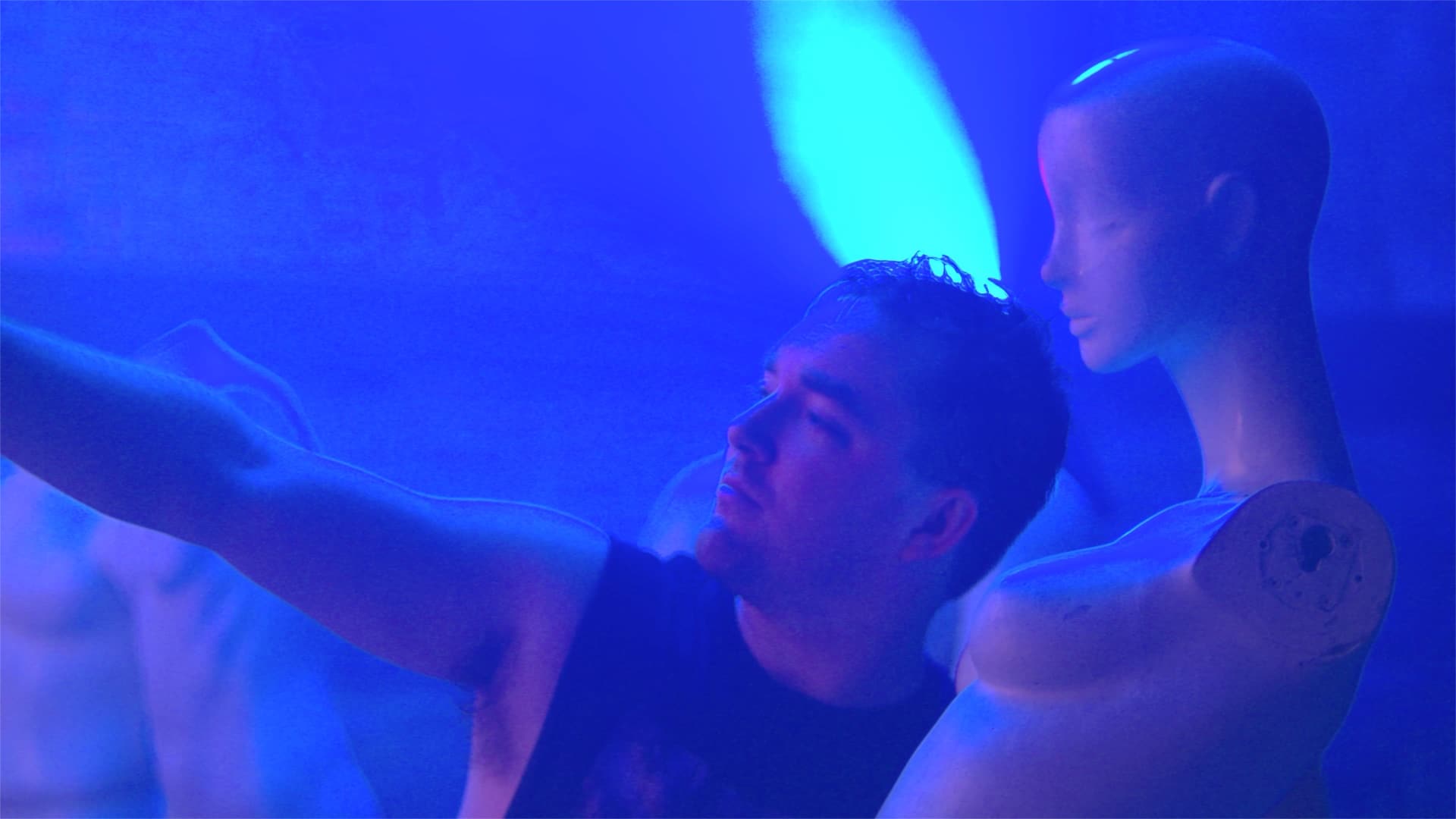
Filmed inside a Brooklyn warehouse, the accompanying music video transforms a modest production budget into a striking DIY environment.
Working with longtime videographer Aleksei Postnikov, McFarland and his band created the video using smoke, mannequins, and elaborate lighting arrangements.
The production cost only a few hundred dollars to rent the space.
Rather than relying on expensive sets or extensive production infrastructure, the team used resourcefulness and experimentation to translate the song’s emotional intensity into images.
The warehouse setting provides a fitting backdrop.
Its industrial atmosphere, combined with the presence of mannequins and dramatic lighting, reinforces the track’s themes of alienation, confrontation, and psychological instability.
The video’s DIY approach also reflects the broader ethos of McFarland’s musical community.
In a city where artistic production can become prohibitively expensive, creativity often depends on collaboration, shared resources, and a willingness to work outside conventional industry structures.
For McFarland, the process is consistent with the rawness of the music itself.
The result isn’t intended to look overly polished or restrained.
It’s supposed to feel immediate.
From Personal Anger to Collective Resistance
One of the more unexpected developments surrounding “Problem Child” is its connection to a new podcast examining artificial intelligence and its consequences for workers and creative industries.
The track will serve as the theme music for Garrison Lovely’s upcoming podcast, Organize Against the Machine.
Lovely, a former McKinsey whistleblower and author of Obsolete, has written about technology, labor, and corporate power for publications including The Nation, Jacobin, The New York Times, TIME, and Vox.
When developing the podcast, he approached McFarland in search of music that carried the confrontational energy associated with Rage Against the Machine.
Although “Problem Child” wasn’t directly inspired by the band, its aggressive guitars and unapologetic anger made it a natural fit.
The song will feature in the podcast’s opening and closing sequences, as well as throughout the program.
The collaboration introduces an interesting new dimension to the track.
Originally conceived as an intensely personal expression of frustration and self-sabotage, “Problem Child” now becomes part of a broader conversation about technological power, labor, and resistance.
The emotional vocabulary remains the same, but the context changes.
Anger directed inward can also become a vehicle for examining external systems.
It’s a reminder that music doesn’t always need to be explicitly political to resonate with political ideas.
Sometimes the emotional intensity of a song is enough to give it meaning beyond its original inspiration.
And in a cultural landscape increasingly shaped by questions about automation, artistic labor, and the future of creative work, the connection feels particularly timely.
An Independent Artist Finding His Own Voice
McFarland’s recent releases have helped establish a growing audience for his particular blend of earnest storytelling and energetic guitar-driven songwriting.
His music has received editorial support from Spotify playlists including New in Punk and Today’s Punk, as well as Apple Music’s New in Rock and New in Alternative.
His work has also earned college radio attention, with “Summer Rain” debuting at No. 189 on the NACC Top 200 and spending four weeks on the Roots Music Report Top 50 album charts, reaching No. 3 on both the Pop and Singer-Songwriter charts.
A Berklee College of Music graduate, McFarland combines formal musical knowledge with the instinctive urgency of punk and alternative rock.
That combination is particularly evident on “Problem Child.”
The song may sound chaotic, but its arrangements reveal a deliberate understanding of harmonic tension, technical guitar performance, and emotional dynamics.
It’s a reminder that punk’s apparent simplicity has never required an absence of musical sophistication.
Sometimes the most effective way to communicate frustration is through carefully constructed disorder.
We caught up with Ian McFarland to discuss the personal experiences behind “Problem Child,” the technical decisions that shaped its explosive guitar solo, and why confronting your own mistakes doesn’t always lead to a neat resolution.
In Conversation With Ian McFarland
You describe “Problem Child” as being about the frustration of repeating your own mistakes and recognizing when you’re the one sabotaging yourself. What inspired you to explore that feeling, and did writing the song change the way you think about those patterns?
I had the chorus written for a year or two before I finally found the courage to finish the verses. Accepting self-sabotage to this degree isn’t the most comfortable topic for me, or I imagine anyone, to write about.
In the Big Apple, depending on who you know, you can get just about anything under the sun at any hour of the day. That kind of access can lead to some questionable decision-making and ultimately a downward spiral. There’s something particularly frustrating about recognizing your own destructive patterns while continuing to repeat them.
I always hope my songwriting will be cathartic enough to help me overcome some of the demons I face, but I’m not sure I’m entirely past this stage of my life. I think that’s part of why the song is so angry.
It’s not necessarily about overcoming something. Sometimes it’s about being painfully aware of what you’re doing and being pissed off that you keep doing it anyway.
You mentioned Synyster Gates as a reference point for the guitar solo. What draws you to that style of playing, and how did you approach incorporating those technical elements into the song?
I think what I was originally trying to point out was the way I chose certain tensions over C# minor. The solo starts, as a lot of guitar solos do, somewhere in the related pentatonic scale, but because of the anger in the song, I wanted to introduce some nastier tensions pretty quickly.
I started incorporating elongated bends and drawing from different minor scales, with passages running up and down the fretboard in a way that almost mimics pacing back and forth. I drop as low as the second fret and climb all the way up to the nineteenth, so the solo really explores a huge range of the guitar.
I wanted it to feel melodic but also unstable. I remember struggling on deciding whether to incorporate really quick passages or really nasty drawn-out tensions. I ended up doing both, and ultimately I’m proud of how balanced the solo is. I think my musician friends would agree that it’s a nice combination of shreddy and interesting.
The section where I’d really cite Synyster Gates as an influence is when I’m arpeggiating an E minor chord over C# in the bass. In jazz theory, that creates a C# minor seven flat five chord, which has these real gross, dark, dissonant qualities that are perfect for this song.
I think the only thing I could’ve added to really nail his style would’ve been some sweep picking, but I’m not sure that would’ve served the song.
There’s a pretty candid sense of self-awareness in “Problem Child,” even as it channels so much anger. How do you balance those two sides when writing about personal experiences?
I write both when I’m going through it and in the aftermath. The chorus actually came out of an energized writing session. I forget what song I was originally trying to emulate, but I know the C7 in the chorus came from “Crazy” by this John Feldmann-produced band called Makeout.
Our version doesn’t incorporate nearly as much of that song’s production or mix, especially since Jared and I make our recordings together in his practice studio and at his apartment. But I think that’s where the initial idea came from. Once I start writing, though, things tend to just fall out.
Anger and self-awareness are two things that, for me, have a really hard time coexisting. It’s almost like being caught in a lie, which I think is one of the worst feelings in the world because there’s so much shame attached to it. You know exactly what you’ve done, and suddenly there’s nowhere to hide from it.
I think that’s where “Problem Child” lives. It’s not a redemption story. It’s more like catching yourself in the act in a mirror, but you stay stuck while the version of you in a mirror wreaks havoc.
The Uncomfortable Honesty of “Problem Child”
What makes “Problem Child” particularly compelling is its refusal to offer an easy answer.
In a culture that frequently treats personal growth as a linear process, McFarland’s latest single acknowledges something far less reassuring.
Recognizing a destructive pattern doesn’t necessarily mean being able to stop it.
Understanding your mistakes doesn’t automatically prevent you from repeating them.
And sometimes the distance between knowing better and doing better can become a source of overwhelming frustration.
For McFarland, that frustration becomes the song’s driving force.
The distorted guitars, dissonant harmonies, and frantic solo aren’t simply stylistic choices designed to make the track sound aggressive.
They express the emotional contradictions at the center of its story.
The music moves between control and instability, technical precision and explosive release.
Much like the experience of self-sabotage itself, it feels simultaneously deliberate and difficult to contain.
There’s also something revealing about the way McFarland describes his songwriting process.
He hopes that writing about his struggles will help him move beyond them, but he doesn’t pretend that catharsis guarantees transformation.
That uncertainty makes the song feel more honest.
Rather than presenting a completed journey toward self-improvement, “Problem Child” documents a moment of confrontation.
It’s the sound of an artist recognizing something uncomfortable about himself and refusing to disguise it.
And perhaps that’s where its emotional power lies.
Not every song about personal struggle needs to end in redemption.
Sometimes the most meaningful thing an artist can do is acknowledge the contradiction, turn up the amplifier, and allow the frustration to speak for itself.
For Ian McFarland, “Problem Child” is that moment.
And with its explosive guitars, unapologetic anger, and uncomfortable self-awareness, it offers a striking new chapter in his evolving relationship with music, New York City, and himself.
“Problem Child” by Ian McFarland is out November 13, 2026.
Watch: “Problem Child” Official Music Video
Listen: Summer Rain EP
Explore: “Leaving New York” | “Coffee Shops and Modern Rock”
Photography and Music Video: Aleksei Postnikov