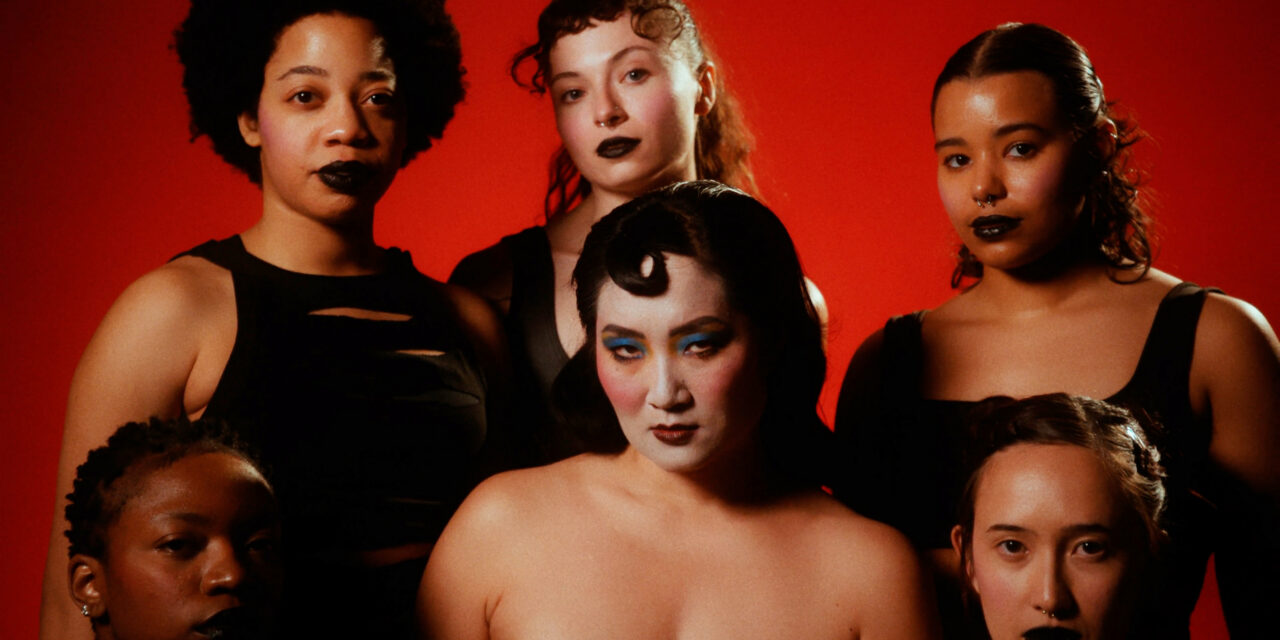
After years of balancing a successful comedy career with her first love, music, Charlene Kaye is reclaiming her creative identity through King Mei Mei. With explosive debut single “Slow Strobe Light,” the singer, guitarist, and comedian transforms a painful chapter of her life into an electrifying celebration of self-discovery, vulnerability, and the beauty of growing at your own pace.
What happens when the world begins to recognize you for something other than the thing you originally set out to do?
For Charlene Kaye, the answer involved creating an entirely new artistic universe.
A prolific songwriter, formidable guitarist, and increasingly recognizable comedian, Kaye has spent much of her adult life navigating the unpredictable relationship between artistic identity and public perception. Having built a devoted following through years of performing and releasing music, she unexpectedly found herself becoming better known for her comedy than for the musical career she had spent decades cultivating.
Her viral sketches, including “Every Taylor Swift Song,” introduced her to hundreds of thousands of new followers. Her comedic work earned recognition from publications including Rolling Stone, which described her as a breakout comedy star. But as her audience grew, so did an unusual creative dilemma.
People were beginning to recognize Charlene Kaye the comedian without necessarily knowing Charlene Kaye the musician.
Rather than attempting to reconcile those identities under a single name, she decided to give her music a new home.
Enter King Mei Mei.
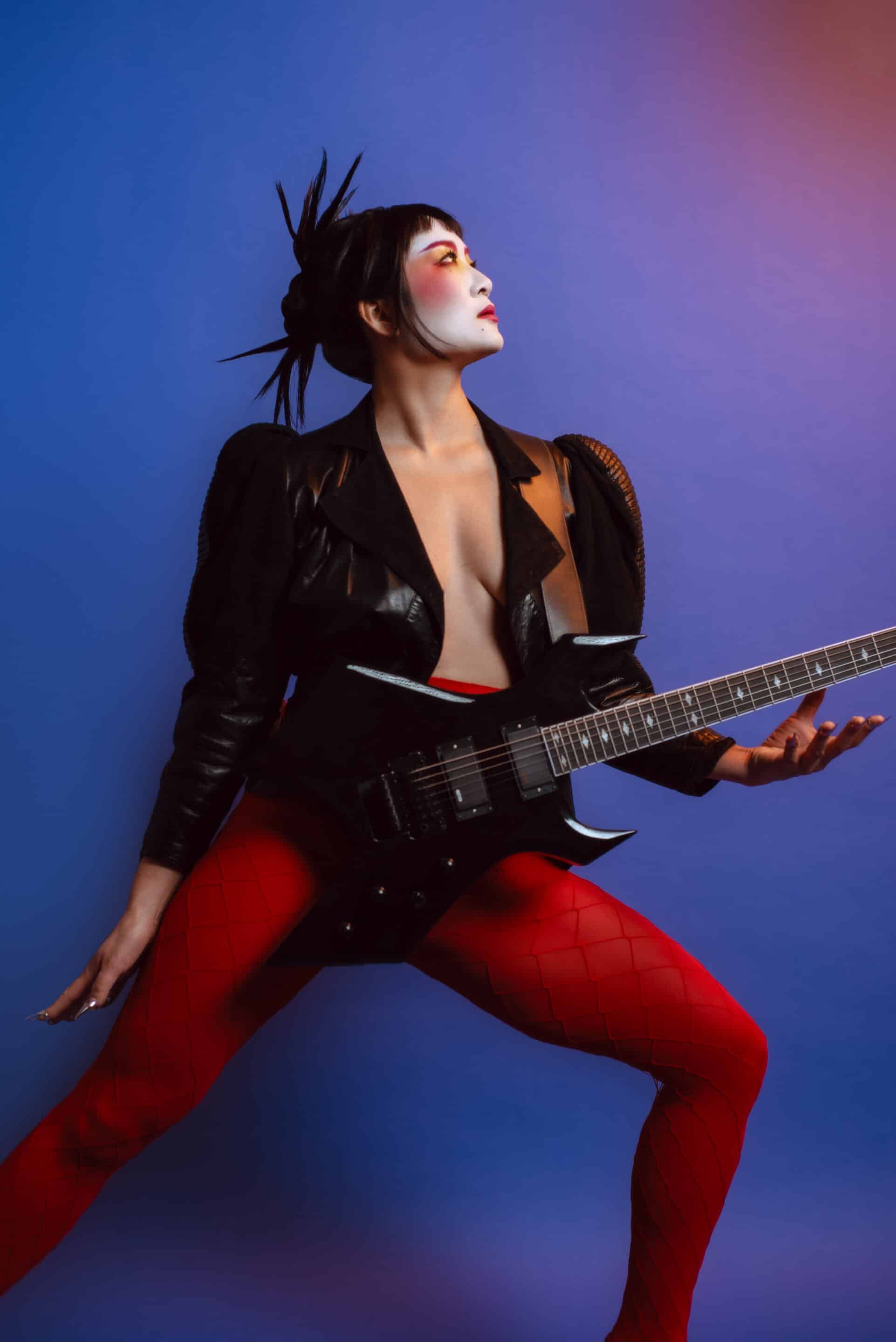
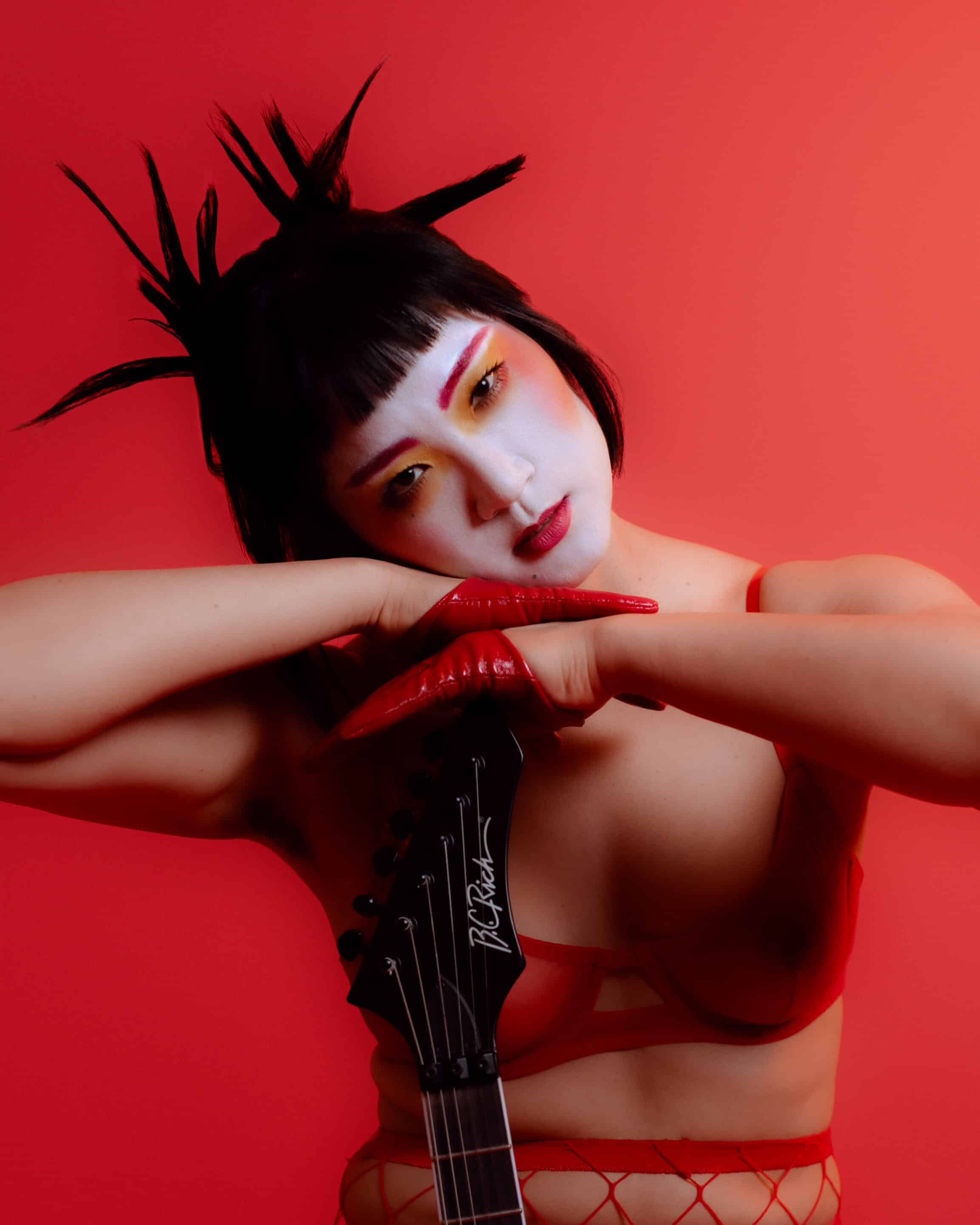
A glam punk project that embraces Kaye’s love of guitar-driven rock, theatrical performance, queer expression, and unapologetic individuality, King Mei Mei represents both a reinvention and a return to the creative instincts that first defined her.
Its debut single, “Slow Strobe Light,” introduces that world through an explosive combination of emotional vulnerability, distorted guitars, theatrical visuals, and an intensely personal story about love, fear, and learning to trust yourself.
Premiered by Atwood Magazine, the song marks the beginning of a new chapter that Kaye has spent four years developing.
But underneath the larger-than-life presentation lies something profoundly intimate.
“Slow Strobe Light” was written during one of the most emotionally difficult periods of her life, shortly after the end of her first queer romance.
Years later, the song has taken on a meaning she never could have anticipated.
Crowning the Younger Self
The name King Mei Mei is more than a memorable artistic moniker.
It’s a declaration of identity.
Kaye’s Chinese name is Mei Lin, meaning “beautiful forest,” while mei mei means “little sister” in Chinese. By placing the word King in front of it, she creates a playful contradiction that reflects her relationship with gender, performance, and personal history.
“I love the idea of crowning my younger self, who guides every creative decision I make,” she explains. “And I love that the ‘King’ nods to my queerness and my love of genderbending, drag and glam rock.”
The name captures the tension between vulnerability and power that runs throughout the project.
There is something particularly compelling about the idea of crowning a younger version of yourself rather than leaving that person behind.
For artists, reinvention is often presented as a rejection of the past. A new sound, a new aesthetic, a new identity: each transformation is framed as an opportunity to become someone entirely different.
King Mei Mei suggests the opposite.
The project is about reconnecting with the parts of yourself that existed before expectations, professional obligations, and external recognition began influencing your decisions.
For Kaye, who spent much of her twenties and thirties as a singer-songwriter and touring guitarist, music has always been the foundation of her creative identity.
Her earlier releases under Charlene Kaye and KAYE established her as a musician long before comedy became a central part of her career.
Yet the unexpected success of her comedic work ultimately gave her something valuable: the freedom to make music without expecting it to fulfill every professional ambition.
King Mei Mei exists in that space.
It’s an opportunity to embrace the strange, theatrical, emotional, and sometimes contradictory dimensions of her personality without having to make them fit into the identity audiences already associate with her.
“Slow Strobe Light”: When Love Arrives Before You’re Ready
At the emotional center of King Mei Mei’s debut is a song about the difficult realization that loving someone and being ready to love them are not necessarily the same thing.
“Slow Strobe Light” emerged from the aftermath of a breakup that left Kaye questioning her ability to accept intimacy.
She had met someone who felt like a soulmate. Their connection was intense, immediate, and deeply meaningful.
It was also her first queer romance.
But as the relationship became more serious, she found herself retreating.
Rather than allowing the connection to develop, she pushed the person away.
“I had met someone who felt like a soul mate, and right as things felt serious, I crashed out and ran away like I ran away from every other person I got close with over the last several years,” she recalls.
The song was written just a week after the breakup, while Kaye was staying with her sister in Michigan.
She was experiencing disturbing nightmares, including recurring dreams about being trapped inside a frightening house and losing control as her cat escaped through an open door.
One day, she stepped onto her sister’s porch and wrote “Slow Strobe Light” in approximately twenty minutes.
The song seemed to arrive almost fully formed.
For Kaye, it immediately became the emotional centerpiece of the album she was creating.
The track channels that turmoil into an explosive alternative rock sound, pairing emotionally charged vocals with forceful guitar work and a sense of urgency that reflects the intensity of the experience behind it.
But the most extraordinary part of the story happened after the song was written.
Three years later, Kaye and the person who inspired it reconnected.
They are now happily together.
The reunion fundamentally changed her relationship with the song.
What began as a document of heartbreak and emotional self-sabotage became a reminder that personal growth doesn’t always follow the timeline we imagine for ourselves.
Sometimes the right relationship arrives before we’re ready to sustain it.
And sometimes stepping away, however painful, becomes part of the process of learning how to return.
“Sometimes the best things in life happen excruciatingly slowly, patiently, at nature’s pace,” Kaye says.
It’s a particularly meaningful realization for someone who describes herself as intense, deeply emotional, and naturally inclined to move quickly.
Rather than presenting love as a transformative force that instantly resolves personal struggles, “Slow Strobe Light” acknowledges the more complicated reality of emotional development.
Growth can be uncomfortable. Healing can be slow. And the right decision doesn’t always feel right in the moment.
Building a World of Glamour, Chaos, and Transformation
If “Slow Strobe Light” explores vulnerability through its lyrics, its accompanying music video transforms those feelings into a theatrical visual experience.
Directed by Anima Works, the creative team of Hil Steadman and Jake DeNicola, the video introduces the visual language of King Mei Mei through a dramatic progression from darkness and isolation toward color, movement, and spectacle.
The opening sections evoke the desolation and emotional instability that inspired the song.
But as the music intensifies, the visual world begins to change.
The defining moment arrives with the guitar solo, when Kaye reveals an elaborate cape, signaling a transformation into the full King Mei Mei persona.
The cape was handmade by costume designer Lara De Bruijn, with stylist Monty Montan playing an important role in developing the project’s aesthetic.
For Kaye, the garment has become one of her most treasured possessions.
The visual transformation feels particularly appropriate for an artist whose identity draws from glam rock, drag, and gender-fluid performance traditions.
In those worlds, clothing is rarely just decoration.
Costume becomes a means of revealing something about the person underneath.
The theatricality allows artists to exaggerate, explore, and ultimately express aspects of themselves that might otherwise remain hidden.
When the video premiered at King Mei Mei’s debut show in Brooklyn, the audience erupted as the cape opened.
It was an unforgettable moment for Kaye, who was able to experience the audience’s reaction in real time.
That response also illustrates something essential about King Mei Mei.
This is not simply a recording project.
It is an artistic world designed to be experienced through sound, movement, costume, and live performance.
The Unexpected Freedom of Having Two Creative Lives
Kaye’s transition into comedy might initially appear to have complicated her musical identity, but she now sees the relationship between the two disciplines differently.
For years, music was her primary profession.
That meant songwriting, touring, performing, and releasing records existed alongside the practical pressures of building a sustainable career.
When comedy unexpectedly became her main professional focus, those pressures began to shift.
Rather than requiring her music to deliver commercial success or external validation, she could approach it as a space for experimentation.
That freedom has become central to King Mei Mei.
Comedy allows her to explore satire, irreverence, and the absurdities of everyday life.
Music offers a different outlet: one where she can embrace theatricality, emotional intensity, punk performance art, and the more unconventional corners of her imagination.
The two identities don’t need to compete.
They can coexist.
In fact, having both has allowed Kaye to develop a more complete understanding of herself as an artist.
It’s a compelling alternative to the increasingly common expectation that creative people must maintain one recognizable personal brand across every medium.
Kaye’s experience suggests that artistic identity can be expansive rather than restrictive.
Sometimes, giving different parts of yourself their own space is what allows them to flourish.
And after four years of developing King Mei Mei’s self-titled debut album, Kaye is finally preparing to share the larger world behind the project.
She describes the record as the most honest reflection of who she is today.
Freaky, fun, dark, sexy, and built around the kind of guitar playing that first established her as a formidable musician, the album promises to push the project’s theatrical and musical identity even further.
With its full release planned for 2027, “Slow Strobe Light” is only the beginning.
We caught up with Charlene Kaye to discuss the creation of King Mei Mei, the deeply personal story behind her debut single, the relationship between comedy and music, and why becoming yourself sometimes means allowing life to unfold at its own pace.
In Conversation With Charlene Kaye
Congratulations on launching King Mei Mei! What inspired you to step into this new musical moniker after your established work in comedy and music?
King Mei Mei is my homecoming to music after I accidentally became a comedian four years ago.
Music is my first love. I was a singer-songwriter and touring guitarist for most of my twenties and thirties. I released music as Charlene Kaye and also as KAYE, but then when I started becoming more known as “Charlene Kaye, the comedian,” I started to want a different container for my music.
The name King Mei Mei came to me really quickly. Mei Mei means “little sister” in Chinese. I love the idea of crowning my younger self, who guides every creative decision I make. And I love that the “King” nods to my queerness and my love of genderbending, drag, and glam rock.
“Slow Strobe Light” makes a huge statement right out of the gate. Can you walk us through the creative process and emotional core behind this track?
I was a week out from this breakup, heartbroken, having all these horrible nightmares of being trapped in this creepy house. My cat escaping through the door is a recurring dream I’ve had for years, something about losing control.
I was staying with my sister in Michigan. I went out on her porch and I wrote this song in like twenty minutes. It just spilled out of me. And instantly I knew it was going to be the emotional centerpiece of the record.
I think when I look back on this song when I’m older, I’m going to remember it as the document where I really became myself.
When I wrote it four years ago, I had just broken up with someone who felt like a soulmate. It was my first queer romance. We only dated for two months, and it was magic, but I just couldn’t let my guard down and commit. I wasn’t ready. I was scared and I pushed him away out of self-preservation.
I never in a million years could have predicted then that three years later, we would reconnect, and now we are happily together.
Obviously I’m not fixed and I still have LOTS of growing to do, but this song is a reminder that sometimes you have to take the time you need to grow, even though it can be incredibly painful.
It’s a reminder that the real is the right way, even though it might not feel like it at the time.
Sometimes the best things in life happen excruciatingly slowly, patiently, at nature’s pace.
Which is very hard for me because I’m a very intense person and I feel deeply and want to move fast, often at my own expense.
The accompanying music video is filled with incredible energy, color, and dance. How did the concept for the video come together, and what was it like bringing that visual side of King Mei Mei to life?
For the “Slow Strobe Light” music video, I worked with this incredible director/DP team called Anima Works (Hil Steadman and Jake DeNicola), and we knew that cape reveal needed to be a show-stopping moment.
The first half of the video is very desolate, dark, and moody, and we knew we wanted to signal some kind of transformation into the colorful King Mei Mei world when the guitar solo hits.
My stylist, Monty Montan, was such a big part of building that world. My costume designer Lara De Bruijn stitched that cape by hand. It’s one of my most treasured possessions.
When we premiered the music video at our debut show in Brooklyn, everyone screamed when the cape flew open. It was so cool to be in the room hearing people’s reactions in real time.
How do you feel your background in stand-up comedy influences your songwriting and overall artistic approach for this new project?
My background is actually in music! Stand-up comedy is relatively new. I’ve only been doing it for the last four years, which is crazy.
I think the fact that comedy is my main career now (which is crazy that I’m saying that) allows me to put a lot less pressure on my music to provide me results or acclaim or whatever. It can just be a space of joy and exploration.
I love that I have multiple buckets to put my multiple facets of expression.
I can have my satirical, irreverent, crass, joke-cracking self with my comedy, and I can put my weirdo, punk performance art stuff in the King Mei Mei bucket.
Having both feels like a more whole representation of myself.
With “Slow Strobe Light” out in the world, what can fans expect next from King Mei Mei?
This is just the beginning!
I’ll be releasing many more songs and visuals and the full album in 2027, which I cannot wait for you all to hear.
Becoming Yourself Is Not Always a Straight Line
There is a particularly striking parallel between the emotional journey behind “Slow Strobe Light” and the creation of King Mei Mei itself.
Both emerged from a period of uncertainty.
Both required Kaye to confront the limitations of an identity she had grown accustomed to inhabiting.
And both ultimately became opportunities to embrace something more honest.
In her personal life, that meant recognizing that emotional intimacy requires a willingness to be vulnerable, but also accepting that readiness cannot always be forced.
In her artistic life, it meant acknowledging that the success of her comedy career did not have to come at the expense of her musical identity.
Instead of choosing between the two, she created a new space in which her music could exist without compromise.
There is something beautifully contradictory about a project called King Mei Mei, a name that combines power and vulnerability, masculinity and femininity, personal history and theatrical reinvention.
But perhaps those contradictions are precisely the point.
The most interesting artists rarely fit neatly into the categories that audiences or industries construct around them.
They exist somewhere between identities, influences, and experiences, continually discovering new ways to express themselves.
For Charlene Kaye, King Mei Mei is not an attempt to erase what came before.
It’s an opportunity to bring more of herself into the present.
And with “Slow Strobe Light,” she has created a debut that captures the complicated beauty of that process: a song born from heartbreak that eventually became a celebration of patience, love, and personal growth.
Sometimes the most important transformation isn’t about becoming someone new.
It’s about finally giving yourself permission to be everything you already are.
King Mei Mei’s debut single “Slow Strobe Light” is available now, with more music, visuals, and a self-titled debut album planned for 2027.
Listen: “Slow Strobe Light”
Watch: Official Music Video
Photography: Anima Works / Liz Fang
Music Video Direction: Anima Works (Hil Steadman and Jake DeNicola)
Styling: Monty Montan
Costume Design: Lara De Bruijn