Grammy-nominated artist K.Flay returns to her rock roots with “Ants” and “Blood Cells,” two visceral tracks that explore the contradictions of modern life, from the destructive nature of power to the complexities of personal transformation. Nearly a decade after her breakthrough album Every Where Is Some Where, the musician reflects on hearing loss, sobriety, independence, and the freedom of creating music without expectations. In conversation with MUNDANE, she discusses the importance of embracing imperfection, confronting hypocrisy, and discovering a new relationship with sound.
For K.Flay, making music has become less about finding answers and more about learning to live with difficult questions.
The Grammy-nominated songwriter, born Kristine Meredith Flaherty, has spent much of her career navigating the intersection of alternative rock, hip-hop, electronic experimentation, and deeply personal storytelling. But her latest releases, “Ants” and “Blood Cells,” signal a particularly revealing chapter.
Heavy guitars, gritty production, and raw performances define a sound that feels increasingly connected to her live shows and personal musical instincts.
Following her 2023 album MONO, which emerged after sudden sensorineural hearing loss left her deaf in her right ear, K.Flay has been reconsidering not only her relationship with music, but also her understanding of herself.
Now creating as a fully independent artist, she’s embracing a more instinctive approach, one that values imperfection, emotional ambiguity, and creative freedom.
“I think the sonic landscape definitely gets clearer,” she tells MUNDANE of her two latest songs. “It’s heavy, gritty, alive.”
“Ants”: The Contradictions of Power
With “Ants,” released through ONErpm, K.Flay examines the destructive nature of power, particularly the ways corporations, governments, and billionaires shape the world around us.
But rather than positioning herself as an innocent observer criticizing those in control, she turns the question inward.
The song’s central metaphor is deceptively simple: even someone who feels powerless within larger political and economic systems possesses enormous power over something smaller.
An ant, for example.
“It’s about the destructive nature of power,” she explains. “It’s an expression of the disillusionment I feel when I look out at the world right now.”
Yet the song also acknowledges her own participation in systems of destruction.
For K.Flay, that self-examination is essential.
“The point of the song isn’t to create a simple us vs. them binary,” she says. “That feels both lazy and untrue.”
Instead, she believes understanding oppression requires recognizing the ways individuals participate in, and sometimes benefit from, the systems they criticize.
That includes humanity’s relationship with the natural world.
“We rarely think about our destruction of the natural world as a form of oppression. But it is.”
It’s a perspective that challenges the comfort of moral certainty.
K.Flay isn’t interested in presenting herself as someone who has escaped contradiction. She wants to acknowledge it without becoming paralyzed by guilt.
“I think it’s been a good reminder to engage with my own hypocrisy,” she explains. “And not be overwhelmed with shame because of my own hypocrisy, but instead to acknowledge it and see how I can make a change.”
The result is a song that raises uncomfortable questions without pretending to resolve them.
Returning to Something Human
The sound of K.Flay’s new music is equally deliberate.
Drawing on the rawness of early Nine Inch Nails, Yeah Yeah Yeahs, and heavy alternative rock, the tracks prioritize physical performances, distorted guitars, and an almost tactile production quality.
For K.Flay, that direction reflects a growing desire for music that feels unmistakably human.
“I’m increasingly drawn to things that feel human, slightly flawed, analog,” she explains.
She sees that attraction partly as a response to the endless stream of carefully curated and generated content dominating contemporary digital culture.
Rather than pursuing immaculate production, she wants to capture the imperfections and energy of real performances.
“We aimed to capture real performances with the vocals and all of the instruments, to bring my recorded music closer to my live show.”
But the shift is also deeply personal.
After years of experimenting across genres, K.Flay finds herself making music that increasingly resembles what she actually enjoys listening to.
“My own music getting closer to my personal taste, I guess.”
That simplicity is significant for an artist whose career has included major-label releases, radio success, Grammy nominations, and collaborations with musicians including Tom Morello, Travis Barker, and The Prodigy.
The new direction isn’t necessarily about reinventing herself.
It’s about removing the distance between her instincts and her work.
Hearing Loss Changed Everything
In 2022, K.Flay experienced sudden hearing loss in her right ear, an event that fundamentally changed her relationship with sound.
Her subsequent album, MONO, emerged in the aftermath of that experience.
Now, with more time to process what happened, she describes her relationship with hearing as simultaneously complicated and deeply meaningful.
“My relationship to sound is unbelievably different,” she says. “It’s fraught and sensitive and grateful.”
Approximately 18 months before this conversation, she received a cochlear implant, beginning another stage of adapting to sound.
Because she now processes a digital signal on one side and natural hearing on the other, listening requires a different kind of attention.
“My brain has been relearning how to process audio input on my right side,” she explains.
“Sound is just… difficult.”
Yet the experience has also changed the way she approaches her craft.
“Weirdly my hearing loss has 100% made me a better musician and vocalist,” she says. “I’m more dialed because I have to be.”
It’s a striking reflection on the relationship between limitation and creativity.
The experience hasn’t made music easier. But it has required K.Flay to become more attentive, deliberate, and engaged with the physical experience of making sound.
And that heightened awareness has become part of the identity of her latest recordings.
Independence and a Different Kind of Ambition
Nearly a decade after her breakthrough 2017 album Every Where Is Some Where and its defining single “Blood in the Cut,” K.Flay finds herself reconsidering what success actually means.
Her career has already included many of the milestones traditionally associated with musical achievement.
Grammy nominations.
Major-label relationships.
International touring.
High-profile collaborations.
But independence has allowed her to redefine her priorities.
“Independence has both broadened the scope of my ambition and reoriented it,” she explains.
Rather than measuring success exclusively through scale, she is increasingly interested in deepening the experiences that make music meaningful.
That means developing closer relationships with fans, making live performances more energizing, creating compelling visual worlds, and working with collaborators she genuinely loves.
“Can I engage with the core elements of being a musician more intensely?” she asks.
The question reflects a shift from external validation toward creative fulfillment.
For K.Flay, independence isn’t a retreat from ambition.
It’s an opportunity to pursue a different kind of ambition, one centered on connection, authenticity, and artistic satisfaction.
“When you are inhabiting yourself, you are free,” she says.
And that freedom is becoming increasingly central to her music.
From “Blood in the Cut” to “Blood Cells”
The relationship between K.Flay’s past and present becomes especially revealing when comparing two songs separated by nearly a decade.
Her 2017 breakthrough “Blood in the Cut” and the newer “Blood Cells” share an evocative image, but reflect very different emotional perspectives.
For K.Flay, the contrast captures years of personal transformation.
“Holy fuck so much has happened in those years,” she says.
Both songs reveal an artist who continues searching for emotional release and understanding.
But their underlying narratives have changed.
“Blood in the Cut is about a man. Blood Cells is about a woman,” she explains.
“Blood in the Cut is about self-destruction. Blood Cells is about self-discovery.”
It’s a concise but powerful description of artistic growth.
The intensity remains.
The desire for catharsis remains.
But the perspective has evolved.
Where earlier work explored the destructive dynamics of a relationship, the new material turns toward identity, self-understanding, and the possibility of transformation.
For K.Flay, that evolution doesn’t require abandoning the person she once was.
It means recognizing how much life has changed while remaining connected to the creative instincts that have always driven her.
Making Music Without a Rulebook
One of the most significant changes in K.Flay’s creative philosophy is her growing rejection of expectations.
She no longer feels particularly interested in what a song is supposed to be about or how it should be structured.
Instead, she’s allowing her personal taste and perspective to guide the process.
The shift reflects a deeper realization about music’s role in her life.
“What I’ve learned about myself is that I NEED to make music,” she explains.
“Before, I felt that I loved to make music. But I need to make it in a real way now, to understand myself and the world.”
That distinction speaks to the urgency behind her current work.
Music isn’t simply a professional activity or creative outlet.
It’s a way of processing experience.
A means of examining contradictions.
And a space where uncertainty can exist without demanding immediate resolution.
That philosophy is evident in both “Ants” and “Blood Cells.”
Neither song attempts to present a single definitive interpretation.
Instead, they invite listeners into the complexity of K.Flay’s thinking.
And for an artist who has experienced profound personal and professional changes, that openness feels particularly meaningful.
Finding Freedom in the Unfinished
With “Ants” and “Blood Cells,” K.Flay isn’t simply returning to a heavier sound.
She’s embracing a more direct relationship with herself.
The distorted guitars and raw performances reflect her desire for music that feels alive and imperfect.
The lyrics reveal an artist willing to confront her own contradictions rather than retreat into easy conclusions.
And her independence has created space to redefine ambition around connection, collaboration, and creative fulfillment.
Perhaps most importantly, she’s learning to accept that growth doesn’t necessarily mean finding certainty.
Sometimes it means becoming more comfortable with ambiguity.
Recognizing hypocrisy without surrendering to shame.
Acknowledging limitations without allowing them to define every possibility.
And understanding that the person making music today doesn’t have to be the same person who made it ten years ago.
For K.Flay, the search for catharsis continues.
But the direction has changed.
From self-destruction toward self-discovery.
From external expectations toward personal instinct.
And from making music because she loves it to making music because she needs it.
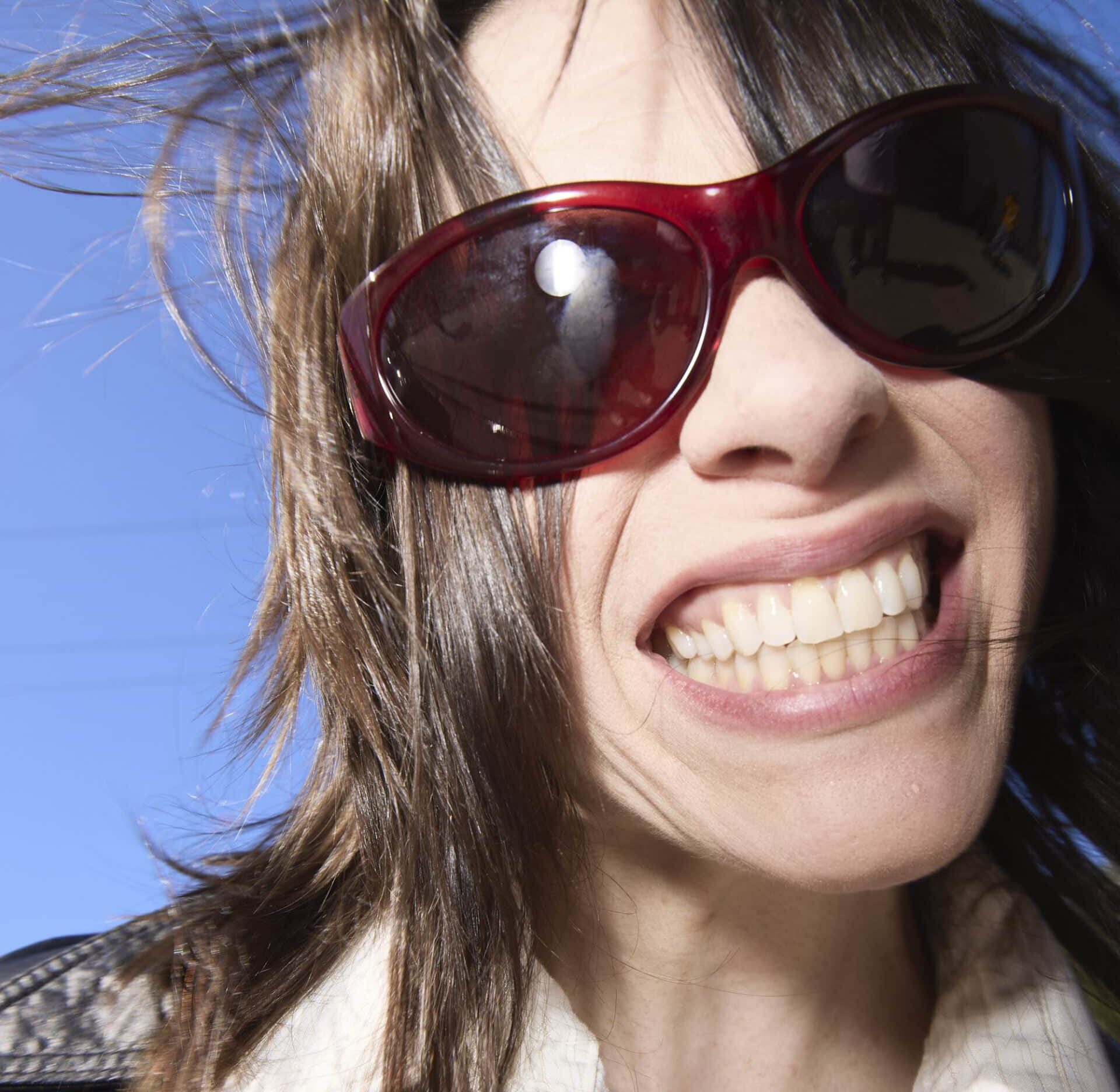
“Ants” and “Blood Cells” introduce a chapter that feels heavier, more human, and more intimately connected to the artist behind it.
And perhaps that’s what makes this new era so compelling.
K.Flay isn’t trying to become someone else.
She’s getting closer to herself.
With “Blood Cells” arriving after “Ants,” what do you think becomes clearer about the world of the new music once people have heard both songs?
i think the sonic landscape definitely gets clearer — it’s heavy, gritty, alive. we aimed to capture real performances with the vocals and all of the instruments, to bring my recorded music closer to my live show. i also think both songs are situated in sort of ambiguous lyrical territory, in that there’s not a clear take per se. which for me is an exciting place to be.
“Ants” looks at power on an enormous scale—corporations, governments, wealth—but then brings the idea back down to something as ordinary as stepping on an ant. Why was it important to implicate yourself in the song rather than simply pointing the finger at people with more power?
the point of the song isn’t to create a simple us vs. them binary. that feels both lazy and untrue. i believe that truly understanding the systems that oppress us begins with an examination of our complicity and the ways in which we sometimes benefit from them. so it felt important to turn the narrative a little bit upside down. and not for nothing, we rarely think about our destruction of the natural world as a form of oppression. but it is. and that feels more important to acknowledge than ever before.
There’s an interesting contradiction in “Ants”: we can feel powerless within larger systems while simultaneously holding enormous power over something else. Has making this song changed the way you think about your own participation in systems you disagree with?
i think it’s been a good reminder to engage with my own hypocrisy. and not ride on a high horse. and not be overwhelmed with shame because of my own hypocrisy, but instead to acknowledge it and see how i can make a change.
Sonically, this era feels physical and deliberately direct, with guitars, distortion and a kind of tactile roughness. Was stripping things back partly about wanting less distance between the emotion that starts a song and what eventually reaches the listener?
it’s twofold. in this moment, i’m increasingly drawn to things that feel human, slightly flawed, analog. i’m sure that’s a product of the infinite curation and content generation that’s flooding the internet. the second part is just wanting to make the kind of music i love listening to. my own music getting closer to my personal taste, i guess.
MONO emerged from an enormous personal disruption following the loss of hearing in your right ear. With some distance from that experience now, how has your relationship with sound itself changed—and can you hear that evolution in the new music?
oh man. my relationship to sound is unbelievably different. it’s fraught and sensitive and grateful. i got a cochlear implant 18 months ago, so my brain has been relearning how to process audio input on my right side. because i’m getting a digital signal on one side and normal hearing on the other, sound is just… difficult. but weirdly my hearing loss has 100% made me a better musician and vocalist. i’m more dialed because i have to be.
You’ve said that making music has shifted from something you love doing to something you feel you need to do in order to understand yourself and the world. Did that realization change what you were willing to write about?
the realization just further untethered me from any notions of what a song “should” be about, or what kind of structure it “should” have. it encouraged me to dive deeper into my own taste and perspective.
You’re now creating as a fully independent artist after experiencing major labels, radio success, Grammy nominations and large-scale touring. Has independence changed your definition of ambition? Is success now less about getting bigger and more about getting closer to yourself?
great question. independence has both broaden the scope of my ambition and reoriented it. can i engage with the core elements of being a musician more intensely? can i expand my relationship with my fans, deepen our connection? can i make the live show more life-giving and energizing? can i create amazing visuals to contextualize the music? and most importantly, can i do it with collaborators i really love? those are the ambitions right now.
We’re approaching ten years since Every Where Is Some Where and “Blood in the Cut,” while “Blood Cells” now arrives in a very different period of your life. When you put those two titles beside each other—“Blood in the Cut” and “Blood Cells”—what do they tell you about the person who was writing then versus the person writing now?
holy fuck so much has happened in those years. i think both songs will tell you that i haven’t stopped searching or looking for catharsis. but blood in the cut is about a man. blood cells is about a woman. blood in the cut is about self-destruction. blood cells is about self-discovery. so i hope they tell a story of growth.
K.Flay’s “Ants” is available now via ONErpm, with “Blood Cells” continuing the new musical chapter.
Listen and watch:
Photography: Magnus Unnar