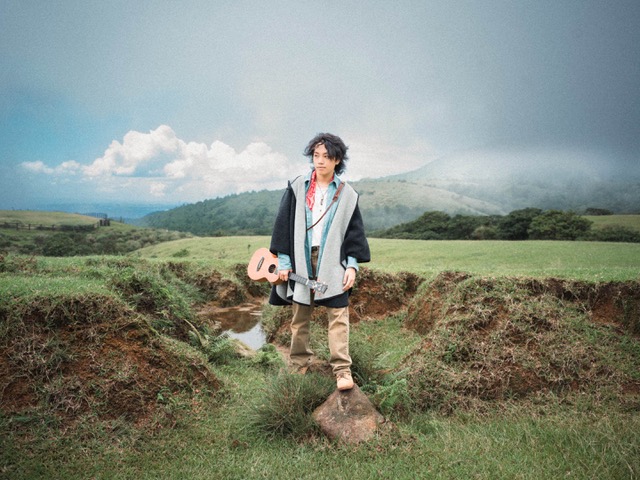
From viral performances on The Ellen Show to stages around the world, Taiwanese musician Feng E has spent much of his life challenging expectations of what the ukulele can do. Now 19, the instrumentalist and composer releases his long-awaited debut album, Grand Tour, an ambitious 11-track project blending classical music, bluegrass, cinematic composition, and global influences. In conversation with MUNDANE, he reflects on growing up in the spotlight, redefining his instrument, and discovering the difference between being a prodigy and becoming an artist.
For most musicians, finding an artistic identity is a process that unfolds away from public attention. For Feng E, that journey has happened in front of millions.
The Taiwanese ukulele virtuoso first captured international attention as a child, appearing on The Ellen DeGeneres Show in 2018 and earning recognition through Asia’s Got Talent. His extraordinary technical abilities quickly made him an internet sensation, introducing audiences worldwide to a side of the ukulele rarely seen in popular culture.
But nearly a decade of performances, touring, and musical experimentation has led him toward something more personal.
Released November 1, 2026, Grand Tour represents the culmination of years spent developing his own musical language.
Featuring 11 tracks, including ten original compositions, the album moves between classical arrangements, bluegrass influences, cinematic soundscapes, and musical traditions from different parts of the world.
More importantly, it marks Feng E’s transition from a young performer celebrated for technical virtuosity to a composer determined to establish his own artistic identity.
“I want people to know me through the music I create,” he tells MUNDANE, “not just through the things I’ve done or the labels people have given me.”
Beyond the Ukulele’s Stereotypes
The ukulele is often associated with lighthearted melodies, simplicity, and playful performances.
For Feng E, those associations have obscured the instrument’s true expressive potential.
“I don’t think the sound of the ukulele has ever been properly represented through professional recording and production,” he explains.
With Grand Tour, he set out to explore a more mature, organic, and expansive sonic identity.
Rather than relying on elaborate arrangements to disguise the instrument’s limitations, Feng E embraces its distinctive tonal qualities.
Working alongside producer and mentor Michael Ning, he developed a production approach that places the ukulele at the center of each composition while allowing supporting instruments to contribute their own personalities.
Most tracks follow a restrained quartet framework, typically featuring ukulele, bass, percussion, and one additional instrument.
The result is a record that prioritizes musical expression over unnecessary complexity.
For Feng E, the goal isn’t simply to demonstrate what the ukulele can technically accomplish.
It’s to encourage listeners to experience it as a serious instrument capable of carrying sophisticated emotional and musical ideas.
Composing Soundtracks for Imaginary Worlds
One of the defining characteristics of Grand Tour is its cinematic quality.
Feng E often approaches composition through visual imagery, imagining landscapes, characters, and scenes before translating them into music.
“It’s almost like composing a soundtrack for a movie that doesn’t exist,” he explains.
That instinct developed naturally through his upbringing.
With a father working in film, Feng E grew up surrounded by the compositions of John Williams, Hans Zimmer, and Ryuichi Sakamoto, whose ability to create emotional narratives through instrumental music left a lasting impression.
Those influences are reflected throughout Grand Tour, where individual compositions explore distinct musical environments.
The title track, “Smaller than Something, Bigger than Anything,” and “Wild Bond” draw inspiration from different geographical and cultural traditions, representing musical landscapes associated with Asia, Europe, and the United States.
Yet despite the album’s stylistic diversity, Feng E maintains a consistent musical philosophy.
Each composition is rooted in organic instrumentation, expressive performance, and a clear artistic vision.
Growing Up in Public
For Feng E, the release of Grand Tour is also an opportunity to reconsider the identity that followed him throughout his childhood.
Being recognized internationally at such a young age brought extraordinary opportunities, but it also created expectations.
Was he an internet personality?
A child prodigy?
A technically gifted instrumentalist?
Or an artist with his own creative vision?
The process of making Grand Tour helped him confront those questions.
“I don’t think I need to deny that I have been, to some extent, all of those things,” he says.
“But ultimately, the identity that matters most to me is being a musician, a composer, and an artist with my own imagination and vision for music.”
That distinction lies at the heart of the album.
Rather than distancing himself from his early success, Feng E is using it as the foundation for a more expansive artistic future.
And with his next album already beginning to take shape, Grand Tour feels less like a final destination than the beginning of another journey.
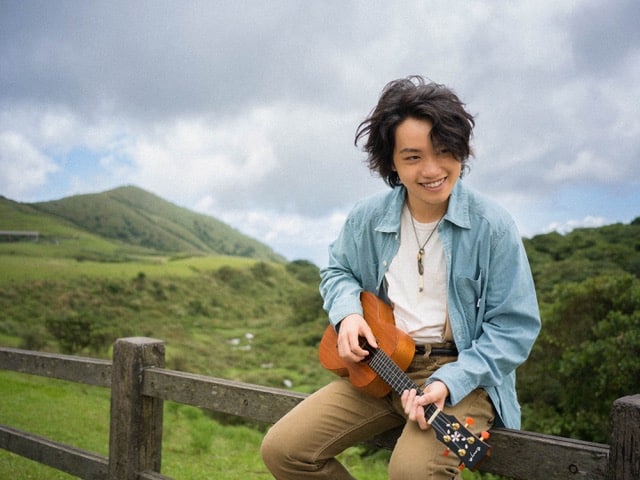
In Conversation With Feng E
You were discovered on The Ellen Show at a young age. How did those early high-pressure experiences shape your development as a performer and your approach to the stage today?
I think those television experiences had a huge influence on the density of information in my performances. Television performances are usually very short, but they need to grab the audience’s attention almost immediately. Over time, I developed a way of performing and arranging music that delivers a lot of musical information in a relatively short amount of time. I think that approach has become a very distinctive part of how I perform today.
“Grand Tour” is a long-awaited milestone. How does it feel to finally have this body of work out in the world after years of anticipation?
Honestly, it’s a huge relief. I finally get to sit down, take a breath, and really listen to everything I’ve accomplished over the past few years. For a long time, I was so focused on making the album happen that I rarely had the chance to step back and appreciate the work itself. Now that it’s out in the world, I can finally do that.
You’ve mentioned this album aims to shatter stereotypes about the ukulele. What are the biggest misconceptions about the instrument you wanted to address through your composition and production?
I don’t think the sound of the ukulele has ever been properly represented through professional recording and production. In popular culture, it’s often treated as something playful, childish, or almost toy-like. I wanted to explore a more modern, organic, and mature side of the instrument.
To me, the ukulele deserves to be appreciated just like any other instrument. It has its own beautiful tonal qualities, depth, and expressive possibilities. I wanted to make a record where people could really hear and appreciate those qualities, rather than just hearing the instrument through the stereotypes attached to it.
The record spans genres from classical to bluegrass and cinematic soundtracks. How did you approach blending such diverse styles while keeping a cohesive sound?
I think having a consistent musical worldview is really important. This album is built around an organic sound and the energy of live performance. At the same time, I deliberately kept the instrumentation relatively restrained, mostly within a simple quartet framework.
Most of the tracks follow a similar foundation: ukulele supported by bass, percussion, and one distinctive featured instrument. Rather than relying on a large number of layers, I wanted each instrument to have a clear role and personality.
Another concept behind the album was exploring different musical traditions through the cultural identities of different regions. Three tracks in particular — “Grand Tour,” “Smaller than Something, Bigger than Anything,” and “Wild Bond” — might all be described as world music, but each approaches it from a different geographical perspective. They represent organic musical landscapes inspired by Asia, Europe, and the United States, respectively.
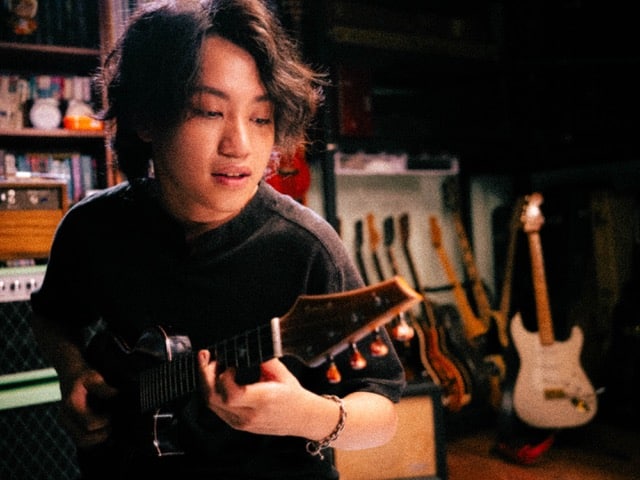
Your tracks often paint vivid visual stories. When you’re writing, do you start with a narrative concept or does the sound lead the way?
I often start with visual imagery when I write music. It’s almost like composing a soundtrack for a movie that doesn’t exist.
I’ve been heavily influenced by film scores throughout my life. My father works in film, so I grew up listening to and watching a lot of the work of John Williams, Hans Zimmer, and Ryuichi Sakamoto. I think that exposure naturally shaped the way I imagine music. Even when I’m writing an instrumental piece, I often see scenes, characters, or landscapes in my head.
Working with Michael Ning as a mentor and producer seems like a significant part of this journey. What is the most important lesson he taught you during the making of this album?
Michael is a friend of mine, although he’s much older, whom I first met when I was twelve. He’s also the only person around me who is equally proficient in both instrumental performance and music production.
One thing I really admire about him is how meticulously he approaches performance. Every musical expression and articulation is intentional. For this album, we approached the recording process almost like producing vocals for a pop record. We carefully planned the expressive details of each section before recording, rather than simply playing through the songs.
I think another producer might have focused on adding arrangements around my lead instrument. But Michael taught me to think about the performance itself and the arrangements as one complete picture. He showed me how to integrate the musical expression of the lead instrument with the design of every other instrument, rather than treating them as separate elements. That completely changed the way I think about producing music.
“Smaller than Something, Bigger than Anything” stands out as a unique title. What is the story or feeling behind that track?
A big part of this album is about how things that seem small in our everyday lives can actually be incredibly meaningful.
The song started from something very simple: I was casually experimenting with different tunings on the open strings of my ukulele. That little experiment unexpectedly sparked a huge amount of inspiration and playing enjoyment.
I think that’s something special about being a musician. Sometimes a great piece of music comes from nothing more than casually playing around with an instrument. And for everyone else, I think the beauty of life often comes from those little moments of joy that we might otherwise overlook.
Many of these songs trace your evolution from a child prodigy to a young adult artist. Was this album a process of self-discovery for you personally?
Absolutely. It gave me a good opportunity to reflect on how I see myself as an artist.
Am I an internet personality? A momentary sensation? A technically skilled instrumentalist? An instrumentalist who is also good at arranging music? Or should I really be focusing on letting the world get to know my own compositions?
I don’t think I need to deny that I have been, to some extent, all of those things. But ultimately, the identity that matters most to me is being a musician, a composer, and an artist with my own imagination and vision for music.
I want people to know me through the music I create, not just through the things I’ve done or the labels people have given me.
You’ve gained invaluable life experiences while touring the world. How has your perspective on your own music changed since those first viral moments?
I actually don’t think I’ve fundamentally changed. The way I love music hasn’t changed at all.
Maybe I was simply discovered a little earlier than most musicians. It took me some time — almost ten years, hahaha — to take a step that many artists take shortly after they first become known: releasing their first proper album.
But I think that’s one of the interesting things about the internet age. People can actually witness the development of an artist in real time, from their bedroom to the recording studio, and eventually to the big stage. In a way, people have been able to follow my entire journey rather than just seeing the finished product.
With “Grand Tour” now released, what are you most looking forward to as you continue your career as a young artist?
Definitely my next album! I’ve already started developing ideas for its concept and even collecting instruments for the recording sessions. I guess I never really stop thinking about the next project.
Of course, I also hope more people will support Grand Tour. Share the streaming links with your friends, get a physical copy, and come to my shows! Every bit of support helps me build a bigger production budget for the next record!
Beyond the Prodigy
With Grand Tour, Feng E offers something more significant than a demonstration of extraordinary instrumental ability.
He’s presenting a musical identity shaped by years of experimentation, performance, and personal discovery.
The album challenges assumptions about the ukulele while revealing the imagination of a composer who sees music as a form of visual storytelling.
But perhaps its most compelling quality is the relationship between the artist Feng E once was and the musician he’s becoming.
The child who captivated television audiences hasn’t disappeared.
His curiosity, enthusiasm, and instinctive love of music remain.
What’s changed is his ability to translate those qualities into a cohesive artistic vision.
And in an era where viral success can often define a young musician before they’ve had the opportunity to discover themselves, Grand Tour represents an important statement of independence.
Feng E isn’t simply the young ukulele sensation the internet discovered.
He’s a composer with stories of his own to tell.
And this is only his first chapter.
Grand Tour is out now, released November 1, 2026.
Listen and watch:
Tracklist:
- Grand Tour
- 8⁺ (feat. Lil’ Feng)
- Bach: Cello Suite No. 3 in C Major, BWV 1009: V. Bourrée I – Bourrée II (Arr. for Ukulele)
- Résonance
- Smaller than Something, Bigger than Anything
- Little Did We Know
- Intertwined
- Wild Bond
- Finding Unicorn
- Vengeance
- GETTUP
Artist: Feng E
Album: Grand Tour
Release date: November 1, 2026
Tracks: 11
Producer and mentor: Michael Ning