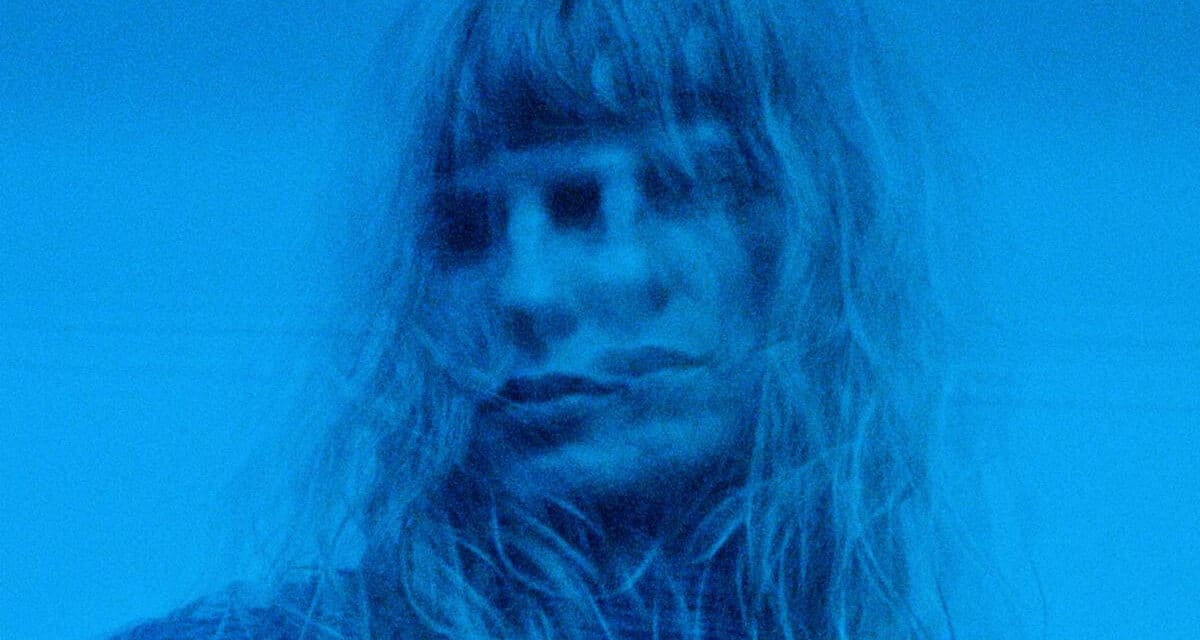
Best known as the guitarist and vocalist of noise-punk band Empath, Catherine Elicson steps into a more intimate creative territory with her debut solo album, River of Fat. Recorded live to tape using a deliberately limited collection of instruments, the nine-track project explores memory, vulnerability, and the expressive possibilities of restraint. In conversation with MUNDANE, Elicson reflects on leaving behind the maximalism of a band, embracing imperfection, and discovering a musical identity that feels entirely her own.
Sometimes, creative freedom comes not from having more possibilities, but from deliberately eliminating them.
For Catherine Elicson, the guitarist and vocalist best known for her work with experimental noise-punk band Empath, that realization became the foundation of her debut solo album, River of Fat, released November 6, 2026, via Community Music.
Where Empath’s music thrives on collective energy, dense textures, and unpredictable sonic collisions, Elicson’s solo work moves in a different direction.
Armed with a guitar, a four-track tape machine, a sampler, and a synthesizer, she began experimenting at home with a more restrained musical language.
The result is an album that embraces vulnerability without abandoning the experimental instincts that have long defined her work.
“Working completely on my own allowed me to become comfortable with a more minimalistic approach to arrangements,” Elicson tells MUNDANE, “and to be ok with feeling totally exposed as both a singer and guitar player.”
Rather than treating her solo debut as a departure from Empath, Elicson sees it as another way of exploring the same fundamental artistic question: how to create music that feels unmistakably personal.
Finding More by Doing Less
The creative process behind River of Fat began with an unusual challenge.
After experimenting with digital production and the seemingly limitless possibilities of Ableton, Elicson found herself overwhelmed by choice.
Having access to more sounds and production techniques wasn’t necessarily bringing her closer to the music she wanted to make.
Instead, she decided to impose a set of restrictions.
Working with longtime collaborator and audio engineer Shaun Sutkus, she built the album around a small collection of instruments, including a vintage Stratocaster, a Korg synthesizer, a Roland SP-404 sampler, and a Tascam four-track tape machine.
Every song was performed live to tape in its entirety, with the intention of being reproducible onstage by Elicson alone.
The limitations became part of the creative process.
Because she would be singing and playing guitar during live performances, she needed to find unconventional ways of incorporating percussion, synthesizers, and additional textures without relying on elaborate arrangements.
That challenge opened unexpected possibilities.
“Prioritizing the live performance forced the restriction I needed to unlock the songwriting,” she explains.
The process was far from straightforward.
Early compositions such as “I’m On Fire” and the title track helped establish the album’s heavier musical direction, but several other songs were discarded along the way.
Through trial, experimentation, and revision, Elicson gradually discovered the balance between atmosphere, density, and emotional directness that would define the record.
The Emotional Truth of Imperfection
In an era when digital recording makes endless correction possible, Elicson’s decision to record live to tape feels particularly intentional.
For her, technical perfection isn’t necessarily the same as emotional authenticity.
“Overly perfected music has a homogenizing effect,” she explains. “When things are scrubbed clean you understand less of the emotional moment the artist was in.”
It’s an observation that extends beyond production technique.
Elicson is drawn to artists whose music feels inseparable from their personalities, imperfections, and creative instincts.
Rather than aspiring toward a universally polished sound, she wants recordings to preserve the specific emotional circumstances in which they were created.
“A ‘perfect’ take doesn’t necessarily mean one with zero mistakes,” she says, “but rather having captured the feeling in the room that can’t be recreated.”
That philosophy gives River of Fat its intimate character.
The recordings prioritize atmosphere, expression, and the distinctive qualities of Elicson’s performance, allowing moments of fragility to coexist with distortion and experimental textures.
Memory, Mystery, and Imaginary Worlds
The album’s lead single, “Figure,” explores the unstable relationship between memory and identity.
Built around warm, warbled vocals and a scrappy guitar solo, the song considers how experiences from the past become distorted as time passes.
For Elicson, memory is neither a completely reliable archive nor a purely invented narrative.
It’s something that exists between retrieval and reinterpretation.
“We retrieve the memories, connect them to other feelings and memories, and start to sense a bigger picture,” she explains.
“We create narratives, for better or for worse.”
That fascination with ambiguity also extends to the album’s unusual title.
River of Fat emerged from a sentence Elicson misread in a book.
Although the original text said something different, the accidental phrase stayed with her.
She began imagining its possible meanings: abundance, discomfort, heaviness, or something more abstract.
Rather than assigning it one definitive interpretation, she embraced its ambiguity.
The same openness shapes the album itself.
Influenced by artists including John Cale, The Urinals, Amen Dunes, Arthur Russell, Sibylle Baier, and Brian Eno, Elicson is interested in music that creates a distinctive world without explaining everything to the listener.
For her, mystery is part of what makes a song worth returning to.
And River of Fat is only the beginning of that exploration.
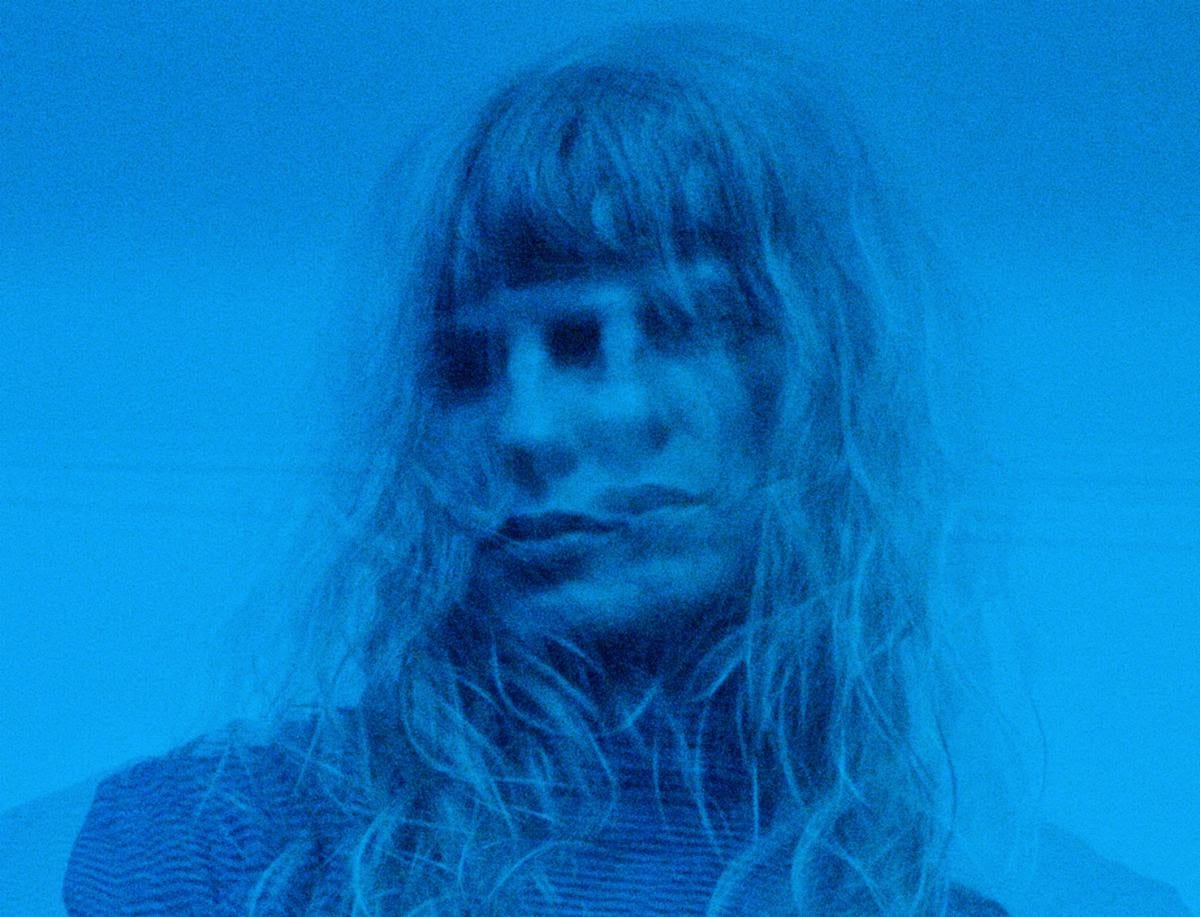
In Conversation With Catherine Elicson
You’ve spent years making music within the collaborative world of Empath. What did working completely on your own reveal about you as a songwriter that you hadn’t been able to access within a band?
Working completely on my own allowed me to become comfortable with a more minimalistic approach to arrangements, and to be ok with feeling totally exposed as both as a singer and guitar player. It took me awhile to discover what my voice as an artist would sound like when stripped back.
I wrote an early version of “Figure” nearly 6 years ago but ditched it because I wasn’t sure how to make it sound interesting to me as such a bare song. I kept coming back to it, knowing there was something there I didn’t want to give up on.
I love the maximalist qualities of Empath, and creating something greater than the sum of our parts, but it was a fun challenge to figure out how to make the songs on River Of Fat feel honest and compelling within the much smaller box I put myself in. Ultimately I learned that no matter what I’m creating, there needs to be a sense of a larger world I’m building, and these songs are individual attempts at getting closer to that vision.
River of Fat began almost like a bedroom experiment—with a guitar, four-track, sampler and synth. Was there a specific moment when you realized these experiments were becoming an album rather than simply a collection of ideas?
I started writing with the intention of making an album or an EP, but I didn’t fully know what it would sound like.
Very early on, I wrote “I’m On Fire” and “River of Fat” back-to-back. They satisfied a style of heavy guitar songwriting that I crave. After that, I wrote a bunch of songs that I didn’t use and felt pretty frustrated. It became a process of trial and error to strike the right balance of mood and density.
The songwriting process overlapped significantly with the recording process, and I tossed out several of the original songs after tracking. I continued to work on new ideas, trying to hone in on the larger sonic vision. The album began to reveal itself the deeper into the process I got.
You deliberately gave yourself a very limited instrumental palette while making the record. Why did restriction feel creatively exciting to you, and did having fewer options actually make you more adventurous?
For a couple of years prior to writing these songs I had been experimenting with writing music as a solo artist, messing around with Ableton trying to make tracks. I found myself stuck with too many options, unable to discover a voice that felt truly like me. The music I am most drawn to feels like it couldn’t have been made by anyone else, and that is always the bar I measure my own songwriting against.
When I realized I wanted to perform the songs live by myself, I knew I had to write and track them in the exact same way they would be performed. Prioritizing the live performance forced the restriction I needed to unlock the songwriting. Because I would be playing guitar and singing, I wouldn’t be able to touch a keyboard or hardware during songs. At that point it became a challenge to problem-solve how to incorporate drum and synth sounds. Since I’m not deeply skilled at programming that stuff, there were overlapping limitations which forced me to experiment in ways I would never have otherwise.
Every song was performed live to tape in its entirety, which is almost the opposite of the endless editing possibilities available in modern production. What does imperfection give a recording that technical perfection sometimes takes away?
As I mentioned, I’m drawn to music that sounds like only that specific artist could have created it. Overly perfected music has a homogenizing effect. When things are scrubbed clean you understand less of the emotional moment the artist was in; the context in which it was created becomes obscured. I care about what people feel and what they have to say. Technical perfection, in terms of both the recording and performance, can mask or try to make up for a lack of emotional depth.
Recording is an art in itself. A “perfect” take doesn’t necessarily mean one with zero mistakes, but rather having captured the feeling in the room that can’t be recreated.
Part of that decision came from wanting to be able to reproduce these songs alone onstage exactly as they were recorded. Did imagining yourself alone in front of an audience affect the intimacy or vulnerability of the songwriting itself?
I knew I wanted to do live performances, but honestly I try not to picture myself in front of an audience. I don’t find imagining that feeling helpful in the moment of writing. It introduces too many thoughts of other peoples’ perceptions and reactions. When I focus on how playing the songs feels to me, it usually all works out when I play live.
“Figure” deals with memories and past lives becoming distorted by time. Do you think memory is something we retrieve, or something we continually rewrite every time we return to it?
I think both things are true. We retrieve the memories, connect them to other feelings and memories, and start to sense a bigger picture. We create narratives, for better or for worse. It’s like a poetic projection we cast onto our past; do this at your own risk.
The record draws inspiration from artists as different as John Cale, The Urinals and Amen Dunes, while also sharing a certain intimacy with Arthur Russell, Sibylle Baier and Brian Eno. What connects those artists for you beyond their actual sound?
I’ve never considered how some of these artists might be connected, but I am definitely inspired by their world-building. They have singular voices, and their songs are layered with meaning. There’s also a sense of mystery that keeps me coming back to their albums, like a puzzle to be solved. Their music is deeply emotional without them ever telling the listener what they should be feeling. And while doing all of that they can still write a catchy tune.
The process apparently helped you discover a more vulnerable and tender voice in your songwriting. Was that softness something you were actively looking for, or did it surprise you once you stripped everything else away?
I believe all my songs start in that place. I have voice memos of every old Empath song played quietly on an acoustic guitar. It’s only more recently that I’ve felt some could stay that way and that they’d still be worth listening to on their own.
There’s something wonderfully strange and tactile about the title River of Fat. Where did that phrase come from, and what does it represent within the world of these nine songs?
“River of Fat” was actually a misread line in a book. I was struck by the immediate feeling the phrase gave me, but when I reread the sentence I realized it said something a little different. I knew I had to save those words, so I wrote them down in my phone notes, which contain a mess of random lines. I’m often only half-paying attention to things, so I collect a lot of misheard lyrics or misread sentences. Actually, now I think this might be a way I allow my subconscious to show me hidden ideas.
The phrase takes me somewhere different each time I think of it. A river of fat could be a symbol of abundance, or something disgusting and scary, or a representation of heaviness with no visible end. I think the songs on this album are similar, I hope there are multiple ways listeners can experience them.
Although this is your first solo record, it’s described as feeling more like the beginning of a larger body of work than a conventional debut. Now that you’ve discovered this new creative language, what possibilities has River of Fat opened that you want to explore next?
Each song is a doorway to something that I want to dive into more. I feel like I’m just scratching the surface of the ambient, dreamy punk, folk-y songwriting world I want to live in. I could have separated those sounds out and focused on one at a time, but it also feels like me to try and weave them all together in a cohesive way. I think the world I’m after lies in the sum of it all in balance together, and there’s a lot more to be done there.
A New World Through Restraint
With River of Fat, Catherine Elicson demonstrates that artistic evolution doesn’t always require a dramatic reinvention.
Sometimes, it begins by removing the elements that have become familiar.
The album’s stripped-back instrumentation and intimate performances reveal a songwriter willing to embrace exposure, uncertainty, and the imperfections that make music feel human.
Yet the experimental imagination behind Empath remains unmistakably present.
Elicson is still interested in texture, atmosphere, distortion, and the creation of immersive musical worlds.
What’s changed is the space she’s allowing those ideas to occupy.
And while River of Fat marks her first solo release, she sees the project as the beginning of something much larger.
An opportunity to explore the space between ambient music, dreamy punk, and folk songwriting without feeling obligated to settle into any one category.
For Elicson, the goal isn’t to perfect a particular sound.
It’s to keep discovering the world that exists somewhere between all of them.
And perhaps the most exciting part is that she’s only beginning to find it.
River of Fat is out now via Community Music.
Tracklist
- I’m On Fire
- A Warm Day In the Park
- Figure
- River Of Fat
- All Sound
- My War
- Flowers Smile
- Safe
- CTW
Artist: Catherine Elicson
Album: River of Fat
Release date: November 6, 2026
Label: Community Music
Recording and mixing collaborator: Shaun Sutkus
Photography: Evan Eisel