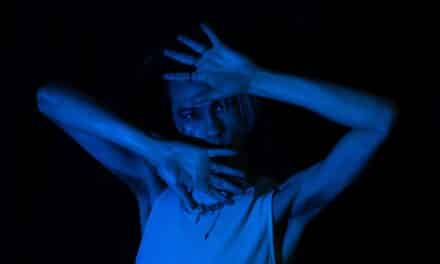
For New York-born, Los Angeles-based singer-songwriter Michelle Kash, music has become both a form of self-expression and a lifeline. Following the deeply personal release of “Salvation,” an 80s-inspired alt-pop anthem born from her experience recovering from a traumatic brain injury, Kash returns with “Messin Around,” a sparkling synth-pop single celebrating spontaneity, connection, and the freedom to feel joy again. In conversation with MUNDANE, she opens up about the realities of her ongoing recovery, the healing power of songwriting, and why sometimes the most meaningful act of resilience is allowing yourself to have fun.
There is something quietly radical about choosing joy after experiencing profound darkness.
For Michelle Kash, that choice has become an essential part of her artistic journey.
The Los Angeles-based singer-songwriter has built a musical identity around transforming life’s most complicated experiences into cinematic alt-pop, combining smoky, soulful vocals with emotionally direct storytelling and a fascination with the sounds of the 1980s.
But behind the shimmering production and anthemic melodies lies a story of survival, vulnerability, and an ongoing effort to reconnect with herself.
Her previous single, “Salvation,” emerged from her experience recovering from a traumatic brain injury, a life-altering event that continues to affect her daily existence.
Now, with her new single “Messin Around,” released November 20, 2026, Kash is exploring a different emotional landscape.
Produced by Stash Konig, the track is a bubbly, synth-drenched celebration of late-night adventures, spontaneous romance, and the electric possibilities of Los Angeles after dark.
“I was having crazy insomnia, so instead of trying to sleep, I went out and had a wild, fun night in LA, then wrote the song the next night,” Kash reveals.
“It’s based on a true story.”
After confronting some of her most difficult experiences through music, she wanted to create something that felt lighter.
Something nostalgic, playful, and unapologetically joyful.
“After the intensity of writing my last single, ‘Salvation,’ I wanted something fun, light, nostalgic, like pink bubblegum and sparkle.”
The result is a song that feels like an invitation to rediscover the pleasure of simply being alive.
From Darkness to Salvation
Before the sparkling synths of “Messin Around,” Kash was navigating a much more difficult chapter.
Her experience with a traumatic brain injury fundamentally changed her relationship with everyday life, introducing ongoing sensitivities to sound and light that have made both living and creating music more challenging.
For an artist whose work revolves around sound, performance, and emotional expression, those changes have been particularly complicated.
Yet rather than abandoning her creative practice, Kash turned toward songwriting as a way to process what she was experiencing.
“Salvation” became an emotional anchor.
“Writing Salvation gave me hope,” she tells MUNDANE. “The whole process from writing, recording, to releasing and performing it was a continuous mirror to my own experience.”
The song’s emotional structure allowed her to connect with different aspects of her recovery.
During moments of discouragement, she found comfort in its chorus.
When frustration and anger became overwhelming, the bridge offered another form of release.
“I don’t think I’ve written anything that has felt like such a global narrative of my own life so completely and continuously,” she reflects.
What makes her story particularly affecting is that the process of recovery is far from complete.
Kash is candid about the daily realities of living with extreme sound and light sensitivity, explaining that even the process of writing and recording music can become physically demanding.
“Having to manage extreme sound and light sensitivity while trying to write music… well, there’s an irony and a dark comedy/horror in that.”
Rather than presenting recovery as a neatly resolved journey, Kash acknowledges its ongoing uncertainty.
At times, she says, the experience can feel debilitating.
But the music continues to offer a way forward.
“The song is still my anchor, my mantra, if you will.”
Why the 1980s Became a Soundtrack for Healing
Despite the difficult experiences behind “Salvation,” Kash deliberately chose an expansive, 80s-inspired alt-pop sound.
The decision was about more than musical nostalgia.
She wanted to create a sonic environment that suggested the possibility of emerging from darkness.
“I wanted to create a world where there was an end to the dark road,” she explains.
“I needed to surrender while dancing in my bedroom while praying and waiting for a shift.”
That juxtaposition between emotional heaviness and uplifting production has become an important element of Kash’s artistic identity.
Her songs acknowledge pain without allowing it to define the entirety of the experience.
In the accompanying music video for “Salvation,” vibrant colors, light, and surreal visual imagery reflect that same tension.
The contrast between darkness and illumination was intentional, symbolizing both the disorientation of her experience and the possibility of breaking through it.
For Kash, music doesn’t necessarily eliminate suffering.
But it can create moments of hope within it.
And sometimes, those moments begin with something as simple as dancing alone in your bedroom.


“Messin Around”: A Love Letter to Los Angeles After Dark
With “Messin Around,” Kash moves from the emotional intensity of survival toward the excitement of spontaneity.
The track began with an unexpected night out in Los Angeles.
Unable to sleep, she decided to embrace the city rather than fight her insomnia.
What followed became the inspiration for a song filled with neon-lit imagery, playful energy, and the intoxicating feeling of getting lost in a moment with someone else.
“‘Messin Around’ captures that amazing feeling when you’re in your own little world with someone, just beaming, gleaming stardust, caught up in each other, running around the galaxy that is LA,” she says.
Produced by Stash Konig, the single combines glittering retro synthesizers with a bright, immediately memorable pop melody.
Its aesthetic draws from the exuberance of 1980s pop while maintaining a contemporary sensibility.
Where “Salvation” explored the determination required to survive difficult circumstances, “Messin Around” celebrates the possibility of experiencing pleasure without guilt.
The shift feels especially meaningful in the context of Kash’s recent work.
Joy isn’t presented as the opposite of vulnerability.
Instead, it becomes another expression of it.
Allowing yourself to experience excitement, romance, or carefree spontaneity can be its own kind of emotional openness, particularly after a period defined by uncertainty.
The single’s visual world will expand with the official “Messin Around” music video, arriving December 4, 2026, bringing its starry Los Angeles atmosphere to life.
The release also marks the beginning of a new chapter, with additional music planned for 2027.
An Artist Who Turns Experience Into Expression
Kash’s relationship with songwriting has always been shaped by the unexpected.
One of the more unusual stories in her artistic history involves a surreal encounter with Lou Reed, which she transformed into a poem and eventually into the song “Gravity,” released in 2025.
Her creative journey also includes finding her voice during a desert retreat in Utah, releasing her debut single “Smoking Gun” in 2019, and reimagining Depeche Mode’s “Personal Jesus,” which reached No. 4 on Billboard’s Dance Club Songs chart in 2020.
Across these releases, Kash has demonstrated an interest in translating personal experiences into music that exists somewhere between intimate confession and cinematic storytelling.
That same sensitivity extends beyond her artistic practice.
She is actively involved in advocacy supporting animal welfare and opportunities for girls and women, including her sponsorship of The Giving Space for One Simple Wish.
More recently, her experience with traumatic brain injury has motivated her to become involved with the Brain Injury Association of America.
For Kash, these commitments aren’t separate from her music.
Both are expressions of her desire to connect with others and create something meaningful from her experiences.
In Conversation With Michelle Kash
“Salvation” explores your journey through a traumatic brain injury and the long, difficult recovery process. How did the actual act of writing and recording this song change the way you relate to your own healing journey?
Writing Salvation gave me hope. The whole process from writing, recording, to releasing and performing it was a continuous mirror to my own experience. When I would feel discouraged or even hopeless, I would sing Salvation, relate to a different part of the song; when needing hope, the choruses got me through. When I wanted to burn it all down, there was the bridge.
I don’t think I’ve written anything that has felt like such a global narrative of my own life so completely and continuously. It’s just one song, yet it has demonstrated to me the power and healing of music and the creative process.
The music video for “Salvation” is filled with vibrant colors and light. Was it important to you to contrast the reality of your recovery—which involved significant time in darkness—with these specific visuals?
The contrast was essential, I wanted the visuals to be a reflection of both the darkness, hall of mirrors, and breaking through to the other side.
This track is described as an 80s-inspired alt-pop anthem. Why did you choose this particular sound to carry such heavy, personal subject matter?
I wanted to create a world where there was an end to the dark road. I needed to surrender while dancing in my bedroom while praying and waiting for a shift. I needed some light and I wanted the music to reflect that.
You mentioned that you now work on your own terms to accommodate your sensitivities. Has this shift in your creative process allowed you to be more honest or vulnerable in your songwriting than you were before the accident?
It’s honestly made things more challenging. Having to manage extreme sound and light sensitivity while trying to write music… well, there’s an irony and a dark comedy/horror in that. I’m not sure if it’s reflected in my songwriting yet. To be honest, I’ve been so focused on managing the symptoms that I’m just happy to be writing when there’s space for it.
I guess that inherently allows for more vulnerability and honesty. Even answering these questions, I haven’t really talked about this publicly before. So maybe it’s making me more vulnerable not just in my art, but as a person.
This affects me daily, my life completely altered. At times I feel the weight of this experience and my sensitivities as a crushing defeat. Not to get dark, but I am still trying to break through.
The song is still my anchor, my mantra, if you will. Lifting the veil… this is the truth about what I am experiencing. It can be debilitating.
You caught me mid-migraine.
Beyond music, you are deeply involved in advocacy, including animal welfare and arts access. Do you see your music as a direct extension of that desire to help others find hope, or do you view your art and your advocacy as two separate spaces?
I think my advocacy and art are an extension of my heart and whatever that authenticity is in the moment. They might be expressing different things but they all come from a place of vulnerability. My art is the deepest expression of my truth, my advocacy as a deep expression of connection to people, animals and wanting to create positive change.
Having gone through this experience, I’ve just begun getting involved with the Brain Injury Association of America. They do such important work bringing awareness to brain injuries and supporting those affected. I think brain injuries can have such a stigma, and even I don’t want to identify as someone with a TBI, but it’s something I experienced. I live with it constantly, as do millions of people. We should remove the stigma and live without shame.
You’ve stated that you plan to keep writing about this chapter. Does having a project like this help give a sense of purpose to the daily challenges you face, or is it more about reclaiming a narrative that feels like it was stolen by the injury?
Neither? Both? When I’m writing, I don’t think it’s a choice. It’s a way of processing, of moving through the experience, and that is my current truth. Trying to heal from this horrific time, to continue healing and try to connect with who I know myself to be, or who I was, or who I will become. Sounds heavy for 80s anthemic dance pop, haha, but I guess I’m putting all my faith in this being the way through.
But I also have ‘Messin Around’ coming out this November 20, which is really fun and light and a departure from all this intensity.
For those listening who are also currently in their own “darkest chapter,” what do you hope they take away from the energy of this track?
You will rise up with the moon. You will break through.
Finding Light Without Forgetting the Darkness
What makes Michelle Kash’s recent musical journey particularly compelling is the way she allows seemingly contradictory emotions to coexist.
“Salvation” confronts the reality of living with a traumatic brain injury, acknowledging the exhaustion, frustration, and uncertainty that continue to shape her experience.
“Messin Around,” meanwhile, offers a different kind of emotional truth.
It’s about the unexpected beauty of a spontaneous night, the thrill of connecting with someone, and the possibility of temporarily escaping the weight of everyday life.
Together, the songs reveal an artist who refuses to reduce her identity to a single experience.
Kash doesn’t pretend that healing is simple or that creativity automatically resolves suffering.
Instead, she treats music as a space where difficult emotions can be expressed, explored, and occasionally transformed into something uplifting.
Her willingness to discuss the realities of her recovery also introduces a deeper dimension to her advocacy, challenging the stigma surrounding brain injuries and encouraging greater understanding of experiences that often remain invisible.
As she prepares to unveil the “Messin Around” music video and continue releasing new music in 2027, Kash is embracing a creative future that makes room for both introspection and celebration.
Because sometimes survival looks like perseverance.
Sometimes it looks like vulnerability.
And sometimes, it looks like an unexpected night beneath the neon lights of Los Angeles, dancing through the uncertainty and remembering that joy still belongs to you.
As Kash herself puts it: “You will rise up with the moon. You will break through.”
“Messin Around” — Out November 20, 2026
Official music video: December 4, 2026
Produced by: Stash Konig
Artist: Michelle Kash
Follow Michelle Kash: