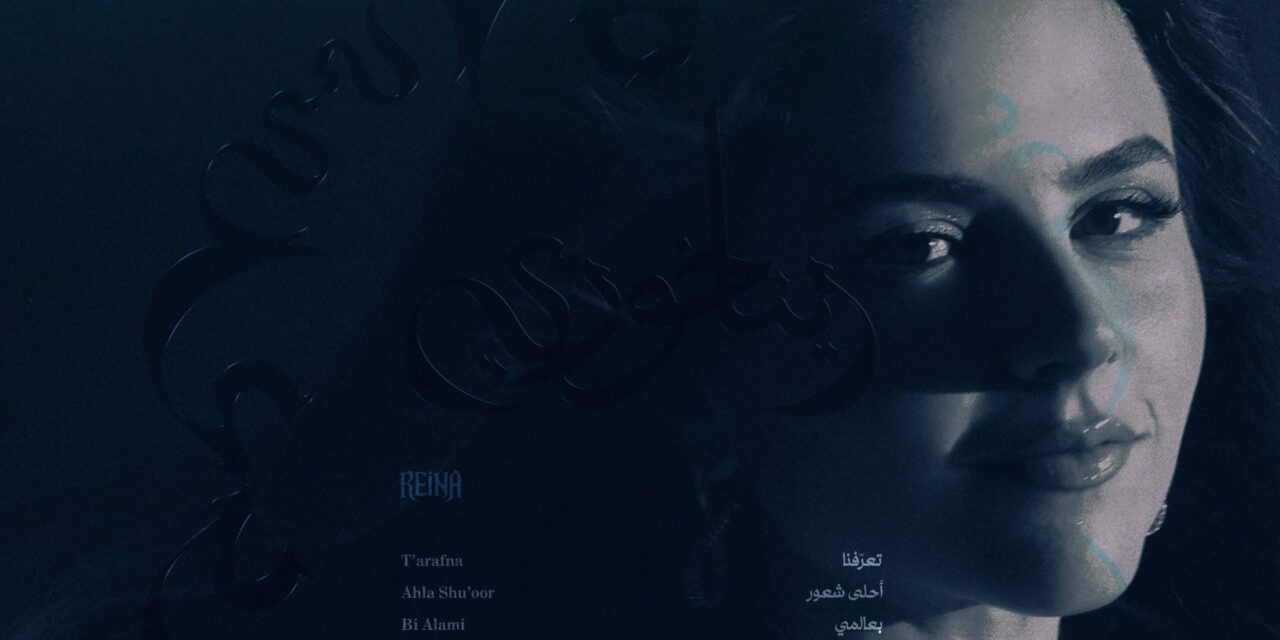
Jordanian pop artist Reina Khoury is entering a defining new chapter with her long-awaited debut album, REINA. Released after a two-year creative hiatus, the nine-track project is an intimate exploration of motherhood, femininity, vulnerability, love, and the cultural heritage that has shaped her identity. Blending traditional Jordanian melodies with contemporary pop influences, Khoury offers a deeply personal portrait of the woman she has become. In conversation with MUNDANE, she reflects on the transformative experience of becoming a mother, the importance of embracing vulnerability, and why returning to her roots has helped her find a renewed sense of artistic purpose.
Who are we when the roles we inhabit begin to change?
For Reina Khoury, that question sits at the heart of her debut album, REINA, released October 15, 2026.
The Jordanian singer-songwriter has spent the past two years navigating one of the most transformative experiences of her life: becoming a mother.
In the process, she found herself reconsidering her relationship with music, her creative identity, and the experiences that had shaped her understanding of womanhood.
Rather than rushing to release new material, Khoury stepped away from the constant demands of the music industry to give herself time to experience that transformation.
What emerged was a nine-track album that feels less like a conventional debut and more like an intimate self-portrait.
REINA introduces its creator in all her complexity: as an artist, a daughter, a partner, a mother, and a woman learning to embrace the different dimensions of her identity.
“Putting it out there felt vulnerable but also really fulfilling,” Khoury tells MUNDANE. “Knowing it’s not just a private project anymore but also something everyone can relate to in their own way.”
For an artist whose music has always existed at the intersection of contemporary pop and Arabic musical heritage, the album also represents a deeper connection to the cultural roots that continue to define her.
And perhaps most importantly, it marks a return to music on her own terms.
Motherhood as a New Creative Language
The album begins not with a conventional pop introduction, but with a whispered poem written by Khoury herself.
It’s a deeply personal reflection on motherhood, setting the emotional foundation for everything that follows.
The poem transitions into “Ahla Shu’oor,” a song whose title translates to “best feeling in the world.”
For Khoury, that phrase became a natural way to describe the profound emotional shift she experienced after becoming a mother.
But the significance of motherhood extends far beyond the subject matter of a single song.
It changed the way she approached creativity itself.
“It was very intentional to open the album with that poem,” she explains.
“Motherhood completely changed my perspective on so many things in life and also shaped the emotions that are present throughout the entire album.”
Poetry became an unexpected creative outlet, allowing her to articulate feelings that didn’t necessarily fit into conventional songwriting structures.
The opening poem was only the second she had written, but the experience revealed another way to communicate the emotional complexity of her new life.
Throughout REINA, motherhood exists alongside themes of romantic love, family, childhood memories, self-confidence, and vulnerability.
Rather than presenting these experiences as separate identities, Khoury allows them to coexist.
The result is an album that challenges the idea that becoming a mother requires a woman to abandon other parts of herself.
Instead, motherhood becomes another dimension of an evolving identity.
The Courage to Be Vulnerable
While REINA contains moments of celebration and empowerment, some of its most revealing passages explore emotional uncertainty.
For Khoury, writing about love came naturally.
Expressing vulnerability, however, proved more challenging.
“Vulnerability was the most challenging and emotional theme to put into words,” she admits.
In particular, she struggled with the experience of needing reassurance and validation, feelings that can be difficult to acknowledge publicly.
For an artist accustomed to communicating through music, exposing those insecurities required a different kind of confidence.
Yet Khoury believes that honesty is essential to creating meaningful connections with listeners.
The album’s emotional range reflects that conviction.
On “Bi Alami” and “Ana Heik,” she embraces a more assertive perspective, celebrating individuality and the freedom to be unapologetically oneself.
Both tracks incorporate authentic Jordanian musical elements, grounding their messages of confidence in the sounds of her cultural identity.
Elsewhere, “Usset Hobna” draws on a classical Jordanian melody to explore romantic love.
Together, these songs create a portrait of femininity that resists easy categorization.
Strength and vulnerability aren’t opposites.
Neither are motherhood and individuality.
For Khoury, they are all essential parts of the same experience.
Finding Home in the Sounds of Jordan
Although REINA represents a new chapter in Khoury’s life, its musical identity remains deeply connected to the place where her story began.
Born and raised in Amman, Jordan, she has always carried the sounds, traditions, and emotional associations of her hometown into her work.
As she has grown older, that connection has become increasingly meaningful.
“I realized that Amman has a very special place in my heart and that it’s something I feel more as I grow older and as I mature,” she explains.
The album closes with “Amman,” an ode to the city that raised her.
Its placement is intentional.
After exploring the many emotional transformations that have shaped her adult life, Khoury returns to the place that first gave her a sense of belonging.
The song reflects her gratitude for the cultural environment, family relationships, and childhood experiences that helped form her identity.
Musically, that connection is present throughout the album.
Traditional Jordanian melodies and Arabic instrumentation coexist with contemporary pop arrangements, creating a sound that feels both rooted and expansive.
Khoury doesn’t approach this combination as a calculated attempt to bridge different markets.
Instead, she sees it as a natural reflection of the music she loves.
“I really appreciate the Arabic instruments and their raw sounds,” she says.
“They give me a sense of belonging and nostalgia so I always try to have a hint of my cultural heritage in the songs I write.”
At the same time, her daily exposure to Western music inevitably influences her songwriting.
The result is an artistic identity that doesn’t require her to choose between tradition and modernity.
Both are part of who she is.
Taking Time to Become Herself
In an industry increasingly driven by constant releases, social media visibility, and the pressure to remain relevant, Khoury’s decision to take a two-year hiatus was significant.
For her, stepping away wasn’t an indication of creative uncertainty.
It was an opportunity to reconnect with the reasons she began making music.
“We live in a world where artists are constantly asked to create and to stay present in order to not be forgotten,” she reflects.
“But with motherhood I really wanted to take a step back and enjoy that time.”
That distance allowed her to approach REINA with greater intention.
She spent time developing its themes, exploring new sounds, and collaborating with musicians whose work she admired.
Among the project’s most important collaborators was Shereef Mostafa of Cairokee, who produced three tracks and mixed the entire album.
Khoury describes Mostafa as both a creative collaborator and a mentor whose guidance has had a lasting influence on her artistic development.
“Shereef was a very big part in shaping the sound of that album,” she says.
“He really is a mentor for me and my artistic identity.”
The collaboration helped bring together the album’s varied musical influences while maintaining a cohesive emotional direction.
After two years of development, REINA emerged as Khoury’s most intentional project to date.
And while its release represents an important personal milestone, she’s already looking toward the next chapter.
Following performances across Jordan, Egypt, and Dubai, Khoury is preparing to bring the album to the stage, creating a live experience that reflects its emotional and musical identity.
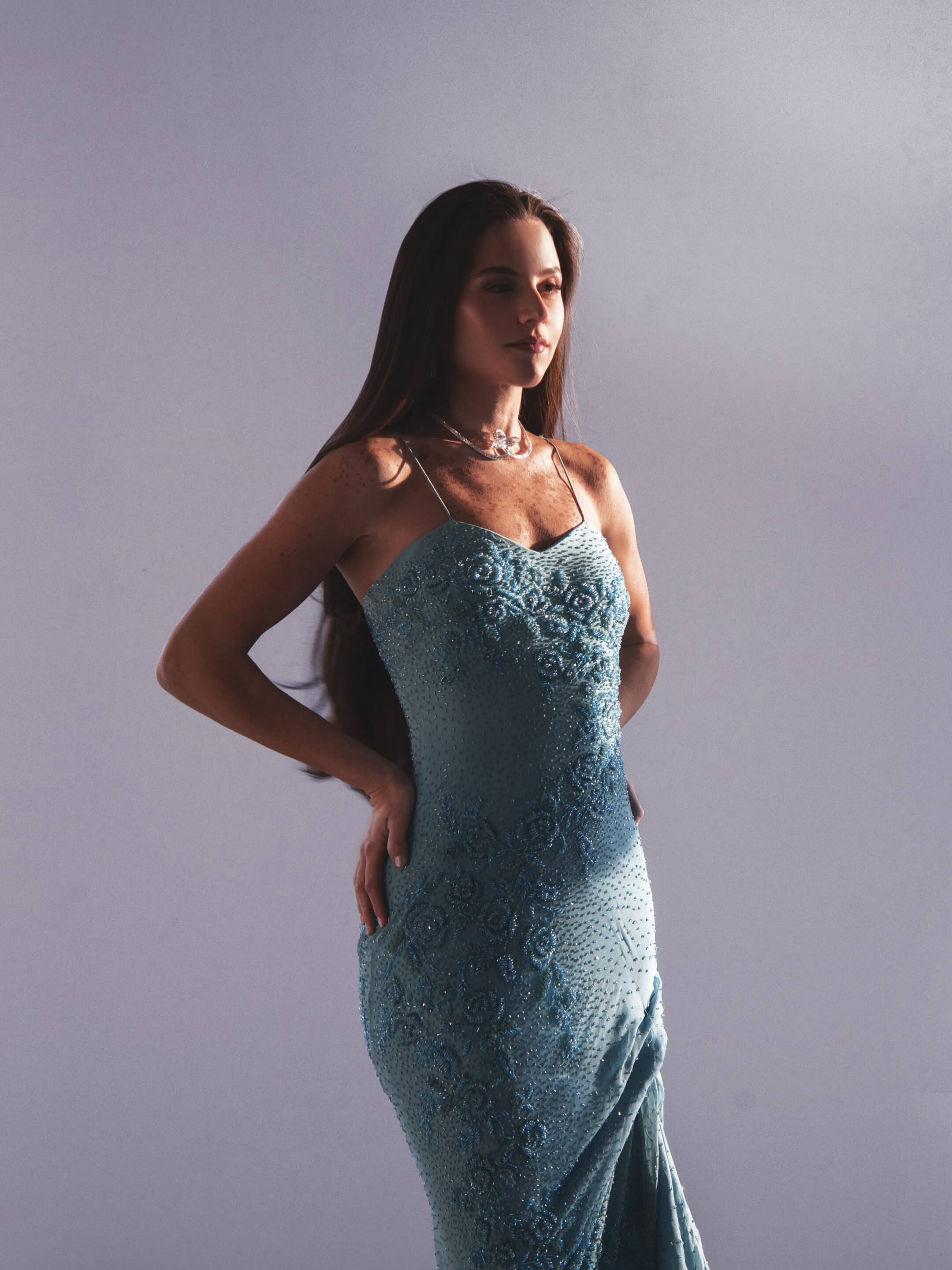
In Conversation With Reina Khoury
“REINA” marks your first full-length album and a major new chapter in your career. How does it feel to finally share this complete body of work with the world after two years in the making?
It’s a major chapter in my career to finally have my debut album out it the world, it feels surreal that everyone is now able to listen to it, I’ve been working on it for the past two years and the only people that had listened to it were my family, close friends, and my collaborators. Putting it out there felt vulnerable but also really fulfilling, knowing it’s not just a private project anymore but also something everyone can relate to in their own way. Releasing a full album is truly a dream come true.
The album opens with a whispered poem about motherhood and transitions into “Ahla Shu’oor.” How did becoming a mother shift your perspective on songwriting and your overall approach to music?
That’s a beautiful question! It was very intentional to open the album with that poem. It’s the second poem I wrote and I realized that poetry was a creative outlet I felt the urge to explore to express the feelings motherhood was making me experience. It felt really right to have this poem as the intro of the album because motherhood completely changed my perspective on so many things in life and also shaped the emotions that are present throughout the entire album so it only felt right to open the album with this.
Across the nine tracks, you explore diverse themes including vulnerability, self-confidence, femininity, and family. Was there a specific song on the album that felt the most challenging or emotional to write?
Vulnerability was the most challenging and emotional theme to put into words. I’m used to expressing emotions such as love and it felt very natural to express this feeling through motherhood this time rather than in a sense of romantic love. But for vulnerability and describing the need for reassurance and validation, that was the toughest emotion to bring out and to be comfortable with having the world hear. I also think it’s really important for listeners to be able to relate to honesty and realness so I’m very happy it’s a theme that is present on the album.
“Amman” serves as an ode to your hometown and brings the album to a close where your story began. How has growing up in Jordan shaped your identity as an artist and the musical sounds you gravitate toward?
I realized that Amman has a very special place in my heart and that it’s something I feel more as I grow older and as I mature. This city is extremely related to our culture and to the family bond that I had the chance to grow up with and all of that really shaped me as a person and artist. I always try to include Jordanian sounds and the cultural influences in every possible way and it is definitely something inherent to my artistic identity.
You blended traditional Jordanian melodies on tracks like “Usset Hobna” with contemporary pop production. How do you approach balancing regional musical heritage with modern global sounds?
I really appreciate the Arabic instruments and their raw sounds, they give me a sense of belonging and nostalgia so I always try to have a hint of my cultural heritage in the songs I write. I don’t intentionally try to make it sound more modern or more global but I think that I’m naturally influenced by the western music I listen to on a daily basis as well.
Tracks like “Bi Alami” and “Ana Heik” radiate a strong sense of confidence and self-assurance. What message do you hope listeners, particularly women, take away from these tracks?
Both these tracks are very confident and upbeat and I felt it was important to have them there because I want women to feel empowered and know that they can do anything they set their heart and mind to when they listen to those tracks.
You collaborated closely with Cairokee’s Shereef Mostafa on the production and mixing of this album. What was the creative chemistry like working together, and how did he help bring your vision for “REINA” to life?
Shereef was a very big part in shaping the sound of that album, he really is a mentor for me and my artistic identity. He’s given me incredible advice that I’ll never forget and it has definitely shaped the music I make today and that I’ll be making in the future.
You’ve mentioned that this album is a statement of identity following a two-year hiatus. In what ways do you feel you’ve evolved most as an artist between your earlier releases and this project?
For this project I gave myself time to step back and not release music for a while. We live in a world where artists are constantly asked to create and to stay present in order to not be forgotten but with motherhood I really wanted to take a step back and enjoy that time. It reminded me why I started making music to begin with, it gave me time to collaborate with amazing people and to really develop the topics and sounds I wanted to put on this album.
From performing in Egypt, Dubai, and Jordan to releasing a deeply personal self-titled album, what has been the most rewarding moment of this release cycle so far?
The most rewarding moment for me is when people come up to me and tell me they liked to album or tell me that a specific song resonated with them. Expressing an emotion and putting it into music is the reason I make music to begin with so knowing someone relates to that is the best feeling ever.
With “REINA” now out in the world, what are you most looking forward to next in this new era of your career?
I’m really looking forward to is performing the album live, I’m currently working with my team to plan live performances and to make sure we have a very cool and fun show for everyone.
A Portrait of a Woman in All Her Forms
With REINA, Reina Khoury has created an album that feels both deeply personal and universally resonant.
Its exploration of motherhood, vulnerability, confidence, family, and cultural identity reflects the many experiences that shape a woman’s understanding of herself.
But perhaps the album’s most meaningful message lies in its refusal to separate those identities.
Khoury doesn’t present motherhood as the end of one chapter and the beginning of an entirely different life.
Instead, she approaches it as an experience that has expanded her understanding of who she is.
The artist, the daughter, the partner, the mother, and the woman all coexist.
Her music reflects that complexity, moving between intimate poetry, traditional Jordanian melodies, romantic storytelling, and confident contemporary pop.
And by closing the album with “Amman,” Khoury reminds listeners that personal transformation doesn’t necessarily mean leaving the past behind.
Sometimes it means returning to the places, people, and experiences that shaped us with a deeper understanding of their significance.
As she prepares to bring REINA to the stage, Khoury is entering a new creative era defined by greater confidence, emotional honesty, and a renewed connection to her roots.
More than a debut album, REINA is a declaration of identity: a celebration of becoming, belonging, and embracing every version of yourself along the way.
REINA — Out Now
Artist: Reina Khoury
Album: REINA
Release date: October 15, 2026
Tracks: 9
Production: Includes three tracks produced by Shereef Mostafa, who also mixed the album