Nashville’s critically acclaimed LGBTQ+ indie-rock artist opens up about dating-app alienation, emotional honesty, and why her upcoming EP marks a new chapter.
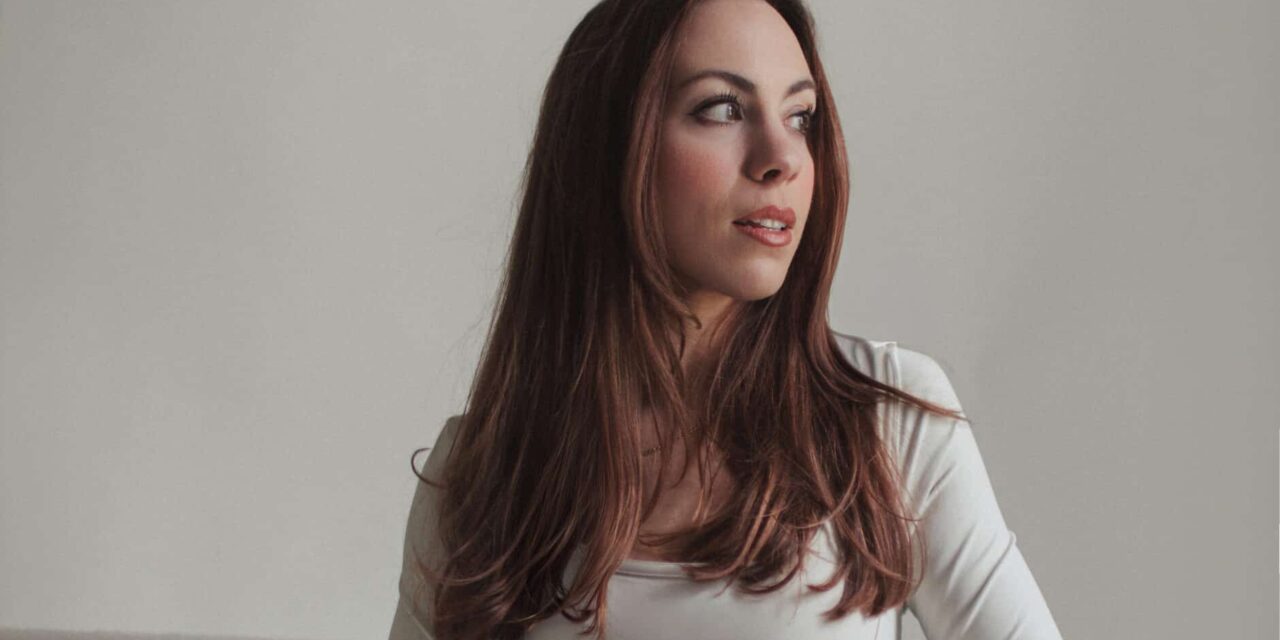
There is a particular kind of loneliness that feels unmistakably contemporary: being endlessly visible, technically reachable, and still somehow emotionally out of reach. On her new single “Why Does No One Want Me,” arriving March 20, Nashville-based LGBTQ+ indie-rock artist Abby Nissenbaum captures that feeling with a mix of wit, ache, and self-awareness that has quickly become her signature.
At first glance, the title lands like a punchline and a wound at once. But that tension is exactly what makes Nissenbaum’s writing so compelling. Her songs rarely sit inside one emotional register for long. Instead, they move between melancholy and humor, vulnerability and defiance, private fear and communal recognition. On “Why Does No One Want Me,” she transforms a deeply personal question into something far larger: a portrait of modern intimacy shaped by swiping, ghosting, instant validation, and the creeping fear that real connection is becoming harder to find.
The single arrives ahead of a new EP due in June, and signals another evolution for an artist whose work has already earned praise from GLAAD, Wonderland, Earmilk, Notion, Clash, Psychedelic Baby Mag, Today in Nashville, and She Makes Music UK. Nissenbaum’s music draws from depression, heartbreak, and isolation, but never stays trapped there. Her voice, both emotionally precise and quietly powerful, gives those themes shape without flattening them into despair.
That balance is part of what sets her apart. A lifelong musician, classically trained soprano, and former musical theater performer, Nissenbaum came to her current sound by way of an unexpected path: after years studying social psychology and data analytics, she found her way back to music during graduate school at the University of Memphis. That unusual combination—formal vocal technique, emotional intelligence, and analytical curiosity—runs through her work in ways that feel both specific and unusually relatable.
Her 2023 debut EP, Unreliable Narrator, introduced listeners to an artist deeply interested in self-perception and emotional subjectivity. Since then, her songwriting has sharpened, widened, and loosened. If that first era was rooted in introspection and heaviness, this new chapter seems more comfortable holding contradiction: sadness alongside sass, yearning alongside humor, hurt alongside perspective.
With “Why Does No One Want Me,” Nissenbaum leans fully into that complexity. What began as a confidence anthem for another artist eventually became something more honest for herself—a song that lets self-doubt and self-assurance coexist in the same breath. It is not simply about wanting to be chosen. It is about what happens when digital culture distorts our understanding of intimacy, and how hard it can be to remember your worth while trying to be seen.
For Mundane Magazine, Abby Nissenbaum reflects on vulnerability, overanalysis, queer community in Nashville, and why her new EP represents a true turning point.
Your upcoming single “Why Does No One Want Me” started as a confidence anthem but evolved into something more vulnerable. What made you decide to lean into that emotional honesty rather than keep the original empowering tone?
I originally wrote it as a sassy, coquettish, 90s girl group-inspired pop-R&B song to pitch to a friend whose sound is more R&B-focused. I ended up really liking the melody and honestly just changed the lyrics to have a rawer, yearning vibe that better fit the themes of my EP and my music style in general. I kept some of the original verses intact, which demonstrate more positive self-talk, but now they contrast more sharply with the chorus of the eponymous line, “why does no one want me?” It’s almost like the concept of an angel on one shoulder and the devil on the other, wrestling between self-confidence and self-doubt.
The chorus touches on a very modern fear: loneliness in the age of dating apps and instant validation. Do you think technology has changed the way people experience intimacy and rejection?
Yes. Even though people are technically more accessible to each other, it doesn’t lessen communication barriers. It’s a lot easier to be avoidant online, and there are no real social repercussions to behaviors like ghosting. Also, it’s a well-researched phenomenon that choice overload makes decisions more difficult. When many options are perceived to be available, cognitive overload makes it harder to process a decision. And then even once a decision is made, people may feel less satisfied with their choice. So yes, dating apps, or just trying to create connections online, can be challenging.
Your music often balances melancholy with quiet resilience. When you’re writing about depression or isolation, how do you keep the songs from becoming purely heavy and instead turn them into something cathartic?
I try to buffer angsty lyrics with more upbeat melodies. There’s nothing wrong with melancholy songs, though. They have their time and place, and some of my favorite artists just lean into it and create truly profound pieces of art. Frightened Rabbit and Sufjan Stevens come to mind immediately.
Before fully committing to music, you were pursuing social psychology and data analytics. Do those analytical frameworks influence the way you observe emotions and relationships when writing lyrics?
Yes — I’m totally guilty of overanalyzing or over-intellectualizing my experiences in my lyrics. I saw myself even doing it a few questions back talking about cognitive overload. But sometimes it shows up in silly ways, like referencing random stats concepts in my songs. I have a lyric about “regressing to the mean” in my song “Generic Indie Song.” I also have a song that I’ll release one day focusing on a famous attachment experiment. I went to school for experimental social psychology for so many years and barely use any of the skills I learned now, so I might as well pull that knowledge when I can.
You’re classically trained as a soprano and have a background in musical theater. How do those early influences shape the way you deliver vocals in an indie-rock context?
I’m lucky to have learned to belt and mix healthily. Singing is extremely physical, and especially with a style like indie rock/pop that requires a lot of vocal power, it’s really important to make sure you’re taking care of your voice. I know where my breaks are and have flexibility to switch to my legit classical voice where applicable, so that’s useful. But one thing I’d say I dislike about my voice is how ingrained my vocal enunciation habits are. Pop especially doesn’t always lend itself well to hyper-dictation, but I think with the rise of musical theatre ladies in the pop-rock space, like Renee Rapp, audiences are getting more acclimated to that sound.
Your debut EP Unreliable Narrator explored emotional subjectivity and self-perception. Looking back now, how has your relationship with storytelling evolved since that release?
Oh, 100 percent. There are a few songs on that album that I kind of wish I hadn’t released just because they’re a little too specific, so now I try to keep things more general. Also, I think my songwriting has improved immensely. I’ve talked to a lot of songwriters, and find it really interesting that many of my peers who started writing songs at younger ages believe that their earlier work was better, and even that their best songs are behind them. I feel the opposite way. Perhaps it’s because I didn’t start writing in earnest until my mid-20s, but I really think the best is yet to come. This current EP is melodically, lyrically, and commercially the strongest work I’ve ever done, and it will only continue to get better.
As a Nashville-based LGBTQ+ artist, how has the city’s music scene shaped your identity — both creatively and personally?
Just being around a supportive creative scene and getting to know other LGBTQ+ musicians has been inspiring. I live in East Nashville, which is particularly known for its LGBTQ+ friendliness, and there are many venues in my neighborhood that welcome and are even owned by LGBTQ+ artists. Speaking generally, I’ve benefited from Nashville’s sheer amount of talent and resources. Whether you need an accompanist, an engineer, or a space to record, world-class talent and spaces are right here in town.
Your sound blends nostalgic guitar-driven indie rock with deeply personal lyricism. Were there particular artists or songwriters — especially female voices from the past — that influenced your musical DNA?
Not exactly from the past as she’s still very much a driving force in the rock scene, but Brandi Carlile’s storytelling is very influential to me. Another favorite of mine would of course have to be Tracy Chapman. My dad introduced me to her music at a young age, and I’ve loved her melodies, lyrics, and rich vocal timbre for as long as I can remember. Vocally, I’m inspired by Grace Slick of Jefferson Starship — one of my cats is actually named after her — Celine Dion, Karen Carpenter, and Cass Elliot.
“Why Does No One Want Me” feels like both a question and a confrontation with self-worth. When listeners hear the song, what realization or emotional shift do you hope they walk away with?
I hope listeners walk away remembering their value, and that the right person will never make you justify your worth.
With a new EP arriving this June, what larger story or emotional arc ties these songs together? Does this new chapter represent a continuation of Unreliable Narrator or a completely new perspective?
It’s a completely new perspective. Unreliable Narrator was a rather depressing EP, and I don’t think there was any lightness to break it up. My second EP that I released in 2024, Don’t Want to Cry, was still pretty angsty overall but had some more empowering themes. I think my upcoming EP retains some of the melancholy that listeners would expect from my music, but it also has an air of lightness and fun. It’s definitely a much more commercial-ready offering than anything I’ve released previously.
What makes Abby Nissenbaum’s work resonate is not simply that she writes about heartbreak, depression, or loneliness. It is that she writes from inside those experiences without romanticizing them, and without surrendering to them completely. There is always a countercurrent in her music: humor, self-awareness, melody, a spark of resistance. Even at her most vulnerable, she sounds like someone still reaching toward herself.
That tension is what gives “Why Does No One Want Me” its charge. It is not a song about collapse. It is a song about the strange psychological tug-of-war between knowing your worth and temporarily forgetting it. It speaks to the emotional confusion of a generation trained to perform confidence while privately navigating uncertainty. And in doing so, it offers something quietly radical: not easy empowerment, but recognition.
With a new EP on the horizon, Nissenbaum seems less interested in choosing between melancholy and hope than in letting both exist at once. That duality has always been present in her work, but here it feels more intentional, more open, and more alive. If this single is any indication, her next chapter may be her most self-assured yet—not because it hides vulnerability, but because it knows exactly how to use it.