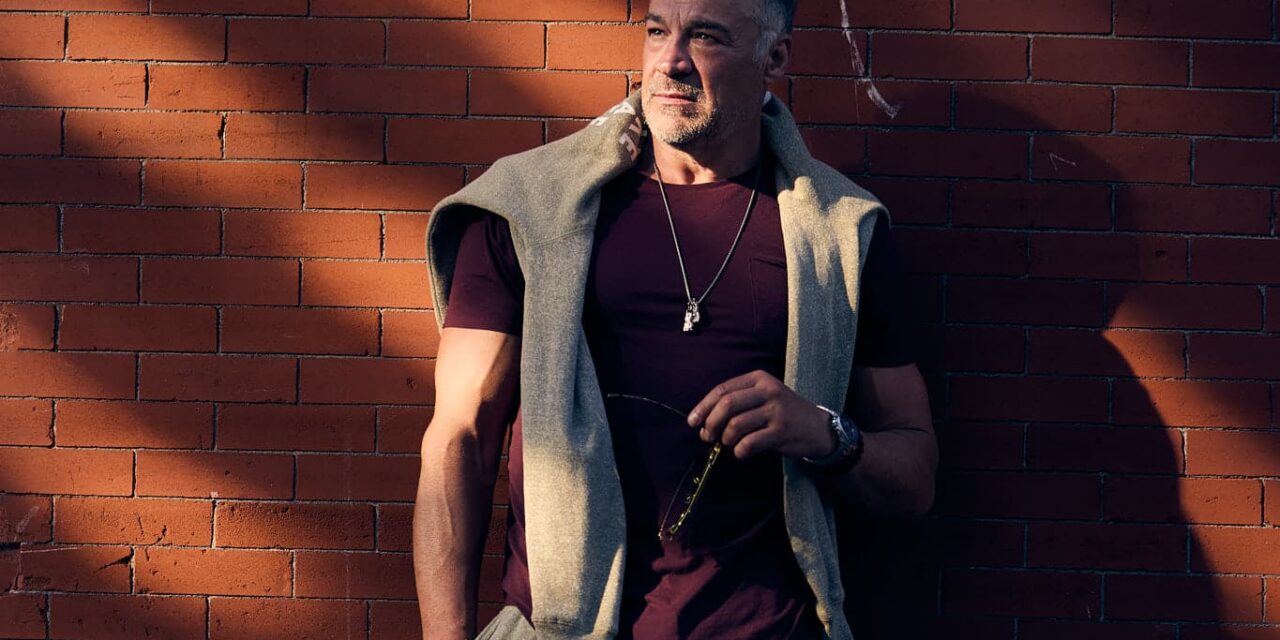
From champion boxer to musician, actor, and entrepreneur, Aleks Paunovic has spent much of his life redefining what it means to be strong. Now, as he steps into the world of Muhammad Ali in the series The Greatest, the 6’5″ actor reflects on the unexpected connections between boxing and performance, the vulnerability behind masculinity, and the freedom that comes from refusing to define yourself through a single identity. In an exclusive conversation with MUNDANE, Paunovic discusses reinvention, the psychology of fear, and why success means very little if you lose yourself pursuing it.
There is a peculiar contradiction in the way we understand strength.
We tend to associate it with physical presence, confidence, and the ability to withstand pressure. We admire people who appear unshakable, who walk into a room and immediately command attention, who seem capable of handling whatever life throws at them.
But what happens when the qualities that make someone appear strong become the very things preventing them from admitting they are struggling?
For actor Aleks Paunovic, that question has become increasingly important throughout a career defined by unexpected transformations.
Standing at 6’5″, Paunovic possesses the kind of imposing physical presence that audiences instinctively associate with authority, intimidation, and toughness.
His extensive screen credits include Snowpiercer, Reacher, Percy Jackson and the Olympians, Hawkeye, FUBAR, See, and War for the Planet of the Apes, among many others.
But before becoming a recognizable presence in film and television, Paunovic was a champion boxer.
A shoulder injury eventually forced him to reconsider his future, setting him on a path through music, acting, and entrepreneurship.
Today, those seemingly separate chapters are coming together in an especially meaningful way.
Paunovic is joining The Greatest, a series exploring the life of Muhammad Ali, portraying William Faversham Jr., who played a role in signing the young Cassius Clay after the Olympics and guiding the early stages of his professional career.
For someone who grew up in a boxing family and considered Ali a childhood hero, the opportunity carries a significance that extends far beyond another acting credit.
“There was the professional reaction, ‘This is an incredible opportunity,’ and then the kid in me, who was considerably less composed.”
Yet beneath the excitement lies a deeper story about identity, ambition, and the difference between appearing strong and actually understanding yourself.
When the Greatest Becomes Personal
Muhammad Ali occupies a unique place in the cultural imagination.
He was not simply an extraordinary athlete, but a figure whose public identity challenged conventional ideas about confidence, masculinity, race, and the relationship between personal conviction and public expectation.
For Paunovic, who grew up surrounded by boxing, Ali’s influence was deeply personal.
“Helping tell Ali’s story felt like two parts of my life meeting.”
But portraying William Faversham Jr. required Paunovic to approach that history from an unexpected perspective.
Rather than playing someone who already understands the magnitude of Ali’s legacy, he had to imagine encountering Cassius Clay before the world knew what he would become.
That distinction fundamentally shaped his interpretation.
“We know what Ali became, Faversham doesn’t. I had to forget the legend and respond to the young man in front of me.”
It’s a deceptively important observation.
Historical dramas often invite audiences to interpret the past through everything they already know about the future.
But the people living through those moments didn’t have that advantage.
They were making decisions based on uncertainty, instinct, and the limited information available to them.
For Paunovic, the challenge was to understand Faversham as someone responding to extraordinary potential without knowing precisely where it would lead.
His own boxing experience helped him appreciate the emotional and physical stakes involved.
But it also required restraint.
“I couldn’t quietly turn him into Aleks with a better suit.”
The role demanded an understanding of the fighter’s world without allowing his personal history to overwhelm the character.
And that balance between experience and imagination is central to his approach to acting.
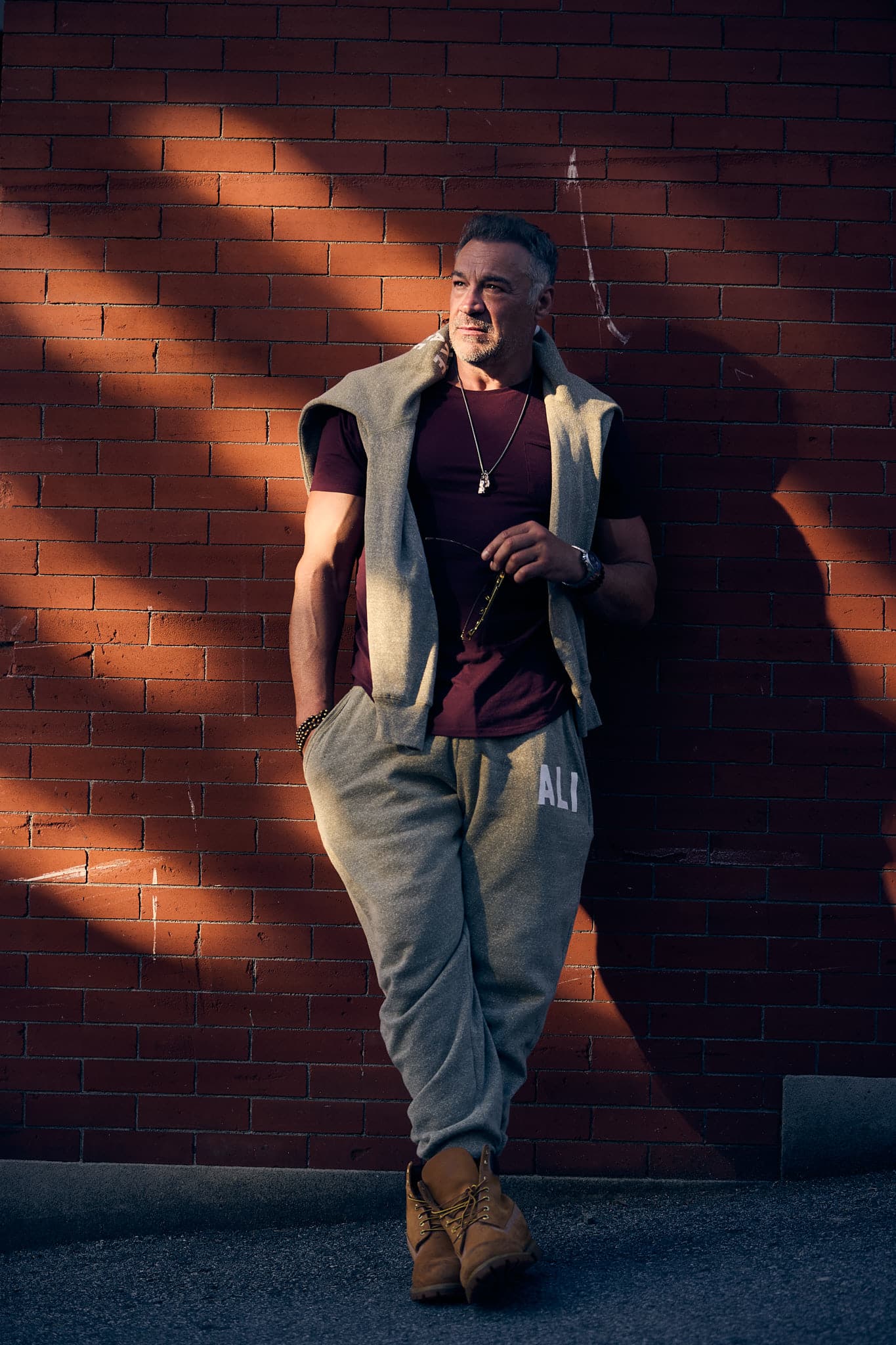
The Difference Between Looking Strong and Being Strong
Paunovic’s relationship with masculinity has evolved considerably since his years in boxing.
As a younger man, he believed strength meant being able to handle everything independently.
Admitting uncertainty or emotional pain felt incompatible with the identity he had built.
But over time, that understanding began to change.
“When I was younger, I valued handling everything until I realized I’d made it impossible to admit I was struggling.”
It’s a realization that challenges one of the most persistent expectations placed on men.
Physical strength is visible.
Emotional honesty often isn’t.
And in a culture that frequently rewards confidence while discouraging vulnerability, the two can become dangerously confused.
For Paunovic, genuine strength now has less to do with appearing invulnerable and more to do with accepting discomfort without retreating behind pride.
“Now I respect a man who can say, ‘I was wrong,’ or ‘That hurt me,’ and stay present afterward.”
His imposing stature adds an almost comic dimension to that contradiction.
“I’m 6’5. I can look tough while waiting for toast.”
But the humor points toward something more meaningful.
An intimidating appearance tells us very little about someone’s internal experience.
And for Paunovic, that understanding has transformed the kinds of emotional details he looks for in his characters.
Rather than repeatedly emphasizing their physical dominance, he is interested in discovering the moments when that dominance becomes irrelevant.
What happens when someone powerful needs forgiveness?
When an apology matters more than intimidation?
When the strongest person in the room cannot control the thing that hurts them most?
“I’d rather find out what makes this particular man feel small.”
What Boxing Teaches You About Fear
Boxing and acting might appear to belong to completely different worlds.
One is defined by physical confrontation.
The other by storytelling, imagination, and emotional interpretation.
But Paunovic sees a fundamental connection between them.
Both require the ability to perform under pressure.
Both demand preparation, focus, and an awareness of the person standing opposite you.
And both involve confronting fear without allowing it to dictate your decisions.
“Fear can come with you. You don’t have to get rid of it before you begin.”
It’s a lesson he continues to apply on set.
Despite his extensive experience, Paunovic still gets nervous before important performances.
He remembers feeling particularly anxious before his first day working on The Greatest, wanting to demonstrate to showrunner Ben Watkins and the production team that they had made the right decision in casting him.
But he no longer interprets that anxiety as evidence that he doesn’t belong.
Instead, he focuses on preparation, breathing, listening, and remaining present.
The objective isn’t to eliminate fear.
It’s to prevent fear from becoming the center of the experience.
That distinction extends beyond acting.
For someone who has navigated multiple careers and entrepreneurial ventures, learning to move forward without absolute certainty has become an essential part of his personal philosophy.
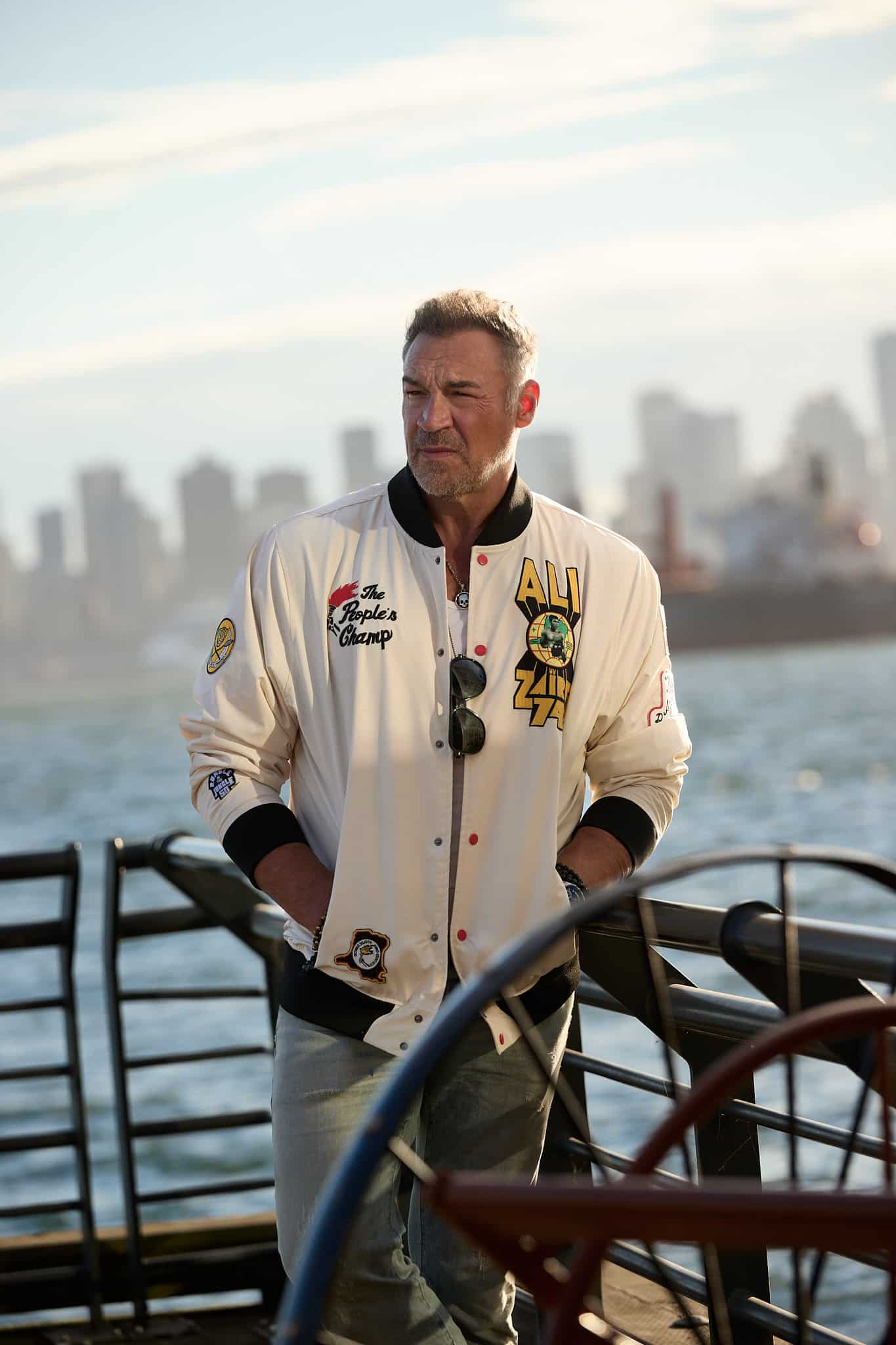
Reinvention Without Losing Yourself
A shoulder injury ended Paunovic’s boxing ambitions and forced him to confront a question that many people encounter when their careers change unexpectedly.
Who are you when the thing that defined you is no longer available?
For an athlete, the relationship between identity and performance can become particularly intense.
Years of discipline, competition, and physical development can make a sport feel inseparable from one’s sense of self.
When that disappears, the loss extends beyond professional opportunity.
“An injury can change your plans much faster than your sense of who you are.”
Paunovic describes struggling with the feeling that he had lost something essential about his value.
Music and acting eventually offered new directions, but neither immediately resolved the deeper issue.
He had to learn that his worth wasn’t dependent on proving himself through another achievement.
“I want to have a bad day at acting without deciding I’m having a bad day at being human.”
That perspective has become especially important as his career continues to expand.
His film and television work has brought him alongside performers including Jennifer Connelly, Daveed Diggs, Arnold Schwarzenegger, Anthony Hopkins, and Jason Momoa.
Yet he remains conscious of the danger of allowing professional recognition to determine personal happiness.
Success can become an endless series of external milestones.
Another role.
Another project.
Another opportunity.
And without a deeper sense of identity, each accomplishment risks becoming a temporary substitute for self-worth.
The Psychology of Dressing the Part
Paunovic’s interest in identity also extends to fashion.
For an actor whose physical stature makes him immediately noticeable, clothing has long been both a practical consideration and an important tool for characterization.
He believes wardrobe can reveal emotional information that dialogue leaves unspoken.
“Clothing shows how someone hopes to be received.”
A carefully controlled appearance might suggest confidence.
But it could just as easily reflect insecurity, self-protection, or a fear of being judged.
Paunovic pays attention to whether a character’s clothing feels natural, borrowed, or protective.
He is particularly interested in the idea of wardrobe functioning as armor.
And in his own life, he’s becoming increasingly comfortable experimenting with personal style.
Rather than allowing his size to determine what he wears, he’s learning to approach fashion through enjoyment and self-expression.
“Now I get to ask, ‘Do I love this?’ instead of, ‘Will the sleeves reach?'”
It’s another small example of the larger transformation shaping his life.
The freedom to stop organizing every decision around how other people might perceive him.
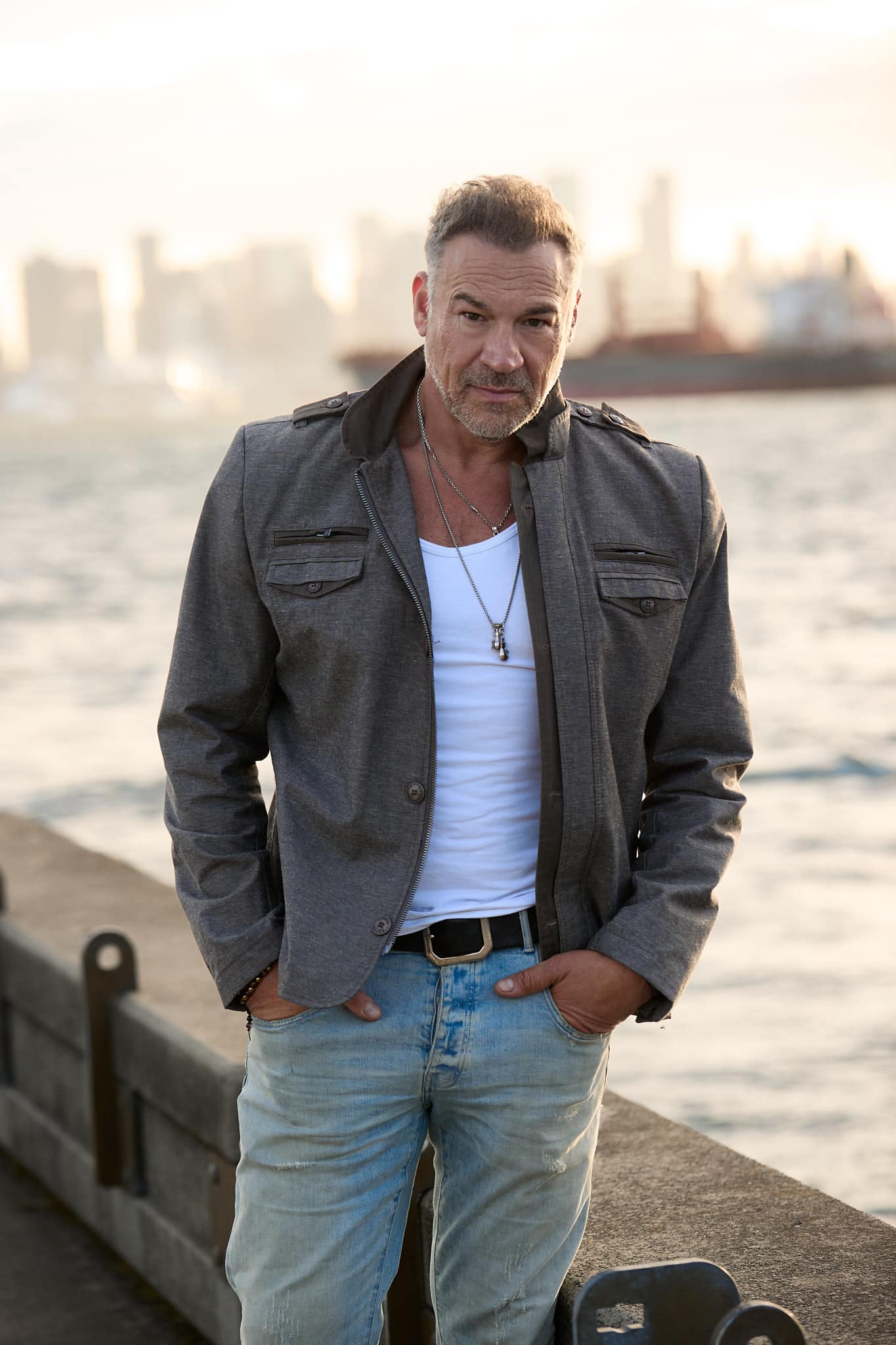
Turning Personal Experience Into Purpose
Outside acting, Paunovic is also the co-founder of LEGEND WATER, a Canadian canned-water company that combines environmental sustainability with mental-health advocacy.
The company sources water from the Canadian Rocky Mountains and aims to reduce reliance on single-use plastic bottles.
But its mission extends beyond packaging.
Each can includes a QR code directing consumers toward mental-health resources.
For Paunovic, the connection between environmental responsibility and emotional well-being is rooted in everyday experience.
Working on film and television sets made him increasingly conscious of how quickly disposable plastic bottles accumulate.
At the same time, his evolving understanding of masculinity reinforced the importance of making mental-health support more accessible.
“Mental health matters because it’s easy to look capable while struggling privately.”
He recognizes that a product cannot solve someone’s emotional difficulties.
But he believes even a small opportunity to access support can matter.
“A QR code doesn’t solve someone’s pain, but it can help them reach support.”
The venture reflects the same philosophy that increasingly shapes his acting career.
Strength isn’t simply about what someone can endure.
It’s also about creating the conditions in which people feel comfortable asking for help.
In Conversation With Aleks Paunovic
MUNDANE: What went through your mind when you learned you’d be joining The Greatest?
Aleks Paunovic: There was the professional reaction, “This is an incredible opportunity,” and then the kid in me, who was considerably less composed.
I grew up in a boxing family. Helping tell Ali’s story felt like two parts of my life meeting. Then you put the emotion aside and do the job. You can’t spend the whole scene thinking, “My dad would love this.” Even though I kind of did. On a few occasions. Lol
MUNDANE: What surprised you about William Faversham Jr.?
Aleks Paunovic: I was interested in the tension between recognizing someone’s potential and understanding the person carrying it. Those are different skills.
We know what Ali became, Faversham doesn’t. I had to forget the legend and respond to the young man in front of me. Otherwise, you’re playing hindsight, and hindsight is a very smug scene partner.
MUNDANE: Did your boxing experience change your approach?
Aleks Paunovic: It gave me a sensitivity to what a fighter might be carrying, the doubt and energy behind appearing certain.
But I had to remember that my experience isn’t Faversham’s. I couldn’t quietly turn him into Aleks with a better suit. The useful part was understanding the stakes: when you discuss a fighter’s future, someone will physically absorb the consequences.
MUNDANE: How has your definition of masculinity changed?
Aleks Paunovic: When I was younger, I valued handling everything until I realized I’d made it impossible to admit I was struggling.
Now I respect a man who can say, “I was wrong,” or “That hurt me,” and stay present afterward.
I’m 6’5. I can look tough while waiting for toast. Being honest when your pride wants you to hide, that takes work.
MUNDANE: What did boxing teach you about fear?
Aleks Paunovic: Fear can come with you. You don’t have to get rid of it before you begin.
In acting, I prepare, breathe, listen, and focus on the person opposite me. That leaves less room for the commentary in my head.
I still get nervous, believe me, I was so nervous the night before my first day on set. I wanted to show our showrunner Ben Watkins and the whole team that they cast this right. And they were all extremely supportive and championed everyone on set, behind and in front of the camera. But with nerves, I just don’t treat it as evidence that I shouldn’t be there.
MUNDANE: How did you stop defining yourself through one profession?
Aleks Paunovic: An injury can change your plans much faster than your sense of who you are. When boxing was taken away, I had to work through the feeling that I’d lost what made me valuable.
Music and acting helped, but the deeper work was realizing I had something to offer before proving myself at the next thing. I want to have a bad day at acting without deciding I’m having a bad day at being human.
MUNDANE: How do you challenge assumptions about your physical presence?
Aleks Paunovic: I know the audience makes a quick assessment when I enter a scene. But I’m interested in what happens when a character needs something he can’t get through size, forgiveness, or an apology.
I don’t have to keep demonstrating that I’m big, the camera has established that. I’d rather find out what makes this particular man feel small.
MUNDANE: What can clothing reveal that dialogue can’t?
Aleks Paunovic: Clothing shows how someone hopes to be received. A controlled appearance might come from confidence or fear of being judged.
I notice whether wardrobe feels earned, borrowed, or like armour. Personally, I’m enjoying being more adventurous. Now I get to ask, “Do I love this?” instead of, “Will the sleeves reach?”
MUNDANE: Why combine sustainability and mental-health advocacy through LEGEND WATER?
Aleks Paunovic: On sets, you notice how quickly bottles pile up. Water is essential, but the waste around it deserves thought.
Mental health matters because it’s easy to look capable while struggling privately. A resource on a can can help someone take a first step without announcing anything to the room.
A QR code doesn’t solve someone’s pain, but it can help them reach support. I like the idea that our product can carry something useful for people, too.
MUNDANE: What does success mean when you remove titles, strength, and recognition?
Aleks Paunovic: It gets personal. Do the people I love feel loved by me? Can they count on me? Am I keeping my word and enjoying my life while it’s happening?
I still want the great role and the phone call, preferably during business hours, but you know I’m picking up at 3 am also! But I’m trying not to make the next achievement responsible for how I feel about myself.
The Freedom of Being More Than One Thing
Perhaps the most meaningful aspect of Aleks Paunovic’s journey is that his understanding of strength has become less dependent on what he can accomplish.
Boxing taught him discipline, courage, and the ability to perform under pressure.
Acting taught him to explore vulnerability, uncertainty, and the complicated emotions hidden beneath physical appearances.
Music and entrepreneurship offered opportunities to reinvent himself without abandoning the experiences that shaped him.
And somewhere along the way, he began to understand that identity doesn’t have to be confined to a single profession.
There is something particularly fitting about that realization arriving as he joins a project about Muhammad Ali, an athlete whose significance extended far beyond the boxing ring.
For Paunovic, the opportunity connects his childhood admiration with the person he has become.
But it also reinforces the importance of remaining grounded in something deeper than professional recognition.
He still wants the great roles.
He still values ambition.
And he still hopes the phone will ring with the next exciting opportunity.
But he is increasingly unwilling to make those achievements responsible for his sense of self.
Instead, success has become a more personal question.
Are the people he loves able to count on him?
Is he keeping his word?
And is he actually enjoying the life he’s worked so hard to build?
Because real strength isn’t necessarily about how much pressure you can withstand, how intimidating you appear, or how many times you succeed. Sometimes it’s about having the courage to admit you’re vulnerable—and understanding that your value was never dependent on being invincible in the first place.
Artist: Aleks Paunovic
Upcoming project: The Greatest
Role: William Faversham Jr.
Additional credits: Snowpiercer, Reacher, Percy Jackson and the Olympians, FUBAR, Hawkeye, See, Suits LA, Wild Cards, War for the Planet of the Apes
Entrepreneurial venture: LEGEND WATER — Co-Founder
From professional boxing to acting and entrepreneurship, Aleks Paunovic is redefining masculinity, vulnerability, and success through a career that continues to challenge the idea that strength and identity can be measured by a single achievement.