The rising electronic artist expands her angelcore universe with akiaura ahead of Winter Forever
Few artists in electronic music are building worlds quite like Baby Jane. Blending EDM, trance, witch house, hardstyle, and the internet-born microgenre known as angelcore, the independent artist has spent the past year transforming herself from underground favorite into one of the most compelling new voices in electronic music.
With over a million monthly listeners, a rapidly growing online following, and a devoted fan community known as the Coven, Baby Jane has created something that feels bigger than a music project. It’s an immersive universe built from occult imagery, brutalist architecture, surreal horror, video game nostalgia, and the kind of emotional honesty that turns escapism into something transformative.
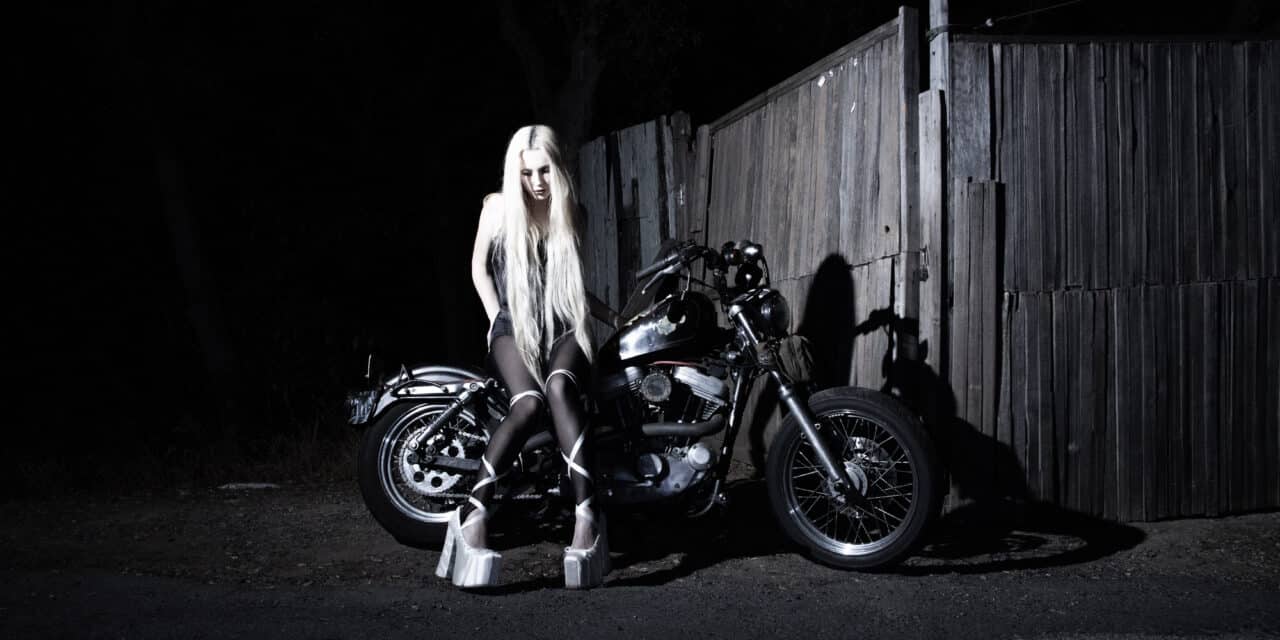
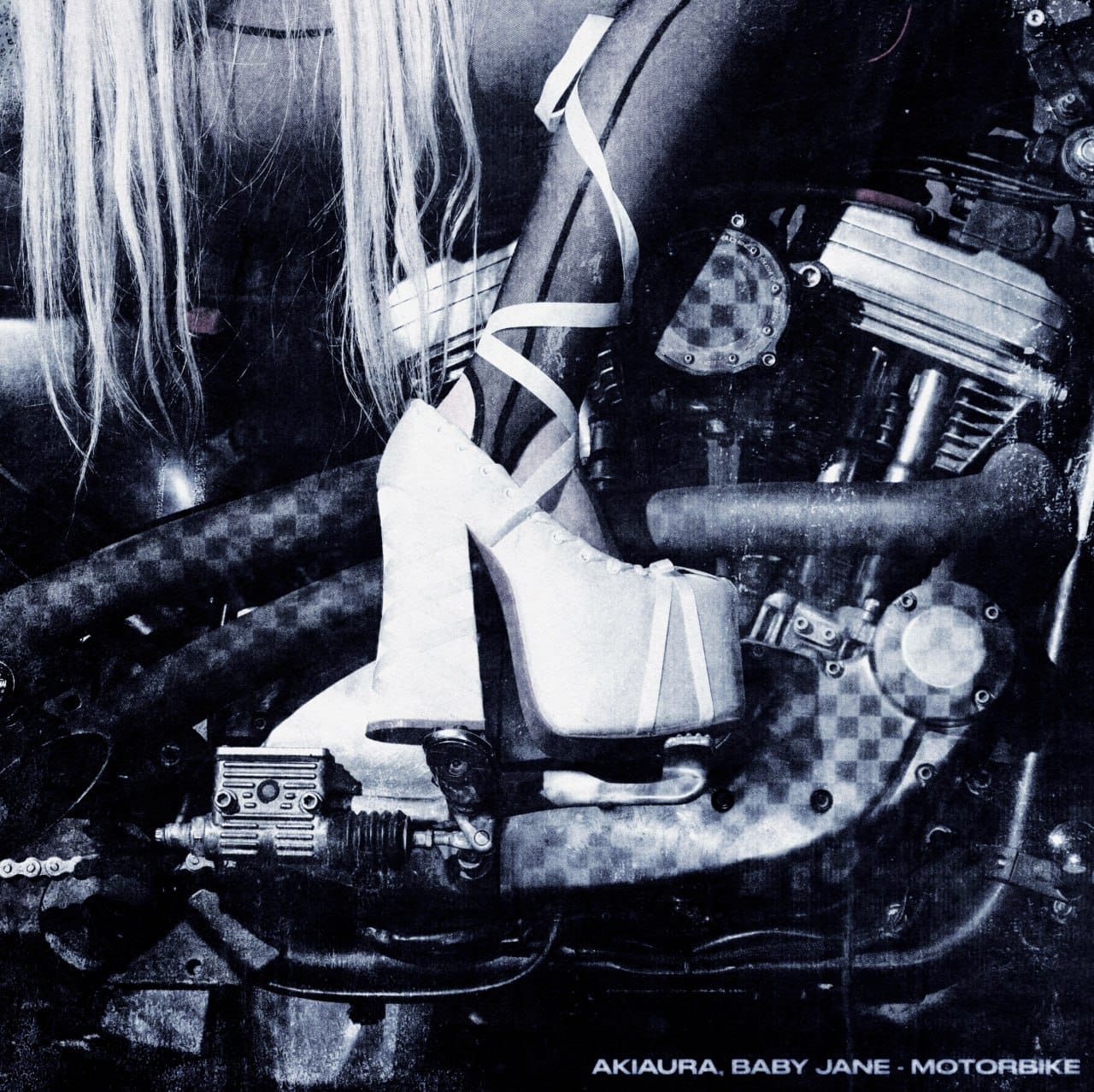
Her latest single, “Motorbike,” a collaboration with renowned angelcore producer akiaura, continues that journey. While the track won’t appear on her forthcoming sophomore album Winter Forever, due July 10, it perfectly captures the euphoric freedom and emotional release that define this current chapter of her artistry.
Atmospheric, cinematic, and effortlessly expansive, “Motorbike” surrounds Baby Jane’s ethereal vocals with shimmering synths and melodic electronic textures, creating a feeling that is simultaneously nostalgic and futuristic.
“When I sent the original demo of ‘Motorbike’ to akiaura, I didn’t expect him to take the direction that he did,” she says. “I was pleasantly surprised to see the track framed in a completely different light with a new vibe.”
What surprised her most was the dramatic transformation of the song’s foundation.
“The chord progression changed completely,” she explains. “He always has a very different take on the song, to my pleasant surprise. I was also surprised that he saw the vocal as progressive house when I originally wrote it as a pop song.”
That ability to reshape expectations has become a hallmark of Baby Jane’s music. Across tracks like “Midnight Highway,” “Alone With You,” and now “Motorbike,” she consistently blurs the lines between genres, embracing contradiction as a creative principle.
“Certain elements inspire me if I can carve out a paradox,” she says. “It feels like I’ve heard it before, but it’s still unfamiliar. It’s nostalgic, but new. A sweet melody over an abrasive kick. Those contrasts excite me.”
That fascination with paradox also lies at the heart of Winter Forever. Originally conceived as an album about loneliness, the project gradually transformed into something far more liberating.
“The first song I wrote was ‘winter 4ever,’” Baby Jane recalls. “I was watching a lot of Soviet cinema and taking in the brutalist architecture that was home to my ancestors. Those images mirrored the coldness and cynicism that seemed to freeze any possibility of real romance in my life.”
But as she continued writing, something shifted.
“I was DJing in Berlin, dancing in clubs with strangers, and eventually wrote ‘One Night in Berlin.’ I became more excited about my love for music than my love for misery. That became the core of the album. It’s still about loneliness, but about the freedom that comes when you surrender.”
That idea of surrender appears repeatedly throughout her work. Roads, night drives, movement, and travel have become recurring motifs across the project, creating a sense of emotional escape and constant motion.
“Driving at night is very euphoric,” she says. “All the songs are very romantic, too. Being alone in a car with someone can be incredibly intimate. No distractions, just music and conversation. It’s meditative. A perfect place to get swept up in your feelings.”
Beyond the music itself, Baby Jane has built an expansive visual mythology around her work, incorporating abandoned architecture, occult symbolism, pixelated video game aesthetics, and dreamlike horror elements. For her, that world-building is essential.
“It’s very important,” she explains. “The absence of world-building jolts people back into the mundanity of their everyday lives. I want Baby Jane to be an escape, a fantasy, or a gateway into their own imagination.”
Fans have increasingly referred to her music as “gothic house,” a term she initially coined to describe her own work.
“I first used that phrase to describe my song ‘All the Saints of Notre Dame,’” she says. “It combines gothic and liminal aesthetics with electronic elements. A gothic house artist has the lore, sincerity, and world-building of an alternative artist, but sonically leans electronic.”
Her approach stands apart from many traditional EDM artists. While dance music forms the foundation of her sound today, Baby Jane didn’t grow up immersed in electronic culture.
“I was a Tumblr girl,” she laughs.
That outsider perspective may explain why her music often feels less concerned with club functionality and more focused on emotional storytelling. Her songs create spaces where loneliness and connection, sadness and liberation, isolation and transcendence can coexist.
It’s also why angelcore became such a natural fit.
“Lonown and akiaura are angelcore,” she says. “They were the first artists I really looked up to who embraced me. We also bonded over being Russian. I find that artists often reach new levels when they embrace their culture.”
For Baby Jane, those cultural roots feel almost spiritual.
“I feel like I have angels helping me when I pull from music connected to my background,” she says. “It’s like I have dead relatives writing with me.”
As her audience continues to grow, maintaining that sense of authenticity has become increasingly important. The rapid rise from underground artist to electronic music phenomenon could easily become overwhelming, but she remains focused on evolution rather than validation.
“A big ego is death to creativity,” she says. “You become afraid to lose the audience that makes you feel validated. Great art can only come from surrendering to the unknown. The love I feel for music and for my fans saves me from that.”
That philosophy extends to her live performances, where she seamlessly moves between DJ, producer, vocalist, and visual storyteller.
“I rely a lot on intuition because there really isn’t anyone doing exactly what I’m doing,” she says. “My life as a nightlife DJ and my life as a singer were completely separate for a long time. Now they’ve come together naturally.”
Looking ahead to Winter Forever, Baby Jane hopes listeners discover something personal within its many contradictions.
“I hope this album offers something unique,” she says. “If any of my lyrics speak to people, I’m grateful. I hope it sparks their imagination, and I hope they have fun listening to it.”
That may ultimately be the greatest strength of Baby Jane’s work. Beneath the shadows, the mythology, and the digital-age aesthetics lies something deeply human: the search for freedom through music, movement, and self-discovery.
With “Motorbike” and the arrival of Winter Forever on the horizon, Baby Jane isn’t simply creating songs—she’s building an entire universe. One where loneliness becomes liberation, where darkness glows with possibility, and where surrendering to the rhythm might be the closest thing to freedom.