Photo Credit: Hunter Cohen
Pop culture commentary once existed at the edges of entertainment journalism. Today, it increasingly shapes the center.
Audiences no longer rely solely on traditional publications, television programs, or polished celebrity interviews to understand what is happening online. They turn to creators who can move quickly without sacrificing context, speak with the familiarity of a trusted friend, and explain why a viral moment matters beyond the few seconds captured in a clip.
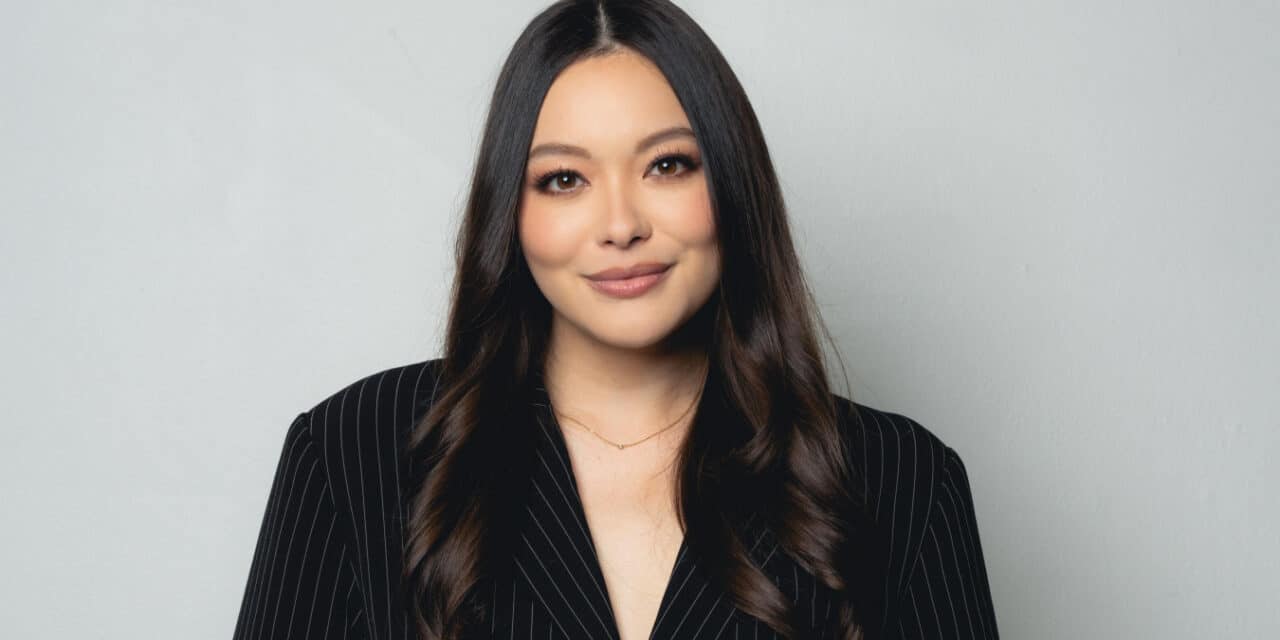
Few creators have navigated that shift as successfully as Kristi Cook, the entertainment journalist, interviewer, podcast host, and media entrepreneur behind Spill Sesh.
Across her channels, Cook’s content has generated more than 625 million views, including over half a billion views on Spill Sesh’s primary YouTube channel. What began as an anonymous pop culture commentary account has evolved into a multi-platform media brand encompassing podcasts, original interviews, talent partnerships, studio collaborations, and on-camera entertainment coverage.
For years, Cook’s anonymity was part of the platform’s identity. Her voice became recognizable while her face remained absent, allowing the stories themselves to occupy the foreground. Spill Sesh developed into a trusted destination for audiences searching for more than gossip: timelines, accountability, internet history, and the context frequently lost in the rush to publish.
Eventually, however, anonymity began to limit the kind of work Cook wanted to pursue.
Revealing her identity in a widely covered New York Times interview marked a significant transition. Cook was no longer only the unseen narrator behind one of YouTube’s most recognizable commentary channels. She was stepping forward as a host, interviewer, and public-facing media personality capable of extending Spill Sesh beyond its original format.
That evolution accelerated in 2025 when she signed with United Talent Agency and expanded further into podcasting and talent-led content. She co-founded and co-hosts POPITY, a Studio71 podcast featuring conversations with voices across entertainment and digital culture, and launched Spill Sesh: After Hours, an interview series focused on some of the personalities already driving online conversation.
Her work has also brought her into partnerships with major studios, networks, and streamers including NBC, Warner Bros., and Amazon. Yet the foundation of her approach remains the same: verify what is known, distinguish speculation from fact, reconstruct the history behind a viral moment, and avoid allowing speed to become more important than accuracy.
As an AAPI creator working in an increasingly visible role, Cook also understands that representation extends beyond appearing on camera. It includes shaping editorial decisions, determining which stories receive attention, and creating room for more voices throughout the structure of a growing media company.
We spoke with Kristi Cook about leaving anonymity behind, transforming Spill Sesh into a sustainable business, maintaining trust in an era of misinformation, and building a new model of entertainment media around the relationship between creators and their audiences.
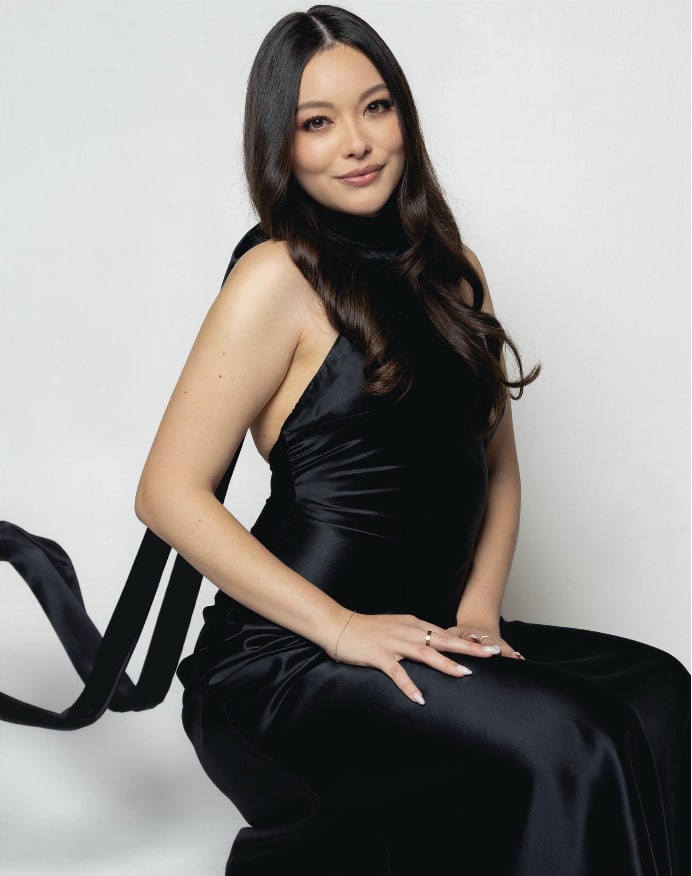
You built Spill Sesh into one of YouTube’s most recognizable pop culture platforms while remaining anonymous for years. Why was anonymity essential at first, and what convinced you it was time to step into the spotlight?
In the beginning, anonymity gave me the freedom to focus completely on the stories.
I wasn’t thinking about becoming a public figure. I was simply obsessed with internet culture and wanted a place where I could talk about everything happening online.
As Spill Sesh grew, however, I realized there were opportunities I couldn’t fully pursue while remaining behind the scenes. I wanted to interview talent, host conversations, and build the brand beyond commentary videos.
Revealing my identity was scary, but it allowed me to grow into an interviewer and host while maintaining the same voice and perspective that originally brought people to Spill Sesh.
Entertainment journalism has changed dramatically over the past decade. How have creator-led platforms reshaped the relationship between audiences, celebrities, and traditional media?
Creator-led platforms have made entertainment journalism feel much more immediate and personal.
Audiences no longer want to receive only the polished version of a story. They want to be part of the conversation and hear the questions they would genuinely ask.
Creators also have a direct relationship with their audiences. We read their comments, understand which details they’re curious about, and recognize when a story needs more context.
I think traditional media and creator media are beginning to meet in the middle.
There is so much potential in combining the access and resources of established entertainment outlets with the voice and audience connection that creators have built online.
Spill Sesh has developed from a YouTube commentary channel into a larger media brand spanning podcasts, interviews, and talent partnerships. What has been the biggest lesson in transforming a successful creator brand into a sustainable business?
The biggest lesson has been realizing that Spill Sesh’s point of view can exist across many different formats.
YouTube commentary will always be the foundation, but launching POPITY and Spill Sesh: After Hours has allowed me to have direct conversations with the people audiences are already discussing.
Signing with UTA and working with Studio71 have also helped me think much bigger about what the brand can become.
At the same time, every expansion still has to feel natural.
I don’t want to introduce a new format simply for the sake of growth. It needs to offer something different to the audience while still feeling like the Spill Sesh they already know.

Your work sits at the intersection of reporting, commentary, and entertainment. How do you create engaging content without sacrificing credibility or audience trust?
I think being entertaining and being accurate can absolutely exist together.
Before I share my opinion, I want to understand where the information originated, what has actually been confirmed, and which context might be missing.
When something is still speculation, I make that clear.
My audience has trusted me with these stories for years, and I never want the pressure to post quickly to become more important than getting the story right.
How has your journalism background influenced the way you cover viral stories differently from the fast-moving social media news cycle?
My journalism background makes me want to understand how we arrived at the viral moment rather than covering only the moment itself.
A single clip can take over the internet, but there is usually a much longer timeline or a piece of old internet history that completely changes how you understand it.
I love bringing those pieces together and presenting every side so viewers can form their own opinions.
The goal isn’t only to tell people what happened. It is to explain why it became such a significant conversation.
You’ve interviewed talent and partnered with studios including NBC, Warner Bros., and Amazon. Has working more closely with the entertainment industry changed the way you approach celebrity coverage?
It has definitely expanded the way I think about celebrity coverage.
For years, I was covering stories from behind the scenes. Sitting across from talent and hearing their perspectives directly has added an entirely new layer to what I do.
It reminds you that there is always more to someone than the headline or viral moment attached to them.
I still want to ask the questions my audience cares about, but I’m also interested in creating an environment where people feel comfortable enough to give a genuine answer.
I’ve learned that the best interviews don’t feel overly formal. They feel like honest conversations where you get to see a side of someone that may not have been visible before.
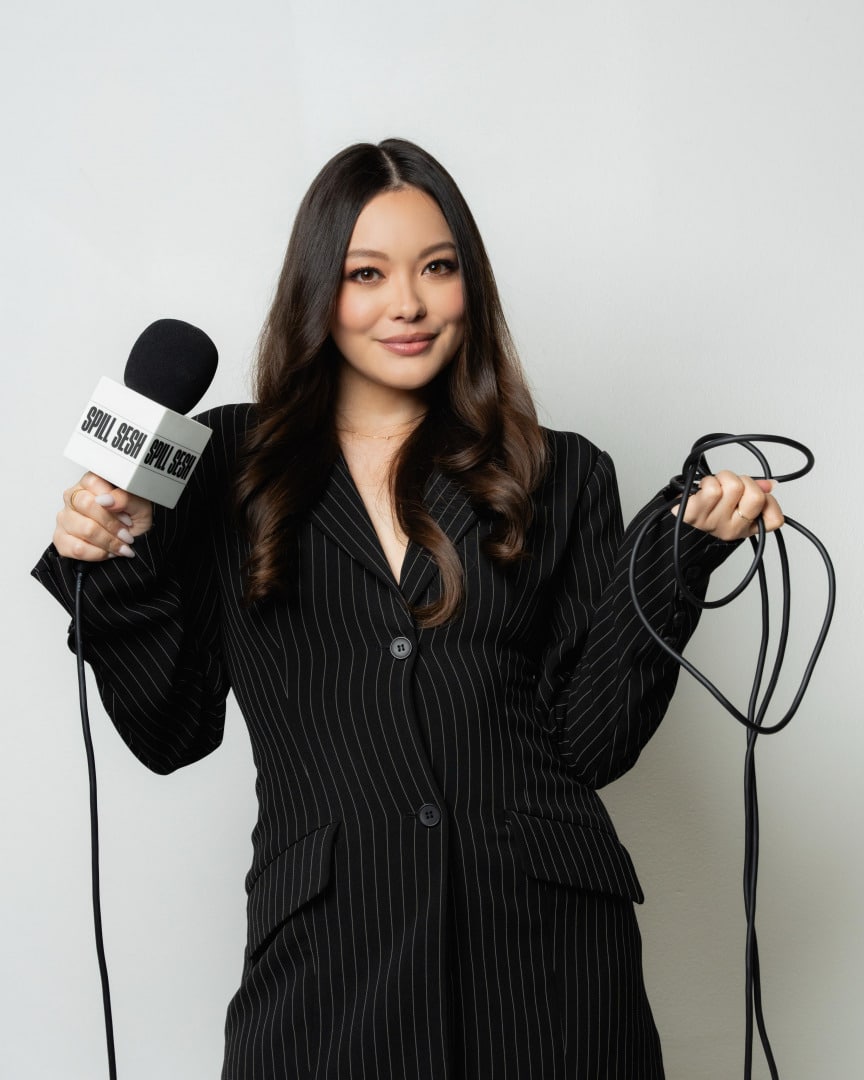
As an AAPI creator navigating a highly visible digital landscape, how have your experiences shaped your ideas about representation, leadership, and creating space for more diverse voices?
Becoming more visible made me realize that representation isn’t only about being seen. It is also about being in a position to shape the conversation.
As an AAPI journalist and creator, I bring my own experiences to the way I approach stories, interview people, and think about responsibility online.
As Spill Sesh grows into a larger media brand, I want it to create space for more perspectives, both on camera and behind the scenes.
Many creators struggle to evolve beyond one platform or format. What advice would you give to emerging creators hoping to build businesses that can survive changing algorithms and trends?
Build something people recognize for its voice, not only its format.
Spill Sesh began as an anonymous YouTube channel, but the connection with the audience and the way I tell stories have carried into podcasts, interviews, and on-camera content.
I also think it is important to accept opportunities that challenge how you see yourself.
I was comfortable behind the scenes for a long time, and stepping in front of the camera opened an entirely new part of my career.
You don’t have to abandon what is already working, but you should give yourself room to evolve beyond it.
Pop culture moves faster than ever, but some stories have lasting cultural impact while others disappear within days. What separates a fleeting viral moment from a conversation that genuinely shapes culture?
The stories that last usually reveal something bigger about the culture than the specific drama itself.
They may begin with one influencer, celebrity, or viral clip, but they lead to larger conversations about fame, relationships, identity, or the way people behave online.
A viral moment gets people talking for a few days.
A culturally important story changes how people think, speak, or move through the internet after the moment has passed.
What is your vision for Spill Sesh over the next five years? Do you see it becoming the next generation of entertainment media?
I definitely see Spill Sesh becoming a next-generation entertainment media brand.
The original channel will always remain at its center, but POPITY and After Hours are showing me how many different ways there are to tell these stories.
I want to continue building original interview formats, working directly with talent, and creating conversations that feel more personal than traditional celebrity coverage.
There is also so much I haven’t explored yet, which is the exciting part.
This entire career began because I followed an interest in internet culture without knowing where it would lead. I want to maintain that openness as Spill Sesh grows and continue creating things that feel new, fun, and authentic to the audience.
The rise of Spill Sesh reflects more than the success of a single YouTube channel. It reveals a broader transformation in how entertainment media earns authority.
Traditional journalism once derived much of its influence from institutional access. Creator-led media builds power differently, through consistency, intimacy, audience participation, and the ability to develop a recognizable editorial voice outside established structures.
That relationship can be powerful, but it also carries responsibility.
When audiences feel personally connected to a creator, commentary can travel with the authority of a trusted recommendation rather than a distant headline. The same closeness that makes creator media compelling can magnify inaccuracies, speculation, and unexamined narratives.
Cook’s approach recognizes that trust is not a permanent reward for building a large audience. It must be renewed with every story.
Her emphasis on timelines, sourcing, and context distinguishes Spill Sesh from a digital culture that often treats immediacy as proof. Rather than simply repeating what is circulating, she attempts to understand the conditions that allowed a particular story to become viral in the first place.
That instinct has also shaped her expansion into interviews.
Moving from anonymous commentary to sitting face-to-face with the people she once covered could have created tension between independence and industry access. Instead, Cook views direct conversation as another layer of context—an opportunity to humanize a person without abandoning the questions her audience expects her to ask.
The larger evolution of Spill Sesh may ultimately depend on preserving that balance.
Its future lies neither in recreating traditional entertainment journalism nor in remaining confined to the conventions of a commentary channel. It exists in the space between them: creator-led but editorially grounded, conversational but accountable, personality-driven without allowing personality to eclipse the story.
Cook built Spill Sesh while hidden from view. Stepping forward did not require her to leave its original identity behind.
It allowed her to demonstrate that the voice audiences trusted was capable of becoming something larger: not merely a commentator reacting to the media landscape, but an entrepreneur helping shape what entertainment media becomes next.